Brighton Beach Tango: Capturing the Spirit of Early 20th Century Leisure in Brooklyn
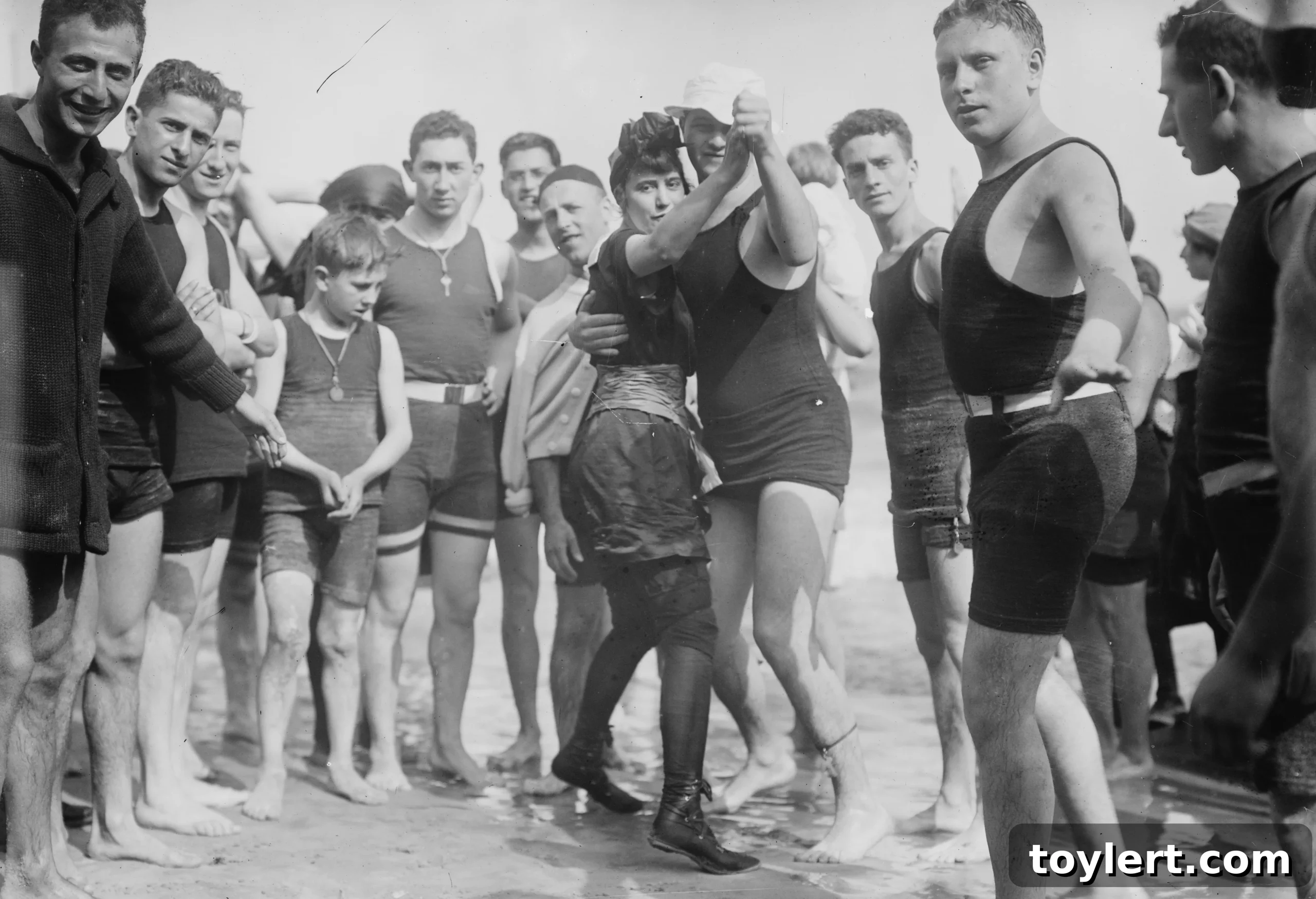
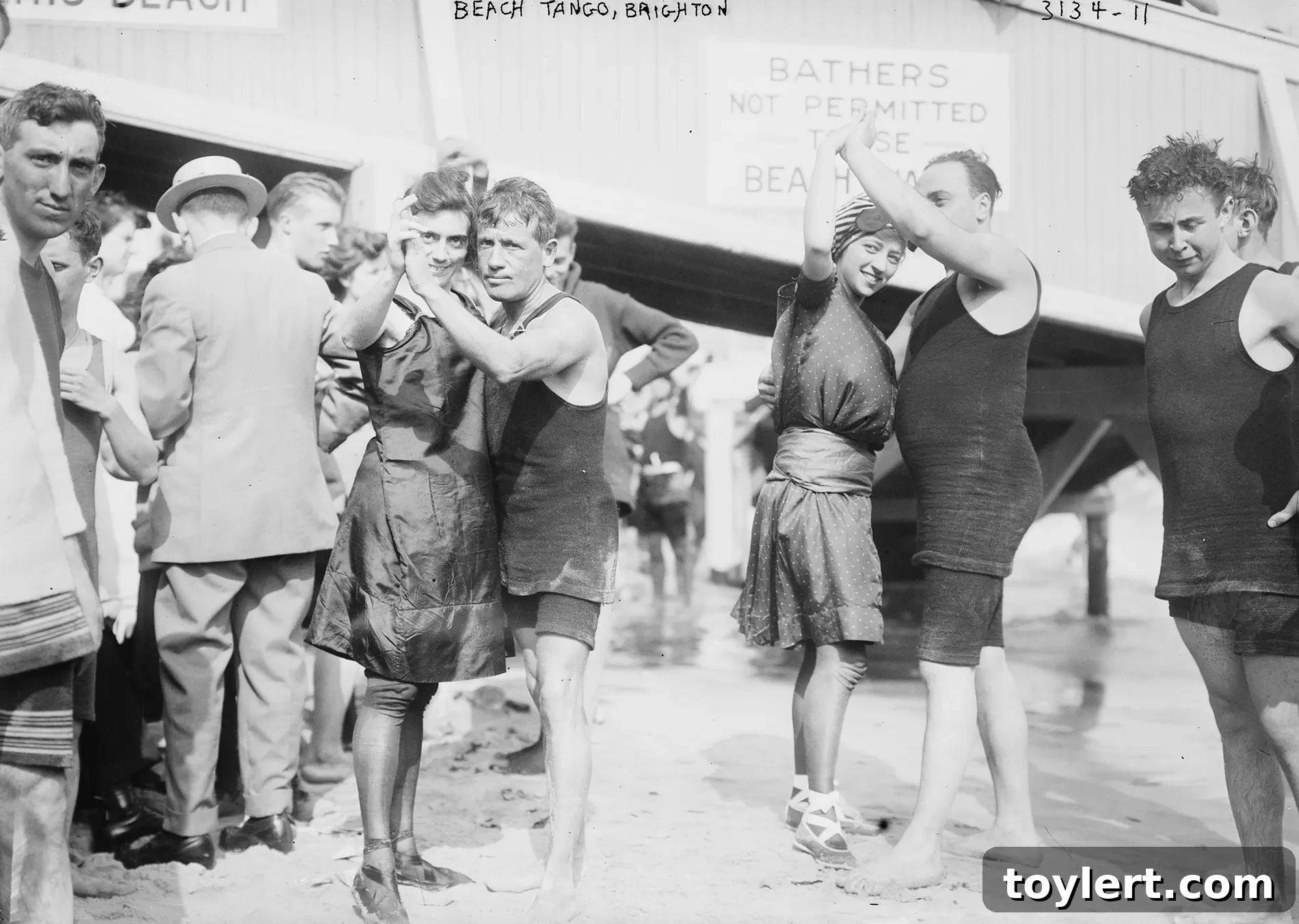
As the days grow longer and the promise of summer beckons, many of us find our thoughts drifting to sun-drenched beaches and the soothing rhythm of ocean waves. Long before today’s bustling crowds and modern beach attire, Brighton Beach in Brooklyn served as a vibrant escape, a place where city dwellers could shed their worries and embrace the joyous spirit of seaside recreation. Imagine a time when the latest dance craze swept across the nation, finding its way even to the sandy shores of New York City. These captivating historical photographs offer us a unique window into such an era, showcasing bathers at Brighton Beach wholeheartedly engaging in the spirited tango, a dance that was both celebrated and condemned in the early 20th century.
Brighton Beach, nestled on the southern coast of Brooklyn, emerged in the late 19th century as a premier resort destination, a glittering jewel in the crown of Coney Island’s recreational district. Named after the fashionable English seaside town of Brighton, it was meticulously designed to attract an affluent clientele. With its grand hotels, elegant pavilions, and pristine boardwalks, Brighton Beach offered a more refined atmosphere compared to the boisterous spectacle of neighboring Coney Island. Yet, like its famous sibling, it was a place where people came to see and be seen, to escape the summer heat, and to partake in the burgeoning leisure culture of the Gilded Age and the Progressive Era. The irresistible allure of the ocean, combined with a plethora of entertainment options, made it an essential magnet for New Yorkers seeking respite and revelry from urban life.
The Rise of the Tango: A Dance That Shocked and Thrilled Early 20th Century Society
The photographs, notably titled “Beach Tango, Brighton,” were captured between 1910 and 1915, a pivotal period when the Argentine tango was taking the world by storm. Originating in the working-class districts of Buenos Aires, the tango was born from a fusion of European and African influences, characterized by its close embrace, improvisational nature, and passionate, often melancholic, melodies. It rapidly traveled across the Atlantic, first captivating audiences in sophisticated salons of Paris and London, before making its dramatic entrance onto the American social scene. Its arrival in the United States ignited a fervent dance craze, but simultaneously sparked considerable controversy and moral debate.
What made the tango so sensational, and to some, so scandalous? Unlike the more formal and restrained ballroom dances that preceded it, the tango’s intimate holds, suggestive movements, and improvisational flair were considered overtly sensual and “risqué” by the moral custodians of the era. American society at the turn of the century was grappling with rapidly changing norms, and the tango became a flashpoint for discussions about public morality, proper conduct, and the perceived breakdown of traditional values. Churches condemned it from the pulpit, conservative dance instructors struggled to adapt to its untamed spirit, and newspaper editorials vehemently debated its appropriateness in polite society, often questioning its origins and its potential influence on youth.
Brooklyn’s Reaction to the Tango: Morality, Health, and Changing Social Mores
Brooklyn, a borough known for its diverse communities and strong opinions, was no stranger to the tango’s polarizing effect. Local newspapers like the venerable Daily Eagle chronicled the unfolding drama, meticulously reflecting the prevailing sentiments and anxieties of the time. Headlines from the era paint a vivid picture of the public discourse, showcasing the varied reactions to this revolutionary dance. We find alarming pronouncements such as “Brooklyn M.D.s Shake Their Heads and Say Shaking the Tango Is No Help to the Health,” suggesting that medical professionals were weighing in on the dance’s supposed detrimental effects on physical well-being – a common tactic used to discredit anything deemed morally objectionable by the establishment. Conversely, other articles, like “Tango Not Vulgar to Parisian Eyes,” highlighted the distinct cultural divide and the differing standards of morality and social acceptance between European capitals and American cities, particularly New York.
These contrasting views underscore the profound societal tension surrounding the tango. While some saw it as an indecent import threatening the moral fabric of American life, others enthusiastically embraced it as an exhilarating expression of modernity, passion, and personal freedom. For many young people, especially those seeking to break away from Victorian prudishness, the tango represented a defiant departure from strict social etiquette. It offered an opportunity to engage in a more physically expressive and emotionally charged form of social interaction, fostering a powerful connection between partners that was both its greatest appeal and its most significant source of controversy. The tango challenged boundaries, encouraging self-expression and spontaneity in an era often defined by rigid decorum.
Brighton Beach: A Dynamic Stage for Social Transformation and Leisure
The sight of bathers tangoing on Brighton Beach is particularly poignant and symbolically rich. Beaches and seaside resorts have historically served as unique spaces where social conventions are often slightly relaxed. The invigorating sea breeze, the pervasive holiday atmosphere, and the liberating feeling of being away from the strictures of daily urban life often encouraged a more carefree and experimental attitude. Here, amidst the abundant sun and the soft sand, individuals could momentarily shed their inhibitions and wholeheartedly participate in the latest cultural phenomena, even if those phenomena were deemed controversial or risqué in more formal settings.
These historical photographs vividly capture a moment of fascinating cultural fusion: the traditional American beach outing combined with a revolutionary new dance from Argentina. The bathers, dressed in the swimwear of the period – often woolen and more modest by today’s standards, yet still a clear departure from everyday street clothes – are depicted in various stages of movement, their postures reflecting the characteristic intensity, elegance, and dynamic shifts of the tango. The expressions on their faces, though perhaps softened by the grainy quality of early photography, suggest palpable joy, intense concentration, and perhaps a touch of playful defiance against prevailing social norms. It’s a testament to the irresistible allure and infectious energy of the dance that people would engage in it even on the relatively challenging surface of the sand, an environment not typically conducive to complex footwork or graceful glides.
Beyond the Dance: A Comprehensive Snapshot of Early 20th Century Brooklyn Life
These images are far more than just a simple record of a fleeting dance craze; they are a precious and invaluable window into the daily lives, evolving leisure activities, and complex social fabric of early 20th century Brooklyn. They show us how people in vibrant metropolitan areas like New York City found innovative ways to enjoy themselves, to connect with others, and to enthusiastically participate in both national and international cultural trends. The widespread popularity of the tango on the beach underscores a broader, significant shift occurring in American society – a gradual move towards greater social freedom, a subtle loosening of moral codes, and an increasing appreciation for forms of entertainment that were lively, engaging, and physically expressive.
The early 1910s were a fascinating time of profound transition, standing squarely on the cusp of the transformative Roaring Twenties. The industrial revolution had brought unprecedented prosperity to many segments of society, leading to more accessible leisure time and increased disposable income. Simultaneously, emerging technologies like photography were rapidly evolving, making it possible to capture these fleeting, candid moments for posterity with greater ease and clarity. These particular photos, meticulously preserved by esteemed institutions like the Library of Congress, allow modern viewers to connect with the past on a deeply human level, seeing the timeless echoes of our own desires for fun, authentic connection, and profound self-expression. They offer a tangible link to a past generation’s pursuit of happiness and defiance of convention.
The Enduring Legacy of Brighton Beach and the Tango
Today, Brighton Beach continues to be a remarkably vibrant and culturally rich neighborhood, often affectionately referred to as “Little Odessa” due to its significant Eastern European population and distinctive cultural flavor. While the tango may no longer be the dominant dance performed spontaneously on its shores, the enduring spirit of community, recreation, and lively cultural exchange remains palpable. The grand hotels of yesteryear may have given way to more modern apartment buildings and storefronts, and the fashions have certainly undergone radical transformations, but the fundamental appeal of the beach as a cherished place of respite, celebration, and gathering endures across generations.
The tango itself has also evolved considerably over the past century. Once considered a scandalous novelty that challenged societal norms, it is now revered worldwide as a sophisticated and elegant art form, a recognized and celebrated part of global cultural heritage, and still danced with immense passion and precision by enthusiasts worldwide. These priceless historical photographs from Brighton Beach serve as a powerful and vivid reminder of the tango’s incredible journey, illustrating a pivotal moment when the dance was a bold statement, actively challenging social conventions and inviting people to move with a newfound, exhilarating freedom. They remind us that culture is a dynamic, fluid entity, constantly shaped and reshaped by local influences and global trends, and that even a seemingly simple dance on the beach can tell a complex, rich story of profound societal change, personal liberation, and enduring human joy.
As we eagerly anticipate our own summer beach days, these evocative images from Brighton Beach provide a wonderfully nostalgic, yet deeply insightful, look back at a pivotal time in history. They invite us to appreciate the enduring human desire for connection, for rhythmic movement, and for the simple, timeless pleasure of a day by the sea, infused with the rebellious charm and captivating energy of a dance that dared to be wonderfully different and forever changed the landscape of social dancing.