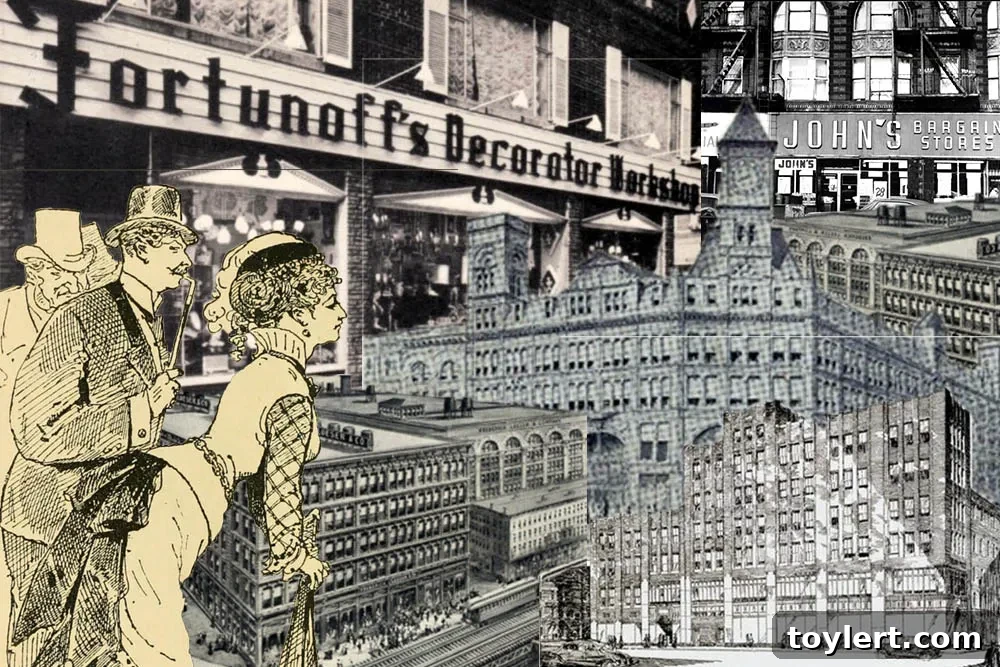
The Golden Age of Brooklyn Retail: How Victorian Innovation Shaped Christmas Shopping
The late Victorian era, spanning the latter half of the 19th century, undeniably laid the foundation for the commercialization of Christmas as we know it today. This transformative period ushered in an unprecedented era of affluence, particularly in burgeoning American cities like Brooklyn. With newfound disposable income and an astounding array of machine-made goods pouring out of increasingly efficient factories, society began to embrace a culture of consumption. Christmas, once primarily a religious observation, swiftly evolved into a grand spectacle of gift-giving and festive shopping, transforming city centers into dazzling retail havens.
A Glimpse into Brooklyn’s Vibrant Past: The Birth of Commercial Christmas
Brooklyn, a bustling borough with a rapidly growing population, found itself at the epicenter of this retail revolution. Its vibrant streets, already teeming with life and commerce, became the stage for a dramatic shift in holiday traditions. The sheer volume of factory-produced items meant that goods were more accessible and varied than ever before. From intricate toys and elegant clothing to household novelties and decorative items, there was something for every member of the family, fueling a burgeoning desire for material expressions of holiday cheer.
The Victorian Era: A Catalyst for Consumerism
The economic prosperity of the late 1800s was a critical factor. Industrialization had created a burgeoning middle class, many of whom had more leisure time and, crucially, more money to spend on non-essentials. This rise in discretionary income coincided perfectly with advancements in manufacturing, which made goods cheaper and more readily available. The concept of “shopping for pleasure” began to take root, especially during the festive season. Christmas, with its inherent themes of generosity and celebration, proved to be the ideal canvas for this burgeoning consumer culture, transforming into an annual economic engine.
Brooklyn’s Grand Emporiums: Pioneers of Retail Splendor
At the heart of Brooklyn’s retail boom were its magnificent department stores. These were not merely places to purchase goods; they were grand social hubs, architectural marvels, and destinations in themselves. Stores like Abraham & Straus on Fulton Street, Frederick Loeser & Co., and A. I. Namm & Son became legendary, shaping the shopping experience for generations of Brooklynites. They pioneered many of the retail practices we still see today, from elaborate window displays to vast selections under a single roof, offering a sense of luxury and convenience that captivated shoppers.
Iconic Department Stores: Abraham & Straus and Beyond
Abraham & Straus, often simply called A&S, stood as a towering symbol of Brooklyn’s retail prowess. Its flagship store was a multi-story edifice that occupied an entire city block, offering everything from apparel and home furnishings to exotic perfumes and children’s toys. During the Christmas season, A&S, along with its competitors, would transform into veritable winter wonderland, drawing crowds with dazzling lights, festive decorations, and the promise of endless gift possibilities. These stores understood the magic of the holiday, leveraging it to create an immersive shopping experience that went far beyond mere transactions.
The Art of the Display: Window Dressing and the Magic of the Season
A crucial element of this retail spectacle was the art of window dressing. Department store windows became elaborate theatrical stages, telling stories and showcasing the finest merchandise in stunning, often whimsical, arrangements. During Christmas, these displays reached their zenith, featuring animated figures, sparkling lights, and enchanting scenes that captivated both children and adults. Strolling down Fulton Street to admire the holiday windows became a cherished tradition, a free form of entertainment that enticed shoppers inside, eager to capture some of that displayed magic for their own homes and loved ones.
The Brooklyn Eagle: Shaping Desires Through Print
No discussion of Brooklyn’s late 19th-century retail scene would be complete without acknowledging the profound influence of the Brooklyn Eagle. As one of the most widely read newspapers of its time, the Eagle played an instrumental role in cultivating and celebrating this consumer excess. It didn’t just report the news; it actively engaged with the commercial pulse of the city, publishing glowing reviews of merchandise found in stores across Brooklyn and running thousands upon thousands of advertisements.
From Local News to Retail Reviews: A Powerful Influence
The Brooklyn Eagle’s pages were a testament to the era’s booming economy and consumer culture. Its writers would pen vivid descriptions of new arrivals, highlight holiday specials, and even offer gift-giving suggestions, effectively acting as a powerful tastemaker and shopping guide for its readership. This symbiotic relationship between the press and retail establishments was mutually beneficial. Stores gained unparalleled exposure, while the newspaper offered content that resonated deeply with its increasingly affluent and consumer-minded audience. For the Eagle, no time of the year was more significant for commerce than Christmas, and its coverage reflected this, with special holiday sections dedicated entirely to inspiring festive purchases.
Beyond the Merchandise: The Social Impact of Shopping
The rise of these grand stores and the commercialization of Christmas had a profound social impact. Shopping became a leisure activity, a way to socialize and partake in the burgeoning urban culture. For many, a trip to the department store, especially during the holidays, was an event in itself, offering a glimpse into a world of elegance and aspiration. This shift also provided new employment opportunities, particularly for women, who found roles as sales clerks, models, and window dressers, contributing to the evolving social fabric of the city.
The Rise of a Middle Class and Disposable Income
As Brooklyn grew, so did its middle class. Factory owners, skilled laborers, and professionals enjoyed a standard of living that allowed for more than just necessities. This segment of society eagerly embraced the opportunity to participate in the new culture of gift-giving, seeing it as a way to express affection, status, and generosity. The department stores catered directly to this demographic, offering a wide range of products at various price points, making the dream of a “Victorian Christmas” accessible to many.
Christmas as a Cultural Phenomenon: Gifts, Traditions, and Spectacle
The transformation of Christmas was not just about buying and selling; it was about the birth of new traditions. The image of Santa Claus was solidified, often depicted as a jolly figure delivering toys, intertwining the mythical with the commercial. Caroling, festive meals, and elaborate home decorations all gained prominence, becoming integral parts of a season increasingly defined by both spiritual reflection and material abundance. Brooklynites enthusiastically adopted these traditions, making the holiday season a truly magical and memorable time for families and communities alike.
Technological Marvels and Mass Production: Fueling the Boom
Underlying this entire phenomenon were the incredible advancements in industrial technology. The late 19th century witnessed an explosion of innovation in manufacturing processes, making it possible to produce goods at an unprecedented scale and speed. From textiles and glassware to toys and trinkets, factories churned out a continuous stream of products. This mass production drastically lowered costs, making previously luxurious items affordable for a broader segment of the population. Without these industrial capabilities, the vision of a “commercial Christmas” simply could not have been realized, as the sheer volume and variety of goods would have been unattainable.
The Enduring Legacy: How Victorian Brooklyn Still Shapes Our Holidays
The impact of this era resonates deeply even today. Many of our modern Christmas traditions, from elaborate window displays to the expectation of gift exchanges, have their roots firmly planted in the late Victorian period. Brooklyn’s pioneering department stores and the influential Brooklyn Eagle were instrumental in establishing the rituals of holiday shopping that continue to define the season. The streets that once bustled with horse-drawn carriages delivering new goods and eager shoppers are now traversed by modern vehicles, but the spirit of festive commerce, ignited over a century ago, remains very much alive.
Conclusion: Celebrating Brooklyn’s Retail Heritage
The story of Brooklyn’s retail history in the late 1800s is more than just a tale of stores and sales; it’s a narrative about cultural transformation, economic evolution, and the birth of a holiday tradition. The commercialization of Christmas, driven by an affluent society, the availability of machine-made goods, and the powerful voice of the Brooklyn Eagle, created a legacy that continues to shape our festive seasons. Brooklyn’s grand department stores weren’t just buildings; they were institutions that etched themselves into the city’s history, forever changing how we celebrate the most wonderful time of the year. Their innovative spirit and dedication to creating an enchanting shopping experience paved the way for the vibrant retail culture that thrives across the globe today.