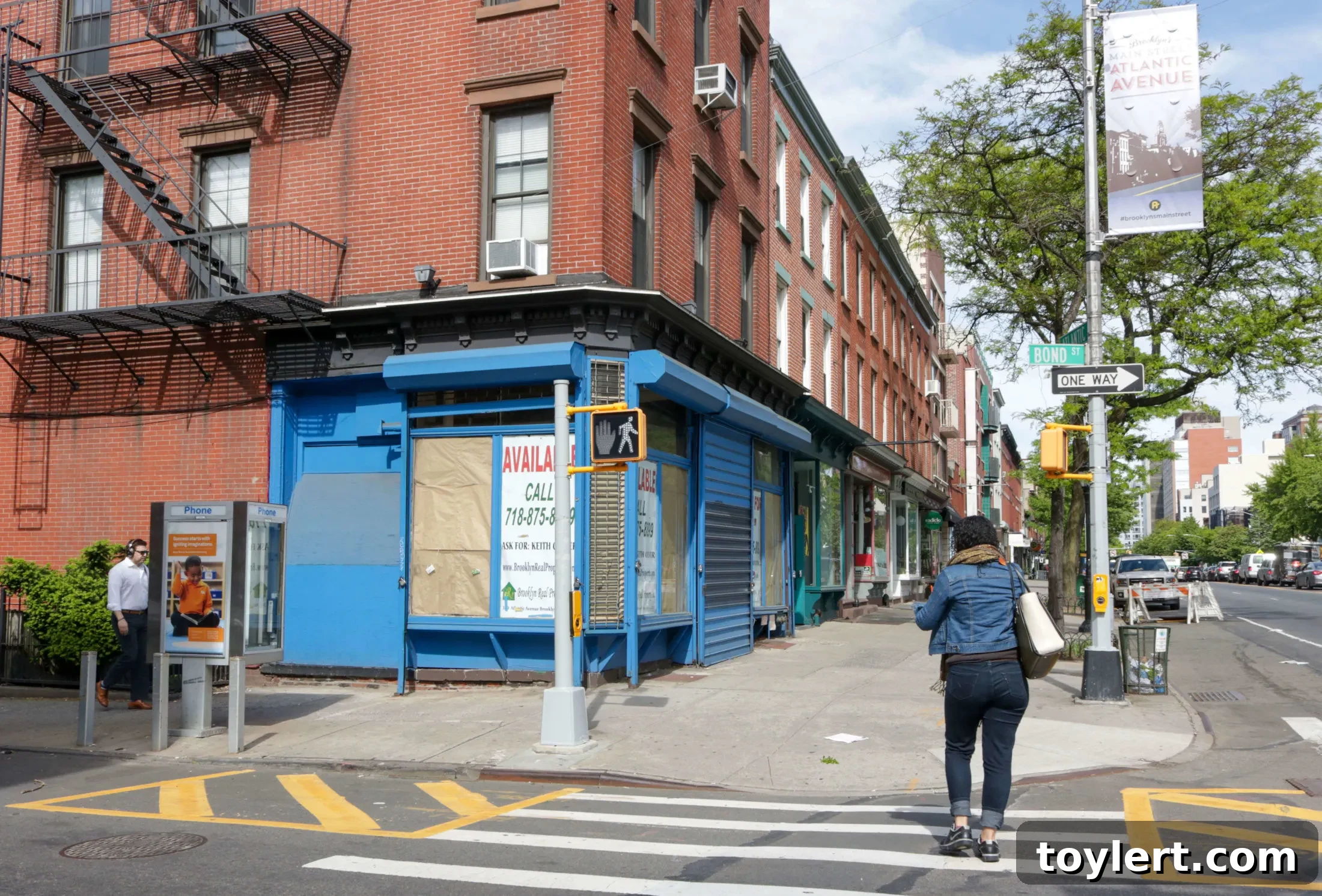
Boerum Hill Historic District Extension Ignites Debate: Small Businesses Raise Concerns on Atlantic Avenue
The proposed expansion of the Boerum Hill Historic District in Brooklyn has become a focal point of intense discussion, highlighting the complex challenge of reconciling historic preservation goals with the economic realities faced by local businesses. At the heart of this unfolding debate are the independent shop owners and property proprietors along a prominent section of Atlantic Avenue, a vibrant commercial corridor that stands to be included in the expanded district. These stakeholders express significant apprehension that the stringent regulations accompanying landmark designation could inadvertently undermine their operations and fundamentally alter the unique character of their cherished neighborhood.
The tensions surrounding the extension proposal recently came to a head at a public hearing convened by the Landmarks Preservation Commission (LPC). During the proceedings, six owners of historic commercial properties situated on Atlantic Avenue delivered compelling testimonies, collectively articulating their opposition to the inclusion of their buildings within the district’s new boundaries. Their statements underscored a pervasive fear of the potential financial burdens and operational constraints that such a designation could impose, presenting formidable obstacles for small-time merchants and property owners alike.
The Economic Crossroads: Small Businesses vs. Preservation Mandates
A central theme emerging from the testimonies was the perceived threat to the economic viability of small, independent businesses. Maureen Lynch, a property owner at 382 Atlantic Avenue, powerfully articulated this concern. During her address, Lynch stated, “Landmarking designation restrictions will severely impact potential small merchant tenants. We fear that as small-time landlord owners we will be forced for economic reasons to accept chain store tenants who have the deep-pocket resources to deal with landmark restrictions.” This sentiment encapsulates a critical paradox: an initiative ostensibly designed to protect local character and heritage could, by its very nature, precipitate the displacement of the distinct local businesses that contribute significantly to that character.
The anxieties voiced by Lynch and her fellow property owners are rooted in the tangible implications of historic district regulations. Such designations typically impose rigorous controls over exterior modifications, often necessitating the use of specific materials, adherence to particular architectural styles, and a frequently protracted and expensive approval process for even routine maintenance or minor renovations. While these stipulations are undeniably crucial for maintaining historical authenticity and aesthetic coherence, they invariably translate into elevated costs for both property owners and their commercial tenants.
Navigating Landmark Restrictions: A Burden on Local Commerce
For small business operators, the task of navigating the bureaucratic labyrinth and financial demands associated with landmark regulations can be daunting. A seemingly straightforward façade repair, for instance, might mandate the procurement of specific, period-appropriate materials that are considerably more costly than modern, readily available alternatives. Similarly, a crucial sign change, essential for marketing and branding, could necessitate an extensive and time-consuming approval process with the LPC, diverting invaluable resources and attention from day-to-day operations. These regulatory hurdles tend to disproportionately affect independent businesses, which often operate on tighter profit margins and lack the extensive legal and financial infrastructures enjoyed by larger corporate entities.
In stark contrast, large chain stores frequently possess the substantial capital, specialized legal teams, and organizational frameworks required to absorb these additional expenses and efficiently manage complex regulatory procedures. Their corporate designs may already align with certain aesthetic criteria, or they have the financial capacity to adapt. The profound concern articulated by the Atlantic Avenue property owners is that if the operational and financial demands within a landmarked district become too onerous for small businesses, property owners may find themselves compelled to seek tenants with greater financial muscle, thereby inadvertently clearing the path for corporate chains to supplant the unique, local establishments that define the neighborhood.
Boerum Hill: A Legacy of Charm and History
Boerum Hill, one of Brooklyn’s most picturesque and historically rich neighborhoods, is celebrated for its enchanting tree-lined streets, elegant brownstone townhouses, and a dynamic blend of residential and commercial vitality. Its distinctive ambiance is a harmonious fusion of 19th-century architecture and a contemporary, community-centric ethos. The existing Boerum Hill Historic District already plays a vital role in safeguarding a substantial portion of this architectural legacy, ensuring that all new development and modifications adhere to stringent guidelines designed to preserve its historical integrity and aesthetic appeal.
The core mission of the Landmarks Preservation Commission is to identify, protect, and preserve New York City’s architecturally, historically, and culturally significant buildings and sites. When the LPC proposes an extension to an existing historic district, it typically aims to incorporate contiguous areas that share similar architectural styles, historical significance, or contribute synergistically to the overarching character of the district. The underlying rationale is often to forge a more comprehensive and cohesive preservation strategy, thereby protecting larger segments of the city’s unique built environment from insensitive development or irreversible alterations.
The LPC’s Rationale for Extending to Atlantic Avenue
From the perspective of dedicated preservationists and the LPC, extending the Boerum Hill Historic District to encompass parts of Atlantic Avenue represents a logical and necessary step. This particular stretch of Atlantic Avenue is home to a notable collection of historically significant structures, many of which date back to the 19th and early 20th centuries. These buildings undeniably contribute to the streetscape’s distinctive aesthetic and historical narrative. Proponents of the extension argue that such a designation would offer crucial protection against demolition, prevent unsympathetic alterations, and ensure that future development harmonizes with the existing historic fabric of the neighborhood. Furthermore, they contend that landmark status can, over the long term, enhance property values and contribute to the area’s desirability, attracting both residents and tourists who appreciate its unique historic charm.
The Broader Preservation vs. Economic Development Dilemma
The conflict currently unfolding in Boerum Hill is emblematic of a much broader and perennial debate that resonates in urban centers worldwide: how to effectively balance the imperative to preserve invaluable historical and architectural heritage with the undeniable need for economic dynamism and adaptive reuse. On one side of this complex equation are those who prioritize the rigorous protection of irreplaceable historical assets, viewing them as fundamental to a city’s identity, cultural richness, and sense of place. They argue that the enduring benefits of preservation, including its contributions to cultural tourism and the stability of property values, ultimately outweigh any short-term inconveniences or financial adjustments.
Conversely, property owners, developers, and certain business advocacy groups emphasize the significant economic costs and regulatory burdens that can accompany strict preservation mandates. They assert that overly restrictive landmarking policies can stifle economic growth, deter crucial investment, and impede a neighborhood’s natural evolution and adaptation to contemporary needs. These voices also raise concerns about what they term “museumification,” where areas become static and lose their organic, vibrant character due to excessive and inflexible regulation, potentially transforming living neighborhoods into mere historical exhibits.
Seeking Equilibrium: Potential Solutions and Collaborative Pathways
Effectively addressing the legitimate concerns of small businesses while steadfastly upholding vital preservation objectives demands creative solutions and a genuine willingness for all involved stakeholders to engage in constructive compromise. One potential pathway involves the implementation of targeted grant programs, specifically designed to assist owners of landmarked commercial properties in offsetting the increased costs associated with historically appropriate renovations and maintenance. Additionally, streamlining the approval processes for minor, visually non-impactful changes could significantly alleviate the bureaucratic burden on property owners and tenants.
Furthermore, robust educational initiatives could be launched to help property owners gain a clearer understanding of the long-term benefits inherent in landmark designation and to more effectively navigate the often-complex LPC application and approval processes. Considering specific guidelines tailored to commercial facades, allowing for necessary flexibility in elements like signage and storefront design while rigorously maintaining overall historical integrity, might also be a viable approach. The overarching goal must be to cultivate an environment where historic preservation and vibrant commerce can not only coexist but actively thrive, rather than being perceived as inherently mutually exclusive endeavors.
The Future Trajectory of Atlantic Avenue and Boerum Hill
The recent public hearing concerning the Boerum Hill Historic District extension marks a pivotal moment in the ongoing decision-making process. The impassioned testimonies and deeply felt concerns articulated by the Atlantic Avenue shop owners will undoubtedly undergo careful and thorough consideration by the Landmarks Preservation Commission. Their ultimate decision will not only profoundly shape the future architectural landscape of this distinctive part of Brooklyn but will also exert a significant and lasting impact on the intricate economic ecosystem of a beloved and historic commercial thoroughfare.
The eventual outcome will serve as an important precedent for how New York City, and indeed other major urban centers, navigates the delicate balance between its profound commitment to preserving its rich historical narrative and the equally imperative need to foster and support its diverse and invaluable tapestry of small businesses. As this crucial debate continues to unfold, the community of Boerum Hill, alongside urban planners, preservationists, and economic developers globally, will be keenly observing to discern how this intricate balance is ultimately achieved, ensuring that Atlantic Avenue can remain both a dynamic artery of commerce and a proud custodian of its unique historical legacy.