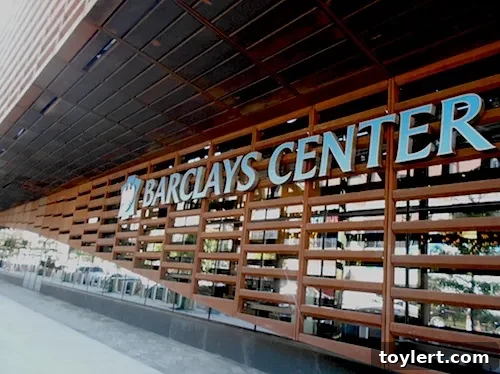
Barclays Center’s Persistent Noise Challenge: A Community’s Quest for Quiet
The vibrant pulse of Brooklyn often collides with the serene expectations of its residents, particularly when large-scale entertainment venues are nestled within bustling neighborhoods. The Barclays Center, an iconic fixture in downtown Brooklyn, has brought unparalleled cultural and sporting events to the borough since its opening. However, its presence has also sparked an ongoing dialogue about noise pollution and its profound impact on the surrounding community. This article delves into the persistent challenges faced by residents due to excessive noise emanating from the arena, examining specific incidents, regulatory battles, and the community’s tireless efforts to restore peace and quiet.
The Sensation Incident: A Resounding Wake-Up Call for Brooklyn Residents
On October 27th, during a high-energy “Sensation” dance and techno-music show at the Barclays Center, the reverberations extended far beyond the arena’s walls. This particular event, featuring a collective of Dutch DJs renowned for their booming soundscapes, became a flashpoint for long-simmering community frustrations. Residents of the Newswalk condos, situated more than a block away from the arena, reported an unbearable assault on their senses. The intensity of the sound was such that it penetrated multiple layers of urban infrastructure, reaching apartments that should have been shielded from the venue’s decibel output.
A city Department of Environmental Protection (DEP) inspector, dispatched to investigate the deluge of complaints, confirmed the severity of the disturbance. Inside a Newswalk apartment, the sound level was measured at a staggering 74 decibels. To put this into perspective, the legal limit for noise inside residential units in New York City is 62 decibels. This reading of 74 dB represents a significant violation, indicating a sound level almost double the perceived loudness of the legal threshold—every 10 dB increase represents a tenfold increase in sound intensity, making the difference between 62 and 74 dB remarkably significant. The constant thumping bass and pulsating rhythms were not merely audible; they were palpable. One Newswalk resident vividly recounted their experience to the New York Post, stating, “It was so loud that night that I had my headphones on watching TV — and I could still feel the vibration and hear the noise from the show.” This personal testimony underscores the invasive nature of the noise, moving beyond mere auditory perception to a physical sensation that disrupts even attempts at mitigation.
Navigating Regulatory Hurdles: Fines, Dismissals, and Reissued Summons
Following the Sensation show, Forest City Ratner, the original developer and operator of the Barclays Center, was issued a $3,200 fine for the noise violation. However, this initial step towards accountability was met with a bureaucratic twist. The summons was subsequently dismissed on a technicality: it had been issued to the parent company instead of the specific subsidiary responsible for managing the arena’s day-to-day operations. This administrative hiccup, while seemingly minor, served as a frustrating delay for residents seeking swift resolution and justice. A new ticket was promptly issued to the correct entity, and a hearing was scheduled, pushing the resolution process further into the future. This incident highlighted the complexities of noise regulation enforcement, particularly when dealing with large corporate entities and intricate ownership structures.
The community’s fight against noise pollution from the Barclays Center is not just about isolated incidents; it’s about establishing consistent enforcement and clear accountability. The saga of the Sensation show fine became a symbol of the challenges residents face in getting their concerns addressed effectively and efficiently. It underscored the need for meticulous procedural adherence from city agencies and a transparent system for venue operators to be held responsible for their impact on surrounding residential areas. The scheduled hearing represents a critical juncture for both the community and the arena, offering an opportunity to reaffirm the importance of adhering to municipal noise ordinances and ensuring the quality of life for Brooklyn residents.
Inconsistent Monitoring: A Question of Fairness and Effectiveness
The Sensation incident also brought to light a deeper, more troubling issue regarding the city’s noise monitoring protocols. While the DEP found clear violations during the Sensation concert, they reported no such issues during the high-profile Jay-Z and Justin Bieber shows. This discrepancy immediately raised questions among residents, who suspected a flaw in the testing methodology. Their suspicions were validated by the same Newswalk resident who experienced the Sensation show’s vibrations. They claimed that the city had tested the noise levels for both the Jay-Z and Justin Bieber concerts when no one was performing on stage, thereby missing the actual periods of peak sound output and potential violations.
This alleged practice of conducting noise tests during quiescent periods severely undermines the credibility and effectiveness of the monitoring process. For residents experiencing real-time disturbances, such testing methods feel disingenuous and neglectful. Effective noise regulation relies on accurate data collected during representative conditions. If tests are consistently conducted when venues are quiet, it creates a loophole that allows excessive noise during actual events to go unrecorded and unpunished. This perceived lack of rigorous, on-site monitoring during peak performance times erodes public trust and fuels the residents’ belief that their complaints are not being taken seriously or addressed with the necessary investigative diligence.
The Broader Impact: Mapping the Soundscape of Discontent
The Sensation incident is not an isolated event but rather a particularly egregious example within a larger pattern of noise complaints surrounding the Barclays Center. Community advocacy groups, most notably Atlantic Yards Watch, have diligently documented and mapped the pervasive nature of this issue. Their compiled map of noise complaints paints a stark picture: grievances stretch a block or more in nearly every direction from the arena, illustrating the widespread disruption experienced by a significant portion of the residential community. These complaints detail everything from continuous bass thumping that vibrates through walls and floors to piercing high-frequency sounds that infiltrate homes, disturbing sleep, work, and general well-being.
The Atlantic Yards Report, another critical voice in community advocacy, has provided comprehensive coverage of noise issues related to the Barclays Center. Their reporting delves into the historical context of these complaints, the various attempts at mitigation, and the ongoing dialogue between residents, arena management, and city officials. This consistent documentation highlights the systemic nature of the problem, indicating that noise pollution is not merely an inconvenience but a significant detriment to the quality of life for thousands of Brooklynites. Understanding the full scope of these complaints, visually represented through maps and detailed reports, is crucial for developing sustainable solutions that balance the economic benefits of a major arena with the residential needs of its neighbors.
Beyond Annoyance: The Health Implications of Chronic Noise Pollution
While often dismissed as mere “annoyance,” chronic exposure to excessive noise has serious implications for public health. The persistent thumping bass and high decibel levels reported by residents living near the Barclays Center contribute to a phenomenon known as noise pollution, a growing concern in densely populated urban environments. Research has linked chronic noise exposure to a range of health problems, including sleep disturbances, which can lead to fatigue, impaired cognitive function, and an increased risk of accidents. Beyond sleep, prolonged noise can elevate stress hormones, contributing to higher blood pressure, cardiovascular disease, and mental health issues such as anxiety and depression.
For residents, especially those directly impacted by the arena’s loudest events, the issue transcends simple discomfort. It becomes a matter of fundamental well-being and the ability to find respite within their own homes. The feeling of physical vibration, as described by the Newswalk resident, indicates an extremely high level of sound energy that can penetrate building structures, making traditional mitigation methods like closing windows largely ineffective. Recognizing noise pollution as a public health concern elevates the urgency of finding effective solutions and reinforces the community’s demand for stronger regulatory oversight and proactive mitigation strategies from the arena’s management.
Seeking Solutions: A Path Towards Harmony
The ongoing noise challenge at the Barclays Center underscores the critical need for a balanced approach that respects both the economic vibrancy of a major entertainment venue and the residential quality of life. Achieving harmony between these often-conflicting interests requires a multi-faceted strategy involving robust regulatory enforcement, advanced acoustical engineering, and continuous community engagement.
Technological and Operational Solutions
- Enhanced Soundproofing: While the arena likely has existing sound dampening, the persistent complaints suggest that current measures are insufficient for certain types of events or sound frequencies. Investing in state-of-the-art acoustical barriers, sound-absorbing materials, and advanced vibrational dampeners could significantly reduce external noise leakage.
- Internal Sound Management: Arena management could implement stricter internal sound monitoring protocols, adjusting sound levels in real-time to comply with external decibel limits, particularly for events known to generate higher bass frequencies. This might include dedicated sound engineers whose primary role is external noise mitigation.
- Curfews and Event Scheduling: For particularly loud events, establishing earlier curfews or scheduling them on specific days could minimize disruption during peak residential quiet hours.
- Improved Testing Protocols: The city’s DEP must implement more stringent and transparent noise testing procedures. This includes conducting tests during the loudest parts of concerts, without prior notice, and in multiple affected residential locations to ensure accurate data collection and build trust with the community.
Community Engagement and Accountability
- Open Dialogue: Establishing regular, structured forums for dialogue between arena management, community leaders, and residents can foster understanding and collaborative problem-solving. This includes sharing event schedules and anticipated sound profiles.
- Rapid Response Systems: A clear and efficient channel for residents to report noise violations in real-time, coupled with a commitment from arena management to investigate and respond swiftly, is crucial for addressing immediate disturbances.
- Financial Penalties and Incentives: Consistent enforcement of noise ordinances, including meaningful fines for violations, serves as a powerful deterrent. Conversely, incentives for venues that consistently demonstrate good neighbor practices could encourage proactive measures.
The Barclays Center, as a prominent community member, has a responsibility to mitigate its negative impacts while continuing to enrich Brooklyn’s cultural landscape. The call from residents is not to silence the arena entirely, but to ensure that its lively events do not come at the expense of their fundamental right to peace and quiet within their homes. Through collaborative effort and a shared commitment to sustainable urban living, a path towards coexistence and mutual respect can be forged.
Conclusion: An Ongoing Battle for Peace in Brooklyn
The noise emanating from the Barclays Center, starkly highlighted by the “Sensation” concert incident, remains a significant challenge for the surrounding Brooklyn community. The journey from a loud concert to a dismissed fine, a reissued ticket, and an ongoing battle over monitoring practices illustrates the complexities inherent in managing a major urban entertainment venue adjacent to residential areas. Residents, empowered by community groups like Atlantic Yards Watch and Atlantic Yards Report, continue to advocate tirelessly for their right to a peaceful home environment, emphasizing that urban development must be balanced with the well-being of its inhabitants. As the scheduled hearing approaches and discussions continue, the imperative for sustainable solutions, transparent enforcement, and a genuine commitment from all stakeholders to address noise pollution becomes ever more clear. The hope is that through these ongoing efforts, the vibrant energy of the Barclays Center can eventually coexist harmoniously with the quiet comfort of its Brooklyn neighbors.