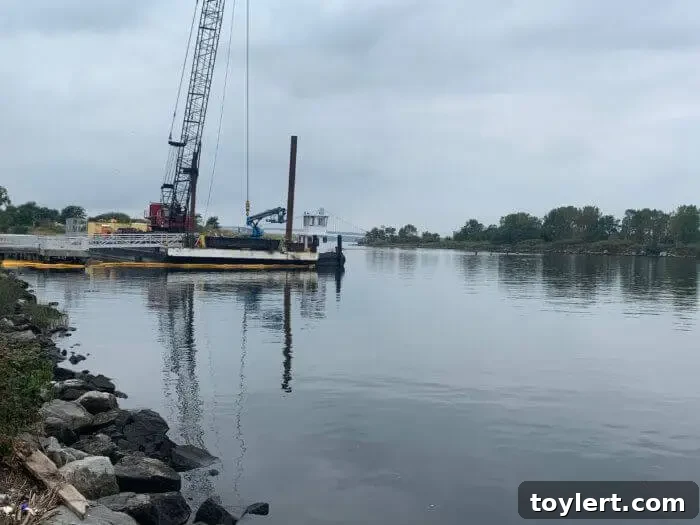
Coney Island Ferry Launch Delayed: Environmental Protections Prioritize Marine Life in Brooklyn Creek Dredging
The highly anticipated launch of the Coney Island ferry service, a pivotal project for Brooklyn’s waterfront connectivity and economic development, has been postponed by one year. Initially slated for an earlier debut, the service is now expected to commence in late 2022. This delay stems directly from a crucial decision by the city’s Economic Development Corporation (EDC), the agency spearheading the project, to halt necessary dredging operations in Coney Island Creek until next summer, ensuring the protection of vulnerable marine species.
In a formal communication dated December 28 to Brooklyn Community Board 13, the EDC clarified the revised timeline. The agency stated that while continued dredging is essential to create adequate pathways for the incoming ferries, work cannot resume until summer 2022. This pause is in adherence to an environmental moratorium, specifically designed to safeguard winter flounder and horseshoe crabs. The moratorium is active annually from January 1 through June 30, underscoring a commitment to ecological preservation.
An EDC spokesperson, in a statement to Brooklyn Paper, emphasized the corporation’s dedication to environmental responsibility: “We continue to work with federal and state regulators to ensure our work is done safely and correctly and does not pose any dangers to the marine environment. To this end, we cannot resume in-water construction on the landing until an NYSDEC moratorium to protect winter flounder and horseshoe crabs is lifted on July 1. With this new timeline, we expect to launch NYC Ferry service in Coney Island in late 2022.” This statement highlights the intricate balance between urban development and ecological stewardship.
A Vision for Enhanced Transportation and Economic Growth
The Coney Island ferry project is part of a broader initiative by NYC Ferry to expand accessible and affordable waterborne transportation across New York City. For Coney Island, a vibrant and historic neighborhood on Brooklyn’s southern tip, the ferry service promises significant benefits. It aims to offer residents a faster, more scenic commute to Manhattan and other boroughs, circumventing often-congested road and subway routes. Beyond daily commuting, the ferry is envisioned as a catalyst for economic growth, drawing tourists and visitors to Coney Island’s iconic boardwalk, amusement parks, and local businesses, thereby boosting the local economy and creating new opportunities.
The strategic expansion of the NYC Ferry network has consistently sought to connect traditionally underserved waterfront communities, providing vital transportation alternatives. The Coney Island route, once operational, will fill a critical gap, making the area more integrated into the city’s extensive transit network and fostering community revitalization. It represents not just a new mode of transport, but a link to new possibilities for residents and visitors alike.
Dredging Coney Island Creek: A Complex Environmental Undertaking
For the Coney Island ferry service to operate safely and efficiently, the waters of Coney Island Creek require significant dredging. Dredging is the process of removing sediment and debris from the bottom of waterways, creating deeper channels that are necessary for large vessels like ferries to navigate without running aground. Coney Island Creek, historically a hub of industrial activity, has accumulated substantial sediment over decades, making parts of it too shallow for regular ferry operations.
This dredging effort is not merely an engineering challenge; it is profoundly intertwined with complex environmental considerations. The creek, despite its industrial past, is a vital part of the local marine ecosystem, serving as a habitat for various species. Therefore, the dredging must be meticulously planned and executed to minimize ecological impact. This involves stringent adherence to environmental regulations set by various federal and state agencies, including the New York State Department of Environmental Conservation (NYSDEC) and often the U.S. Army Corps of Engineers.
Navigating Regulations and Environmental Safeguards
The need for dredging highlights a common challenge in urban infrastructure projects: balancing developmental goals with ecological preservation. Environmental impact assessments are crucial, guiding how and when such work can proceed. These assessments consider factors like water quality, sediment composition, and the presence of sensitive marine life. The goal is always to achieve the necessary navigational improvements while safeguarding the health of the waterway and its inhabitants. The recent delay underscores just how seriously these environmental safeguards are taken by regulatory bodies.
The Moratorium: Protecting Winter Flounder and Horseshoe Crabs
At the heart of the Coney Island ferry delay is a moratorium designed to protect two distinct but equally vital marine species: the winter flounder and the horseshoe crab. These creatures play crucial roles in the ecosystem of Coney Island Creek and the broader New York Harbor, and their life cycles are particularly vulnerable to disturbances from in-water construction and dredging activities during specific times of the year.
The Ecological Significance of Winter Flounder
Winter flounder (Pseudopleuronectes americanus) are a flatfish species native to the Atlantic coast of North America. They are bottom-dwellers, typically found in bays, estuaries, and coastal waters like Coney Island Creek. These fish are significant both ecologically, as a food source for larger marine animals, and commercially, having historically supported a robust fishery. Their reproductive cycle is key to the moratorium: winter flounder typically spawn in late winter and early spring, with eggs settling on the seabed. Disturbances like dredging during this period can directly harm eggs and larvae, jeopardizing the next generation and impacting population numbers. The moratorium protects these critical spawning and early developmental phases.
The Vital Role of Horseshoe Crabs
Horseshoe crabs (Limulus polyphemus) are ancient marine arthropods, often referred to as “living fossils” due to their appearance having changed little over millions of years. They are integral to the marine ecosystem, particularly in coastal areas. Their eggs, laid on sandy beaches during late spring and early summer high tides, are a critical food source for migratory shorebirds, including several endangered species. Beyond their ecological importance, horseshoe crabs hold immense value in biomedical research; their copper-based blue blood contains Limulus Amebocyte Lysate (LAL), which is used globally to test the sterility of vaccines, injectable drugs, and medical devices. Dredging operations can disturb their spawning grounds and migratory paths, making the moratorium essential for their survival and the health of the broader ecosystem that depends on them.
NYSDEC’s Mandate and the January-June Halt
The New York State Department of Environmental Conservation (NYSDEC) imposes environmental moratoria to ensure the health and sustainability of marine populations. The January 1 to June 30 window is specifically chosen to encompass the critical spawning and breeding periods for winter flounder and horseshoe crabs. During this time, any “in-water construction” or significant disturbance like dredging is prohibited to prevent adverse impacts on these sensitive life stages. The EDC’s adherence to this moratorium reflects a responsible approach to development, prioritizing compliance with environmental regulations over project expediency. This pause is a direct testament to the regulatory framework in place to protect New York’s precious natural resources.
Implications of the Delay: A Broader Perspective
The one-year delay for the Coney Island ferry launch, while rooted in sound environmental policy, carries several implications. For the local community, it means a longer wait for a promised transportation upgrade and the associated economic benefits. Commuters in Coney Island, who had anticipated shorter travel times, will continue to rely on existing, often crowded, public transport options for an additional year. Local businesses, particularly those reliant on tourism, might see a deferment in the anticipated boost that a new ferry service would bring, potentially affecting their recovery and growth plans.
From a project management standpoint, delays can lead to increased costs for the Economic Development Corporation and the city. Halting and then restarting large-scale infrastructure projects involves logistical complexities, potential demobilization and remobilization expenses, and adjustments to contractor schedules. Such setbacks often test the resolve and flexibility of project teams, requiring careful planning to mitigate financial and operational impacts.
However, the delay also reinforces a crucial message about environmental stewardship. It demonstrates that even significant infrastructure projects must bend to the dictates of ecological protection. This commitment, while inconvenient in the short term, fosters long-term sustainability and public trust. It sends a clear signal that the health of the marine environment is not merely an afterthought but a foundational consideration in urban planning and development. In an era of increasing awareness about climate change and biodiversity loss, such actions set an important precedent.
The Path Forward: Summer 2022 and Beyond
With the moratorium lifting on July 1, 2022, the EDC is poised to resume dredging activities in Coney Island Creek. This period will be critical for completing the necessary channel deepening and preparing the site for the ferry landing construction. The agency will work diligently to complete the remaining work, aiming to minimize any further delays and keep the project on its revised late 2022 timeline. The focus will be on efficient execution, ensuring that all environmental protocols continue to be observed even as work ramps up.
Following the completion of dredging and the construction of the ferry landing, rigorous operational readiness checks will be conducted. This includes testing the landing infrastructure, ensuring accessibility for all passengers, and integrating the new route into the broader NYC Ferry schedule and system. The anticipation within the Coney Island community for this new mode of transport remains high, and the EDC is committed to delivering a safe, reliable, and environmentally conscious ferry service.
This revised timeline reflects a carefully managed approach, balancing the urgent need for infrastructure development with the imperative of protecting New York’s natural heritage. The lessons learned from this process—the importance of proactive environmental planning, rigorous regulatory adherence, and transparent communication—will undoubtedly inform future urban development projects across the city.
Conclusion: Awaiting a Greener Commute
The delay in the Coney Island ferry launch, while initially disappointing for many, ultimately underscores a profound commitment to environmental protection. By prioritizing the spawning and breeding cycles of winter flounder and horseshoe crabs, the city and the EDC are demonstrating that responsible development can, and must, coexist with ecological preservation. This decision, guided by federal and state regulations, ensures that Brooklyn’s marine ecosystems remain healthy and vibrant for future generations.
As the community looks forward to the late 2022 launch, the Coney Island ferry project serves as a powerful reminder of the delicate balance between progress and stewardship. When the ferries eventually begin navigating Coney Island Creek, they will not only represent a new era of connectivity and economic opportunity but also a triumph of thoughtful planning and environmental responsibility. Residents and visitors alike can anticipate a greener commute, knowing that their journey is supported by a foundation of ecological respect.