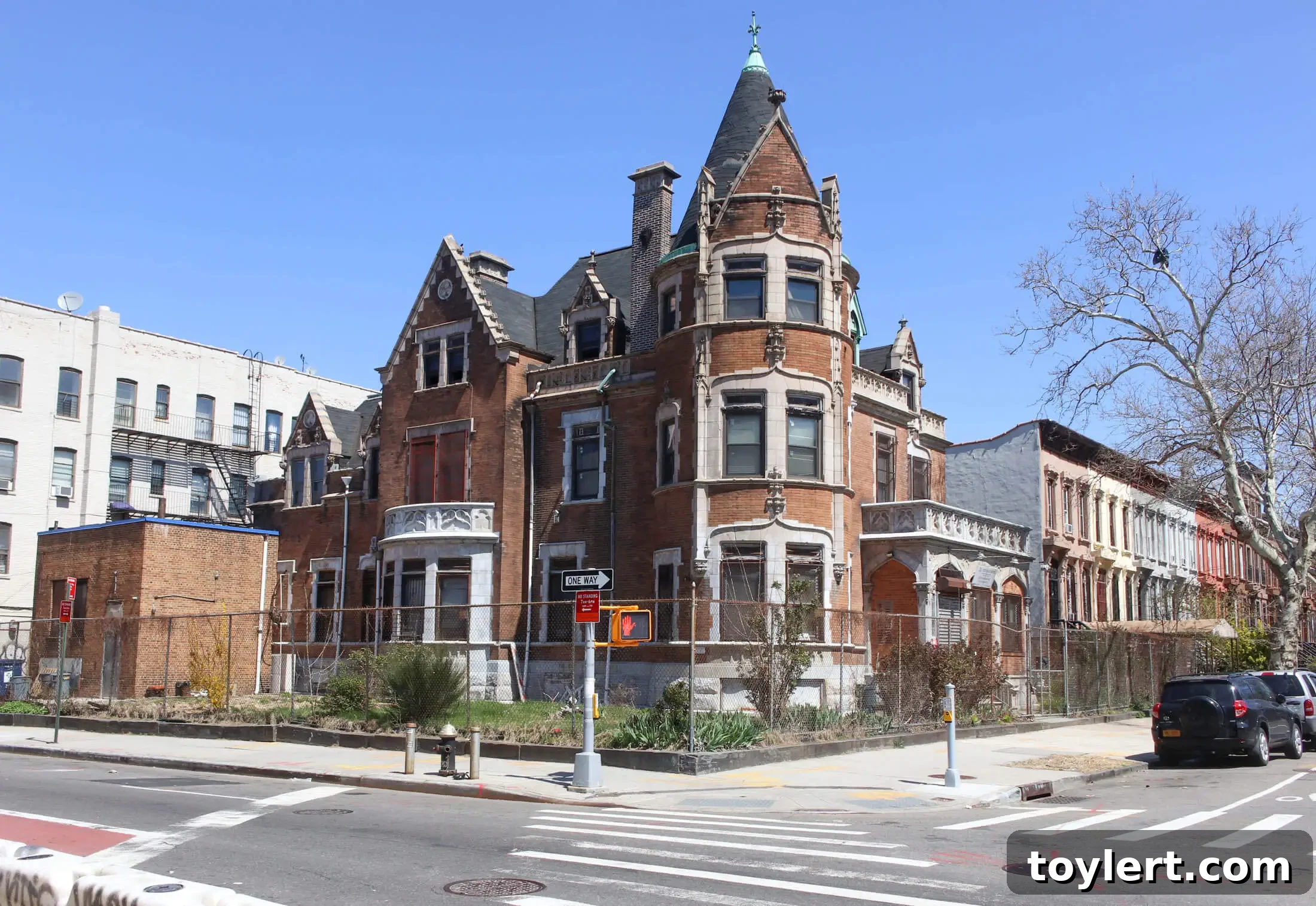
Landmark Ruling Blocks Bed Stuy Property Sale: The Enduring Saga of the Jacob Dangler Mansion
In a significant legal victory for community advocates and preservationists, a Kings County Supreme Court judge has sided with the New York State Attorney General, effectively blocking the controversial sale of 441 Willoughby Avenue in Bed Stuy. This dramatic development marks a crucial turning point in a long-running dispute that has pitted local residents and heritage defenders against a developer and a nonprofit organization, all centered around the former site of the iconic Jacob Dangler Mansion.
The Demise of a Beloved Bed Stuy Landmark: The Jacob Dangler Mansion
The saga of 441 Willoughby Avenue began long before its recent court battle. The property was once home to the Jacob Dangler Mansion, an architectural gem celebrated for its distinctive French Gothic Revival style. Erected in the late 19th century, this grand residence was a cornerstone of Bed Stuy’s rich historical landscape, embodying the neighborhood’s unique heritage and architectural prowess. Its intricate details, soaring gables, and elaborate stonework made it a local treasure, a testament to a bygone era, and a subject of immense community pride.
For decades, the mansion served as a poignant reminder of Bed Stuy’s elegant past, drawing admiration from architecture enthusiasts and local historians alike. Its significance extended beyond its aesthetic appeal; it represented a tangible link to the community’s foundational stories and the architectural movements that shaped Brooklyn. As development pressures mounted in Bed Stuy, the Dangler Mansion became a symbol of the fight to preserve the neighborhood’s character against rapid modernization.
The Controversial Demolition and the Developer’s Role
The property’s fate took a drastic turn in 2022 when developer Tomer Erlich controversially demolished the historic structure. This act ignited widespread outrage, particularly because the demolition occurred while the mansion was actively in the process of being landmarked. Community groups and preservation societies had diligently campaigned to protect the building, recognizing its irreplaceable historical and cultural value. The landmarking process, designed to safeguard structures of significant heritage, was seen as a vital last line of defense. Erlich’s decision to proceed with demolition despite these ongoing efforts was widely condemned as a blatant disregard for due process, community sentiment, and the spirit of historic preservation laws.
The swift and unceremonious destruction of the Jacob Dangler Mansion left a void in the streetscape and a scar on the community’s collective memory. Critics argued that the demolition represented a calculated move to sidestep potential preservation mandates and maximize development potential, signaling a concerning trend where economic interests overshadow historical reverence. This act not only erased a piece of Bed Stuy’s past but also galvanized the resolve of locals and preservationists to ensure that such an event would not go unchecked.
The Nonprofit’s Role and the Proposed Sale
At the heart of the ownership debate was the United Grand Chapter Order of the Eastern Star, a nonprofit organization that owned the 441 Willoughby Avenue property. Nonprofits, by their very nature, are entrusted with assets that serve a public or charitable purpose, and their transactions are subject to specific oversight, particularly when it comes to significant assets like real estate. The proposed sale of the valuable Bed Stuy property to Tomer Erlich raised immediate red flags for various stakeholders, including the Attorney General’s office.
The Attorney General’s office, tasked with overseeing the conduct of nonprofits in New York State, began to scrutinize the details of the proposed transaction. Concerns emerged regarding the transparency and fairness of the sale. When a nonprofit sells a substantial asset, it is expected to do so in a manner that maximizes the benefit to the organization and its mission, adhering to strict fiduciary responsibilities. Any deviation from these principles can invite legal intervention, aiming to protect the nonprofit’s assets from mismanagement or improper dealings. The involvement of the Attorney General underscored the seriousness of the allegations surrounding the proposed sale and the perceived failure of the nonprofit to adequately steward its valuable property for its intended beneficiaries.
Attorney General’s Intervention and the Court’s Scrutiny
The Attorney General’s office launched an in-depth investigation into the proposed sale of 441 Willoughby Avenue. Their involvement signals a critical check-and-balance mechanism in New York State, ensuring that nonprofit organizations act in the public interest and manage their assets responsibly. The investigation specifically looked at the terms of the sale between the United Grand Chapter Order of the Eastern Star and developer Tomer Erlich, probing for any irregularities or breaches of fiduciary duty.
On a pivotal Friday, September 20, Kings County Supreme Court Judge Aaron Maslow delivered a resounding rejection of the property sale. His ruling underscored several “serious concerns” that cast a shadow over the entire transaction. Judge Maslow’s judgment wasn’t merely a procedural block; it was a deeply critical assessment of the proposed deal and the nonprofit’s conduct. His remarks highlighted systemic issues, suggesting a profound lack of proper governance and oversight within the United Grand Chapter Order of the Eastern Star.
Key Concerns Identified by Judge Maslow:
- The Amount Being Offered: The judge raised significant questions about the purchase price proposed by Tomer Erlich. It was implied that the offer might have been substantially below market value, raising suspicions about whether the nonprofit was receiving fair compensation for such a prime piece of Brooklyn real estate. An undervalued sale would not only diminish the nonprofit’s assets but also potentially indicate a lack of due diligence or even improper influence in the negotiation process. Ensuring that nonprofits receive fair market value for their assets is a core tenet of nonprofit stewardship.
- Failure to Manage Assets: Judge Maslow pointed to a broader failure by the nonprofit to adequately manage its assets. This concern suggests that the United Grand Chapter Order of the Eastern Star might have lacked proper internal controls, financial oversight, or strategic planning regarding its property portfolio. Effective asset management is crucial for a nonprofit’s long-term sustainability and ability to fulfill its mission. A documented failure in this area can lead to significant legal and reputational consequences.
- Misappropriation of Funds: Perhaps the most alarming concern cited by the judge was the revelation that a “so-called member had absconded with a portion of them.” This serious accusation points to potential internal fraud or embezzlement, indicating a profound breach of trust and potentially criminal activity within the organization. Such an allegation not only highlights severe governance deficiencies but also raises questions about the overall integrity of the nonprofit’s operations and financial accountability.
These findings collectively painted a troubling picture, compelling Judge Maslow to intervene decisively. His ruling sends a clear message that transactions involving nonprofit assets must withstand rigorous scrutiny, particularly when the public interest and responsible stewardship are at stake.
Implications for Historic Preservation and Nonprofit Governance
Judge Maslow’s ruling represents a significant victory for historic preservation efforts, particularly in rapidly gentrifying neighborhoods like Bed Stuy. It sets a powerful precedent, demonstrating that legal avenues exist to challenge and overturn property sales deemed to be against the public interest or to involve questionable dealings, even after a historic structure has been demolished. While the Jacob Dangler Mansion itself cannot be restored, the blocking of the sale for its site ensures that the land’s future development will face enhanced scrutiny and potentially different outcomes than if the original deal had gone through. This decision empowers preservationists and community groups, affirming their persistent advocacy can yield tangible results against powerful development interests.
Furthermore, this case has profound implications for nonprofit governance across New York State. The Attorney General’s successful intervention and the judge’s stern findings serve as a stark warning to all nonprofit organizations regarding their fiduciary duties. Nonprofits are expected to exercise utmost care in managing their assets, particularly valuable real estate holdings. This includes ensuring transparency in sales processes, obtaining fair market value, and maintaining robust internal controls to prevent mismanagement, fraud, or self-dealing. The Bed Stuy case highlights the critical role of the Attorney General in protecting the public’s trust in charitable organizations and ensuring that their assets are used for their intended purpose, not for personal gain or through opaque transactions. It will likely lead to increased scrutiny of real estate deals involving nonprofits and encourage organizations to review and strengthen their governance practices.
Looking Ahead: The Future of 441 Willoughby Avenue
With the sale to Tomer Erlich now blocked, the future of 441 Willoughby Avenue remains uncertain, yet also full of new possibilities. The property, currently an empty lot where a historic mansion once stood, is now in legal limbo, awaiting further decisions regarding its ownership and potential redevelopment. The court’s decision does not immediately determine what will be built on the site, but it certainly opens the door for a more community-centric and transparent process.
The Attorney General’s office will likely continue its oversight, potentially guiding the United Grand Chapter Order of the Eastern Star towards a more responsible and transparent process for handling its assets. This could involve soliciting new offers, potentially through a public bidding process, or even considering alternative uses for the land that align more closely with community needs or a renewed commitment to the nonprofit’s mission. Locals and preservationists, emboldened by this ruling, will undoubtedly continue to advocate for a development outcome that respects the site’s history and serves the Bed Stuy community.
This landmark decision is more than just a legal victory; it is a powerful affirmation of the public’s right to demand accountability from both developers and nonprofit organizations. It underscores the vital importance of historic preservation and responsible asset management. The saga of the Jacob Dangler Mansion, though it ended in demolition, has paved the way for a precedent that could protect countless other historic sites and ensure greater integrity in transactions involving community assets across New York City and beyond.