Still Racing to Deliver: Quick-Commerce and the Shifting Landscape of NYC Grocery
This article marks the second installment in amNewYork Metro’s compelling series, “Still Racing to Deliver.” It serves as a vital follow-up to our original five-part exploration into the explosive proliferation and profound impact of quick-commerce grocery services across the vibrant expanse of New York City. We delve deeper into how these rapid delivery platforms have reshaped urban retail, consumer habits, and the very fabric of local commerce.
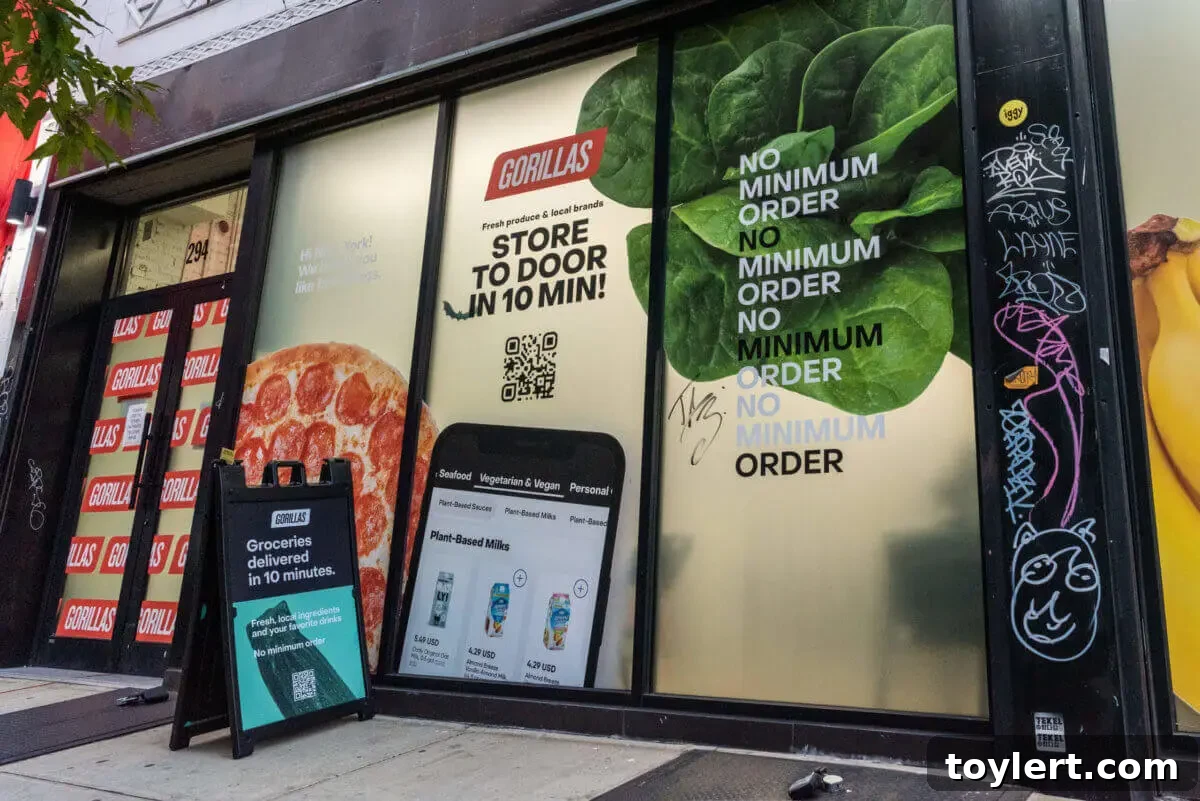
Just last year, New York City witnessed a dramatic transformation in its retail ecosystem with the meteoric rise of quick-commerce grocery delivery services. These nimble, investor-backed enterprises swiftly infiltrated the urban landscape, aggressively acquiring prime retail spaces for their “dark stores” and launching pervasive advertising campaigns across every borough. Their promise was simple yet revolutionary: a broad, curated selection of groceries, household essentials, and other goods delivered directly to customers’ doorsteps within an astonishingly brief 15-minute window, often for a nominal delivery fee or even free. This unprecedented speed and convenience quickly captivated a significant segment of the city’s fast-paced populace. However, this rapid ascent was not met without apprehension, as many of New York City’s most cherished and well-established local businesses began to voice their growing concerns over the sudden and fierce competition.
The strategic intent of these quick-commerce giants was never to replace the weekly grocery run or compete directly with large-scale supermarket orders. Instead, their business model ingeniously targeted a specific, yet incredibly common, consumer pain point: the forgotten item. They aimed to attract the New Yorker who, in the midst of preparing dinner, suddenly realized they were missing a crucial ingredient like a specific spice or a carton of milk. Or perhaps it was the urgent need for everyday household staples such as paper towels, dish soap, or a quick snack during a busy workday. These impulse buys and emergency top-ups represented a significant and previously untapped market, allowing these apps to integrate seamlessly into daily routines without necessarily demanding a full shift in shopping behavior. This focus on immediate gratification and convenience proved to be a powerful magnet for urban dwellers seeking instant solutions.
The Lightning-Fast Rise of Instant Delivery Apps in the Big Apple
The quick-commerce phenomenon wasn’t merely a trend; it was a revolution fueled by venture capital and sophisticated logistics. Companies like Gorillas, Buyk, Fridge No More, and many others burst onto the scene, each vying for market dominance in a city ripe for rapid delivery solutions. They established a network of strategically located micro-warehouses, often disguised as unassuming storefronts, which they dubbed “dark stores.” These facilities were not open to the public but served as highly efficient distribution hubs, staffed by couriers ready to dispatch orders at a moment’s notice. The promise of “groceries in minutes” resonated deeply with New Yorkers accustomed to efficiency and convenience, transforming the very expectation of how quickly one could acquire daily necessities. The sheer volume of advertising, from subway ads to viral social media campaigns, ensured these brands were ubiquitous, making their apps indispensable tools for many residents.
Beyond the Weekly Haul: Catering to Instant Gratification
What truly set these quick-commerce platforms apart was their acute understanding of modern urban lifestyles. In a city where time is a precious commodity and schedules are often unpredictable, the ability to order a single item or a small handful of forgotten essentials and have them arrive almost instantaneously became an invaluable service. This wasn’t about planning; it was about reacting. A late-night craving, an unexpected guest, a child’s sudden need for school supplies – these were the scenarios where quick-commerce excelled. Unlike traditional online grocery services that often required scheduling delivery windows hours or days in advance, these apps offered immediacy, transforming the way New Yorkers approached unplanned purchases. This shift fundamentally altered consumer expectations, moving beyond mere convenience to demand instant fulfillment.
Local Businesses Under Siege: The Bodega’s Fight for Survival
While consumers relished the newfound speed, the rapid expansion of quick-commerce sent ripples of apprehension through New York City’s venerable network of local businesses. For generations, bodegas, corner stores, and family-owned grocery shops have been the lifeblood of neighborhoods, providing not just goods but also a sense of community and familiarity. These establishments, deeply embedded in the city’s cultural fabric, faced an unprecedented challenge. Quick-commerce companies, armed with vast investor capital, could afford to offer aggressive discounts, free delivery, and a level of instant gratification that traditional stores, operating on razor-thin margins, simply couldn’t match. The concern wasn’t just about losing a sale; it was about the erosion of a vital neighborhood institution. Many small business owners feared being priced out and outmaneuvered by these well-funded tech startups, threatening the diversity and character of New York’s retail landscape.
The Investor-Fueled Blitz: A Race for Market Share
The initial proliferation of quick-commerce was largely driven by a massive influx of venture capital, with investors betting big on the “future of grocery.” This funding allowed companies to operate at a loss, prioritizing rapid customer acquisition and market share over immediate profitability. The strategy was to establish a dominant presence, hook consumers with unbeatable offers, and then eventually monetize once competition dwindled. This aggressive, growth-at-all-costs approach enabled them to saturate neighborhoods with dark stores, offer substantial discounts, and invest heavily in marketing. However, this high-burn rate model raised questions about long-term sustainability. Critics pointed out that the economics of 15-minute delivery, factoring in courier wages, real estate costs, and inventory management, were inherently challenging to make profitable without significantly increasing prices or delivery fees, which would then diminish their core appeal.
Navigating the New Regulatory Landscape and Labor Debates
The rapid emergence of quick-commerce also brought forth a host of regulatory and labor-related issues. Cities like New York grappled with how to classify and regulate these new entities. Were dark stores retail establishments? Were they warehouses? Zoning laws, land use permits, and business licenses became hot topics of debate. Furthermore, the employment practices of these companies came under scrutiny. Concerns were raised about the working conditions of couriers, their classification as independent contractors versus employees, wage transparency, and safety on the bustling city streets. The intense pressure to meet 15-minute delivery targets often placed couriers in precarious situations, leading to calls for better labor protections and fair compensation. This complex interplay of rapid growth, innovative business models, and existing urban infrastructure created a challenging environment for both companies and city officials to navigate.
Adapting to Change: How Local Businesses Are Responding
In the face of this formidable competition, many local businesses in New York City have not remained passive. Some have sought to enhance their unique strengths, emphasizing personalized customer service, curated product selections that cater to specific neighborhood tastes, and the invaluable human connection that quick-commerce apps often lack. Others have begun to explore their own digital transformations, partnering with existing delivery services or developing their own simple online ordering systems to offer a hybrid model of convenience and local charm. The challenge for these traditional establishments is to innovate without losing the authentic appeal that has made them integral parts of their communities for decades. Their resilience hinges on their ability to highlight their distinct value proposition beyond mere speed, focusing on quality, community engagement, and the personalized shopping experience that a local store can provide.
The Evolving Future of Grocery Delivery in New York City
As the initial quick-commerce gold rush begins to settle, the industry is witnessing a period of consolidation and strategic re-evaluation. Some companies have scaled back operations, merged with competitors, or even exited the market entirely, highlighting the inherent challenges of sustaining such rapid growth and high operational costs. The focus is now shifting towards achieving profitability and building more sustainable business models. This evolving landscape suggests that while instant gratification will remain a key consumer demand, the market may eventually settle on a more balanced ecosystem. This future could involve a blend of traditional local stores, larger supermarket chains with enhanced online ordering, and a streamlined quick-commerce sector that has refined its operations and pricing. The ultimate outcome will likely be a more diverse and competitive grocery market in New York City, where both cutting-edge technology and time-honored community businesses continue to play vital roles in serving the dynamic needs of its residents.
The narrative of quick-commerce in New York City is far from over. It’s a continuous race, not just to deliver groceries, but to adapt, innovate, and find a sustainable place within the city’s complex commercial ecosystem. The story of these rapid delivery services is a microcosm of broader trends shaping urban economies worldwide, prompting essential questions about the balance between convenience, community, and the future of local commerce.