Brooklyn, one building at a time.
Discovering Brooklyn’s Past: The Elias Hubbard Ryder House in Historic Gravesend
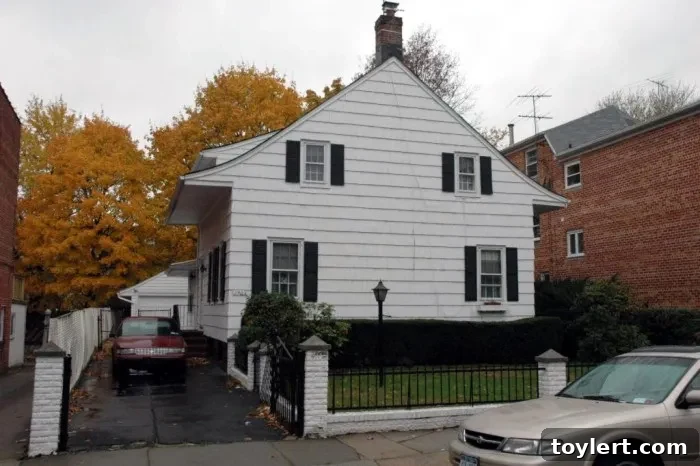
Nestled within the vibrant and historically rich Gravesend neighborhood, the Elias Hubbard Ryder House stands as a remarkable testament to Brooklyn’s enduring past. More than just an old dwelling, this distinguished property, built in 1834, offers a unique window into the architectural styles, social movements, and pioneering spirits that shaped one of New York City’s most iconic boroughs. Its designation as an individual landmark in 1976 underscores its profound historical and architectural significance, preserving a tangible link to Brooklyn’s colonial and early American narrative.
The Elias Hubbard Ryder House: A Glimpse into Early Brooklyn Architecture
The Elias Hubbard Ryder House, situated on East 28th Street, is a captivating example of Dutch Colonial architecture, a style deeply embedded in the early history of New York. Despite the passage of nearly two centuries and the integration of modern additions, the house retains its fundamental character, speaking volumes about the craftsmanship and design principles prevalent in the 19th century. Its builder, John Stillwell, a name closely associated with Gravesend’s foundational families, contributed to a legacy of construction that has defined the neighborhood for generations.
Key Details of This Historic Brooklyn Landmark:
- Name: Elias Hubbard Ryder House
- Address: 1926 East 28th Street, Gravesend, Brooklyn
- Cross Streets: Situated between Avenue S and Avenue T
- Neighborhood: Gravesend, one of Brooklyn’s original towns
- Year Built: 1834
- Architectural Style: Dutch Colonial, notable for its distinctive roofline and historical integrity, complemented by thoughtful modern enhancements.
- Builder: John Stillwell, a prominent local craftsman whose work contributes to the architectural heritage of Gravesend.
- Landmark Status: Individually landmarked since 1976, ensuring its preservation and recognition as a significant historical asset for Brooklyn and New York City.
Gravesend: Brooklyn’s Unique English Colonial Outpost
To fully appreciate the Elias Hubbard Ryder House, one must delve into the extraordinary history of Gravesend itself. While the majority of colonial Brooklyn’s towns were established by Dutch settlers, Gravesend holds the unique distinction of being the sole English-founded settlement in what was then New Netherland. Its story began in 1643 with the arrival of Lady Deborah Moody, an exceptional Englishwoman whose vision and determination laid the groundwork for a community unlike any other in the region.
Lady Deborah Moody: A Beacon of Religious Freedom in the New World
Lady Deborah Moody’s journey to establish Gravesend was driven by a fervent desire for religious liberty. As an Anabaptist, she held beliefs, particularly regarding adult baptisms, that were considered heretical by the established Church of England and, controversially, by the strict Puritans of the Massachusetts Bay Colony. Her steadfast refusal to compromise her faith led her to seek a new home where she and her followers could practice their beliefs without persecution. After an unwelcoming reception in Massachusetts, Lady Moody, alongside figures like Nicholas Stillwell (an ancestor of the Ryder House’s builder, John Stillwell) and other Anabaptists, turned their gaze towards the more tolerant Dutch colony of Long Island.
In 1643, Lady Moody successfully petitioned the Dutch authorities, securing a patent that granted her and her community the right to establish a town. This was a remarkable achievement, as it not only created an English enclave within a Dutch territory but also explicitly guaranteed religious freedom within its borders. Gravesend thus became one of the earliest colonial settlements in North America founded on the principle of religious tolerance, predating even William Penn’s “Holy Experiment” in Pennsylvania. Lady Moody’s leadership was foundational, shaping Gravesend into a sanctuary for dissenters and a pioneering model for self-governance in the nascent American colonies.
Unraveling the Etymology of “Gravesend”: A Name Rooted in English Heritage
The name “Gravesend” frequently sparks curiosity, often leading to the mistaken assumption of a connection to burial grounds. However, the true origin of the name is far more evocative and deeply linked to its English roots. “Gravesend” is a derivation from Old English, meaning “Grove’s End” or “at the end of the grove.” This nomenclature was inspired by a similarly named English seaport town in Kent, England, a place of personal significance to the early settlers. By naming their new home after a familiar landmark, the pioneers imbued Gravesend with a sense of continuity and a connection to their ancestral lands, while simultaneously establishing their unique identity in the New World. Understanding this etymology dispels common myths and enriches our appreciation for the town’s profound historical lineage.
Early Challenges and the Flourishing of Gravesend
The initial years of Gravesend were marked by a blend of opportunity and formidable challenges. The region, still reeling from the brutality of Kieft’s War between Dutch settlers and local Native American tribes, demanded a cautious and defensive approach from the new inhabitants. Despite the recall of the notoriously harsh Dutch governor, Willem Kieft, tensions lingered, compelling Lady Moody and her followers to establish a fortified town. Barricaded walls were constructed, providing essential protection and creating a sense of security for the nascent community in an often-unpredictable frontier environment. This strategic planning was crucial for the survival and eventual success of the settlement.
Despite these initial hardships, Gravesend demonstrated remarkable resilience and quickly began to thrive. The promise of religious freedom, fertile land, and new opportunities attracted a steady stream of settlers. The town expanded beyond its original fortified boundaries, with new houses being built and small farms developing into productive agricultural enterprises. Gravesend became renowned for its rich farmlands, contributing significantly to the agricultural output of Long Island. The unique cultural blend resulting from its English origins within a Dutch colony fostered a distinct identity, characterized by self-sufficiency and a strong community spirit that would endure for centuries.
Indeed, Gravesend is home to some of Brooklyn’s most ancient houses, silent witnesses to its long and intricate past. While many of these historic residences have not received individual landmark status, their collective presence paints a vivid picture of colonial life and urban development. The Elias Hubbard Ryder House, however, stands out for its architectural integrity and its official recognition as a cherished component of Brooklyn’s historical fabric, making it a pivotal site for understanding the borough’s foundational history.
Architectural Grandeur: The Dutch Colonial Style of the Elias Hubbard Ryder House
The Elias Hubbard Ryder House beautifully embodies the distinctive architectural characteristics of the Dutch Colonial style, a building tradition that left an indelible mark on New Netherland. This style is most readily identified by its iconic gambrel roof, featuring two distinct slopes on each side, with the lower slope being noticeably steeper than the upper. This ingenious design maximized usable space in the attic or upper stories, providing practical areas for living or storage—a valuable feature for families and farming communities of the era.
Upon closer inspection, the Ryder House, even with its “modern additions,” likely exhibits other quintessential Dutch Colonial elements. These often include a broad, understated profile, prominent eaves, and occasionally dormer windows that gracefully emerge from the roofline. Historically, Dutch Colonial homes were constructed using readily available local materials such as fieldstone, brick, or timber, frequently finished with a whitewash. The thoughtful integration of these traditional features with subsequent modifications in the Ryder House speaks to a continuous history of adaptation and evolution. It showcases how historical properties can maintain their functionality and relevance across generations while preserving their essential charm and character, making it a living piece of Brooklyn’s architectural narrative.
The fact that John Stillwell, a descendant of Gravesend’s original settlers, was the builder, adds a profound layer of historical authenticity to the house. The Stillwell family played a crucial role in the early development and prosperity of Gravesend, making John Stillwell’s involvement in erecting such a significant structure a direct link to the founding families of the neighborhood. His skilled craftsmanship in 1834 resulted in a durable and aesthetically pleasing home that has stoically weathered the passage of time, serving as a prime example of the architectural sensibilities and construction practices of the early 19th century in Brooklyn.
Preserving a Legacy: The Importance of Landmark Status for the Elias Hubbard Ryder House
The official designation of the Elias Hubbard Ryder House as an individual landmark in 1976 marked a pivotal moment in safeguarding this irreplaceable segment of Brooklyn’s heritage. Landmark status provides vital legal protection against inappropriate alterations or, critically, demolition, thereby ensuring that the building’s rich historical and architectural integrity is meticulously maintained for the benefit of future generations. This prestigious recognition emphatically highlights the house’s significant contribution to our understanding of colonial and early American architecture within the broader context of New York City.
For Brooklyn, the preservation of structures like the Elias Hubbard Ryder House is paramount. These buildings serve as invaluable educational resources, offering residents and visitors alike a direct, tangible connection to the lives, challenges, and triumphs of the individuals who shaped the borough. They are instrumental in comprehending the intricate evolution of neighborhoods such as Gravesend, tracing their trajectory from fortified colonial outposts to the dynamic, diverse communities they are today. The Ryder House stands as a proud emblem of endurance, representing a continuous narrative of Brooklyn’s progressive development, meticulously woven one historic building at a time.
Gravesend Today: A Rich Tapestry of History and Modernity
Today, Gravesend continues to flourish as a vibrant and diverse Brooklyn neighborhood, characterized by its multicultural communities and a strong, inherent sense of belonging. While the physical barricaded walls of Lady Moody’s original settlement have long since vanished, the echoes of its profound past resonate throughout its meticulously preserved street names, its numerous historical markers, and, most significantly, in its surviving architectural treasures like the Elias Hubbard Ryder House. The neighborhood has undergone substantial evolution over the centuries, yet it steadfastly continues to honor its unique historical identity as a pivotal haven for religious freedom and a distinct English outpost in what was once Dutch New Netherland.
Both visitors and long-time residents can still feel the palpable weight of history woven into the very fabric of Gravesend, observing how seamlessly the past integrates with the present. The Elias Hubbard Ryder House stands as a quiet yet powerful sentinel, inviting contemplation and reflection on the audacious spirit of pioneers like Lady Deborah Moody and the masterful craftsmanship of builders such as John Stillwell. It serves as a compelling reminder that behind every street and within every structure in Brooklyn lies a captivating story, patiently awaiting rediscovery, enriching our collective understanding of this extraordinary city.
Conclusion: The Enduring Significance of the Elias Hubbard Ryder House
The Elias Hubbard Ryder House is far more than an antiquated dwelling; it is an essential, living chapter in the continuous and evolving narrative of Brooklyn. From its exemplary Dutch Colonial architecture to its strategic location within the historically profound Gravesend neighborhood, the house embodies centuries of evolution, resilience, and the fascinating confluence of cultures that shaped early America. It stands as a powerful symbol of Lady Deborah Moody’s unwavering pioneering spirit, the lasting architectural legacy of John Stillwell, and the enduring quest for freedom, community, and self-determination that defined the earliest American settlements.
As an individually landmarked property, the Elias Hubbard Ryder House serves as a constant, tangible reminder of Brooklyn’s extraordinary past and the continuous, vital effort to preserve the structures that intricately narrate its story. Its venerable walls whisper tales of bygone eras, inviting us to delve deeper into the intricate origins of our urban landscape. This ensures that the profound legacy of those who painstakingly built Brooklyn, one remarkable building at a time, continues to resonate with clarity and inspiration for countless generations to come, fostering a deep appreciation for the borough’s rich historical tapestry.