Remarkable Revival: Historic Twin Houses on Carlton Avenue in Prospect Heights Nearing Completion
The distinguished twin houses located at 578 and 580 Carlton Avenue in the heart of Prospect Heights, Brooklyn, are undergoing a truly remarkable transformation. Once known for their precarious state and visible decay, these landmarked properties are now shining examples of dedicated architectural restoration. From a state of near ruin, these historic brownstones are swiftly approaching the culmination of an ambitious project that will see them restored to their former glory, breathing new life into a cherished corner of Brooklyn.
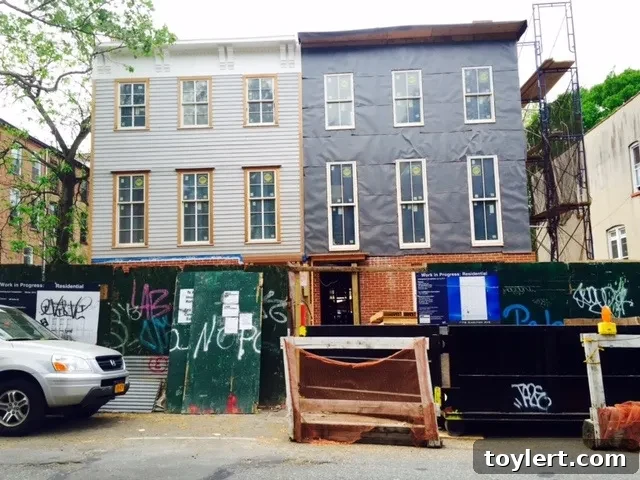
For those who have followed their journey, the progress is undeniably impressive. Since our last update in February, significant strides have been made, particularly on the left-hand property, No. 580. This residence now proudly showcases a fully rebuilt cornice, a testament to the meticulous craftsmanship involved in heritage preservation. Meanwhile, its counterpart, No. 578, on the right, is being carefully wrapped in insulation, a crucial preparatory step before its new facade is meticulously applied. These developments mark a pivotal phase in their journey back to architectural prominence.
A Legacy Reclaimed: From Collapse to Restoration
The sight of these houses being meticulously rebuilt is a welcome one, especially considering their challenging past. Not long ago, one of the properties tragically experienced a partial building collapse, while the other was reduced to little more than a fragile facade. This dire situation underscored the urgent need for intervention to save these vital pieces of Prospect Heights’ architectural tapestry. The decision to undertake a comprehensive restoration was not just about rebuilding structures; it was about reclaiming a significant legacy for the community.
Guiding this intricate and sensitive restoration project is the acclaimed architect Rachel Frankel, whose expertise in historical preservation has been instrumental. Her firm specializes in navigating the complexities of landmarked properties, ensuring that every phase of the restoration adheres to stringent historical guidelines while integrating modern construction techniques for structural integrity and energy efficiency. As we have previously highlighted, her involvement provides assurance that the unique character and historical accuracy of these brownstones will be faithfully preserved.
These architectural gems are strategically situated between the bustling thoroughfares of St. Marks Avenue and Bergen Street, an area renowned for its vibrant community and rich historical context. Their prominent location ensures that their revival will have a visible and positive impact on the surrounding streetscape and neighborhood aesthetic, serving as an inspiration for future preservation efforts.
The Intricate Process of Landmarked Restoration
Restoring landmarked properties like 578 and 580 Carlton Avenue is far more complex than standard construction. It involves a delicate balance between historical accuracy, structural stability, and adherence to the strict guidelines set forth by the Landmarks Preservation Commission (LPC). Every detail, from the choice of materials to the replication of original design elements, must be carefully considered and approved. This ensures that the building’s historical integrity is maintained, preserving the authentic charm and architectural style that make these homes so valuable.
The rebuilding of the cornice on No. 580, for instance, is not merely a cosmetic fix. Cornices are intricate architectural features that define the roofline and often feature elaborate decorative elements. Their restoration requires skilled artisans who can replicate original moldings, carvings, and proportions using period-appropriate materials or modern alternatives that convincingly mimic the originals. This level of detail is crucial for maintaining the visual continuity and historical accuracy of the entire structure.
Similarly, the insulation work on No. 578 signifies a thoughtful approach to modernizing historic homes. While preserving exterior aesthetics, interior systems are updated to meet contemporary standards for comfort and energy efficiency. Wrapping the building in insulation before the new facade is applied ensures that the future residents will benefit from improved thermal performance, reduced energy consumption, and a more comfortable living environment, all without compromising the historical look of the exterior.
Architectural Significance and Community Impact
The twin houses on Carlton Avenue are emblematic of Brooklyn’s rich architectural heritage, likely constructed in the late 19th or early 20th century, a period when Prospect Heights was rapidly developing into a desirable residential neighborhood. These homes typically feature distinctive brownstone facades, large windows, and elegant stoops, characteristic of the Victorian or Romanesque Revival styles popular during that era. Twin houses, while common in some areas, often present a unique symmetrical grandeur that adds to their individual and collective appeal.
The successful restoration of these properties extends beyond their individual boundaries. It sends a powerful message about the value of preservation to the entire community. Historic homes contribute immensely to the character and identity of a neighborhood. They offer a tangible connection to the past, reminding residents of the history that shaped their surroundings. By saving these buildings, Prospect Heights not only retains its aesthetic charm but also reinforces its commitment to cultural heritage.
Moreover, such high-profile restorations often have a ripple effect on local real estate. They can inspire other homeowners to invest in their properties, boosting property values across the neighborhood and fostering a greater sense of community pride. The meticulous work on Carlton Avenue stands as a beacon for quality restoration, potentially encouraging similar projects and further solidifying Prospect Heights’ reputation as a well-preserved historic district.
The Visionary Leadership of Rachel Frankel
The role of an architect in such projects cannot be overstated. Rachel Frankel’s firm has earned a stellar reputation for its sensitive and effective approach to historical preservation. Her team’s ability to navigate the stringent requirements of the Landmarks Preservation Commission, procure appropriate materials, and oversee skilled contractors is critical. This involves extensive research into the original architectural plans, photographic evidence, and material analysis to ensure that the restoration is as authentic as possible.
Frankel’s vision for 578 and 580 Carlton Avenue goes beyond mere repair; it’s about re-establishing the historical narrative of the buildings. This includes not only the structural and aesthetic elements but also ensuring that the restored homes are functional and appealing for modern living. The integration of new insulation, for example, demonstrates a forward-thinking approach that marries historical integrity with contemporary liveability standards.
Looking Ahead: The Future of Carlton Avenue
As the restoration progresses, the anticipation among residents and preservation enthusiasts continues to grow. The application of the new facade on No. 578 will be a particularly exciting moment, as it will unveil the culmination of months of planning and labor. This final exterior layer will not only protect the structure but also dramatically enhance its curb appeal, completing the exterior transformation.
The completion of these twin houses will undoubtedly mark a significant milestone for Prospect Heights. They will stand as proud testaments to the power of preservation, demonstrating that even buildings on the brink of collapse can be brought back to life through dedicated effort, expert guidance, and community support. The revived 578 and 580 Carlton Avenue will not just be homes; they will be symbols of enduring beauty and the timeless value of architectural heritage in Brooklyn.
Conclusion: A Triumph of Preservation
The ongoing restoration of 578 and 580 Carlton Avenue is a compelling narrative of resilience and dedication. From their once crumbling state, these landmarked twin houses are rapidly emerging as vibrant, historically accurate residences ready for a new chapter. Thanks to the expert stewardship of architect Rachel Frankel and the unwavering commitment to preserving Brooklyn’s past, these homes are not just being rebuilt; they are being reborn. Their revival serves as a powerful reminder of the importance of protecting our architectural treasures for future generations, ensuring that the rich history and unique character of neighborhoods like Prospect Heights continue to thrive.