The Evolving Skyline of Clinton Hill: A Closer Look at 1 Lexington Avenue
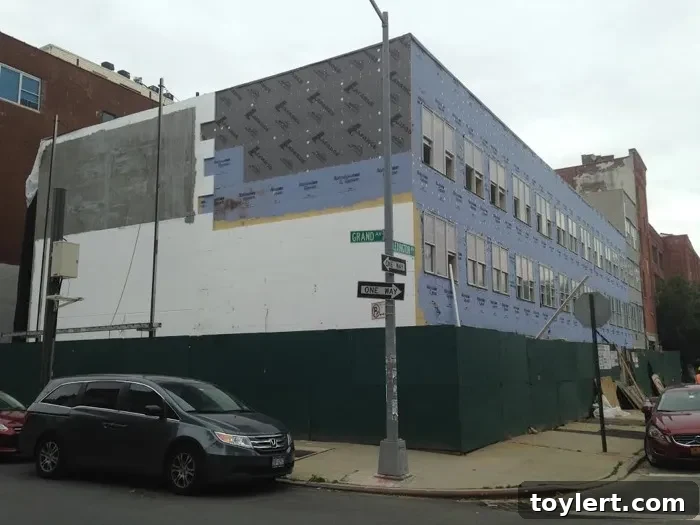
Clinton Hill, Brooklyn, a neighborhood renowned for its historic brownstones, tree-lined streets, and vibrant community spirit, is continuously evolving. One of the latest examples of this dynamic transformation is the new building taking shape at 1 Lexington Avenue, strategically positioned on the corner of Grand Avenue. Recently, we observed significant progress on this site, with layers of insulation being installed – a clear indicator that the structure is rapidly moving towards its completion and readiness for interior finishing. This crucial stage in construction highlights the meticulous planning and modern building practices employed in new Brooklyn developments, focusing on energy efficiency and structural integrity.
Project Insights: Decoding the Building’s Blueprint
Initial observations of the new building at 1 Lexington Avenue sparked considerable curiosity regarding its intended purpose and scale. Its robust façade and overall massing suggested a substantial development, leading many to speculate whether it might house a new educational institution or a larger residential complex with numerous apartments. However, official records provide a more specific outline. According to a new building permit filed with the Department of Buildings, the project is officially designated as a three-family, three-story building. This description, while precise, stands in intriguing contrast to the building’s grand visual presence, prompting further investigation into what makes this particular development unique in the bustling Clinton Hill landscape.
The discrepancy between the perceived scale and the permit’s designation of three units is a fascinating aspect of modern urban development, particularly in high-value areas like Brooklyn. It could imply exceptionally large, perhaps luxury, units designed for spacious living, or potentially a mixed-use scenario where ground-floor retail or community facility space is combined with residential units above. Such configurations are increasingly common in New York City, allowing developers to maximize the utility and profitability of prime real estate while adhering to zoning regulations.
A Site Transformed: From Ramshackle Past to Modern Future
The site at 1 Lexington Avenue has undergone a dramatic transformation. Prior to the current construction, the lot was occupied by a dilapidated one-story structure, which appeared to be a remnant of earlier decades. This previous building likely comprised a cluster of 1920s-era garages, possibly augmented by an improvised shed, painting a picture of a neglected space that was ripe for redevelopment. Such transformations are characteristic of Brooklyn’s ongoing revitalization, where underutilized or aging properties are reimagined into contemporary structures that meet the demands of a growing population and a vibrant economy. The demolition of the old structure and the rise of this modern building symbolize a clear step forward in the architectural narrative of Clinton Hill, blending new design with the existing historic fabric of the neighborhood.
The decision to replace an old, utilitarian structure with a new, potentially high-end residential building reflects a broader trend across Brooklyn. Developers are increasingly recognizing the intrinsic value of well-located parcels, even those with challenging existing conditions. This particular site, at the intersection of Lexington and Grand Avenues, offers excellent connectivity and neighborhood amenities, making it a highly desirable location for new residential offerings. The thoughtful design and construction of the new building suggest an aspiration to contribute positively to the streetscape, moving away from the “ramshackle” appearance of its predecessor to a more refined and enduring presence.
Clinton Hill: A Coveted Brooklyn Enclave
To fully appreciate the significance of the 1 Lexington Avenue development, it’s essential to understand the unique allure of Clinton Hill itself. Nestled between Fort Greene and Prospect Heights, Clinton Hill boasts a rich history, distinguished by its stunning array of architectural styles, from grand mansions to elegant brownstones and co-op buildings. The neighborhood is a melting pot of cultures, attracting a diverse demographic of long-time residents, young professionals, and families drawn to its tree-lined streets, community gardens, and excellent schools.
Beyond its aesthetic charm, Clinton Hill offers an exceptional quality of life. Residents enjoy access to a vibrant culinary scene, boutique shops, art galleries, and numerous parks, including the close proximity to Fort Greene Park and Prospect Park. Its strategic location provides convenient access to various subway lines, making commutes to Manhattan and other parts of Brooklyn seamless. Educational institutions like Pratt Institute further enrich the cultural and intellectual fabric of the area, contributing to its dynamic and intellectual atmosphere. The continuous influx of new residents and businesses underscores Clinton Hill’s status as one of Brooklyn’s most desirable and economically robust neighborhoods, justifying significant investment in new construction projects like 1 Lexington Avenue.
The Brooklyn Real Estate Market: Investment and Valuation Dynamics
The real estate market in Brooklyn, particularly in coveted neighborhoods like Clinton Hill, operates on a unique set of principles driven by high demand and limited supply. The last recorded transaction for the property at 1 Lexington Avenue was in 2013, when it changed hands for a substantial $6,175,000. This price point, even a decade ago, raises pertinent questions about the developer’s strategy, especially if the ultimate plan involves only three residential units. Such a significant initial investment suggests a strong confidence in the neighborhood’s appreciation potential and the ability to command premium prices for the finished product.
Several factors contribute to these high land values and subsequent development costs in Brooklyn. Prime location, restrictive zoning laws that limit density, and the sheer cost of construction in New York City all play a role. Developers investing millions in land acquisition must project an even higher return on investment, often by creating luxury residences with state-of-the-art amenities, high-end finishes, and expansive living spaces. For a three-unit building to justify a $6 million land purchase, each unit would likely be marketed as a substantial, high-value property, potentially fetching multi-million dollar prices upon completion. This strategy targets a niche market of affluent buyers seeking spacious, well-appointed homes in a prime Brooklyn location, willing to pay for exclusivity and modern comforts.
The Future of 1 Lexington Avenue and Clinton Hill
As the construction at 1 Lexington Avenue progresses, it stands as a testament to the ongoing evolution of Clinton Hill. The installation of insulation is a significant milestone, signaling that the building is nearing its envelope completion and soon, its interior fit-out. This development, whether it ultimately houses three expansive luxury units or a combination of residential and commercial spaces, will undoubtedly contribute to the evolving character of the neighborhood. It represents a continuous cycle of renewal and investment that defines Brooklyn’s growth story.
The project at 1 Lexington Avenue is more than just a new building; it’s a piece of the larger puzzle that shapes Clinton Hill’s future. It highlights the neighborhood’s enduring appeal to developers and residents alike, its capacity for growth, and its ability to seamlessly integrate modern developments into its historic fabric. As the scaffolding eventually comes down and the new residents move in, 1 Lexington Avenue will stand as a new landmark, reflecting the aspirations and dynamism of one of Brooklyn’s most cherished communities. The dialogue between its modest permit description and its ambitious visual presence will surely continue to captivate observers, adding another layer to the rich tapestry of urban development in New York City.