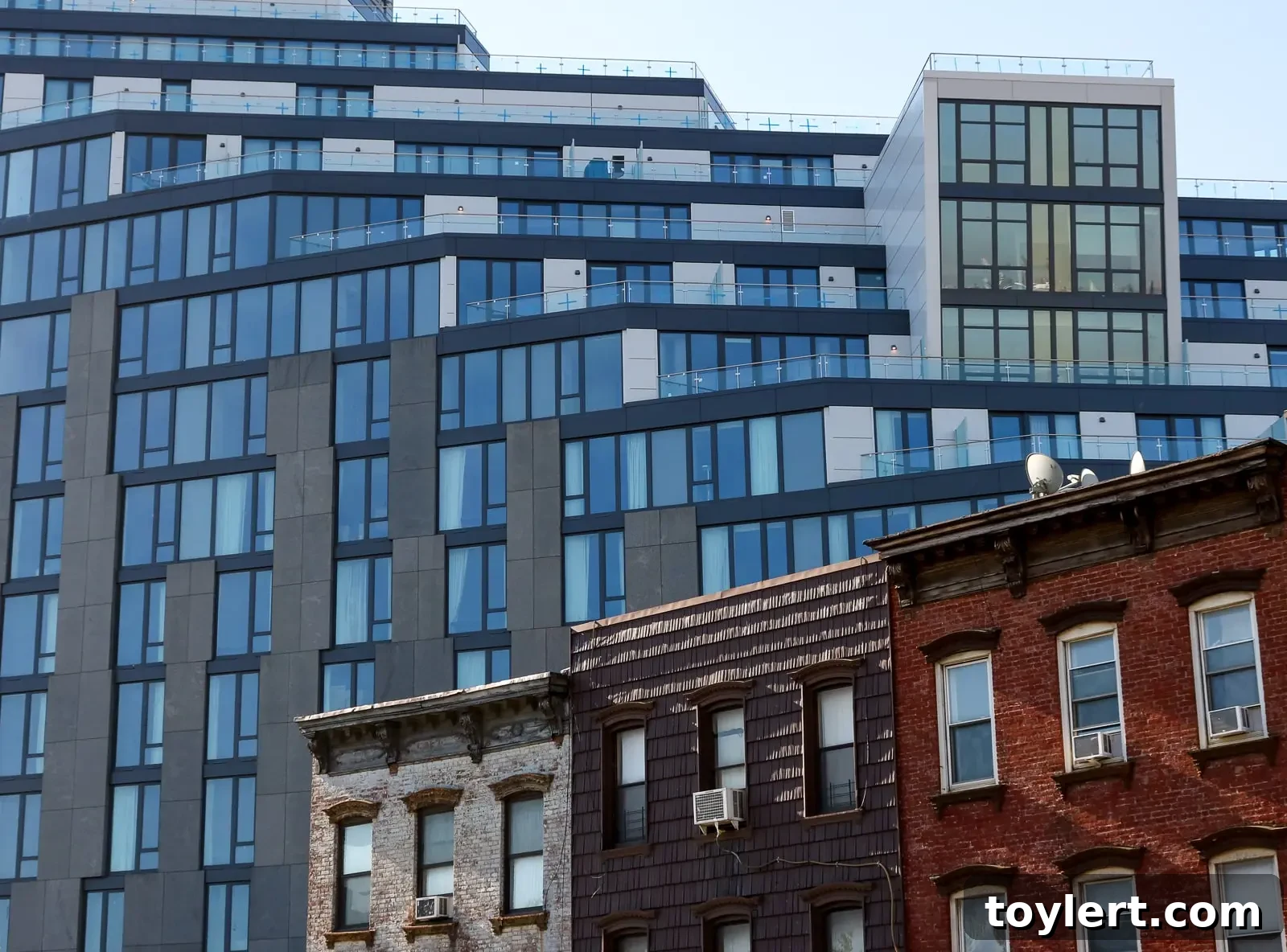
New York City’s Urgent Housing Crisis: Navigating Solutions for a Sustainable Future
The landscape of New York City’s rental market has undergone a dramatic transformation in recent years, presenting an unprecedented challenge to residents and policymakers alike. While the initial phase of the COVID-19 pandemic saw a temporary dip in rental prices, offering a brief respite for some, this trend quickly reversed. Within two years, rents surged to levels even higher than pre-pandemic rates, intensifying the city’s long-standing affordable housing crisis. This rapid escalation has ignited a passionate debate among experts, community leaders, and residents regarding the most effective strategies to stabilize the market and ensure housing security for all New Yorkers. Some argue that the fundamental solution lies in increasing the overall housing supply at any price point, believing that a greater volume of units will eventually ease pressure across the market. Others contend that the priority must be on creating housing specifically affordable to the city’s most vulnerable populations, those who are most in need of subsidized or lower-cost options. A third perspective advocates for a comprehensive approach, suggesting that a successful strategy must encompass both market-rate development and targeted affordable housing initiatives.
Leila Bezorg, New York City’s executive director for housing, starkly outlined the severity of the situation, presenting compelling statistics that underscore the depth of the crisis. Speaking at a pivotal housing conference in March, Bezorg cited a staggeringly low 1.4 percent vacancy rate across the city, a figure that highlights the extreme scarcity of available homes. Even more sobering were the numbers related to homelessness: an astonishing 120,000 individuals sought shelter in the city’s facilities the prior night, while over 50,773 children experienced homelessness last year alone. These figures, she emphasized, are undeniable proof that New York City is grappling with a housing crisis of unparalleled proportions, impacting every segment of society and threatening the very fabric of its communities.
Understanding the Roots: A Deep Dive into Supply and Demand Imbalance
The core of New York City’s housing predicament, as Bezorg pointed out, is a critical supply and demand problem. This isn’t a new issue for the densely populated metropolis, but it has been exacerbated by a confluence of factors. On the demand side, New York City remains a global magnet for talent, culture, and opportunity. Its vibrant economy, diverse job market, and world-class institutions continue to attract people from across the nation and around the world, all seeking a piece of the city’s unique charm. This sustained influx of residents, coupled with evolving household sizes and preferences, places immense pressure on an already constrained housing stock. The allure of New York City ensures that demand consistently outpaces the rate at which new housing becomes available, creating an intensely competitive rental and sales market.
The supply side, however, presents a complex web of challenges that make increasing housing stock particularly difficult in the five boroughs. Limited land availability is perhaps the most obvious hurdle; as an island city, physical space is finite. Beyond this, restrictive zoning regulations in many neighborhoods often limit the density and height of new construction, effectively capping the number of units that can be built. The cost of construction in New York City is among the highest in the world, driven by expensive land acquisition, high labor costs, complex regulatory approvals, and the need for specialized building materials and techniques. Permitting processes can be lengthy and arduous, adding significant time and expense to development projects. Furthermore, community opposition, often termed “Not In My Backyard” (NIMBYism), can delay or even derail proposed developments, regardless of their potential to alleviate the broader housing shortage. These intertwined factors create a bottleneck in housing production, perpetuating the low vacancy rates and driving up prices across the board, making the city increasingly unaffordable for many of its residents.
Diverse Perspectives on Navigating the Path to Affordability
The multifaceted nature of the crisis has given rise to several distinct philosophies on how to best tackle it, each with its own set of proponents and potential outcomes. Moving away from an “either/or” mindset, as Bezorg suggested, is crucial for finding comprehensive solutions. Yet, understanding these individual perspectives is key to appreciating the complexity of the debate.
The “Build More at Any Price” Argument
One prominent school of thought posits that the most effective way to address the housing crisis is simply to increase the overall supply of housing units, regardless of their initial price point. Proponents of this view argue that building more market-rate housing, including luxury developments, will eventually create a “trickle-down” or “filtering” effect. As new, higher-end units come online, wealthier residents will move into them, vacating older units. These older units, in turn, become available to middle-income residents, who then move out of their current homes, freeing up even more affordable options further down the chain. This process, it is argued, gradually increases the supply across all price points, eventually easing pressure on the lower end of the market and making housing more accessible for everyone. This approach emphasizes market-driven solutions, believing that an abundance of choice, even at the high end, will inherently improve the overall housing ecosystem.
The “Targeted Affordability” Imperative
In contrast, another group argues that focusing solely on overall supply ignores the immediate and dire needs of the city’s most vulnerable populations. They advocate for a direct and aggressive approach to creating and preserving deeply affordable housing units. This perspective suggests that market forces alone cannot adequately address the needs of low-income families, essential workers, and individuals experiencing homelessness, as the “trickle-down” effect is often too slow, insufficient, or non-existent in high-demand markets like New York City. Solutions favored by this group include robust government subsidies for the construction of affordable housing, stricter inclusionary zoning requirements that mandate a percentage of affordable units in new developments, and the preservation of existing rent-stabilized and rent-controlled housing stock. The goal is to ensure that housing is accessible to those who need it most, preventing displacement and fostering greater social equity across the city. This approach often calls for significant public investment and regulatory intervention to counter market failures.
The “Comprehensive Approach”: Building It All
A third, increasingly popular perspective seeks to bridge the gap between these two viewpoints, arguing for a “build it all” strategy. This integrated approach acknowledges the validity of both arguments: New York City needs more housing at every income level. This means not only aggressively pursuing the development of new market-rate units to alleviate overall supply shortages but also simultaneously implementing robust programs to create and preserve deeply affordable housing. Proponents of this view advocate for policies that encourage diverse types of housing construction, from luxury high-rises to supportive housing for the formerly homeless, and everything in between. They emphasize the importance of community planning that integrates mixed-income developments, ensures equitable distribution of housing types, and avoids concentrating poverty. This holistic strategy recognizes that a healthy and equitable urban environment requires a balanced housing portfolio that caters to the diverse needs and income levels of its population, fostering both economic vitality and social inclusion.
Beyond Construction: Policy Innovation and Collaborative Solutions
While the debate over housing production methods is central, a sustainable path forward for New York City’s housing crisis also requires innovative policy reforms and unwavering collaboration across various sectors. The problem extends beyond simply putting up new buildings; it involves addressing systemic issues and leveraging all available resources.
One critical area for reform is zoning. Many existing zoning codes, designed decades ago, are now seen as barriers to denser, more affordable development. Reforming these codes to allow for greater density, mixed-use developments, and adaptive reuse of underutilized commercial or industrial spaces could unlock significant potential for new housing. For example, converting vacant office buildings into residential units could provide a rapid infusion of housing without requiring new land acquisition. Simplification of the permitting process, while maintaining rigorous safety and environmental standards, could also reduce development timelines and costs.
Furthermore, innovative models like Community Land Trusts (CLTs) offer a promising avenue for preserving long-term affordability. In a CLT, the land beneath a property is owned by a non-profit trust, while the buildings on it can be owned by individuals or cooperatives. This model permanently removes land from the speculative market, ensuring that housing remains affordable for future generations, regardless of market fluctuations. Expanding funding for housing vouchers and supportive housing programs is also essential. These initiatives directly assist low-income individuals and families, and those with special needs, in securing and maintaining stable housing, preventing homelessness, and improving quality of life.
Effective solutions will also demand unprecedented levels of cooperation among city government, private developers, non-profit housing organizations, and community groups. Bezorg’s call to move beyond an “either/or” mentality underscores the need for a unified strategy that leverages the strengths of each stakeholder. Public-private partnerships can accelerate development, while community engagement ensures that new housing meets local needs and integrates seamlessly into existing neighborhoods. Investment in infrastructure to support new housing, such as public transit, schools, and parks, is equally crucial to creating vibrant, livable communities.
The Human Cost and the Future of New York City
Ultimately, the numbers and policy debates surrounding New York City’s housing crisis boil down to profound human impact. The inability to secure affordable, stable housing has cascading effects on individuals, families, and the city as a whole. It affects children’s education, public health outcomes, economic mobility, and overall quality of life. The increasing number of people experiencing homelessness, the strain on emergency shelters, and the constant fear of displacement faced by countless residents paint a stark picture of a city struggling to provide a fundamental necessity for its citizens. An unaffordable city risks losing its diversity, its essential workforce, and its very soul. It becomes a place accessible only to the privileged, losing the vibrant, inclusive character that has always defined it.
The journey to resolve New York City’s housing crisis is undeniably complex and will require sustained effort, creative thinking, and a steadfast commitment from all stakeholders. There are no simple answers, and a silver bullet solution is unlikely to emerge. However, by embracing a comprehensive strategy that prioritizes both increasing overall supply and ensuring targeted affordability, by reforming outdated policies, fostering innovative models, and cultivating genuine collaboration, New York City can chart a course towards a more equitable and sustainable future. The urgency of the crisis demands immediate action, but the long-term vision must be one where every New Yorker has access to a safe, stable, and affordable place to call home, ensuring the city remains a place of opportunity and belonging for generations to come.