The Rebirth of a Brooklyn Landmark: Broken Angel Transforms into Luxury Condos in Clinton Hill
In the historically rich and culturally vibrant neighborhood of Clinton Hill, Brooklyn, a significant chapter is beginning for one of its most unique and storied properties. The structure at 4-8 Downing Street, famously known as the Broken Angel, is undergoing an extensive transformation. Once an iconic, whimsical art installation that evolved from a humble tenement building, this property is now being meticulously redeveloped by architect and developer Alex Barrett into a collection of high-end, modern condominiums. This ambitious project signals a new era for a building that has captivated the imagination of New Yorkers for decades.
A Deep Dive into the Legacy of the Broken Angel
The legend of 4-8 Downing Street is deeply embedded in Brooklyn’s artistic and architectural narrative. Its journey began as a conventional tenement building, but its destiny was forever altered with the arrival of Arthur Wood and his family in the late 1970s. Wood, an visionary self-taught artist and sculptor, alongside his wife Cynthia, embarked on an extraordinary, multi-decade endeavor that reshaped the very identity of their home. Driven by a boundless creative spirit and an affinity for repurposed materials, Wood began to adorn the existing structure with an eclectic mix of salvaged wood, stained glass, discarded architectural fragments, and various found objects. What started as personal enhancements gradually blossomed into an elaborate, multi-layered edifice that challenged traditional architectural norms.
The property soon became known as the Broken Angel, a towering monument to unbridled imagination. Its distinctive, often precarious-looking additions, including turrets, balconies, and an array of intricate sculptural elements, bestowed upon it the appearance of a fantastical castle, a whimsical treehouse, or perhaps a ship perpetually under construction. This continuously evolving art piece quickly garnered widespread admiration, drawing visitors and artists from across New York City and beyond. It transcended being merely a building; it was a dynamic, breathing sculpture, an enduring symbol of artistic freedom and the unconventional spirit often associated with Brooklyn.
Over the years, the Broken Angel attracted significant media attention, featuring prominently in documentaries, art publications, and countless local news stories. It stood as a powerful counterpoint to the city’s frequently rigid architectural landscape, a constant reminder to passersby of the profound beauty that could emerge from artistic spontaneity and a joyous disregard for convention. For many long-time residents of Clinton Hill, it was a cherished fixture, an idiosyncratic neighbor that added immeasurable character and an undeniable sense of magic to the streetscape.
The Road to Transformation: Challenges and Controversies
Despite its profound cultural significance and widespread adulation, the Broken Angel’s unconventional construction inevitably led to a series of escalating challenges. The very nature of its organic, largely unpermitted growth brought it into direct and prolonged conflict with city building codes and regulations. For several decades, Arthur Wood faced numerous citations and arduous legal battles with the New York City Department of Buildings, which deemed many of the imaginative additions structurally unsafe. These ongoing disputes frequently jeopardized the future of the beloved landmark, sparking fears among its many supporters that the unique structure might ultimately face demolition.
The immense financial strain imposed by these legal battles, coupled with the inherent difficulties of maintaining such an idiosyncratic and complex property, eventually culminated in the difficult decision to sell. In 2011, after much public speculation and intense debate within the community, Arthur Wood officially sold the Broken Angel to Alex Barrett. This sale marked a poignant turning point, signaling the conclusion of an extraordinary era for the Wood family and the dawn of a new, albeit dramatically different, chapter for the iconic building. While the decision to sell was heartbreaking for the Woods and countless fans of the property, it simultaneously offered a potential lifeline, ensuring the structure’s survival, albeit in a reimagined form.
Alex Barrett’s Vision: Crafting Modern Luxury from Artistic Heritage
With the acquisition of 4-8 Downing Street, Alex Barrett, an experienced developer and architect renowned for his thoughtful and often sensitive approach to renovating Brooklyn’s historic properties, took on the formidable responsibility of navigating the building’s transformation. Barrett’s vision for the Broken Angel is ambitious yet meticulously planned: to convert the former art project into eight exquisite luxury condominiums at 4 Downing Street, with an additional two units slated for 8 Downing Street, culminating in a total of ten exclusive, high-end residences.
The comprehensive redevelopment plan, as detailed in an Alt 1 permit for 4 Downing Street approved recently, specifies a full-scale interior and exterior renovation. This crucial permit provides the regulatory green light for the extensive work required to transform the property from its previous state into a meticulously designed residential building. A core component of the plan involves a strategic reduction in the number of units from the original nine (when it functioned as a tenement) to eight, thereby ensuring more spacious, refined, and desirable living arrangements for future residents. Furthermore, the project aims to secure a new certificate of occupancy, a vital legal document that certifies the building’s compliance with all contemporary safety and zoning regulations for its new, luxurious residential purpose.
The financial commitment to this ambitious endeavor is substantial, underscoring the scale and complexity of the project. According to the approved permit, the estimated cost for the extensive work at 4 Downing Street alone is approximately $1,100,000. This figure highlights the comprehensive nature of the renovation, accounting for essential structural reinforcements, the installation of state-of-the-art utility systems, high-end interior finishes, and strict adherence to contemporary building codes, all while skillfully navigating the unique challenges presented by the building’s rich, unconventional past.
Construction Underway: Signifying a New Dawn for Downing Street
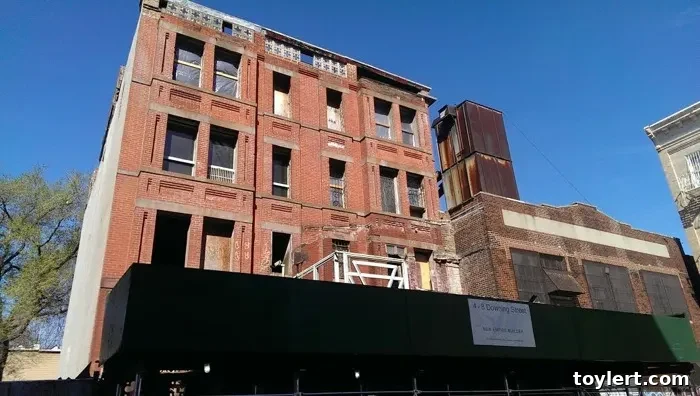
The long-awaited construction phase at 4-8 Downing Street has officially commenced, marking a pivotal moment in the building’s storied evolution. The visible presence of a sidewalk shed signals that active work is now underway, providing essential protection for pedestrians and delineating the construction zone. This initial phase typically involves securing the site, preparing for extensive demolition and reconstruction, and implementing rigorous safety protocols for both construction personnel and the surrounding public. The installation of a sidewalk shed is a standard and necessary first step in any major urban renovation project, particularly in a densely populated neighborhood like Clinton Hill.
The Alt 1 permit, specifically issued for 4 Downing Street, received its approval recently, clearing the regulatory path for the transformation to proceed with full legal sanction. This permit is far more than a mere formality; it represents a thoroughly vetted architectural and engineering plan that has undergone rigorous review and approval by city authorities. It encompasses detailed schematics for the layout of the eight condominium units, precise specifications for all construction materials, and a clear, comprehensive outline of the proposed construction methodology. The approval process for such a significant permit is often rigorous, involving multiple revisions, detailed inspections, and adherence to stringent codes, all to ensure that the final structure will be safe, compliant, and aesthetically integrated with city standards.
This renovation project transcends a simple upgrade; it represents a complete reimagining of the space. While meticulously respecting the historical footprint and contextual integrity of the building, the interior will be entirely gutted and reconfigured to accommodate modern luxury living. Contemporary conveniences, advanced energy-efficient systems, and sophisticated design elements will be seamlessly integrated throughout the property. The exterior, while likely shedding some of its more fantastical and non-compliant additions, is expected to be meticulously restored and refined, offering a harmonious blend of historic charm and contemporary elegance. The overarching goal is to create residences that epitomize the best of Brooklyn living – spacious, light-filled layouts, premium finishes, and a tangible connection to one of the borough’s most storied and culturally significant addresses.
Clinton Hill: A Desirable Enclave for Modern Urban Living
The ambitious development of the Broken Angel into luxury condominiums is also a powerful reflection of the broader, ongoing transformation occurring throughout Clinton Hill. Nestled strategically between the dynamic neighborhoods of Fort Greene and Prospect Heights, Clinton Hill boasts a rich and captivating history, characterized by its stunning brownstone-lined streets, majestic historic mansions, and a deeply ingrained sense of community. For generations, it has served as a favored enclave for artists, academics, and discerning professionals, all drawn to its picturesque tree-lined avenues and enduring architectural grandeur.
In recent decades, Clinton Hill has experienced a significant and sustained surge in popularity, driven by its highly appealing mix of historic charm, thriving cultural institutions, and an ever-expanding array of independent boutiques, charming cafes, and critically acclaimed restaurants. The neighborhood offers residents exceptional access to diverse public transportation options, beautiful green spaces like Fort Greene Park and Prospect Park, and a vibrant cultural scene that includes the renowned Pratt Institute. As a direct result, demand for residential real estate in Clinton Hill has steadily climbed, cementing its status as one of Brooklyn’s most desirable and competitive residential areas.
The introduction of high-end condominiums at 4-8 Downing Street aligns perfectly with this evolving demographic and market demand. Future residents will not only gain access to meticulously crafted and exquisitely designed homes but will also become an integral part of a dynamic, sought-after, and historically rich community. The property’s unique and celebrated history, even in its transformed state, will undoubtedly add to its immense allure, offering prospective buyers not just a home, but a unique piece of Brooklyn’s captivating narrative intertwined with modern luxury and comfort.
The Delicate Balance: Preserving Heritage Amidst Modernization
The conversion of the Broken Angel property raises profound and often complex questions about urban preservation, responsible development, and the constantly evolving face of city landscapes. For many who cherished its original form, the Broken Angel represented an irreplaceable piece of folk art and a potent symbol of artistic defiance against conformity. Its transformation into luxury condominiums, while perhaps an inevitable outcome given its structural challenges, escalating maintenance costs, and the intense economic pressures of New York City real estate, nonetheless marks the bittersweet end of a truly unique cultural chapter.
However, proponents of this development argue persuasively that the project represents a thoughtful and necessary form of adaptive reuse, granting a storied structure a vital new lease on life while simultaneously ensuring its long-term viability and contribution to the urban fabric. Alex Barrett, in his dual role as an architect and developer, has been presented with the challenging yet rewarding opportunity to navigate this delicate balance. The challenge lies in respectfully retaining some essence of the building’s historical and artistic significance, even as its physical form and functional purpose are thoroughly updated for the 21st century. The exceptional quality of the renovation, the sensitive design choices, and the palpable respect shown for the building’s storied past will ultimately determine how this transformation is perceived by the community and the broader city at large.
The successful completion of these condominiums will undoubtedly contribute significantly to the ongoing narrative of Clinton Hill’s growth and gentrification. It reflects a broader, pervasive trend seen across Brooklyn, where historic structures are frequently reimagined and repurposed to meet contemporary housing demands, seamlessly blending the old with the new in often striking, and sometimes controversial, ways. This particular development stands as a powerful testament to the enduring appeal of Brooklyn real estate and the continuous, dynamic evolution of its iconic and beloved neighborhoods.
Anticipating the Future: Sophisticated Living in a Historic Brooklyn Setting
Upon its anticipated completion, the condominiums at 4-8 Downing Street are poised to become highly sought-after residences within the competitive Clinton Hill real estate market. Prospective buyers can realistically expect a sophisticated fusion of historical character and cutting-edge contemporary amenities. These exquisite homes will likely feature spacious, light-filled interiors, state-of-the-art gourmet kitchens equipped with top-of-the-line appliances, luxurious spa-like bathrooms, and potentially private outdoor spaces or shared roof decks offering breathtaking city views. Given the developer’s established reputation, meticulous attention to detail and unparalleled craftsmanship will undoubtedly be paramount in every aspect of the design and construction.
The strategic and highly desirable location of 4-8 Downing Street further amplifies its considerable market appeal. Residents will enjoy unparalleled convenience, being within easy reach of numerous subway lines that provide swift access to Manhattan and other vibrant Brooklyn neighborhoods. The immediate proximity to Pratt Institute, a globally renowned art and design school, imbues the area with a youthful, creative, and intellectual energy. Furthermore, the charming array of local businesses, ranging from artisanal bakeries and bespoke boutiques to upscale dining establishments, collectively contribute to a sophisticated and highly desirable urban lifestyle that is increasingly coveted by discerning buyers seeking the best of Brooklyn.
This project is fundamentally more than just the creation of new homes; it is about curating a distinctive and elevated lifestyle. It appeals directly to individuals and families who deeply appreciate architectural significance, demand modern comforts, and aspire to be an integral part of a vibrant, historic Brooklyn community. The future residents of these exceptional condominiums will inherit a tangible piece of New York City history, meticulously reimagined for contemporary living, representing a truly unique and compelling offering in the fiercely competitive Brooklyn real estate market.
Conclusion: A New Chapter for a Brooklyn Landmark
The commencement of construction work at 4-8 Downing Street marks a truly pivotal and transformative moment for the Broken Angel, signaling its metamorphosis from a celebrated art project into a collection of highly coveted luxury residences. While the quirky, organic, and truly unique structure created by Arthur Wood will largely become a cherished memory, its enduring spirit of creativity, transformation, and artistic audacity will undoubtedly linger within the reimagined building. Developer Alex Barrett’s ambitious project represents a careful and commendable balance of preserving historical context with expertly meeting the contemporary demands of modern urban development. The infusion of significant financial investment and profound architectural expertise promises to deliver exceptional homes in one of Brooklyn’s most coveted and desirable neighborhoods. As Clinton Hill continues its dynamic evolution, the new incarnation of 4-8 Downing Street stands as a powerful testament to Brooklyn’s enduring capacity for reinvention, offering future residents a singular blend of profound history, artistic legacy, and sophisticated contemporary living.