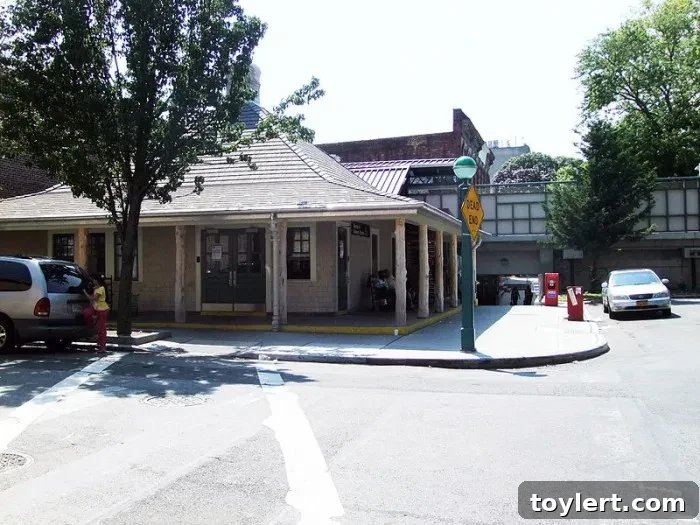
802 East 16th Street: A Beacon of Brooklyn’s Architectural Heritage
Brooklyn, one building at a time. Every structure tells a story, a chapter in the grand narrative of one of New York City’s most dynamic boroughs. Among these silent narrators stands 802 East 16th Street, a building that has witnessed the transformation of Flatbush from suburban dream to vibrant urban reality. Originally serving as the prominent T.B. Ackerson Real Estate office, this architectural marvel has since evolved into the beloved Avenue H Station House, steadfastly anchoring its community through changing eras and functions. Its dual identity speaks volumes about the historical currents that shaped Brooklyn, making it a pivotal piece in understanding the borough’s rich legacy.
This article delves into the fascinating past of 802 East 16th Street, exploring its origins, its distinctive architectural style, and its enduring significance to the Ditmas Park and Flatbush neighborhoods. From its early days as a bustling real estate hub to its current role as a gateway to public transit, the building embodies the spirit of Brooklyn’s resilience and adaptability. Join us as we uncover the layers of history embedded within its walls, celebrating its journey from a commercial cornerstone to a cherished local landmark.
The Visionary Behind the Walls: T.B. Ackerson and Brooklyn’s Early 20th Century Boom
To truly appreciate 802 East 16th Street, one must first understand the man and the era that brought it to life. T.B. Ackerson was not just a real estate agent; he was a visionary developer who played a colossal role in shaping the residential landscape of early 20th-century Brooklyn, particularly the burgeoning Flatbush and Ditmas Park areas. As Brooklyn transitioned from a collection of independent towns into a fully integrated borough of New York City, the demand for well-appointed suburban-style homes grew exponentially. Ackerson capitalized on this demand, envisioning orderly, picturesque communities that offered the tranquility of country living with convenient access to Manhattan.
His office at 802 East 16th Street was more than just a place of business; it was a statement. Built at a time when grand development schemes were taking root, the building itself served as a powerful advertisement for the quality and aesthetic principles that Ackerson promoted. It was an architectural anchor, designed to instill confidence and reflect the aspirations of the middle and upper-middle-class families Ackerson sought to attract. This period saw the proliferation of distinctive architectural styles, blending Victorian influences with emerging Arts and Crafts and Colonial Revival aesthetics, creating the unique streetscapes that define much of historic Flatbush today. The choice of style for Ackerson’s office was deliberate, intending to convey stability, elegance, and a sense of timeless appeal that would resonate with prospective homeowners.
The prosperity of Ackerson’s ventures contributed significantly to the rapid development and population growth of Brooklyn, transforming vast tracts of farmland into a mosaic of tree-lined streets and architecturally distinct homes. These planned communities offered modern amenities and a serene environment, making them highly desirable for those seeking an escape from the burgeoning density of Manhattan. The T.B. Ackerson Real Estate office stood as a testament to this era of ambitious urban planning and the creation of aspirational suburban enclaves within the city’s expanding footprint.
An Architectural Gem: Unpacking the Details of 802 East 16th Street
The building at 802 East 16th Street is a remarkable example of early 20th-century American architecture, embodying a robust blend of styles that were popular during Brooklyn’s development boom. While often categorized under the broader umbrella of “Victorian,” its specific features lean heavily towards the Tudor Revival and Arts and Crafts movements, with subtle hints of Colonial Revival elegance. This eclectic mix gives the building its unique character and charm, distinguishing it from surrounding structures.
Constructed primarily of sturdy brick, the building exudes a sense of permanence and craftsmanship. The choice of brick, often laid in intricate patterns or with contrasting mortar, speaks to the attention to detail prevalent in the era. Stone accents, perhaps around windows, doors, or as decorative banding, further enhance its visual appeal, providing texture and a touch of grandeur. The roofline is particularly striking, likely featuring steep gables, dormers, and perhaps even half-timbering typical of Tudor Revival designs, lending it a picturesque, storybook quality. These architectural elements were not merely decorative; they were integral to the building’s structural integrity and its ability to withstand the test of time.
The windows are another key feature, often multi-paned and possibly featuring leaded or stained glass details, which were common in Arts and Crafts designs. These windows not only allow natural light to flood the interior but also contribute significantly to the building’s exterior aesthetic, creating a rhythm and pattern across its facades. The entrance, likely framed by an archway or a portico, would have been designed to be inviting and impressive, reflecting the building’s original commercial purpose as a welcoming gateway for potential homebuyers. Decorative elements such as carved stonework, terra cotta details, or intricate woodwork under the eaves would have added layers of sophistication, showcasing the skilled artistry of the period.
Inside, one can imagine a layout designed for functionality and an impression of quality. High ceilings, rich wood paneling, and perhaps a grand central staircase would have created an atmosphere of professionalism and comfort, ideal for a real estate office where crucial transactions took place. The architectural integrity of 802 East 16th Street serves as a tangible link to Brooklyn’s past, illustrating the high standards of design and construction that characterized the borough’s formative years. It stands as a proud testament to an era when buildings were crafted not just for utility, but also for beauty and lasting impact.
From Commerce to Community: The Avenue H Station House
As the decades progressed, Brooklyn continued to evolve, and with it, the needs and functions of its buildings. The real estate landscape shifted, and eventually, the T.B. Ackerson office transitioned into its present-day role as the Avenue H Station House. This transformation is a poignant reflection of urban growth and the increasing importance of public transit in connecting far-flung neighborhoods to the heart of the city.
The “Avenue H Station” refers to the subway stop on the BMT Brighton Line, a vital artery that transports thousands of commuters daily. The fact that the historic Ackerson building became associated with, or even directly serves, the station speaks volumes. It likely became a ticket booth, a waiting area, or an administrative office for the transit system, adapting its grand spaces to serve the public in a new and essential capacity. This repurposing highlights the inherent flexibility and adaptability of well-built historical structures.
As the Avenue H Station House, the building serves as more than just a functional space; it is a recognizable landmark for countless daily commuters and a welcoming gateway to the Ditmas Park neighborhood. It offers a sense of arrival, grounding the modern transit experience within a rich historical context. For many, it’s the first and last piece of historic architecture they encounter on their daily journeys, a beautiful contrast to the often utilitarian design of contemporary transit hubs. Its presence ensures that the history of the neighborhood is visibly woven into its everyday fabric, a constant reminder of the past even as the city rushes forward.
Ditmas Park: A Neighborhood Defined by Its Architecture and Legacy
The building at 802 East 16th Street is intrinsically linked to the character and history of Ditmas Park, one of Brooklyn’s most architecturally significant and cherished neighborhoods. Ditmas Park is renowned for its distinctive collection of large, freestanding Victorian homes, many of which were built during the same period of rapid development spearheaded by individuals like T.B. Ackerson. Unlike the typical Brooklyn brownstone rows, Ditmas Park offered a unique vision: a suburban-style oasis within the bustling city, complete with sprawling lawns, front porches, and mature tree-lined streets.
The T.B. Ackerson office, now the Avenue H Station House, stands as a commercial and civic counterpoint to these residential masterpieces. It represents the administrative and infrastructural backbone that made such a neighborhood possible. Its robust architecture and prominent location speak to the ambition and foresight of the developers who shaped this area. The building serves as a visual cue to the neighborhood’s origins as a carefully planned community, a stark contrast to the organic, often haphazard growth of older city districts.
Today, Ditmas Park remains a highly sought-after neighborhood, celebrated for its unique blend of urban convenience and small-town charm. Its residents are deeply committed to preserving its architectural integrity and vibrant community spirit. The Avenue H Station House, therefore, is not just a building; it is a symbol of this enduring commitment to heritage and place. It stands as a testament to the power of thoughtful urban planning and the lasting appeal of beautiful, well-maintained architecture. Its presence contributes to the neighborhood’s unique identity, making it instantly recognizable and cherished by those who live, work, and pass through Ditmas Park.
Preserving the Past, Serving the Future: A Lasting Legacy
The journey of 802 East 16th Street, from a bustling real estate office to the vital Avenue H Station House, is a microcosm of Brooklyn’s own evolution. It stands as a powerful example of how architecture can adapt and thrive across different eras, continuously serving the needs of its community while retaining its historical essence. Its robust construction and distinctive design have allowed it to endure, becoming a familiar and comforting presence in the urban landscape of Ditmas Park.
The preservation of such buildings is paramount, not merely for aesthetic reasons, but because they are tangible links to our collective past. They offer invaluable insights into the social, economic, and architectural trends that have shaped our cities. 802 East 16th Street, with its dual identity, perfectly encapsulates the ingenuity of early 20th-century developers and the enduring importance of efficient public transit in a modern metropolis. Its continued functionality ensures that this piece of Brooklyn’s heritage remains alive and relevant.
As we continue to navigate the complexities of urban development, buildings like the Avenue H Station House remind us of the value of thoughtful design, quality craftsmanship, and the power of history embedded in our everyday surroundings. It is a true Brooklyn beacon, shining a light on the borough’s rich architectural tapestry and its unwavering spirit.