Editor’s note: This article is an updated exploration of a historic Dumbo landmark, first covered in 2012. For the original feature, please refer to the initial post here.
The Enduring Grandeur of 100-110 Bridge Street: A Dumbo Landmark
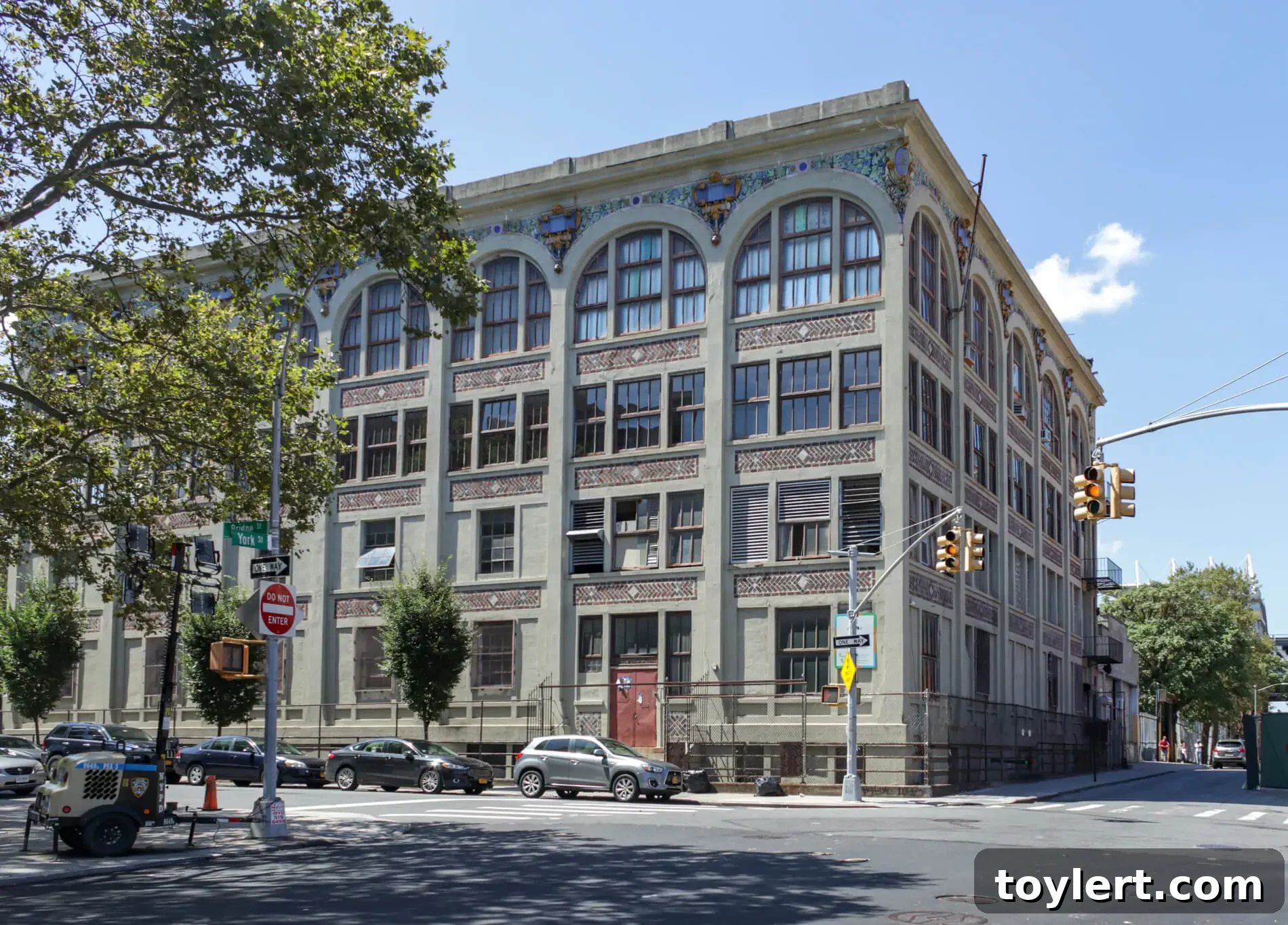
In the vibrant, ever-evolving landscape of Dumbo, Brooklyn, certain structures possess an undeniable magnetic pull, effortlessly commanding attention amidst a tapestry of architectural styles. Among these, the building at 100-110 Bridge Street stands as a particularly striking example. While Dumbo itself is a precinct rich with historic brick industrial buildings, interspersed with sleek new construction condos and the imposing brick towers of nearby housing projects, this particular edifice radiates an almost theatrical brilliance. It’s as if permanent spotlights illuminate its every detail, inviting passersby to pause and appreciate its unique charm.
At first glance, 100-110 Bridge Street presents itself as an exquisite, almost whimsical, terra-cotta ornamented fantasy. Its intricate facade hints at a bygone era of architectural opulence and craftsmanship. Yet, a closer inspection reveals much more than mere aesthetic appeal. This building is not just a visual delight; it is a repository of a rich and compelling history, a narrative woven into the very fabric of Dumbo’s industrial and cultural evolution.
An Architectural Masterpiece: Terra-Cotta Splendor in Dumbo
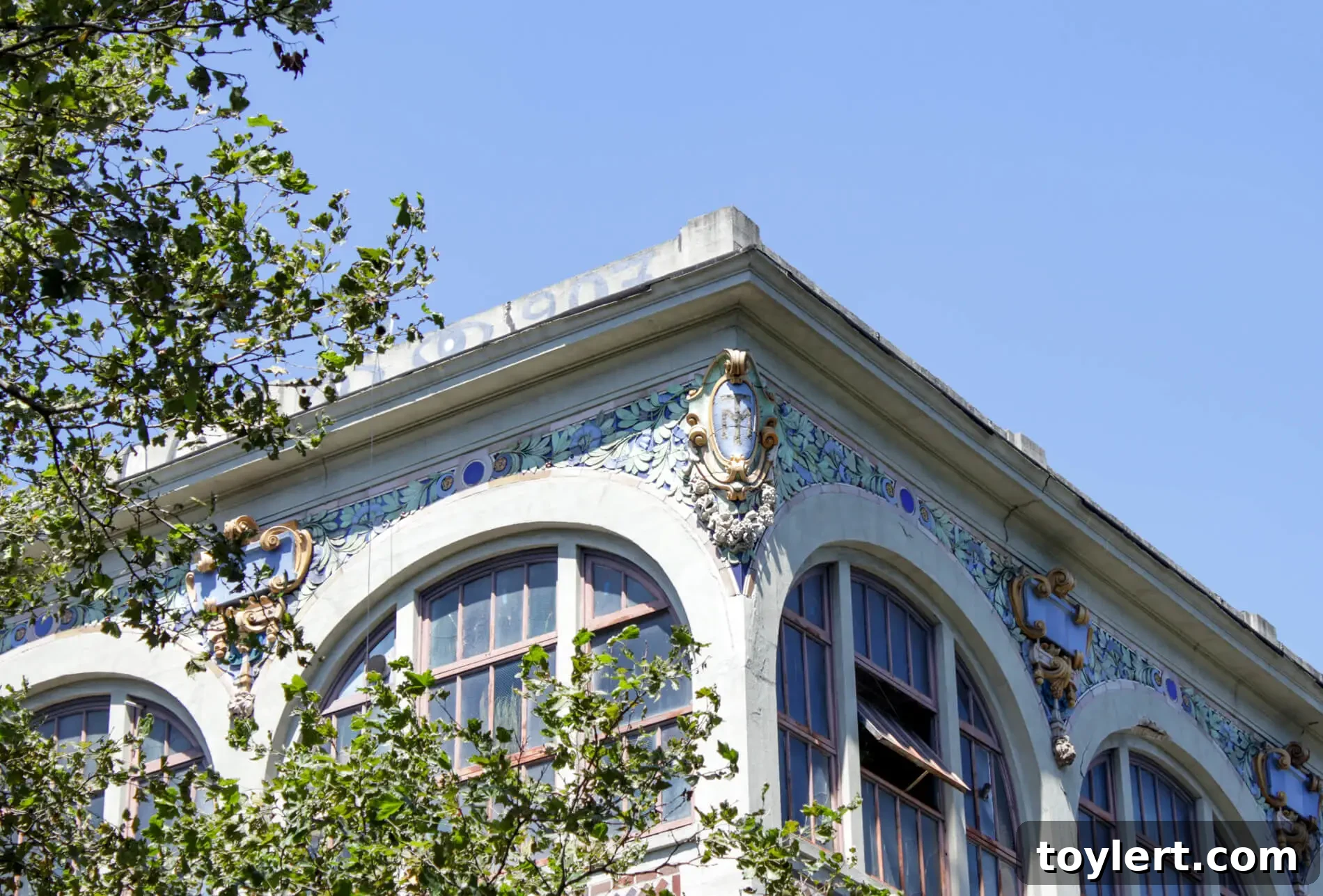
The architectural distinction of 100-110 Bridge Street is primarily defined by its magnificent terra-cotta detailing. This material, often associated with the Beaux-Arts and Romanesque Revival styles prevalent in late 19th and early 20th-century American architecture, was a favorite for public buildings and grand commercial structures due to its versatility, durability, and ability to be molded into highly elaborate designs. On this Dumbo factory building, the terra-cotta is not merely decorative; it’s an integral part of its identity, creating a facade that is both robust and remarkably ornate.
Observe the intricate patterns that adorn the building’s upper stories, the sculpted cornices, and the decorative elements framing its large industrial windows. These details transform what might otherwise be a utilitarian factory building into a work of art. The building’s designers skillfully integrated classic architectural motifs with an industrial scale, resulting in a structure that exudes both gravitas and a surprising lightness. The warm, earthy tones of the terra-cotta contrast beautifully with the darker brickwork, creating a visual rhythm that draws the eye upwards, encouraging appreciation for its verticality and grandeur. Each arch, pilaster, and frieze tells a story of craftsmanship and artistic ambition, setting it apart from its plainer industrial neighbors and even the more contemporary glass and steel constructions.
The scale of the building is also impressive, a testament to the industrial might that once characterized this part of Brooklyn. Its generous windows, designed to flood the factory floors with natural light, now offer panoramic views of the Manhattan skyline and the East River, reflecting the building’s seamless transition from a hub of manufacturing to a modern residential and commercial space. This architectural marvel not only anchors its block but also serves as a living monument to Dumbo’s rich building heritage, a beacon of historical design in a constantly reinventing urban landscape.
A Legacy Forged in Industry: The Thomson Meter Company
The “delicious history” of 100-110 Bridge Street is deeply rooted in Brooklyn’s industrial past, particularly its association with the Thomson Meter Company. Erected during an era when Brooklyn was a global manufacturing powerhouse, this building was originally constructed to house the operations of one of the leading manufacturers of water and gas meters in the United States. Founded in the late 19th century, the Thomson Meter Company played a critical role in the burgeoning infrastructure of American cities, providing the essential instruments for accurate utility measurement.
The choice of Dumbo as the location for such a significant factory was no accident. The neighborhood, strategically positioned along the Brooklyn waterfront, offered unparalleled access to shipping routes and a robust network of railways, facilitating the efficient transport of raw materials and finished products. The presence of other major industries, from sugar refineries to machinery manufacturers, created a vibrant industrial ecosystem, providing skilled labor and ancillary services. The Thomson Meter Company’s operations here were state-of-the-art for their time, encompassing intricate metalwork, assembly lines, and precision engineering. The building itself was designed to accommodate these complex processes, with robust floor plates, high ceilings, and ample natural light, all characteristic features of advanced industrial architecture of the period.
For decades, the rhythmic hum of machinery and the diligent work of hundreds of employees filled the floors of 100-110 Bridge Street, contributing to Brooklyn’s economic prosperity and shaping the daily lives of countless city residents. The company’s innovative spirit and commitment to quality made it a respected name in its field, reflecting the broader narrative of American ingenuity and industrial growth. This era laid the foundation for the building’s enduring legacy, imbuing it with the spirit of innovation and hard work that characterized Dumbo’s golden age of industry.
From Meters to Melodies: The Sweet History of Eskimo Pie
Perhaps one of the most intriguing and indeed “delicious” chapters in the building’s history involves its connection to the beloved American treat, the Eskimo Pie. While the Thomson Meter Company established the building’s initial industrial purpose, later tenants brought a different kind of production to its hallowed halls. Though exact details of the Eskimo Pie’s manufacturing tenure within this specific address can be elusive in historical records, the association itself underscores the versatile and evolving nature of Dumbo’s industrial landscape. It speaks to a period where factory spaces could adapt to produce a diverse range of goods, from essential infrastructure components to popular consumer delights.
The Eskimo Pie, invented in 1920 by Christian Kent Nelson, quickly became a sensation. This simple yet revolutionary concept—a block of vanilla ice cream enrobed in a chocolate shell—captured the public’s imagination and its sweet tooth. The success of the Eskimo Pie was meteoric, leading to widespread production and distribution across the nation. For a time, it is believed that operations related to the creation or distribution of this iconic frozen treat found a home within the capacious floors of 100-110 Bridge Street, adding a layer of charming, accessible history to its more serious industrial past. Imagine the sweet scent of chocolate mingling with the lingering echoes of metalworking, a testament to the building’s multifaceted life.
This “sweet innovation” period highlights Dumbo’s capacity for reinvention, even within its industrial phase. The shift from manufacturing precision instruments to producing an item of pure indulgence illustrates the dynamic economic forces at play in Brooklyn. It also provides a delightful anecdote, making the building’s story more relatable and memorable. The transformation of a factory that once housed the meticulous creation of meters into a potential site for the mass production of a cherished dessert perfectly encapsulates the adaptive spirit of urban industrial architecture.
Dumbo’s Transformation: 100-110 Bridge Street in the Modern Era
The story of 100-110 Bridge Street is inextricably linked with the dramatic transformation of Dumbo itself. Once a bustling industrial and maritime district, Dumbo (which stands for “Down Under the Manhattan Bridge Overpass”) experienced a period of decline in the mid-20th century as industries moved away from urban centers. However, beginning in the late 20th century and accelerating into the new millennium, Dumbo underwent an extraordinary renaissance. Artists, tech companies, and developers discovered its raw charm, expansive spaces, and unparalleled views, breathing new life into its historic fabric.
Today, Dumbo is one of New York City’s most sought-after neighborhoods, a vibrant hub of creativity, innovation, and upscale living. The old factory buildings, including 100-110 Bridge Street, have been meticulously preserved and adapted for new uses. Many have been converted into luxury residential lofts, stylish offices for tech startups and creative agencies, and ground-floor retail spaces, galleries, and acclaimed restaurants. This adaptive reuse has been a cornerstone of Dumbo’s revitalization, allowing the neighborhood to retain its unique industrial character while embracing modernity.
100-110 Bridge Street now stands as a prime example of this successful urban renewal. Its grand architectural details, once a symbol of industrial might, now lend an unparalleled sense of character and history to its modern inhabitants. The large windows that once illuminated factory floors now offer residents and office workers spectacular vistas of the Brooklyn Bridge, Manhattan skyline, and the East River. The building continues to serve as a vital component of Dumbo’s dynamic identity, harmoniously blending its storied past with its vibrant present. It’s a testament to how intelligent preservation and thoughtful development can transform industrial relics into cherished, functional landmarks for future generations.
A Timeless Icon: The Enduring Appeal of 100-110 Bridge Street
In conclusion, 100-110 Bridge Street is far more than just another building in Dumbo; it is a profound testament to Brooklyn’s enduring architectural and industrial heritage. Its striking terra-cotta facade, a masterpiece of early 20th-century design, ensures its prominence on a street renowned for its historic structures. From its origins as the bustling headquarters of the Thomson Meter Company, an innovator in industrial precision, to its charming connection with the sweet success of the Eskimo Pie, the building has witnessed and participated in significant chapters of American commerce and culture.
As Dumbo continues its journey as one of New York City’s most desirable and dynamic neighborhoods, 100-110 Bridge Street remains a steadfast anchor, a magnificent blend of history and contemporary living. It symbolizes the ingenious spirit of adaptation, showcasing how structures built for intense industrial purposes can be reimagined and repurposed to meet the demands of a new era without losing their intrinsic character. This building does not merely stand out; it captivates, educates, and inspires, inviting everyone to delve deeper into its rich layers of history and appreciate the meticulous craftsmanship that has allowed it to endure. It is truly a timeless icon, a jewel in the crown of Brooklyn’s architectural landscape, and a constant reminder of the profound stories embedded within our urban fabric.