The Tragic Demise of the Historic Bowne Warehouse: A Red Hook Landmark Lost
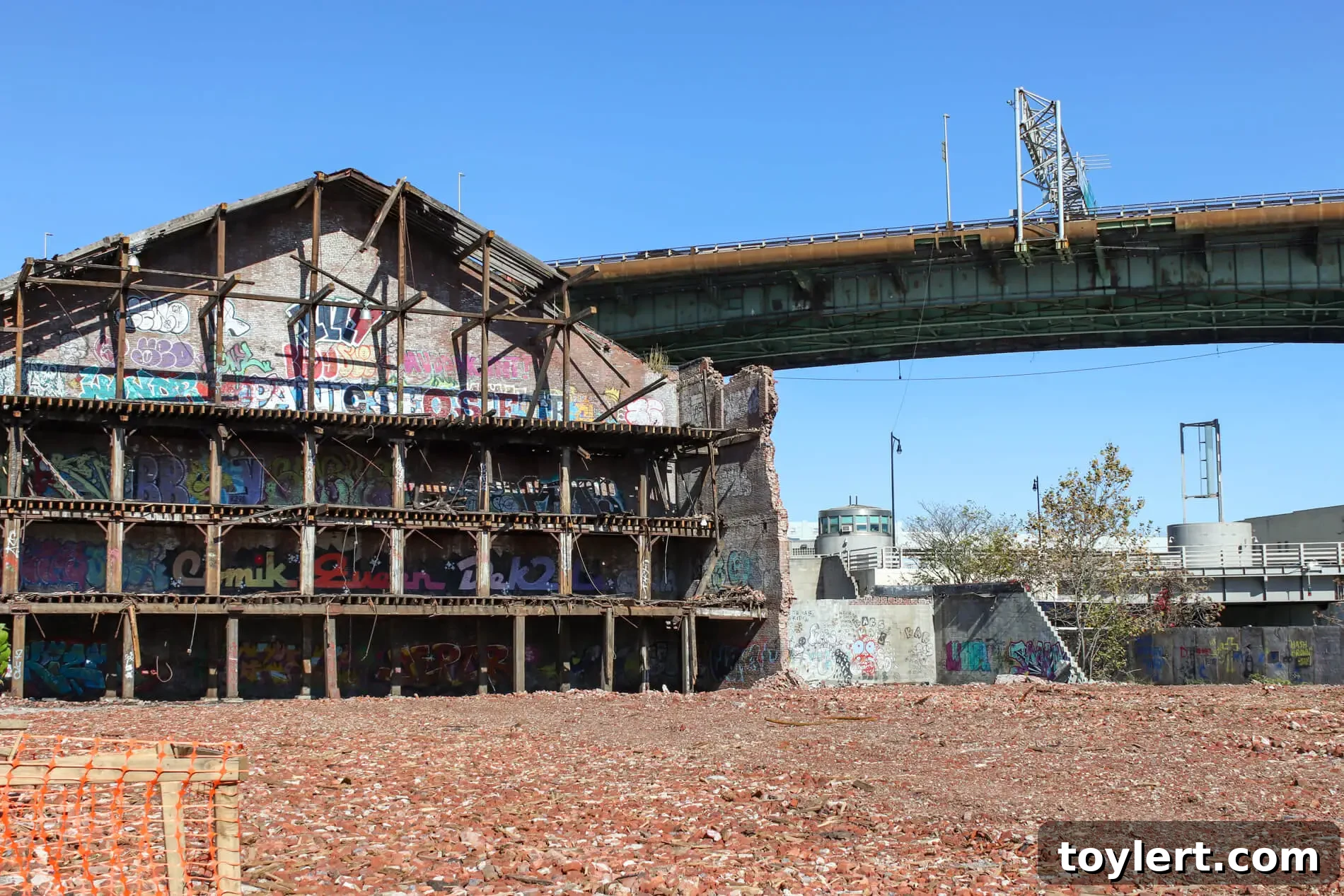
The once-proud structure of the historic Bowne Warehouse, a cornerstone of Red Hook’s industrial heritage, is now largely reduced to rubble. Following a devastating arson fire in June, demolition efforts have systematically dismantled what remained of the venerable building. As of recent reports, only a solitary wall stands as a stark reminder of its former grandeur, a poignant testament to a significant piece of Brooklyn’s past now mostly erased. This saga represents a painful loss for local preservationists and a somber reflection on the challenges of protecting historical assets in rapidly developing urban landscapes.
The Bowne Warehouse, officially known as the S.W. Bowne Grain Storehouse, was more than just an old building; it was a tangible link to Red Hook’s storied past as a bustling port and industrial hub. Erected in the late 19th century, it played a crucial role in the processing and storage of grain, feeding the burgeoning city and connecting it to agricultural networks across the nation. Its robust brickwork and distinct architectural style embodied the utilitarian elegance of its era, marking it as a significant example of industrial design. For decades, it stood as an iconic silhouette on the Red Hook waterfront, a silent witness to the area’s transformation from a gritty working port to a vibrant, eclectic community.
A Fire that Ignited Controversy and Accelerated Demolition
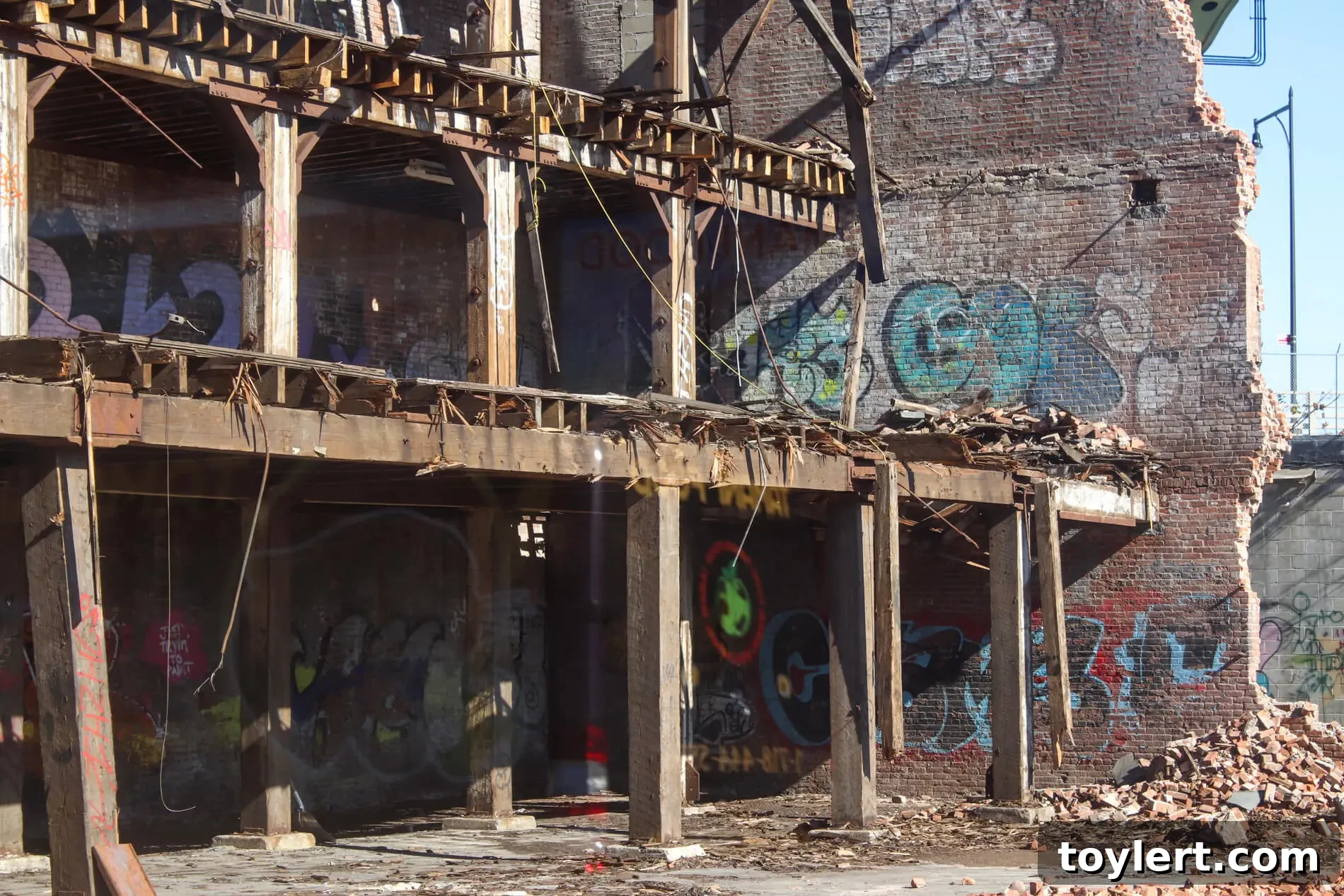
The tragic arson fire that engulfed the warehouse in June wasn’t merely a structural disaster; it was a catalyst that intensified an already heated debate. The inferno decimated much of the building, rendering large sections structurally unsound and accelerating the inevitable demolition. While investigations into the fire’s origins are ongoing, the timing proved to be exceptionally contentious, occurring amidst fervent efforts by local preservation groups to save the building from the wrecking ball. The fire not only destroyed a significant portion of the physical structure but also dealt a severe blow to the hopes of those who championed its preservation.
The days leading up to the fire were steeped in a critical struggle for the warehouse’s future. Just twenty-four hours before the devastating blaze, City Council Member Carlos Menchaca had formally notified Meyer Chetrit, the property’s owner and a prominent figure in real estate development, of a significant development. A dedicated coalition of local preservationists had successfully rallied, requesting the councilman’s crucial support to initiate the process of landmarking the building. This designation, had it been granted, would have provided the Bowne Warehouse with robust legal protection against demolition and significant alteration, ensuring its long-term survival and historical integrity.
The Battle for Preservation: A Community’s Last Stand
The community’s desire to preserve the Bowne Warehouse was not a sudden impulse but the culmination of years of advocacy and a deep appreciation for Red Hook’s unique identity. Locals saw the warehouse not just as bricks and mortar, but as an irreplaceable piece of their collective memory and an anchor to the neighborhood’s working-class roots. Landmark status would have recognized this intrinsic value, preserving the building for future generations and potentially opening doors for adaptive reuse projects that could integrate its historical character with new community-oriented functions. The preservationists’ efforts highlight a broader trend in urban areas where communities fight to retain their distinct identities against the homogenizing forces of rapid development.
However, the path to preservation was fraught with obstacles. Months before the fire and the councilman’s notification, residents had voiced concerns regarding activities at the site. As early as May, reports emerged of workers seemingly engaged in the systematic removal of portions of the building. These observations were particularly alarming because, at that time, the city had not yet granted an application for a demolition permit. This pre-permit activity fueled suspicions among locals, raising questions about the developer’s intentions and whether a deliberate strategy was in play to bypass formal preservation processes or to expedite the building’s eventual removal.
Meyer Chetrit and the Dynamics of Development
Meyer Chetrit, the owner of the Bowne Warehouse property, is known for his extensive portfolio in real estate development across New York City. Developers like Chetrit often operate within a complex economic framework, where the highest and best use of a property is typically determined by its potential for new construction and maximizing return on investment. From a purely economic standpoint, an old, potentially dilapidated warehouse might represent an opportunity for a modern residential or commercial complex, offering significant financial gains. This perspective often clashes directly with the intangible values of historical preservation and community sentiment.
The controversy surrounding the Bowne Warehouse underscores the perennial tension between development and preservation. On one side, developers seek to capitalize on valuable urban land, often promising new housing, jobs, and economic growth. On the other, communities and preservationists strive to safeguard architectural heritage, maintain neighborhood character, and remember the narratives embedded within historic structures. The legal framework governing these interactions, particularly the process for obtaining demolition permits and the criteria for landmark designation, is critical in mediating these competing interests. The alleged pre-permit demolition activity at the Bowne Warehouse site further complicated this already delicate balance, casting a shadow of doubt over the legitimacy of the subsequent events.
Red Hook’s Evolving Identity: A Microcosm of Urban Change
Red Hook itself is a neighborhood that embodies the complex dynamics of urban evolution. Once a thriving industrial port district, it experienced periods of decline before undergoing a significant revitalization in recent decades. This transformation has brought new residents, businesses, and cultural institutions, yet it has also put immense pressure on its historical fabric. Iconic structures like the Bowne Warehouse are not just remnants of the past; they are vital components of Red Hook’s unique identity, offering character and a sense of place that new, generic developments often fail to replicate.
The loss of the Bowne Warehouse is therefore more than just the loss of a building; it is a profound blow to the collective memory and historical landscape of Red Hook. It signals a potential erosion of the very qualities that make the neighborhood distinct and desirable. The debate over its fate serves as a microcosm for larger discussions happening in cities worldwide: how do we balance progress and growth with the imperative to protect our shared heritage? How can communities empower themselves against powerful development interests? And what role do civic leaders play in championing their constituents’ wishes for preservation?
Beyond the Rubble: Lessons Learned and Future Vigilance
As demolition continues, and the last standing wall of the Bowne Warehouse eventually falls, the narrative of this historic site will continue to resonate. It will serve as a powerful cautionary tale about the vulnerability of historic buildings in the face of development pressures, particularly when timely landmarking efforts are outpaced by unforeseen events like arson or alleged pre-emptive demolition. The incident highlights the urgent need for more proactive and robust protective measures for threatened historic sites, alongside greater transparency in the demolition permit process.
For the residents of Red Hook and preservation advocates everywhere, the Bowne Warehouse saga reinforces the importance of unwavering vigilance and sustained community activism. It underscores the necessity for comprehensive urban planning that values historical integrity alongside economic development. The battle for the Bowne Warehouse may be lost, but its story can galvanize future efforts, inspiring communities to act sooner, advocate louder, and demand stronger protections for the irreplaceable landmarks that define their cities and connect them to their past. The physical structure may be gone, but the lessons learned from its demise must endure, shaping a future where heritage is truly valued and safeguarded.
The site at 595 Smith Street, once home to the S.W. Bowne Grain Storehouse, now faces an uncertain future. While the immediate next steps are likely to involve clearing the remaining debris, the long-term plans for this prominent Red Hook parcel will undoubtedly be a subject of intense local interest and continued scrutiny. What rises in place of the historic warehouse will be a new chapter, but one forever marked by the indelible legacy of what was lost.