Navigating New York: Urban Development, Policy Shifts, and Community Voices
New York City, a global epicenter of culture, commerce, and innovation, is perpetually in a state of flux. Amidst its iconic skyline and bustling streets, a myriad of crucial discussions and developments continually shape its future. From ambitious urban planning projects that redefine neighborhoods to intricate political maneuvering, environmental challenges, and the vibrant pulse of its community life, understanding these narratives offers a comprehensive look at the city’s dynamic evolution. This article delves into a selection of pressing issues and noteworthy events that capture the essence of New York’s ongoing transformation, reflecting the diverse forces at play in one of the world’s most influential cities.
We will explore how major infrastructure projects impact local residents, the financial complexities underpinning city governance, emerging environmental concerns, and the unique cultural threads that weave through the urban fabric. Each topic, while distinct, contributes to the overarching story of New York City’s resilience, adaptability, and enduring spirit, providing insights into the challenges and opportunities that define this unparalleled metropolis.
Urban Transformation and Infrastructure Challenges
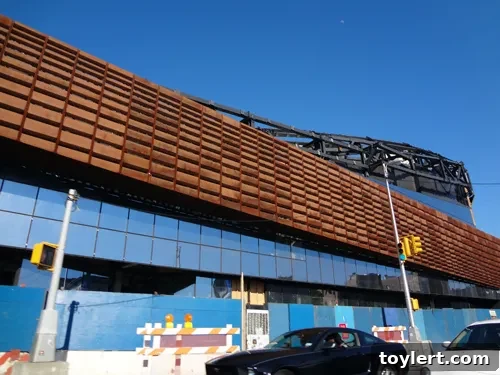
The skyline of New York City is a testament to its relentless ambition, constantly evolving through major urban development projects. Among the most prominent in recent memory is the Barclays Center, an impressive sports and entertainment arena that has significantly reshaped the Prospect Heights neighborhood in Brooklyn. This monumental undertaking, while celebrated for bringing new energy and economic activity, also sparked considerable debate regarding its integration into an already densely populated urban environment. The image below captures a moment in its construction, symbolizing the ongoing progress and challenges inherent in such large-scale ventures.
The construction and subsequent operation of facilities like the Barclays Center invariably raise critical questions for local residents and urban planners alike. A particular concern highlighted by NY1 reports revolved around the capacity of Prospect Heights to accommodate the anticipated increase in arena traffic. This apprehension is deeply rooted in the daily lives of those living near the arena, who face potential gridlock, noise pollution, and strained local services. Effective traffic management, public transportation integration, and proactive community engagement become paramount in mitigating these impacts, ensuring that development benefits all stakeholders, not just event-goers. The delicate balance between economic growth and residential quality of life remains a constant challenge in dense urban areas like New York, demanding innovative solutions and collaborative efforts from city officials and local communities.
Closely tied to the Barclays Center is the larger Atlantic Yards development, a controversial and massive project envisioned to bring residential towers, office space, and retail to the area surrounding the arena. The sheer scale and prolonged timeline of this development have been subjects of intense public scrutiny and debate for years. A compelling demonstration of this long-standing public engagement was captured by the Atlantic Yards Report, which advertised an event distilling “8 Years of AY in 20 Minutes!” This concise summary speaks volumes about the project’s complex history, the community’s persistent oversight, and the ongoing public discourse about its promises and pitfalls. Such events underscore the importance of transparency and accountability in large-scale urban planning, reminding us that these projects are not merely bricks and mortar, but integral parts of existing communities whose voices must be heard and considered throughout the development process.
Beyond major construction, the city’s everyday infrastructure faces its own unique challenges, sometimes from unexpected sources. The New York Times reported a curious, yet concerning, trend: the rising theft of Con Edison manhole covers. While seemingly minor, this issue represents a significant public safety hazard and a costly problem for the utility company. The theft of these heavy metal covers, often sold for scrap metal, exposes pedestrians and vehicles to dangerous open conduits beneath the streets, posing risks of falls, vehicle damage, and even electrocution in some circumstances. This phenomenon is a stark reminder of the often-unseen vulnerabilities within urban infrastructure and the persistent challenge of safeguarding public assets against opportunistic crime, demanding vigilance and innovative solutions from municipal authorities to ensure the safety and smooth functioning of the city’s vital utilities.
NYC Politics and Budgetary Dynamics
The intricate world of New York City politics constantly influences the lives of its residents, from budgetary decisions to leadership debates. Financial stability is always a paramount concern for any major metropolis, and the city’s budget frequently becomes a focal point of public attention. In a notable development, a settlement in a payroll scandal provided a significant lift to the mayor’s budget, as reported by The New York Times. This unexpected financial boost allowed for crucial allocations, including the restoration of 2,500 teaching jobs in a revised budget proposal. Such events highlight the complex interplay between financial rectitude, legal outcomes, and their direct impact on public services, particularly in vital sectors like education. For a city as large and diverse as New York, robust financial management and the ability to navigate unforeseen fiscal challenges are essential for maintaining critical public services and ensuring the well-being of its citizens, especially when unforeseen windfalls can dramatically alter budgetary prospects.
Beyond fiscal matters, the political landscape is often animated by speculation surrounding future leadership. The question of whether Raymond W. Kelly, then Police Commissioner, would run for mayor was a recurring theme in local political discussions. Such speculation is a common feature of New York City politics, where influential figures from various sectors are often considered potential candidates for the city’s highest office. The New York Times noted that at least one declared candidate expressed weariness with the persistent chatter, underscoring the intensity and often prolonged nature of political rumor mills. The mayoral race is not just a contest of policies but also a dynamic interplay of personalities, public perception, and strategic positioning, shaping the city’s trajectory for years to come. These ongoing debates about leadership underscore the democratic vitality and the high stakes involved in governing one of the world’s most complex urban centers.
Environmental Debates and Sustainability
Environmental concerns are increasingly at the forefront of public discourse, and New York State, with its diverse geography, is no exception. One of the most contentious environmental debates revolves around hydraulic fracturing, or “hydrofracking,” a drilling technique used to extract natural gas from shale rock formations. While offering potential energy independence and economic benefits, hydrofracking also raises significant environmental and health concerns, particularly regarding water resources. The New York Times reported that wastewater became a major issue in the debate on gas drilling. The process generates vast quantities of chemically contaminated wastewater, and its disposal presents a complex challenge. Concerns include potential contamination of drinking water sources, difficulties in treatment, and the long-term ecological impact of injecting this wastewater deep underground. This debate underscores the broader tension between energy needs and environmental protection, a critical balance that policymakers must continually strive to achieve through robust regulation, scientific understanding, and public engagement.
The management of industrial wastewater, especially from activities like hydrofracking, requires meticulous oversight to prevent ecological damage. New York’s approach to this issue reflects a broader national and global challenge in reconciling economic development with environmental stewardship. The discussion around wastewater generated by gas drilling highlights the necessity for advanced treatment technologies, stringent regulatory frameworks, and comprehensive environmental impact assessments before large-scale extraction operations proceed. Public health and the preservation of natural ecosystems, especially the state’s vital water bodies, remain paramount in these complex energy policy discussions. The long-term implications for groundwater and surface water quality demand a precautionary approach to ensure sustainable resource management for future generations.
Community Life and Cultural Pulse
Beyond the grand narratives of politics and development, New York City’s vibrant community life and cultural scene offer a unique flavor to urban existence. The city is a mosaic of neighborhoods, each with its distinct character, and its cultural offerings are as diverse as its population. For those who appreciate the finer aspects of urban living, New York’s historical establishments often provide a captivating blend of past and present. The Wall Street Journal captured this perfectly, noting “For Cocktail Devotees, a Chance to Mix With History.” This refers to the city’s enduring legacy of classic bars and speakeasies, where meticulously crafted cocktails are served in settings steeped in history. These establishments are more than just drinking venues; they are cultural institutions that preserve stories, traditions, and a certain elegance from bygone eras, offering a tangible connection to New York’s rich past for modern patrons. They exemplify how the city’s history is not just confined to museums but is a living, breathing part of its everyday social fabric.
The intellectual and artistic discourse within the city is equally dynamic, constantly adapting and expanding. Architectural criticism, for instance, plays a vital role in shaping public perception and understanding of urban design and development. The New York Observer reported that Curbed, a prominent online platform for real estate and urban news, added two architecture critics. This expansion signals a growing recognition of the importance of informed commentary on the built environment. Dedicated architectural critics provide valuable insights, evaluating new constructions, preservation efforts, and urban planning initiatives, thereby fostering a more informed public dialogue about how the city looks, feels, and functions. Their work helps to hold developers and policymakers accountable and celebrates innovative design, contributing significantly to the cultural fabric and intellectual vibrancy of New York, ensuring that urban aesthetics and functionality remain central to public discussion.
Conclusion: A City in Constant Motion
The stories originating from New York City are always multifaceted, reflecting a metropolis in perpetual motion. From the tangible impacts of arena traffic in residential neighborhoods and the complex financial mechanics of municipal budgets to the crucial environmental debates surrounding natural resource extraction, each issue contributes to the city’s ongoing narrative. The cultural highlights, whether through historical cocktail bars or evolving architectural commentary, remind us of the rich tapestry that defines daily life in this extraordinary urban center. New York is not just a collection of buildings and streets; it is a living entity, continually shaped by the interplay of policy decisions, community actions, economic forces, and environmental imperatives. Understanding these interwoven dynamics is key to appreciating the enduring spirit and complex future of one of the world’s most iconic cities, a place where challenge and innovation constantly meet to forge new paths forward.