
Sustainable Solutions: How PaintCare Transforms Paint Recycling in New York
In an evolving economic landscape, the imperative for sustainable practices has never been clearer. Both businesses and homeowners are increasingly seeking environmentally responsible solutions that also offer practical benefits. Leading this charge in waste management is PaintCare, a visionary non-profit organization established in 2009. PaintCare has fundamentally reshaped how communities across the nation, and particularly in New York, approach the challenge of leftover paint. By fostering a collaborative network with paint manufacturers and retailers, PaintCare has meticulously developed a system of easily accessible drop-off locations, effectively transforming what was once considered household waste into valuable, reusable resources.
This innovative approach extends beyond mere convenience; it represents a commitment to circular economy principles, where materials are kept in use for as long as possible. The impact is palpable for individuals and industries alike, demonstrating that ecological responsibility can go hand-in-hand with economic sense, especially in times of economic uncertainty.
Addressing a Pressing Environmental Need
The accumulation of leftover paint has long posed a significant environmental dilemma. Improper disposal, whether through discarding in household trash, pouring down drains, or leaving containers to leach into the ground, can lead to serious soil and water contamination. This harms local ecosystems, pollutes waterways, and potentially impacts human health. Traditionally, homeowners and contractors faced limited, often inconvenient, and sometimes costly options for disposing of unwanted paint. This challenge was particularly acute in densely populated areas like New York City and its vibrant boroughs, including Brooklyn, where space is at a premium and municipal waste services have strict guidelines regarding hazardous materials.
Recognizing this critical gap, PaintCare was founded with a clear mission: to manage unwanted paint in an environmentally sound way, making it easy and convenient for everyone. The organization operates under paint stewardship laws, which require paint manufacturers to collectively fund and operate programs for managing leftover architectural paint. This shared responsibility ensures a sustainable, industry-led solution that benefits the public and the environment without burdening taxpayers with direct costs for collection and processing. It’s a proactive step towards producer responsibility, shifting the onus from individual consumers to the industry itself.
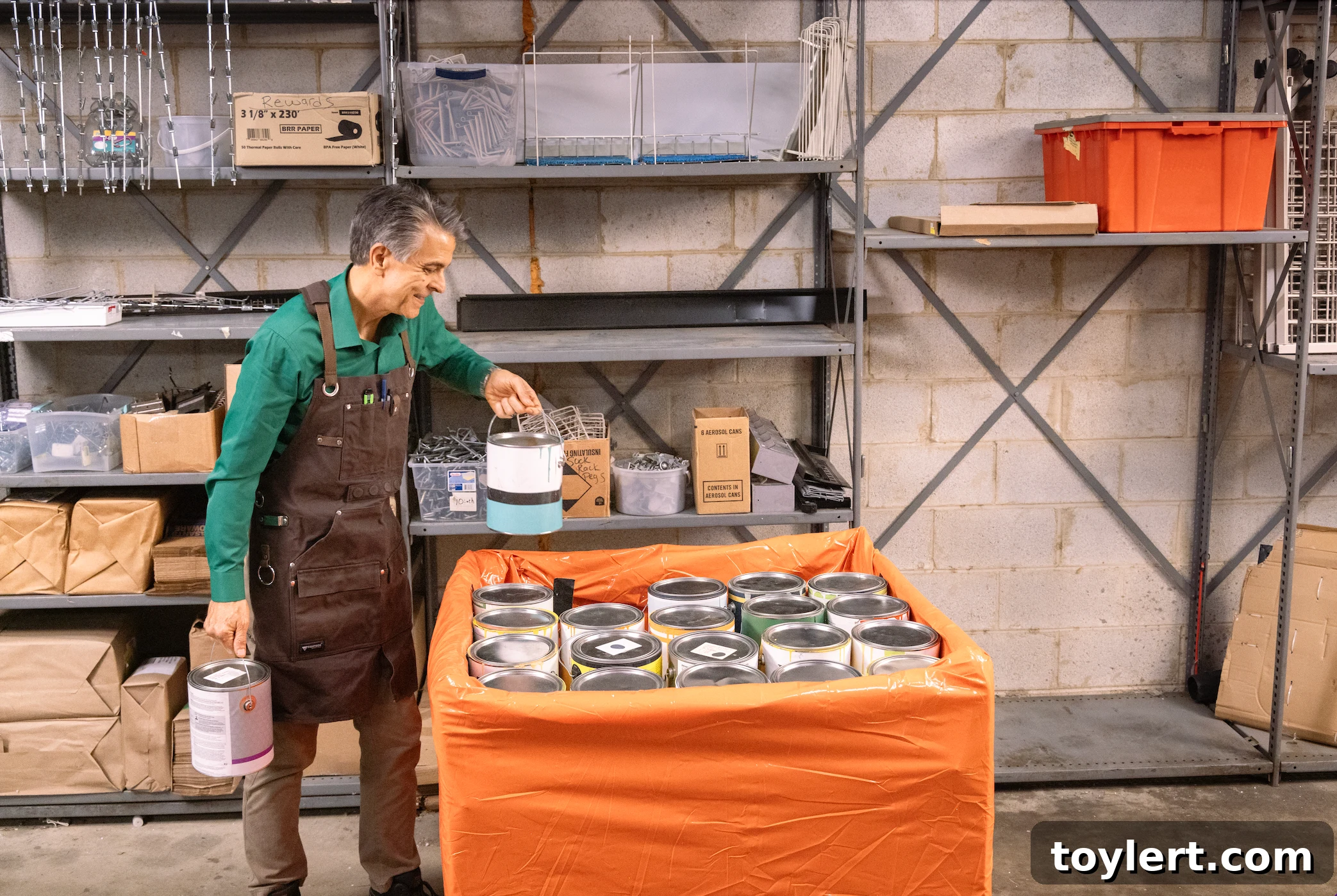
The PaintCare Difference: Convenience and Impact in New York
For New Yorkers, from the bustling streets of Brooklyn and Manhattan to the quiet suburbs of Long Island and upstate regions, PaintCare provides a much-needed service. The program has established hundreds of permanent drop-off sites throughout the state, primarily at existing paint and hardware stores. These locations are strategically chosen to be integrated into daily routines, making the act of recycling paint as simple and accessible as picking up a new can. This widespread accessibility is key to the program’s success and its ability to capture a significant volume of leftover paint that might otherwise end up in landfills or improperly disposed of, posing environmental risks.
Andrew Radin, the New York State Program Manager for PaintCare, emphasized the program’s resonance with contemporary values: “This kind of sustainability initiative resonates deeply with today’s business owners and consumers. They are actively looking for practical ways to reduce their environmental footprint and appreciate programs that simplify the process. PaintCare offers that clear solution, making it easy for individuals and companies to do the right thing without unnecessary hassle or expense.” This endorsement highlights the program’s ability to meet both environmental goals and consumer expectations for convenience and efficiency.
How PaintCare Works: A Simple Process for Everyone
Utilizing PaintCare’s services is remarkably straightforward, designed to be user-friendly for both residential and commercial entities. Residents and businesses can visit PaintCare’s official website to easily locate the nearest drop-off site. The sites accept most types of house paint, stains, and varnishes, regardless of whether they are oil-based or latex-based, provided they are in their original containers with legible labels and are not empty or completely dry. It’s important to note that certain materials, such as aerosols, industrial coatings, or spray paints, are typically not accepted, so checking the guidelines beforehand is advisable.
There are usually limits on the volume accepted per visit, typically up to 5 gallons for households without prior arrangement, but larger quantities can often be arranged by contacting the site directly or PaintCare for special event collection. Once dropped off, the paint undergoes a systematic collection and processing procedure. Usable paint that is still in good condition may be offered for reuse through local community programs, schools, or theater groups, extending its life cycle. Other paint is meticulously sorted for recycling. For instance, latex paint can be reprocessed into new paint, used in other products like concrete, or incorporated into aggregate for road construction. Oil-based paint, due to its chemical composition, is often directed to energy recovery facilities, where its inherent chemical energy can be safely converted into fuel, preventing further environmental impact.
Environmental and Economic Benefits of Responsible Paint Disposal
The advantages of PaintCare’s comprehensive program extend far beyond just cleaning out garages and storage units; they contribute significantly to broader environmental and economic well-being. Environmentally, the program dramatically reduces the amount of hazardous waste entering landfills, thereby preventing soil and groundwater contamination, which can have long-lasting and detrimental effects on local ecosystems and public health. By diverting millions of gallons of paint from the waste stream annually, PaintCare conserves valuable natural resources that would otherwise be depleted to produce new paint from scratch. This commitment to resource efficiency helps mitigate climate change by reducing the energy consumption and greenhouse gas emissions associated with virgin material extraction and manufacturing processes.
Economically, PaintCare offers tangible benefits to various stakeholders. For homeowners, it eliminates the confusion, inconvenience, and often significant costs associated with traditional hazardous waste disposal methods or municipal collection events that might be infrequent. For businesses, particularly painting contractors, renovation companies, and construction firms, it provides a reliable, compliant, and often cost-effective way to manage large volumes of leftover paint, ensuring they meet environmental regulations without incurring excessive disposal fees. This not only streamlines their operations but also enhances their reputation as environmentally conscious entities, a growing advantage in today’s increasingly green-conscious market.
Furthermore, the initiative supports local economies by utilizing existing retail infrastructures—hardware stores, paint shops, and home improvement centers—as convenient collection points. This brings more foot traffic to these local businesses, fostering community engagement and providing an additional service to their customer base. It’s a win-win scenario: retailers offer a valuable community service, and consumers gain easy, responsible access to paint disposal solutions.
A Model for Future Sustainability
PaintCare’s pioneering success in New York and other participating states serves as a powerful model for effective product stewardship. It clearly demonstrates how industries can take collective responsibility for the entire lifecycle of their products, from manufacturing to end-of-life disposal. This collaborative approach fosters innovation in waste management and ensures that the financial and logistical burden of managing waste is shared equitably, rather than solely falling on individual consumers or financially strained municipalities. It sets a precedent for how other industries might implement similar circular economy initiatives.
As sustainability continues to be a cornerstone of modern development and a critical concern for global environmental health, programs like PaintCare will become increasingly vital. They not only educate the public about responsible consumption and disposal but also provide essential services that drive systemic change towards a more circular, resource-efficient economy. For anyone in New York looking to responsibly dispose of unwanted paint, PaintCare offers a clear, effective, and environmentally sound solution that contributes to a healthier planet for current and future generations.
Get Involved: Find Your Nearest PaintCare Drop-Off Site
Taking part in the PaintCare program is simple and impactful. To find a convenient location near you, visit the official PaintCare New York website at paintcare.org/states/new-york. Their user-friendly drop-off site locator tool allows you to search by zip code or city, ensuring you can quickly pinpoint the most accessible site, whether you’re in the heart of Brooklyn, the bustling streets of Queens, the vibrant neighborhoods of Manhattan, the Bronx, Staten Island, or anywhere else across New York State. Before heading out, ensure your paint is in its original, non-leaking container with the label intact, and that it is not completely empty or dry. By participating in this vital program, you contribute directly to a cleaner, greener New York and actively support a more sustainable future for us all.
This initiative not only streamlines the paint disposal process but also cultivates a greater sense of environmental responsibility and community engagement. It stands as a testament to the fact that collective action, supported by innovative programs, can lead to significant and lasting positive change for both our environment and our economy.