Transforming Myrtle Avenue: A Blueprint for Community-Led Urban Renewal
Myrtle Avenue, a historic and vibrant artery threading through Brooklyn’s Fort Greene and Clinton Hill neighborhoods, stands on the cusp of a significant transformation. Once a bustling commercial and cultural hub, the avenue has been the focus of extensive community planning and development initiatives aimed at revitalizing its essence while embracing modern urban needs. These comprehensive changes encompass critical redevelopments, the creation of expansive public spaces, and a renewed focus on enhancing the shopping experience for residents and visitors alike. This ambitious vision for Myrtle Avenue is not merely about physical construction; it’s a testament to sustained community engagement, thoughtful urban planning, and the collaborative spirit of its residents and local leadership.
The Vision for Myrtle Avenue: A Multi-Faceted Revitalization
The revitalization efforts along Myrtle Avenue are strategically designed to create a more dynamic, sustainable, and enjoyable urban environment. This includes a mix of residential and commercial upgrades, significant infrastructure improvements, and the strategic introduction of green spaces that will fundamentally reshape the avenue’s character and functionality.
The Associated Supermarket Site: A Hub of Modern Living and Commerce
One of the cornerstone projects driving Myrtle Avenue’s transformation is the redevelopment of the Associated Supermarket building. This site, a familiar landmark for many years, is being reimagined as a modern mixed-use complex that will infuse the neighborhood with new residential opportunities and invigorated retail spaces. The plans call for a substantial number of apartments, catering to a diverse range of residents and contributing to the area’s housing supply. These residential units are being designed with contemporary urban living in mind, aiming to attract new residents while providing updated options for existing community members.
Beyond the residential component, the ground floor of this redevelopment will feature new retail establishments. This is a crucial element for enhancing the avenue’s commercial viability, offering convenient access to goods and services for the new residents and the broader community. The selection of retail tenants is often guided by community input, aiming to bring in businesses that complement the existing fabric of Myrtle Avenue and fulfill local needs. The goal is to create a vibrant, active street front that encourages pedestrian activity and supports local commerce, making the area a more attractive destination for daily errands and leisure.
Architecturally, the project aims to integrate seamlessly into the existing urban landscape while introducing modern aesthetics. Emphasis is placed on design that respects the historical context of the neighborhood while pushing forward with sustainable and innovative building practices. This redevelopment is expected to serve as a significant economic and social catalyst, generating new jobs, increasing foot traffic, and enhancing the overall streetscape, thereby creating a stronger sense of place for everyone.
Myrtle Plaza: A New Green Heart for the Community
Complementing the commercial and residential redevelopments is the highly anticipated public plaza coming to Myrtle between Hall Street and Emerson Place. This initiative represents a significant commitment to providing much-needed green and public spaces in a densely populated urban environment. The creation of Myrtle Plaza is envisioned as a central gathering point, a green oasis where community members can relax, socialize, and engage in various activities.
The design for Myrtle Plaza typically includes thoughtfully curated landscaping, comfortable seating areas, and potentially public art installations or performance spaces. These elements are chosen to foster a sense of tranquility and community engagement. Such a plaza can serve multiple functions: a quiet spot for contemplation, an informal meeting point for neighbors, or a venue for community events, markets, and cultural performances. Its strategic location is designed to enhance pedestrian flow and connect different sections of Myrtle Avenue, creating a more cohesive and pedestrian-friendly thoroughfare.
The benefits of public green spaces in urban areas are manifold. They contribute to improved air quality, mitigate the urban heat island effect, and provide crucial ecological habitats. More importantly, they foster social interaction, improve mental well-being, and enhance the overall quality of life for residents. Myrtle Plaza is poised to become a beloved landmark, reflecting the community’s desire for beauty, nature, and shared public life.
Revitalizing the Shopping Experience: Boosting Local Economy
Beyond the major redevelopment projects, a significant focus is placed on the broader revitalization of the Myrtle Avenue shopping area. This comprehensive effort aims to create a more attractive, diverse, and prosperous commercial corridor that serves the needs of the growing community. Initiatives typically include streetscape improvements such as upgraded sidewalks, enhanced lighting, new street furniture, and improved signage, all designed to make the avenue more appealing and accessible for pedestrians.
Support for local businesses is also a cornerstone of this revitalization. This can involve programs for facade improvements, marketing assistance, and initiatives to attract new, complementary businesses while retaining and supporting existing ones. The goal is to cultivate a dynamic retail mix that offers a wide array of goods and services, from unique local boutiques to essential everyday retailers. By fostering a vibrant commercial environment, Myrtle Avenue seeks to boost the local economy, create jobs, and offer a superior shopping and dining experience. This holistic approach ensures that the avenue evolves into a destination that reflects the unique character and aspirations of its community.
Community Engagement: The Cornerstone of Sustainable Development
The ambitious transformation of Myrtle Avenue is fundamentally rooted in a robust process of community engagement. These significant changes are not imposed but rather shaped through ongoing dialogue and collaboration between residents, local businesses, developers, and elected officials. This participatory approach ensures that the projects truly reflect the needs and desires of the people who call Myrtle Avenue home.
Council Member Tish James and the Power of Voice
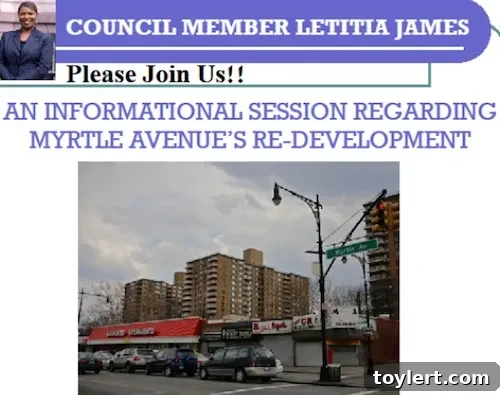
A key figure in facilitating this community-driven development has been Council Member Tish James (now Public Advocate). Her leadership in organizing and hosting community meetings has been instrumental in providing a platform for residents to voice their opinions, ask questions, and contribute their insights into the planning process. These meetings, such as the one held at the Willoughby Walk Co-Op, serve as vital forums for transparency and public input.
Community meetings offer a direct channel for residents to learn about proposed plans, view renderings, and understand the potential impacts of development. They allow for an exchange of ideas, where concerns about issues like traffic, parking, affordability, and preserving neighborhood character can be addressed directly by project proponents and city representatives. This feedback loop is crucial for refining plans, mitigating potential negative consequences, and building consensus around the vision for Myrtle Avenue. The emphasis on community involvement ensures that the resulting developments are not just aesthetically pleasing or economically viable, but also socially responsible and genuinely beneficial to the existing community.
Willoughby Walk Co-Op: A Hub for Dialogue
The choice of venues like the Willoughby Walk Co-Op at 185 Hall Street for these community meetings highlights the commitment to accessibility and local presence. Holding meetings in neighborhood-specific locations, often within community rooms, makes it easier for residents to attend and participate. Such venues symbolize the local ownership of these development processes and underscore the idea that these transformations are for and by the community. The specific meeting mentioned, scheduled for 7 pm in the basement community room, exemplifies the grassroots effort to ensure every interested resident has the opportunity to be heard.
The Broader Impact: Myrtle Avenue as a Model for Urban Renewal
The revitalization of Myrtle Avenue extends beyond the individual projects, aiming for a broader, positive impact on the overall quality of life in Fort Greene and Clinton Hill. This integrated approach to urban renewal positions Myrtle Avenue as a potential model for other neighborhoods grappling with similar challenges of growth and modernization.
A Holistic Approach to Urban Improvement
By combining new housing, enhanced public spaces, and a revitalized commercial district, the Myrtle Avenue initiatives address multiple facets of urban living simultaneously. This holistic strategy aims to create a more vibrant, safe, and livable environment. Improved walkability, increased access to green spaces, diverse retail options, and well-designed residential buildings collectively contribute to a higher standard of urban life. Furthermore, efforts are often made to ensure that new developments contribute positively to the existing cultural fabric of the neighborhoods, acknowledging the rich history and diverse population of Fort Greene and Clinton Hill. Addressing concerns like affordable housing and equitable development remains a critical part of these discussions, ensuring that the benefits of revitalization are shared across all segments of the community.
Myrtle Avenue as a Model for Urban Revitalization
The successful implementation of these projects on Myrtle Avenue, characterized by strong community partnership and a clear long-term vision, can serve as an exemplary case study for other urban areas. It demonstrates how strategic planning, coupled with active citizen participation and committed political leadership, can transform a neighborhood. The integrated nature of the redevelopment—from commercial vibrancy to public green spaces—creates a synergistic effect that amplifies the positive outcomes, making Myrtle Avenue a benchmark for sustainable and inclusive urban transformation.
Charting a Vibrant Future for Myrtle Avenue
The changes unfolding on Myrtle Avenue represent an exciting chapter in the history of Fort Greene and Clinton Hill. From the innovative redevelopment of the Associated Supermarket site to the welcoming expanse of Myrtle Plaza and the renewed vitality of its shopping district, every aspect of this transformation is geared towards creating a more dynamic, sustainable, and community-centric urban environment. The ongoing commitment to public engagement, spearheaded by leaders like Council Member Tish James, ensures that these developments are not just about bricks and mortar, but about enhancing the lives of the people who call this unique Brooklyn thoroughfare home. As Myrtle Avenue continues to evolve, it stands as a shining example of how collaborative vision and dedicated action can shape a truly vibrant future for an urban community.