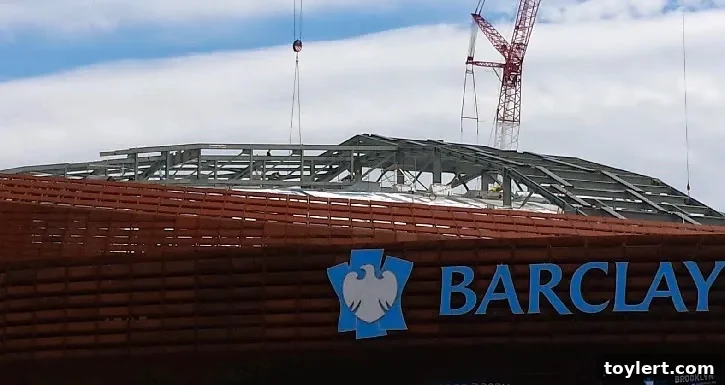
Tragedy Strikes Barclays Center Green Roof Project: A Call for Enhanced Construction Safety
The construction industry, a vital engine of urban development and innovation, is unfortunately not immune to devastating accidents. A recent incident at the iconic Barclays Center in Brooklyn brought this stark reality into tragic focus, highlighting the critical importance of stringent safety protocols in every phase of a project. The vibrant vision of a sprawling green roof, designed to enhance sustainability and aesthetics in the heart of New York City, was overshadowed by a fatal accident that claimed the life of an experienced worker.
A Devastating Loss: The Incident at Barclays Center
On a somber afternoon, the ongoing construction of the Barclays Center’s ambitious green roof project came to a grinding halt following a fatal workplace accident. Peter Zepf, a 52-year-old worker with years of experience, tragically lost his life while engaged in the complex and inherently risky task of unloading massive steel joists. These crucial structural components were destined to form the framework for the expansive green roof, a testament to modern, eco-conscious urban architecture.
The incident occurred around 1:00 PM when Zepf was meticulously transferring heavy joists from a delivery truck onto a waiting hoist, a standard procedure requiring precision, coordination, and adherence to safety protocols. During this critical transfer, four of the colossal beams unexpectedly dislodged and fell upon him, resulting in fatal crushing injuries. The impact was instantaneous and overwhelming, leaving no chance for survival. Work on the entire Barclays Center site was immediately suspended as investigators from various agencies descended upon the scene to meticulously piece together the sequence of events that led to this profound loss.
Unraveling the Mystery: Initial Investigations and Eyewitness Accounts
The initial phase of any workplace fatality investigation focuses on identifying potential causes, often looking at a combination of human error, mechanical failure, or systemic oversights. In the immediate aftermath of the Barclays Center tragedy, investigators began exploring two primary possibilities. One theory posited that the truck driver, responsible for securing and releasing the load, might have inadvertently released the beams prematurely or at an incorrect moment, disrupting the delicate balance required for safe unloading. Another possibility under consideration was that the victim himself, Peter Zepf, might have accidentally triggered an emergency release button, though the exact mechanism and context of such an action would require further scrutiny.
The harrowing moments were witnessed by fellow workers, whose testimonies provide crucial insights and underscore the sudden, catastrophic nature of the event. A fellow signal man, visibly shaken by the incident, recounted the horrifying seconds to the New York Daily News. He described the load as “top heavy,” a common challenge with large structural components, emphasizing the inherent instability if not handled with utmost care. His account painted a vivid picture of the truck driver unhooking the load “without being told,” implying a breakdown in communication or established safety procedures. “It toppled right on top of him,” he grimly stated. The witness immediately checked for a pulse, but tragically, Zepf was “there for half a second, and then he was gone,” underscoring the severity of the impact and the instantaneous nature of his passing.
The Indispensable Role of Construction Safety Protocols
This devastating incident serves as a grim reminder of the perpetual risks inherent in construction, particularly when handling heavy materials and operating complex machinery. Construction sites are dynamic environments where dangers can arise from multiple sources, necessitating a robust and continuously enforced safety culture. The unloading of heavy steel joists, such as those intended for the Barclays Center green roof, is a particularly high-risk activity that demands rigorous planning, meticulous execution, and unwavering vigilance.
Critical Safety Measures for Material Handling:
- Pre-Lift Planning and Risk Assessment: Before any heavy lift or material transfer, a comprehensive plan must be developed. This plan should identify potential hazards, define safe working zones, specify equipment requirements, and assign clear roles and responsibilities to every team member involved.
- Effective Communication: Clear, unambiguous communication between crane operators, truck drivers, signal persons, and ground crews is paramount. Hand signals, radio communication, and pre-arranged verbal commands must be standardized and understood by all. The reported breakdown in communication (“unhooked it without being told”) highlights a critical vulnerability.
- Proper Load Securement: Materials on trucks or in transit must be securely fastened to prevent shifting or dislodging during transport and unloading. This includes using appropriate chains, straps, and chocks.
- Equipment Inspection and Maintenance: All hoisting equipment, slings, shackles, and trucks must undergo regular inspections and maintenance to ensure they are in optimal working condition. Any defects or malfunctions can have catastrophic consequences.
- Qualified Personnel: Only trained and certified personnel should operate heavy equipment or direct material handling operations. Their expertise is crucial in assessing risks and making real-time safety decisions.
- Exclusion Zones: Designated exclusion zones must be established around lifting and unloading areas to protect workers from falling objects or accidental contact with moving loads.
- Personal Protective Equipment (PPE): Hard hats, safety glasses, steel-toed boots, and high-visibility vests are non-negotiable on construction sites, offering a layer of protection against common hazards.
The Broader Implications for Green Infrastructure and Urban Development
The Barclays Center green roof project is part of a growing trend in urban planning, where green infrastructure is integrated into modern buildings to offer numerous environmental and economic benefits. Green roofs help manage stormwater, reduce urban heat island effects, improve air quality, and provide habitat for local wildlife. While these benefits are substantial, their construction often involves unique challenges, including the logistical complexities of hoisting heavy materials to significant heights and ensuring the structural integrity to support the added weight of soil, vegetation, and water retention systems.
The tragedy at Barclays Center underscores that even innovative and environmentally beneficial projects must prioritize the safety of the workers who bring them to life. The pursuit of sustainable urban landscapes should never come at the expense of human lives. This incident serves as a stark reminder for developers, contractors, and city planners to not only champion green initiatives but also to invest equally, if not more, in comprehensive safety programs that mitigate the inherent risks of such ambitious construction endeavors.
Learning from Tragedy: Moving Forward with Enhanced Vigilance
Workplace fatalities are not merely statistics; they represent profound human losses with lasting impacts on families, co-workers, and entire communities. The death of Peter Zepf is a somber call to action for the entire construction industry to re-evaluate and reinforce its commitment to safety. Investigations by authorities such as the Occupational Safety and Health Administration (OSHA) will meticulously examine every detail, from site-specific safety plans and worker training records to equipment logs and communication protocols. The findings of these investigations are vital, not just for accountability but, more importantly, for informing new regulations, best practices, and training modules designed to prevent similar tragedies in the future.
Every construction site must foster a culture where safety is not just a set of rules but a deeply ingrained value. Workers must feel empowered to speak up about unsafe conditions without fear of reprisal, and management must actively encourage and reward proactive safety measures. Regular safety briefings, called “toolbox talks,” should be routine, addressing specific hazards relevant to the day’s tasks. Continuous training, adapting to new technologies and construction methods, is also essential to keep safety knowledge current and effective.
The legacy of Peter Zepf, and countless others who have lost their lives on construction sites, must be a renewed commitment to making every workplace as safe as possible. The dream of a greener, more sustainable urban future must be built on a foundation of unwavering safety, ensuring that no more lives are needlessly sacrificed in the pursuit of progress.