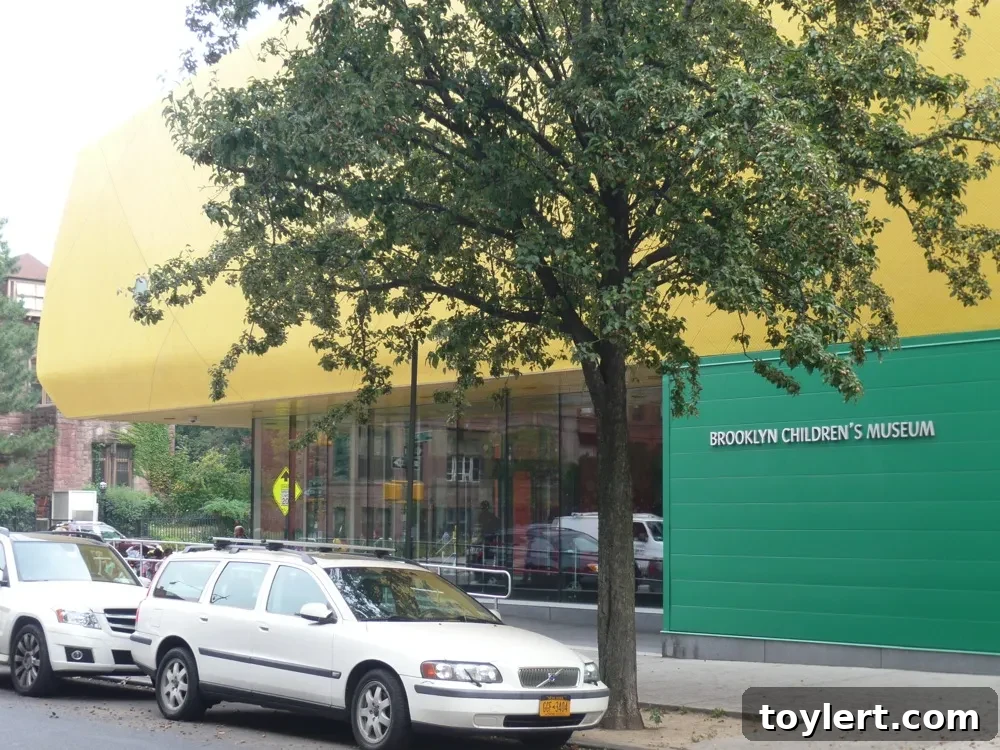
Brooklyn Children’s Museum Faces Backlash Over Expansion Plans and Community Alienation
The Brooklyn Children’s Museum, a cherished institution with a rich history of serving diverse communities, is currently embroiled in a significant controversy. Its ambitious growth plans, particularly the proposed outpost in One John Street within the affluent Brooklyn Bridge Park area, have ignited a fierce debate. Employees, local politicians, and long-standing community members express deep concerns that the museum’s expansion is inadvertently sidelining its traditional, predominantly Black, and local supporters. This contentious issue is further exacerbated by a notable increase in admission fees, which have nearly doubled from $5 to $9, raising questions about accessibility and the institution’s core mission. Adding to the tension, reports from The New York Times highlight a dramatic decline in staff racial diversity, painting a complex picture of a museum grappling with its identity amidst rapid urban change.
A Pillar of the Community: The Museum’s Enduring Legacy
For decades, the Brooklyn Children’s Museum has stood as a beacon of learning and cultural enrichment, particularly for the vibrant communities of Crown Heights and surrounding neighborhoods. Founded in 1899, it holds the distinction of being the world’s first children’s museum, pioneering an interactive approach to education long before it became mainstream. Its original mission was deeply rooted in serving local families, offering accessible educational experiences that celebrated diversity and fostered a sense of belonging. Through various programs, exhibits, and outreach initiatives, the museum became an invaluable resource for countless children, especially those from Black and Hispanic backgrounds, providing a safe and stimulating environment for exploration and discovery. This legacy of community engagement and inclusivity is precisely what makes the current criticisms so poignant and difficult for many long-time supporters to reconcile with the museum’s new direction.
The Dumbo Outpost: A Symbol of Shifting Priorities?
At the heart of the current dispute is the museum’s plan to open a satellite location in One John Street, a luxurious condominium development situated in Brooklyn Bridge Park. The Dumbo neighborhood, once an industrial waterfront area, has undergone a dramatic transformation, becoming one of Brooklyn’s most expensive and exclusive residential enclaves. While the museum’s administration might envision this expansion as an opportunity to broaden its reach and appeal to new audiences, many perceive it as a move away from its foundational principles. The stark contrast between the museum’s historical home in Crown Heights—a neighborhood with a rich working-class history and significant racial diversity—and the opulent setting of Dumbo has fueled accusations of gentrification and a perceived abandonment of its original community. Critics argue that positioning an outpost in such an upscale area signals a strategic shift towards a more affluent, predominantly white demographic, potentially at the expense of the diverse families it has traditionally served.
Mounting Concerns: Voices from Employees and Advocates
The discontent extends beyond community activists to the very individuals who have shaped the museum’s operations. Anne Smith, a former public relations manager at the museum, voiced pointed criticisms that encapsulate the frustration felt by many. Her remarks highlight systemic issues that seem to plague the institution’s recent trajectory:
“How are you going to service there when you can barely staff your own building?” said Anne Smith, a former public relations manager at the museum. “Why has there never been a satellite office for black communities, Hispanic communities?” Ms. Smith complained that an administrator had lamented that events at the museum had too much of a “local feel,” and asserted that managers wanted to market to predominantly white, upscale Brooklyn neighborhoods like Park Slope and Carroll Gardens.
Ms. Smith’s questions strike at the core of resource allocation and equitable community engagement. The concern about understaffing at the main location, coupled with the ambitious Dumbo expansion, suggests a potential misprioritization of resources. Her query about the absence of satellite offices in predominantly Black or Hispanic communities underscores a deeper issue regarding the museum’s commitment to equitable growth and access across all of Brooklyn’s diverse populations.
The “Local Feel” Dilemma and Targeted Marketing
Perhaps most telling is Ms. Smith’s assertion that an administrator expressed dissatisfaction with events having “too much of a ‘local feel.'” This statement, if true, reveals a concerning shift in internal perspective, suggesting that the museum’s unique connection to its immediate neighborhood might now be viewed as a drawback rather than a strength. This sentiment is further reinforced by the alleged desire of managers to market predominantly to affluent, white neighborhoods such as Park Slope and Carroll Gardens. While these neighborhoods are undeniably part of Brooklyn, a focused marketing strategy that neglects the museum’s historical base raises serious questions about its future demographic and cultural orientation. Such a strategy risks alienating the very families who have contributed to the museum’s legacy and who continue to rely on its services.
Accessibility and Affordability: The Impact of Higher Admission Fees
The near-doubling of admission fees from $5 to $9 is another significant point of contention. For many families in economically challenged neighborhoods, every dollar counts. A $9 admission fee per person can quickly become prohibitive for a family with multiple children, effectively creating a barrier to entry that did not exist before. Critics argue that this increase directly contradicts the museum’s long-standing commitment to accessibility and affordability, pushing it further out of reach for the low-income families it once championed. Cultural institutions, especially those aimed at children, often play a vital role in providing educational opportunities for all socioeconomic strata. When these institutions become less affordable, they risk exacerbating existing inequalities in access to enriching experiences, potentially widening the gap between privileged and underserved communities.
The Decline in Staff Diversity: A Reflection of Shifting Values?
The reported dramatic decline in the racial diversity of the museum’s staff is another alarming indicator for many. A diverse staff that reflects the community it serves is crucial for a children’s museum, as it provides role models, ensures culturally relevant programming, and fosters an inclusive environment where all children feel represented and understood. If the staff becomes less diverse, it can lead to a disconnect between the institution and its audience, potentially impacting the quality and relevance of its programs for diverse groups. This decline, when viewed alongside the other criticisms, suggests a broader systemic issue within the museum’s leadership and hiring practices, raising questions about its commitment to diversity and inclusion beyond mere rhetoric.
Gentrification’s Shadow: Cultural Institutions and Community Identity
The situation at the Brooklyn Children’s Museum serves as a powerful microcosm of a larger phenomenon: the struggle of cultural institutions to navigate the complexities of gentrification and urban development. As neighborhoods transform, museums, theaters, and community centers often find themselves at a crossroads, balancing financial pressures with their social missions. The allure of new funding, broader audiences, and modern facilities in developing areas can be compelling. However, the path to expansion can be fraught with ethical dilemmas if not handled with extreme sensitivity and genuine community engagement. The danger lies in institutions becoming perceived as instruments of gentrification rather than anchors of community identity, thereby losing the trust and loyalty of their foundational supporters. The Brooklyn Children’s Museum, given its history and location, bears a particular responsibility to demonstrate how growth can be achieved without compromising its deep-rooted commitment to accessibility and inclusivity for all Brooklynites.
Charting a Path Forward: Reconciling Growth with Mission
To move forward constructively, the Brooklyn Children’s Museum faces the critical task of genuinely engaging with its critics and reassessing its strategic direction. This involves more than just damage control; it requires a transparent and sincere commitment to its core values. Potential steps could include: initiating open dialogues with community leaders and long-time patrons; re-evaluating admission fee structures to ensure affordability (perhaps through expanded free days or subsidized memberships for low-income families); implementing robust diversity and inclusion initiatives for both staff and board members; and clearly articulating how new outposts will complement, rather than diminish, its existing community commitments. The challenge for the Brooklyn Children’s Museum, and indeed for similar institutions in rapidly changing urban landscapes, is to demonstrate that growth can be inclusive, equitable, and truly beneficial to all segments of the community it aspires to serve. Its ability to navigate this delicate balance will ultimately determine its continued relevance and beloved status within the vibrant tapestry of Brooklyn.