The Enduring Legacy of Rufus L. Perry: Brooklyn Pioneers and Weeksville’s Heritage
Brooklyn, New York, is a borough steeped in history, a vibrant mosaic woven from countless individual stories of resilience, innovation, and community building. Among the most compelling narratives are those of individuals who defied immense odds to forge a better future for themselves and generations to come. This article delves into the remarkable legacy of Rufus L. Perry, focusing on both father and son, and their profound impact on Brooklyn’s African American community, particularly through their connection to the historic Weeksville settlement.
The story of the Perrys is one of unwavering dedication to progress, a testament to the power of self-determination in the face of systemic adversity. From the foundational efforts of Rufus L. Perry Sr. in the 19th century to the continued advocacy of Rufus L. Perry Jr. in the 20th, their lives encapsulate the spirit of Brooklyn’s pioneers. Their contributions not only shaped local communities like Weeksville and Crown Heights but also left an indelible mark on the broader landscape of African American history in New York City.
Rufus L. Perry Sr.: A Foundation of Resilience in 19th-Century Brooklyn
Born into enslavement in 1834 in Virginia, Rufus L. Perry Sr.’s early life was marked by the pervasive injustices of the era. Yet, through sheer determination and an unyielding spirit, he achieved self-emancipation, embarking on a journey that would eventually lead him to Brooklyn, New York. His arrival in the mid-19th century placed him amidst a burgeoning free Black community, particularly in areas like Weeksville.
Weeksville, established in 1838 by free African Americans, was more than just a cluster of homes; it was a powerful symbol of self-sufficiency and communal strength. It offered a refuge from the racial discrimination prevalent elsewhere and allowed its residents to build their own institutions, including churches, schools, and benevolent societies. It was within this vibrant, self-governing community that Perry Sr. found his calling and made significant contributions.
Weeksville: A Beacon of Self-Sufficiency
The establishment of Weeksville was a radical act of resistance and hope. Located in what is now Crown Heights, it predated the Emancipation Proclamation and served as a model for Black autonomy. Residents purchased land, established their own infrastructure, and cultivated a rich cultural and intellectual life. It was a place where African Americans could own property, vote, and operate businesses without the constant threat of racial prejudice and violence.
Perry Sr. quickly became an integral part of this innovative community. He was a minister, educator, and a prominent voice for civil rights. His leadership extended beyond the pulpit; he was actively involved in fostering educational opportunities for Black children and advocating for social justice. His work helped solidify Weeksville’s reputation as a safe haven and a center for African American advancement in a challenging period of American history.
Perry’s Role in Community Development
Rufus L. Perry Sr.’s commitment to his community was multifaceted. As a minister, he provided spiritual guidance and fostered a sense of unity among residents. As an educator, he understood the transformative power of knowledge and championed access to learning for all. He was also a prolific writer, contributing to newspapers and publishing theological works, using his intellect to articulate the struggles and aspirations of African Americans.
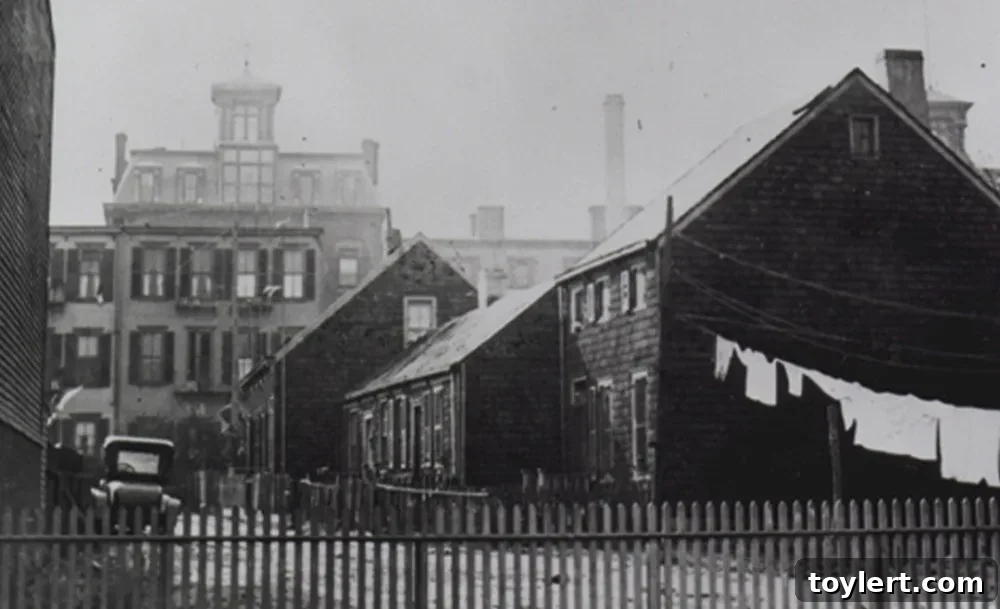
His efforts laid a crucial groundwork for the future, demonstrating that Black communities could thrive independently and contribute significantly to the broader society. The houses pictured, emblematic of Weeksville, stand as a testament to the tangible achievements of individuals like Perry Sr. and the collective will of a community determined to build its own destiny.
Rufus L. Perry Jr.: Carrying the Torch into the 20th Century
The legacy of Rufus L. Perry Sr. did not fade with his passing; it was powerfully continued by his son, Rufus L. Perry Jr. Born in Brooklyn in 1872, Perry Jr. inherited his father’s passion for justice and community upliftment. He seamlessly transitioned into a leadership role, adapting the family’s mission to the new challenges and opportunities of the early 20th century.
As Brooklyn continued to grow and change, particularly the Crown Heights neighborhood where Weeksville was situated, Perry Jr. focused his efforts on preserving the gains made by his father’s generation while fighting against new forms of discrimination and advocating for equitable urban development. His work was critical in ensuring that the rich history and contributions of Weeksville and its inhabitants were not forgotten.
Advocacy and Social Justice
Rufus L. Perry Jr. was a prominent attorney, using his legal expertise to champion civil rights and address racial inequalities. In a time when African Americans still faced immense systemic barriers, his work provided vital legal representation and advocacy. He fought against housing discrimination, supported Black businesses, and ensured that the voices of his community were heard in political and civic arenas.
His influence extended into the political sphere, where he became a respected figure in Brooklyn politics. He understood that legal and political action were essential tools for achieving lasting social change. Through his efforts, he helped solidify the rights and opportunities for African Americans in Brooklyn, building upon the foundations laid by his father and other pioneers.
Preserving Brooklyn’s Black Heritage
One of Perry Jr.’s most enduring contributions was his dedication to preserving the historical memory of Weeksville. By the mid-20th century, the original Weeksville houses and much of its history were at risk of being lost to urban redevelopment. Perry Jr., along with other dedicated community activists, played a crucial role in initiating efforts to save and restore the historic homes that symbolized the community’s past.
His commitment to historical preservation ensured that future generations would understand the significance of Weeksville as a beacon of African American self-determination. This visionary approach to safeguarding heritage has allowed the Weeksville Heritage Center to become a vital educational and cultural institution today, offering a tangible link to Brooklyn’s rich Black history.
The Weeksville Houses: Tangible Testaments to History
The image provided, depicting Rufus Perry, Sr. and the Weeksville houses, is more than just a photograph; it’s a window into a pivotal era of Brooklyn’s past. These humble wooden houses, often referred to as the Hunterfly Road Houses, are among the few remaining structures from the original 19th-century Weeksville settlement. Their preservation is a remarkable achievement, spearheaded by local historians and community activists, including the efforts championed by Rufus L. Perry Jr. and his contemporaries.
These houses represent the resilience and self-reliance of the free Black community that built them. They tell stories of families who owned land, educated their children, and created a vibrant culture in an era of immense racial oppression. Today, these restored houses form the core of the Weeksville Heritage Center, an internationally recognized institution dedicated to preserving, documenting, and interpreting the history of Weeksville and its broader implications for American history.
A Lasting Impact on Brooklyn and Beyond
The combined legacies of Rufus L. Perry Sr. and Rufus L. Perry Jr. are central to understanding the historical development of Brooklyn’s African American communities. Their lives demonstrate a continuous thread of activism, community building, and an unwavering belief in the power of collective action. From establishing institutions in Weeksville to advocating for civil rights in Crown Heights, the Perrys were instrumental in shaping a more equitable Brooklyn.
Their story serves as an inspiring example of how individuals, through sustained effort and commitment, can make a profound difference. It reminds us of the importance of historical memory, of recognizing the contributions of those who came before us, and of continuing the fight for justice and equality in our own time. The Weeksville Heritage Center stands today as a living monument to their vision and the tenacity of the community they served.
Conclusion: Honoring a Dual Legacy of Brooklyn Pioneers
The Perrys, father and son, stand as monumental figures in Brooklyn’s history, epitomizing the spirit of pioneering and perseverance. Rufus L. Perry Sr. laid the essential groundwork, helping to establish and nurture the vibrant Weeksville community, a testament to Black autonomy in the 19th century. His son, Rufus L. Perry Jr., meticulously carried this torch forward, adapting to new challenges, advocating for civil rights, and ensuring that the physical and historical remnants of Weeksville were preserved for posterity.
Their collective journey illuminates a vital chapter in African American history, showcasing the resilience, intellect, and community spirit that thrived against formidable odds. As we reflect on their contributions, we are reminded of the power of individual and communal action to shape history and create a better world. The legacy of Rufus L. Perry, Sr. and Jr. continues to inspire, urging us to recognize, celebrate, and learn from the extraordinary pioneers who built the Brooklyn we know today.