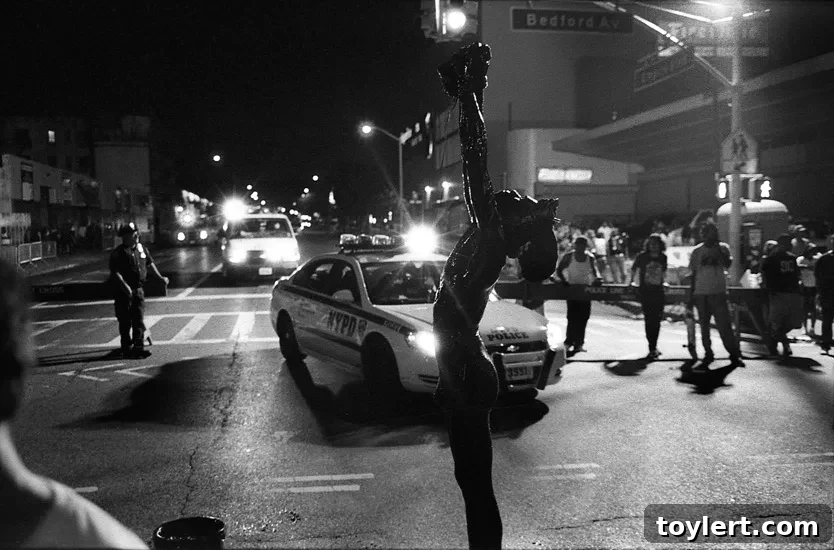
J’Ouvert: The Soul-Stirring Dawn of Brooklyn’s Caribbean Carnival
As the bustling metropolis of New York City prepares to observe Labor Day, a unique and electrifying spectacle awakens in the predawn hours of Brooklyn. Long before the grand floats and vibrant costumes of the West Indies Day Parade begin their majestic procession along Eastern Parkway, another celebration, deeply rooted in history and resilience, ignites the streets. This is J’Ouvert, a mesmerizing cultural phenomenon that marks the true commencement of the Caribbean Carnival experience in the heart of Brooklyn.
Often stirring to life around 4:30 a.m., J’Ouvert – pronounced “joo-vay” – derives its name from a contraction of the French words “jour ouvert,” meaning “daybreak” or “the opening of the day.” It is a fitting name for an event that not only heralds the dawn but also signifies an awakening of spirit, heritage, and communal joy. Far from a mere warm-up act, J’Ouvert stands as a powerful, primal expression of freedom and identity, setting the raw, energetic tone for the larger festivities to follow.
A Journey Through Time: The Historical Tapestry of J’Ouvert
To truly appreciate J’Ouvert’s profound significance, one must delve into its rich and often turbulent past, a history intertwined with colonialism, resistance, and eventual liberation in the Caribbean. The traditional celebration finds its genesis with the arrival of French settlers in the Caribbean, particularly in Trinidad, during the late 18th century. In 1783, these French colonists introduced the opulent and exclusive masquerade balls, known as ‘fêtes champêtres‘ and ‘mascarades,’ which were European Carnival traditions transplanted to the islands.
However, this vibrant, aristocratic celebration was strictly for the planter class. Enslaved Africans, forbidden from participating in their masters’ elaborate Carnival festivities, found ingenious ways to reclaim and redefine the concept of revelry. In their backyards and hidden spaces, they began to hold their own, smaller, clandestine carnivals. These gatherings were not simply imitations; they were profound acts of cultural resistance and preservation. Slaves used these moments to mock their enslavers, satirize colonial society, and preserve elements of their own African spiritual and cultural practices, often disguised within seemingly innocent songs and dances.
The pivotal moment in J’Ouvert’s evolution arrived with the Emancipation Act of 1838, which abolished slavery throughout the British Caribbean. With their newfound freedom, formerly enslaved people surged into the public spaces, reclaiming Carnival as their own. They blended the vestiges of the French masquerade tradition with their indigenous African rituals, folk characters, and forms of expression. This post-emancipation Carnival became a powerful vehicle for expressing collective identity, celebrating freedom, and articulating grievances against continued social inequalities. The use of mud, oil, and paint during J’Ouvert emerged as a symbolic act, transforming participants into elemental beings, blurring social distinctions, and symbolizing rebirth and liberation from the shackles of the past.
From Caribbean Shores to Brooklyn Streets: J’Ouvert in the Diaspora
As Caribbean communities migrated to global urban centers throughout the 20th century, particularly to cities like New York, they brought with them their cherished traditions. Brooklyn, with its significant Caribbean diaspora, especially in neighborhoods like Crown Heights, became a fertile ground for these cultural roots to flourish. The West Indies Day Parade, officially known as the West Indian American Day Carnival Association (WIADCA) parade, grew into one of North America’s largest celebrations of Caribbean culture. Naturally, J’Ouvert, as the traditional opener to Carnival, found its rightful, if sometimes challenging, place within these new urban landscapes.
In Brooklyn, J’Ouvert has evolved into a magnificent affirmation of cultural pride and continuity. It’s a testament to the enduring spirit of Caribbean people, a way to connect with ancestral heritage while creating new traditions in a foreign land. The Brooklyn J’Ouvert is more than just a party; it’s a living, breathing connection to the historical struggles and triumphs of generations, a vibrant reminder that culture transcends borders and time.
The Sensory Spectacle: Experiencing Brooklyn’s J’Ouvert
Participating in or witnessing J’Ouvert in Brooklyn is an immersive sensory experience unlike any other. As the city sleeps, the air begins to thrum with anticipation. Around 4:00 AM, the first rhythmic beats of soca and calypso music echo through the streets, carried by powerful sound systems mounted on trucks or the hypnotic, metallic harmonies of steelpan bands, often played on traditional “pan-around-the-neck” instruments. These live steelpan groups, a hallmark of Trinidadian Carnival, provide an authentic, soul-stirring soundtrack that connects directly to the heart of the tradition.
As the revelers emerge, often dressed in old, disposable clothing, they are transformed. The defining visual element of J’Ouvert is the joyous application of paint, powder, mud, and sometimes even oil or chocolate. Participants become living canvases, drenched in vibrant hues or earthy tones, blurring individuality and fostering a powerful sense of collective identity. This ritual of anointing oneself with elemental substances symbolizes a return to basics, shedding societal inhibitions, and embracing a shared, unbridled spirit of revelry. It’s a messy, liberating, and utterly unforgettable experience.
The procession, a moving river of sound and color, snakes through designated routes, often near Grand Army Plaza and along parts of Eastern Parkway. There’s a raw, spontaneous energy that defines J’Ouvert. Unlike the more structured, costumed spectacle of the daytime parade, J’Ouvert is about letting go, dancing without inhibition, and connecting deeply with the pulsating rhythms and the communal spirit. Traditional J’Ouvert characters, though sometimes less prominent than in their Caribbean counterparts, might also make appearances, adding layers of folklore and satire to the early morning celebrations.
Symbolism and Significance: Why J’Ouvert Matters
Beyond the revelry, J’Ouvert carries profound cultural weight:
- Identity and Heritage: For the Caribbean diaspora in Brooklyn, J’Ouvert is a powerful reaffirmation of their roots, a vivid expression of cultural identity passed down through generations. It serves as a living history lesson, reminding participants of where they come from and the struggles their ancestors endured.
- Resistance and Freedom: Its origins as a celebration born out of defiance against slavery continue to resonate. J’Ouvert remains a symbol of resilience, a triumphant assertion of freedom and agency in public spaces.
- Community and Unity: The act of sharing in the mud, paint, and music creates an unparalleled sense of camaraderie. Social barriers dissolve as everyone becomes part of the same joyful, paint-splashed throng. It’s a powerful unifier.
- Catharsis and Renewal: The early morning timing, the darkness giving way to dawn, combined with the transformative nature of the paint and mud, offers a unique opportunity for catharsis. It’s a chance to shed the burdens of the everyday, to release inhibitions, and to experience a profound sense of renewal before the new day truly begins.
Navigating the Evolving Landscape: Challenges and Preservation
Like any large-scale public event, especially one held in the pre-dawn hours, J’Ouvert in Brooklyn has faced its share of challenges. Concerns over safety have led to increased security measures, revised routes, and stricter regulations over the years. Organizers, community leaders, and city officials continuously work to ensure that the celebration can continue safely while preserving its authentic spirit. This balance between necessary regulation and maintaining the organic, spontaneous nature of J’Ouvert is crucial for its longevity.
Despite these challenges, the commitment to J’Ouvert remains unwavering. It continues to be a cherished tradition, a vibrant pulse in Brooklyn’s cultural calendar, and an essential component of the broader West Indies Day Parade festivities.
The Grand Transition: From J’Ouvert to the West Indies Day Parade
As the sun fully rises and the J’Ouvert revelers slowly disperse, covered in their earthy pigments and sweat, the energy doesn’t dissipate. Instead, it transforms and transfers to the main event: the West Indies Day Parade. J’Ouvert serves as the raw, uninhibited prelude, a spiritual cleansing that paves the way for the more elaborate, family-friendly display of national pride, intricate costumes, and larger-than-life floats that characterize the afternoon parade.
The transition is seamless, with the echoes of steelpan and soca carrying into the morning, eventually giving way to the full spectrum of Caribbean music, dance, and culinary delights that fill Eastern Parkway for the rest of Labor Day. J’Ouvert is not just a beginning; it’s the very foundation upon which the entire Caribbean Carnival experience in Brooklyn is built, a testament to enduring heritage and boundless joy.
Conclusion: An Unforgettable Awakening
J’Ouvert is far more than an early morning party; it is the beating heart of Brooklyn’s Labor Day Caribbean celebration, a living testament to resilience, freedom, and cultural pride. It is an immersive journey into the very soul of Caribbean heritage, expressed through pulsating rhythms, vibrant colors, and an undeniable spirit of community. For those seeking an authentic and profoundly moving cultural experience, J’Ouvert offers an unforgettable awakening, a powerful reminder of history’s echoes and the enduring power of celebration. It is an essential, invigorating, and absolutely unique fixture on the global cultural stage, truly defining the “opening of the day” for countless revelers and observers alike.