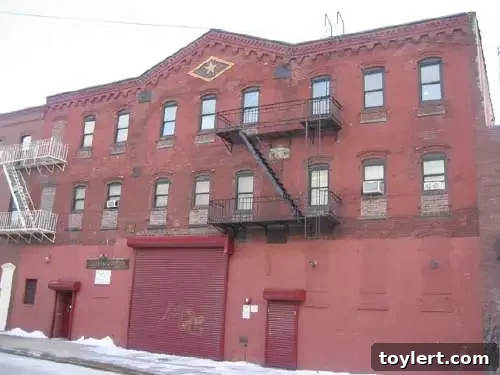
From Industrial Heritage to Innovative Workplace: The Transformation of 58 Kent Street in Greenpoint
Greenpoint, Brooklyn, a neighborhood steeped in rich industrial history, is witnessing yet another chapter in its ongoing evolution. Among its most storied structures, the factory building at 58 Kent Street, a distinguished part of the Eberhard Faber Historic District, is poised for a significant adaptive reuse project. This iconic edifice, once a hub of pencil manufacturing, is set to be reimagined as dynamic office space, blending historical preservation with contemporary functionality. The proposed conversion, which includes substantial alterations to its facades and the addition of a modern penthouse, is currently under the rigorous review of the Landmark Preservation Commission (LPC), signaling a thoughtful approach to urban redevelopment within a protected historical context.
The Enduring Legacy of 58 Kent Street and the Eberhard Faber Historic District
At the heart of Greenpoint’s vibrant industrial past lies 58 Kent Street, a structure imbued with historical significance. Designed in the distinctive German Revival style by the renowned architect Theobald Engelhardt and constructed in 1895, this building served as an integral component of the vast Eberhard Faber Pencil Company complex. For decades, it was a cornerstone of American manufacturing, producing pencils that reached every corner of the globe and employing countless Greenpoint residents. Engelhardt, known for his prolific work in Brooklyn, often designed buildings that showcased robust functionality blended with intricate architectural details, a characteristic clearly evident in the strong, utilitarian yet aesthetically pleasing facade of 58 Kent Street.
The Eberhard Faber Historic District, established to protect this unique industrial heritage, encompasses a collection of buildings that tell the story of a bygone era when Greenpoint was a manufacturing powerhouse. Preserving these structures is crucial not only for their architectural merit but also for their cultural importance, representing a significant period in New York City’s economic and social development. The district serves as a living museum, reminding us of the ingenuity and craftsmanship that once defined this waterfront community. Any proposed alteration within this district, therefore, comes under intense scrutiny to ensure that its historical integrity is maintained while allowing for necessary modernization.
The conversion of 58 Kent Street is more than just a real estate project; it’s a testament to Greenpoint’s resilience and capacity for reinvention. As the neighborhood continues its transition from an industrial stronghold to a sought-after residential and commercial destination, the adaptive reuse of its historic factory buildings plays a pivotal role. These transformations breathe new life into old bones, retaining the distinctive character that draws people to Greenpoint while providing spaces that meet the demands of the 21st century.
Navigating the Conversion: A Blend of Preservation and Progress
The journey from a century-old factory to a modern office building is complex, particularly when dealing with a landmarked structure. It requires a delicate balance of architectural vision, regulatory compliance, and a deep respect for history. The plans for 58 Kent Street exemplify this intricate process, involving multiple stakeholders and layers of approval.
The Indispensable Role of the Landmark Preservation Commission (LPC)
The Landmark Preservation Commission is the primary guardian of New York City’s architectural and historical heritage. Its mission is to preserve the city’s landmarks and historic districts, ensuring that new developments or alterations respect the original character and context. For 58 Kent Street, the LPC’s review is comprehensive, focusing on several key aspects of the proposed conversion:
- Façade Alterations: The application seeks to “alter the front and rear facades.” This involves careful consideration of materials, fenestration (window design and placement), and any new openings or closures to ensure they harmonize with the German Revival style and the district’s overall aesthetic. The goal is to update the building for modern use without erasing its historic face.
- Light Court Construction: The proposal to “construct a light court” suggests an innovative solution to bring natural light deeper into the building’s interior, a common challenge in large, older industrial structures. The design of this court must be carefully integrated to minimize its visual impact on the historic exterior while maximizing its functional benefits.
- Rooftop Addition: The most visible new element is the “rooftop addition,” described by the Department of Buildings as a “new penthouse.” Rooftop additions are often contentious in historic districts, as they can significantly alter a building’s silhouette. The LPC will evaluate its height, setback, materials, and design to ensure it is minimally intrusive and visually subservient to the original structure, preserving the historic skyline of Greenpoint.
The LPC’s decision will hinge on whether these proposed changes can successfully integrate modern requirements with the building’s historic fabric, setting a precedent for future developments in the district.
Architectural Vision by Ole Sondresen Architects
The architectural firm spearheading this ambitious project is Ole Sondresen Architects, known for their thoughtful and often sustainable approach to design. While specific details about their vision for 58 Kent Street remain undisclosed, their portfolio suggests an expertise in creating spaces that are both functional and environmentally conscious, often with a keen eye for material integrity and natural light. Their involvement implies a commitment to not just renovating, but truly reimagining the building in a way that respects its past while firmly planting it in the future. Their challenge will be to translate the original industrial aesthetic into a sophisticated, modern office environment that fosters creativity and collaboration, all within the strictures of landmark preservation.
Securing Approvals: From DOB to LPC
Before any physical work can commence, a project of this scale requires a multi-stage approval process. The Department of Buildings (DOB) has already approved a permit for the “new penthouse,” indicating that the structural and zoning aspects of this particular addition meet city codes. However, the DOB permit typically focuses on safety and code compliance, while the LPC permit delves into the aesthetic and historical impact. This dual-track approval system underscores the city’s commitment to both safety and heritage. The LPC’s review, currently underway, represents the final critical hurdle for the project to move forward, ensuring that the architectural modifications align with the stringent standards for historic properties.
The Transformation: From Factory Floor to Modern Office Hub
The conversion of industrial buildings into contemporary office spaces is a prevailing trend in urban redevelopment, especially in burgeoning neighborhoods like Greenpoint. These former factories often offer unique advantages: high ceilings, expansive floor plates, robust structural frameworks, and an undeniable sense of character that newer constructions struggle to replicate. For 58 Kent Street, this transformation promises to deliver highly desirable office environments.
Envisioning the future of 58 Kent Street reveals spaces that celebrate its industrial past while embracing modern needs. Original architectural elements, such as exposed brick, large windows, and potentially even remnants of the factory’s operational infrastructure, could be preserved and integrated into the new design. These features provide a raw, authentic aesthetic that is highly sought after by creative industries and tech companies. The introduction of a “light court” suggests a design philosophy centered on maximizing natural light, creating bright, airy workplaces that enhance productivity and well-being, a significant departure from the sometimes dimly lit factory floors of yesteryear.
The “new penthouse” addition is likely designed to serve as premium office space, offering panoramic views of Greenpoint, the East River, and the Manhattan skyline. Such spaces often include private terraces or rooftop amenities, adding significant value and appeal. Its design will be critical to its acceptance by the LPC, requiring a sensitive approach that respects the historic roofline and visual character of the district.
Ultimately, 58 Kent Street is poised to become a vibrant center for innovation and commerce, attracting businesses that appreciate a workspace with character and history. It will offer a refreshing alternative to generic high-rise offices, providing a unique environment that fosters a sense of place and connection to Greenpoint’s rich heritage.
Greenpoint’s Evolving Landscape: A Case Study in Urban Renewal
The conversion of 58 Kent Street is more than an isolated project; it’s a microcosm of Greenpoint’s broader urban renewal story. Once a quiet, industrial enclave, Greenpoint has undergone significant transformation, evolving into one of Brooklyn’s most desirable neighborhoods. This evolution has been driven by a confluence of factors, including its waterfront access, unique historic architecture, and a strong sense of community.
The adaptive reuse of historic buildings like 58 Kent Street plays a crucial role in this ongoing narrative. It represents a sustainable approach to development, minimizing waste and preserving the embodied energy of existing structures. Economically, such projects can catalyze local growth, bringing new businesses and jobs to the area. They increase the tax base, support local retail and service industries, and further solidify Greenpoint’s reputation as a dynamic hub.
However, urban renewal also brings its own set of challenges, including concerns about gentrification and the potential displacement of long-standing communities and businesses. The careful oversight by bodies like the LPC helps ensure that new developments contribute positively to the neighborhood’s fabric, balancing economic progress with cultural preservation. The hope is that 58 Kent Street’s transformation will create inclusive growth, providing opportunities for both new and existing residents and businesses to thrive in a revitalized Greenpoint.
The Future of Historic Industrial Buildings in New York City
The story of 58 Kent Street is emblematic of a larger trend across New York City and other mature industrial cities: the adaptive reuse of historic factory buildings. As industries shift and urban landscapes evolve, these robust, character-filled structures often find new life as residential lofts, retail spaces, cultural institutions, and, increasingly, modern offices. This practice is not merely about renovation; it’s about recognizing the inherent value in our architectural heritage and finding innovative ways to ensure its relevance for future generations.
Projects like the one at 58 Kent Street underscore the commitment to sustainability through preservation. By repurposing existing buildings, we reduce the demand for new construction materials, minimize demolition waste, and conserve the energy expended in the original construction. Moreover, these converted spaces often retain unique architectural details that contribute significantly to the aesthetic appeal and historical narrative of a neighborhood, offering a sense of place that new developments rarely achieve.
The successful conversion of 58 Kent Street, contingent upon LPC approval, will stand as another example of how New York City can honor its past while boldly stepping into its future. It demonstrates that with thoughtful design, collaborative planning, and respect for historical context, Greenpoint’s industrial giants can continue to serve as vital components of a dynamic, ever-evolving urban environment, contributing to its economic vitality and cultural richness for decades to come.