A Legacy of Dialogue: Irondale’s Artistic Response to Police Brutality and the Echo of “I Can’t Breathe”
By Kirstyn Brendlen, Brooklyn Paper
The year 2014 marked a profound turning point in American discourse on policing, justice, and racial equality. It was the year Eric Garner died on Staten Island, following an encounter with police officers. The incident, captured on video by Garner’s friend, became a chilling testament to the escalating tensions between law enforcement and the communities they serve. The footage, played repeatedly across news channels and social media, showed Garner arguing with officers who suspected him of selling loose cigarettes. This disagreement quickly spiraled into a fatal confrontation when Officer Daniel Pantaleo applied an illegal chokehold, ignoring Garner’s desperate pleas of “I can’t breathe.” These three words, uttered repeatedly as his life ebbed away, would soon become an enduring and powerful rallying cry against police violence and systemic injustice, echoing across the nation and the world for years to come.
For many, including Terry Greiss, co-founder and artistic director of the Irondale Ensemble Project in Brooklyn, the video was more than just a news report; it was a disturbing documentation of human tragedy. Greiss, like countless others, watched the raw footage over and over, grappling with the stark reality of Garner’s death, which was later officially declared a homicide. This repeated viewing wasn’t merely out of morbid curiosity but a profound search for understanding, a catalyst that would ignite a new direction for Irondale’s long-standing commitment to using theatre as a tool for social change and community engagement. The weight of Garner’s final words, and the palpable fear and desperation they conveyed, resonated deeply, highlighting an urgent societal need for dialogue, empathy, and meaningful reform.
The Genesis of a Program: Responding to a Community’s Cry
The aftermath of Eric Garner’s death sparked widespread protests and an intensified national conversation about police accountability, racial profiling, and the use of excessive force. Communities grappled with feelings of anger, grief, and a profound sense of injustice. In the midst of this turmoil, the Irondale Ensemble Project, known for its innovative and politically engaged theatrical work, recognized its unique role. Terry Greiss and the Irondale team understood that art possessed a powerful capacity to bridge divides, humanize complex issues, and foster difficult but necessary conversations that conventional forums often failed to achieve. Their mission was clear: to create a space where the issues brought to the forefront by Garner’s death could be explored, understood, and potentially transformed.
This commitment led to the development of the “Protect, Serve, Understand” program. Conceived as a direct response to the escalating tensions between the NYPD and various New York City communities, the program aimed to use theatrical techniques and facilitated dialogue to improve relations and foster mutual understanding. Irondale, based in Fort Greene, Brooklyn, a borough with its own rich history of activism and diverse communities, was uniquely positioned to undertake such an initiative. They sought to move beyond rhetoric and provide a practical, experiential platform for police officers and community members to engage with one another not as adversaries, but as fellow human beings, each carrying their own perspectives, fears, and hopes.
“Protect, Serve, Understand”: A Framework for Empathy
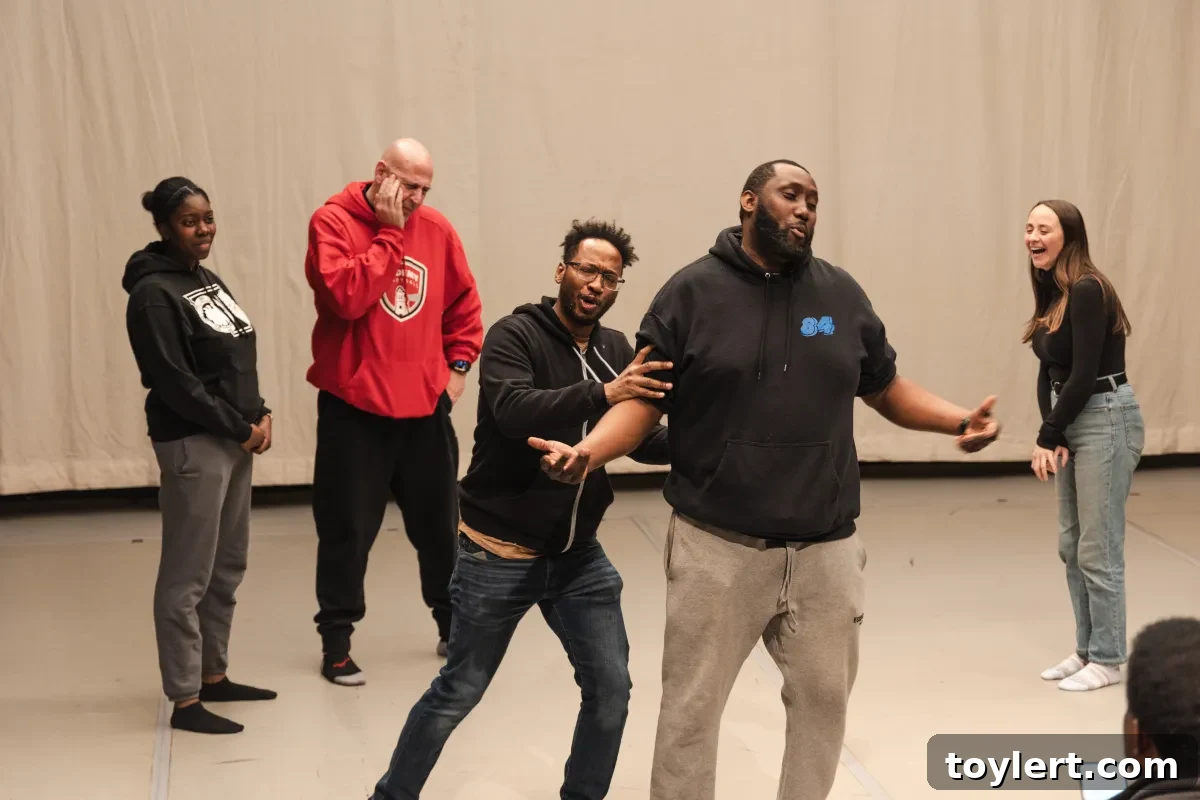
The “Protect, Serve, Understand” program is far from a simple seminar; it is an immersive, interactive experience designed to challenge preconceived notions and build bridges through shared humanity. At its core, the program utilizes the techniques of theatrical improvisation, role-playing, and facilitated group discussions. Participants include a diverse cross-section of society: uniformed NYPD officers, community residents, youth, activists, and local leaders. This deliberate mix ensures that a wide array of perspectives is brought to the table, creating a rich tapestry of experiences and viewpoints that are essential for genuine understanding.
Workshops typically involve exercises where participants step into each other’s shoes, literally acting out scenarios from different viewpoints. An officer might play the role of a community member experiencing stop-and-frisk, while a civilian might portray an officer facing a high-stress situation. These role-reversals are not just theatrical exercises; they are profound empathy-building tools. By physically embodying another person’s experience, participants gain firsthand insight into the emotional and psychological pressures faced by others. This can lead to moments of profound realization, breaking down stereotypes and fostering a deeper appreciation for the complex realities of policing and community life.
Facilitated discussions are also a critical component. Led by experienced Irondale facilitators, these sessions provide a safe and structured environment for participants to debrief their experiences, share personal stories, and express their feelings without fear of judgment. Topics often include the nuances of daily interactions, the impact of historical injustices, de-escalation techniques, and the psychological toll of their respective roles. The program emphasizes active listening and respectful disagreement, fostering a space where challenging conversations can occur constructively. For police officers, it offers an opportunity to hear directly from community members about the impact of their actions, beyond what internal reports might convey. For community members, it provides a rare glimpse into the complex decision-making processes and dangers inherent in police work. The overarching goal is not necessarily to agree on every point, but to cultivate a shared understanding of diverse perspectives and to build a foundation of trust that can extend beyond the workshop setting into real-world interactions.
The Enduring Resonance of “I Can’t Breathe”
The phrase “I can’t breathe” transcended Eric Garner’s final moments to become a universal symbol of oppression, injustice, and the desperate struggle for survival against systemic forces. Its tragic echo reverberated even more loudly six years later with the murder of George Floyd, whose own pleas of “I can’t breathe” under the knee of a police officer reignited the global movement for racial justice and police reform. This enduring resonance underscores the critical and ongoing need for initiatives like Irondale’s “Protect, Serve, Understand” program. These aren’t isolated incidents but symptoms of deeper, systemic issues that require continuous attention, dialogue, and innovative solutions.
The program confronts these issues head-on, acknowledging the painful history of community-police relations and the urgent call for accountability. By creating a space for empathy and shared narrative, Irondale aims to address the root causes of mistrust and miscommunication. It provides a platform where the meaning of “protect and serve” can be re-examined, not just as a departmental motto, but as a living commitment to human dignity and safety for all, particularly for those communities that have historically borne the brunt of disproportionate policing.
The Power of Theatre in Forging Social Change
Irondale’s approach exemplifies the unique power of theatre as a catalyst for social change. Unlike traditional lectures or policy debates, theatre engages participants on an emotional and visceral level. It allows for the exploration of complex human emotions—fear, anger, vulnerability, hope—in a controlled environment. By physically enacting scenarios and embodying different roles, participants bypass intellectual defenses and tap into a deeper well of understanding and empathy. This experiential learning is far more impactful and memorable than passive instruction.
Furthermore, theatre provides a safe space for conflict resolution and de-escalation training. Officers can practice communication strategies and learn to recognize and manage their own emotional responses in simulated high-pressure situations, without the real-world consequences. Community members, in turn, can develop more effective ways to interact with law enforcement, fostering productive engagement rather than adversarial confrontation. The shared creative process also builds camaraderie, fostering a sense of shared purpose among participants who might otherwise never interact, let alone collaborate, in such an intimate way. Irondale’s unique contribution lies in its ability to transform raw, painful experiences into structured, constructive dialogues, demonstrating that art is not just entertainment but a vital tool for societal healing and progress.
Sustaining Dialogue and Embracing Hope for the Future
The journey towards genuinely harmonious community-police relations is long and arduous, requiring sustained effort and commitment from all sides. Programs like “Protect, Serve, Understand” are not quick fixes, but essential investments in the long-term health and stability of our communities. They represent a hopeful vision where understanding can replace prejudice, and dialogue can pave the way for lasting systemic change.
Terry Greiss and the Irondale Ensemble Project continue their vital work, building on the lessons learned from Eric Garner’s tragedy and the ongoing national conversation. Their efforts in Brooklyn and beyond serve as a powerful reminder that even in the face of profound pain and division, human connection, empathy, and artistic expression can illuminate pathways toward a more just and equitable future. The echoing cry of “I can’t breathe” continues to demand our attention, but through the transformative power of dialogue and theatre, organizations like Irondale offer a tangible path towards a society where every individual’s right to breathe freely is truly protected and universally understood.
This commitment ensures that the legacy of those who have suffered is honored not just by remembrance, but by proactive efforts to build a world where such tragedies are prevented, and trust between those who serve and those who are served can genuinely flourish. The Irondale Ensemble Project’s work stands as a testament to the enduring belief that through art, we can confront our deepest societal wounds and collectively work towards healing and progress.