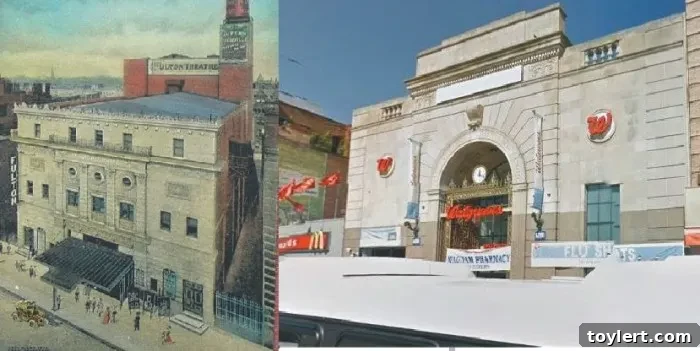
The Enduring Spirit of Brooklyn: A Journey Through Time with the Fulton Theater
Brooklyn, New York, is a borough steeped in history, a vibrant tapestry woven with stories of immigrants, industry, innovation, and an unwavering community spirit. From its early days as a collection of independent towns to its eventual consolidation into New York City, Brooklyn has continuously reinvented itself, its landscape bearing witness to centuries of change. While iconic structures like the Brooklyn Bridge and Prospect Park often capture the spotlight, it is sometimes the lesser-known, yet equally significant, sites that truly encapsulate the borough’s profound evolution. Among these, the story of the Fulton Theater offers a poignant reflection on Brooklyn’s past and present – a narrative of grandeur, transformation, and the relentless march of urban development.
Brooklyn’s Golden Age: A Flourishing Metropolis
To understand the significance of the Fulton Theater, we must first transport ourselves back to the late 19th and early 20th centuries, a period often regarded as Brooklyn’s golden age. During this era, Brooklyn was not merely a residential extension of Manhattan but a formidable city in its own right, boasting its own distinct character, industries, and cultural institutions. Grand avenues were lined with elegant brownstones, bustling commercial districts thrived, and an impressive network of trolleys connected its diverse neighborhoods. This was a time when Brooklyn nurtured a robust sense of local identity, where residents found entertainment, commerce, and community within their own borough’s vibrant bounds.
The demand for entertainment during this period was immense. Theaters, opera houses, and vaudeville stages dotted the urban landscape, serving as vital social hubs where people gathered to escape the daily grind, witness artistic performances, and partake in collective cultural experiences. These establishments were not just venues; they were architectural marvels, often adorned with intricate facades, luxurious interiors, and state-of-the-art stage technology for their time. They reflected the aspirations and prosperity of the growing borough, symbolizing a sophisticated urban life that paralleled, and in some respects rivaled, that of Manhattan.
The Rise of the Fulton Theater: A Beacon of Entertainment
Nestled amidst this thriving urban environment, the Fulton Theater emerged as a significant player in Brooklyn’s entertainment scene. While the exact opening date varies in historical accounts, it is widely recognized to have been established during the peak of Brooklyn’s theatrical boom, likely in the early 1900s. Its location, often in a central and easily accessible part of the borough, made it a popular destination for theatergoers from various Brooklyn neighborhoods.
From its inception, the Fulton Theater was designed to impress. Its architecture, in line with the popular styles of the era, likely featured elements of Beaux-Arts or Neo-Classical design, with a grand marquee beckoning patrons inside. Inside, audiences would have been greeted by opulent lobbies, plush seating, and an expansive stage equipped to host a variety of performances. The Fulton Theater quickly became renowned for its diverse programming, presenting everything from dramatic plays and musical comedies to vaudeville acts and early motion pictures. It served as a launching pad for aspiring artists and a cherished venue for established stars, contributing significantly to Brooklyn’s rich cultural fabric.
For decades, the Fulton Theater was more than just a building; it was a cornerstone of community life. It was a place where families created cherished memories, where young couples went on their first dates, and where the magic of live performance transported audiences to different worlds. It embodied the collective joy and shared experiences that defined urban life in early 20th-century Brooklyn, a testament to the borough’s cultural vibrancy and an indispensable part of its communal memory.
A Shifting Landscape: Decline and Urban Renewal
However, the mid-20th century brought profound changes that would reshape cities across America, and Brooklyn was no exception. The rise of television, the proliferation of suburbanization, and evolving entertainment preferences led to a gradual decline in the patronage of grand movie palaces and live theaters. Many historic venues, unable to adapt to the new economic realities or compete with home entertainment, either closed their doors, fell into disrepair, or were repurposed for other uses. Urban decay, shifting demographics, and ambitious urban renewal projects further accelerated this transformation, often leading to the demolition of historic structures deemed obsolete or impediments to progress.
The Fulton Theater, like many of its contemporaries, faced immense challenges during this turbulent period. While specific details of its final years might be etched only in the memories of its last patrons, it eventually succumbed to these forces of change. Whether it ceased operations due to dwindling audiences, structural issues, or simply became a casualty of a redevelopment scheme, its grand facade eventually faded, making way for a new chapter in Brooklyn’s urban story. The loss of such an architectural and cultural landmark was undoubtedly felt by those who remembered its glory days, a bittersweet reflection of progress often coming at the cost of heritage.
Brooklyn Today: A Resurgent Metropolis
Fast forward to the 21st century, and Brooklyn has undergone another dramatic metamorphosis. What was once perceived as a borough in decline has experienced an unprecedented renaissance, transforming into one of the most desirable and culturally influential urban centers in the world. Neighborhoods that were once struggling are now booming with new residential developments, innovative businesses, and a thriving arts scene. Real estate values have soared, attracting a diverse influx of new residents, from young professionals and artists to families seeking a vibrant community.
This resurgence is driven by a unique blend of factors: Brooklyn’s rich historical character, its distinct neighborhood identities, its burgeoning culinary scene, and its reputation as a hub for creativity and entrepreneurship. Walk through neighborhoods like Williamsburg, Dumbo, or Prospect Heights, and you’ll witness a dynamic fusion of old and new – historic brownstones standing proudly alongside modern high-rises, artisanal shops nestled beneath elevated train lines, and community gardens thriving amidst bustling streets. The borough has successfully rebranded itself as a destination in its own right, no longer merely Manhattan’s quieter sibling, but a global trendsetter.
The Fulton Theater Site: Echoes of the Past in the Present
Today, the site where the Fulton Theater once stood serves as a powerful reminder of this continuous evolution. The image we see, perhaps a composite, starkly contrasts the past with the present, illustrating how profoundly Brooklyn has changed. The grand theater, a symbol of early 20th-century entertainment, has likely been replaced by a structure that reflects contemporary urban needs and aesthetics. This could be a modern residential building, a commercial complex, or even a mixed-use development, each a testament to Brooklyn’s ongoing growth and adaptation.
While the physical edifice of the Fulton Theater may be gone, its legacy endures in the collective memory of Brooklynites and in the broader narrative of urban development. The modern structures that now occupy its footprint represent the borough’s current vitality, its economic strength, and its continuous capacity for reinvention. Yet, for those who remember, or for historians who delve into Brooklyn’s past, the site remains imbued with the echoes of a vibrant theatrical era, a place where dreams were spun and communities gathered.
Preserving Heritage Amidst Progress
The story of the Fulton Theater encapsulates the broader challenges and triumphs of urban development. It highlights the delicate balance between preserving historical heritage and embracing necessary progress. While not every historic building can be saved, understanding their stories and the roles they played is crucial for maintaining a sense of place and continuity. Brooklyn, in its modern iteration, continues to grapple with these themes, celebrating its historical architecture in some areas while allowing for significant redevelopment in others.
The site of the Fulton Theater, whether it now hosts a gleaming apartment tower or a bustling retail space, stands as a silent chronicler of Brooklyn’s journey. It invites us to pause and reflect on the layers of history beneath our feet, to appreciate the dramatic transformations that have shaped this iconic borough, and to ponder the enduring spirit that continues to define Brooklyn, then and now.