Unmasking the Affordable Housing Crisis: Activists Accuse Industry of Exploiting New York City
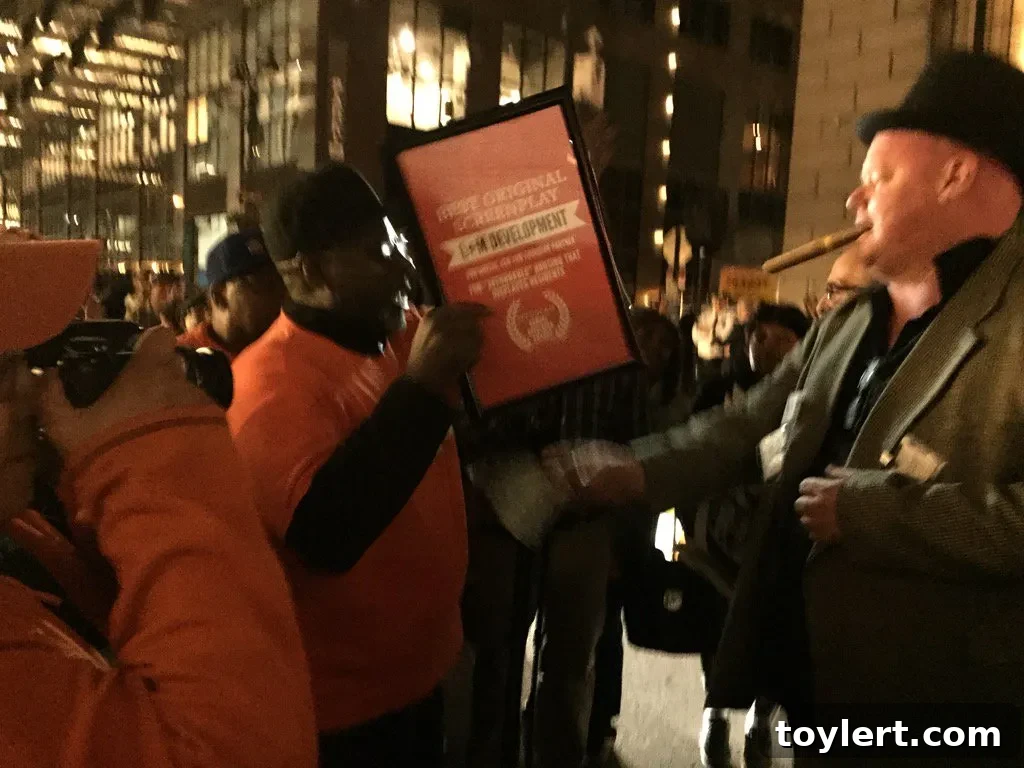
In a dramatic display of discontent, a local activist group recently made headlines by crashing a prominent developer gala held at Manhattan’s exclusive Yale Club. Their stark message resonated clearly through the opulent halls: the affordable housing industry, they claim, is actively “robbing” New York City. This bold accusation shines a spotlight on the deep-seated frustrations surrounding the city’s housing landscape and raises critical questions about who truly benefits from current affordable housing initiatives.
The incident, which unfolded on a Wednesday evening, saw activists disrupting an event attended by influential figures within the real estate and development sectors. Their actions were not merely a publicity stunt but a powerful statement against what they perceive as systemic failures and exploitative practices within a sector vital to the city’s future. For years, New York City has grappled with an intensifying housing crisis, characterized by skyrocketing rents, limited availability of truly affordable units, and a widening gap between the city’s average income and the cost of living. This confrontation at the Yale Club underscores the escalating tensions between developers, policymakers, and the communities striving for genuine, sustainable affordable housing solutions.
The Persistent Challenge of Affordable Housing in NYC
New York City, a global epicenter of culture and commerce, paradoxically faces one of the most severe affordable housing shortages in the United States. Millions of residents struggle to secure safe, stable, and reasonably priced homes, leading to overcrowding, long commutes, and immense financial strain. The city’s median rent consistently outpaces national averages, making it increasingly difficult for working-class families, artists, and essential service providers to remain in the five boroughs. This crisis isn’t new, but recent years have seen it reach critical levels, prompting widespread calls for urgent and effective interventions.
The term “affordable housing” itself often becomes a point of contention. While developers and city officials frequently tout new projects containing “affordable” units, activists and community members argue that these units are often priced out of reach for the very populations they are intended to serve. The standard definition of affordability, typically tied to a percentage of the Area Median Income (AMI), often fails to reflect the true economic realities of a significant portion of New York’s diverse population. This discrepancy creates a situation where what is deemed “affordable” on paper remains unattainable for many low-income and even middle-income households.
Activist Allegations: Is the System Rigged?
The activist group’s accusation of the industry “robbing” New York City stems from several key arguments. They contend that the current framework for affordable housing development, which heavily relies on public subsidies, tax abatements, and zoning concessions, disproportionately benefits developers rather than the public. Critics argue that these incentives, designed to encourage the creation of affordable units, often lead to luxury developments with a small fraction of units set aside as “affordable,” often at price points still far too high for local residents.
Questionable Definitions of Affordability
One of the primary concerns revolves around the calculation of Area Median Income (AMI). In New York City, AMI is often inflated by the high incomes of affluent neighborhoods, thereby skewing the “affordable” rent levels upwards. For instance, an apartment deemed affordable at 80% or 120% of AMI might still require an income far exceeding what many New York families earn. Activists argue that this mathematical sleight of hand creates a false sense of progress, allowing developers to fulfill their obligations without genuinely addressing the needs of those most impacted by the housing crisis.
Exploitation of Public Subsidies
Furthermore, activists point to the substantial public funds and tax breaks allocated to private developers. They claim that billions of dollars in taxpayer money are funneled into projects that ultimately exacerbate gentrification and displacement, rather than fostering true community stability. These subsidies, critics argue, are often granted without sufficient oversight or accountability, enabling developers to maximize profits while the city’s housing deficit continues to grow unchecked. The lack of transparency in how these funds are utilized and the long-term impact on neighborhoods are central to the activists’ concerns.
The Cycle of Displacement and Gentrification
The “robbing” accusation also speaks to the broader socio-economic consequences of current development practices. New luxury buildings, even those with “affordable” components, often drive up property values and rents in surrounding areas, pushing out long-time residents and small businesses. This cycle of displacement, commonly referred to as gentrification, erodes the cultural fabric of neighborhoods and deepens economic inequality. Activists see this as a form of systemic extraction, where the city’s resources and character are gradually stripped away for private gain.
The Yale Club Incident: A Call for Immediate Accountability
The choice of the Yale Club as the venue for the protest was highly symbolic. Known for its exclusivity and association with the city’s elite, it served as a powerful backdrop to confront the very individuals and institutions perceived as benefiting from the housing crisis. By disrupting a lavish gala, the activists aimed to bring their message directly to the doorstep of those they hold responsible, highlighting the stark contrast between the wealth accumulated by developers and the struggles faced by everyday New Yorkers.
Details emerging from the protest indicate a deliberate attempt to penetrate a highly guarded space, emphasizing the activists’ determination to be heard. While specific outcomes of the disruption are yet to be fully realized, the incident successfully garnered significant media attention, forcing a public conversation about the ethics and efficacy of current affordable housing strategies. It underscores a growing impatience among community advocates who feel their voices are often ignored in the formal policymaking process.
Seeking Genuine Solutions for Real Affordability
Beyond protest, activist groups are advocating for concrete policy changes to reform the affordable housing sector. Their demands typically include:
- Redefining Affordability: Shifting away from AMI-based calculations that are often out of sync with local incomes, towards definitions that reflect actual neighborhood income levels and are truly accessible to low- and extremely low-income households.
- Increased Transparency and Oversight: Implementing stricter regulations on how public subsidies are used, along with greater public accountability for developers who receive them. This includes making project finances and unit allocations more transparent.
- Ending Developer Tax Breaks: Re-evaluating and potentially eliminating tax abatements like 421-a, which critics argue primarily enrich developers while providing minimal benefits to communities in terms of deeply affordable housing.
- Investing in Public Housing: Advocating for significant investment in and preservation of existing public housing stock, rather than relying solely on private development.
- Community Land Trusts: Promoting and funding alternative models such as Community Land Trusts (CLTs) that take land out of the speculative market and ensure permanent affordability.
- Stronger Tenant Protections: Strengthening rent control and other tenant protection laws to prevent displacement and ensure housing stability for current residents.
These proposals represent a fundamental shift in approach, moving from a model that critics argue prioritizes profit to one that genuinely serves the housing needs of all New Yorkers. The call for “real affordability for all” isn’t just a slogan; it’s a demand for a systemic overhaul that places human dignity and community well-being above speculative real estate gains.
The Road Ahead: A Battle for the City’s Soul
The confrontation at the Yale Club is indicative of a broader, ongoing battle for the soul of New York City. As the city continues to evolve, the question of who gets to live here, and under what conditions, remains paramount. The activists’ claims, while controversial, resonate with countless residents who feel priced out and marginalized by unchecked development and a housing system perceived as fundamentally unfair. Their actions serve as a potent reminder that the dialogue around affordable housing must move beyond statistics and delve into the lived experiences of New Yorkers.
The future of affordable housing in New York City hinges on a willingness from all stakeholders – developers, policymakers, and communities – to engage in meaningful dialogue and implement reforms that prioritize equity and accessibility. Without a commitment to addressing the root causes of the housing crisis and ensuring genuine affordability for its diverse population, the accusations of the city being “robbed” will only intensify, fueling further protests and a deepening divide within one of the world’s most vibrant urban centers.
The activists’ bold stance at the Yale Club represents a turning point for many, signaling that the status quo is no longer acceptable. The fight for “Real Affordability for All” is far from over, and its outcome will undoubtedly shape the future of New York City for generations to come.