Brooklyn Leads the Charge: Record-Breaking Early Voter Turnout Signals a New Era of Civic Engagement
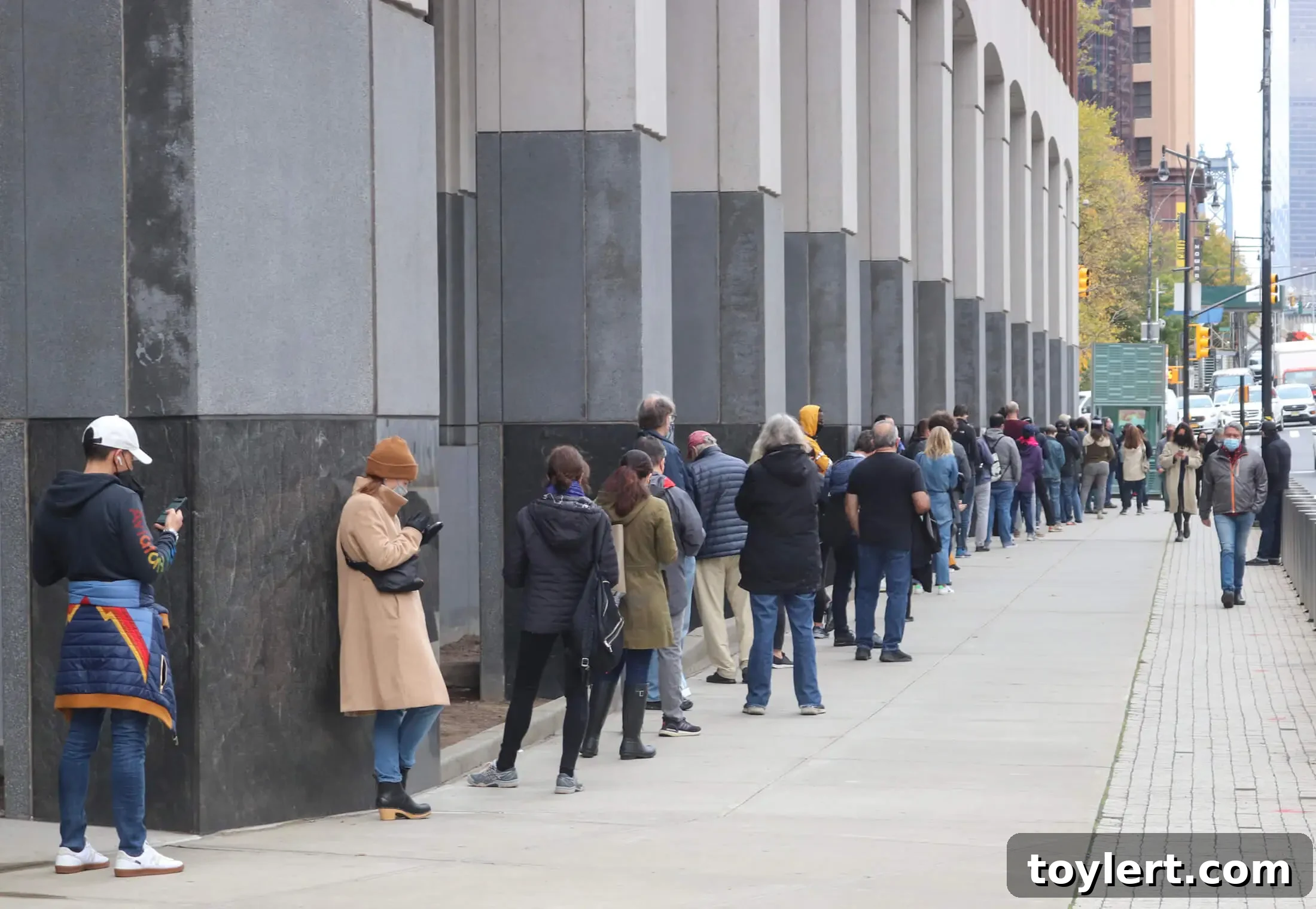
Brooklyn, often dubbed the “Borough of Homes and Churches,” has firmly established itself as the “Borough of Voters” in the recent presidential election. Setting a remarkable precedent, Brooklynites cast the most ballots during the early voting period, outperforming all four other New York City boroughs with an impressive total of 373,270 voters checking in at designated polling sites. These striking figures, released by the city’s Board of Elections (BOE), paint a vivid picture of a deeply engaged and politically active community.
The preliminary data from the BOE highlights King’s County’s pivotal role in the city’s overall early voting success. By Sunday evening of the early voting period, New York City had witnessed an unprecedented 1,119,056 early votes. Of this staggering total, Brooklyn alone accounted for more than a third, underscoring its significant contribution to the city’s democratic process. This high level of participation not only reflects Brooklyn’s vast and diverse population but also points to a heightened sense of civic duty among its residents.
The Power of Accessibility: Early Voting Transforms Participation
The introduction of early voting in New York State, championed by local legislators, has unequivocally proven its transformative power. A state legislator, whose bill brought early voting to the state in January, articulated the sentiment perfectly: “These numbers prove that making voting easier will bring out more people to exercise their democratic rights.” This statement is more than just an observation; it’s a testament to a fundamental principle of democracy – that accessibility is paramount to participation.
Before the advent of early voting, citizens often faced a myriad of challenges on a single Election Day. Long lines, inconvenient polling hours, work commitments, childcare responsibilities, and even unforeseen personal emergencies could deter individuals from casting their ballots. Early voting has effectively dismantled many of these barriers, offering unparalleled flexibility. Voters now have the luxury of choosing a time and day that best suits their schedules over an extended period, significantly reducing the pressure and logistical hurdles associated with traditional Election Day voting.
This increased convenience translates directly into a more inclusive electoral process. Working parents can vote during off-peak hours, students can participate without disrupting their studies, and individuals with unpredictable work schedules can find a window of opportunity to fulfill their civic duty. The success observed in Brooklyn and across New York City serves as a powerful model, demonstrating that proactive measures to enhance voter accessibility are not just beneficial, but essential for fostering a robust and representative democracy.
Brooklyn’s Electoral Pulse: A Deep Dive into High Engagement
Brooklyn’s remarkable turnout isn’t merely a statistical anomaly; it’s a reflection of the borough’s unique demographic tapestry and its vibrant community spirit. With neighborhoods ranging from the bustling streets of Williamsburg to the serene avenues of Bay Ridge, and the diverse communities of Marine Park, Brooklyn is a microcosm of New York City itself. The sheer density of its population, coupled with strong community organizations and active advocacy groups, likely played a crucial role in mobilizing voters.
Factors contributing to this exceptional engagement might include:
- Diverse Demographics: Brooklyn is home to an incredibly diverse population, encompassing various ethnic, cultural, and socioeconomic groups, each with distinct concerns and political interests. This diversity often translates into a high level of political awareness and a strong desire to have voices heard.
- Community Activism: The borough has a long history of grassroots activism and community organizing. Local leaders and community groups frequently engage in voter registration drives, informational campaigns, and get-out-the-vote efforts, particularly in pivotal elections.
- Accessibility of Polling Sites: While not without its initial challenges, the establishment of numerous, well-distributed early voting polling sites across Brooklyn likely made it easier for a large segment of the population to access the ballot box.
- High Stakes of the Presidential Election: The 2020 presidential election, perceived by many as one of the most consequential in modern history, undoubtedly energized voters across the political spectrum. This heightened sense of urgency motivated many to participate earlier than ever before.
- Media and Information Campaigns: Extensive media coverage and public information campaigns regarding the new early voting procedures ensured that Brooklyn residents were well-informed about their options and the importance of casting their votes.
Areas like those around the Barclays Center, often hubs of activity and easily accessible via public transit, may have also contributed to the overall ease of voting for many city residents, including Brooklynites who work or travel through these central locations. The sheer volume of participation points to a collective understanding among Brooklyn residents that their votes truly matter.
Beyond Brooklyn: The City-Wide Early Voting Success and Future Implications
While Brooklyn led the charge, the success of early voting was a city-wide phenomenon, with over a million New Yorkers participating before Election Day. This collective effort significantly alleviated the potential for overcrowding and long lines on the traditional Election Day, contributing to a smoother and more efficient voting process for everyone involved.
The experience in New York City, particularly Brooklyn’s exemplary performance, offers valuable lessons for other jurisdictions across the nation. It unequivocally demonstrates that when barriers to voting are reduced, voter participation tends to increase. This isn’t just about convenience; it’s about empowering citizens and strengthening the very fabric of democracy. The administrative efforts of the New York City Board of Elections, in conjunction with state legislation, paved the way for this success, proving that systemic changes can yield profound democratic dividends.
The robust turnout for early voting suggests a potential paradigm shift in electoral practices. As technology evolves and voter expectations change, the push for more flexible and accessible voting options is likely to continue. Discussions around expanding early voting periods, increasing the number of polling sites, and exploring other secure voting methods will undoubtedly gain momentum, driven by the clear positive outcomes observed.
Reinforcing Democracy: The Broader Significance of High Voter Turnout
The record-breaking early voter turnout, spearheaded by Brooklyn, is a powerful affirmation of democratic principles. High voter participation is not just a statistic; it is a vital sign of a healthy democracy. It signifies that citizens feel connected to their governance, believe in the power of their vote, and are committed to shaping the future of their communities and their nation.
When more people vote, the elected representatives are more reflective of the diverse will of the populace. This leads to more legitimate governance and policies that are better aligned with the needs and aspirations of the electorate. The message sent by Brooklyn’s voters is clear: they are engaged, they are informed, and they are ready to actively participate in the democratic process.
This surge in participation also underscores the critical role of civic education and community engagement. When communities are well-informed about the importance of voting and the procedures involved, they are more likely to turn out. The efforts of local organizations, media outlets, and political campaigns in communicating vital election information cannot be overstated.
Conclusion: A New Benchmark for Civic Pride
Brooklyn’s unparalleled early voting turnout for the presidential election marks a significant milestone in New York City’s electoral history. With 373,270 residents casting their ballots early, the borough not only led the city but also set a new benchmark for civic engagement and democratic participation. This success story is a direct testament to the efficacy of early voting mechanisms and the enduring commitment of Brooklynites to their democratic rights.
The figures from the Board of Elections provide compelling evidence that making the voting process more accessible directly translates into higher voter turnout. As New York City, and indeed the nation, looks towards future elections, the lessons learned from Brooklyn’s early voting triumph will undoubtedly serve as a guiding light. It is a powerful reminder that an engaged citizenry is the cornerstone of a vibrant democracy, and that innovative electoral practices can unlock unprecedented levels of civic participation. Brooklyn has truly shown the way forward, demonstrating that when the opportunity is presented, people will rise to the occasion and make their voices heard.