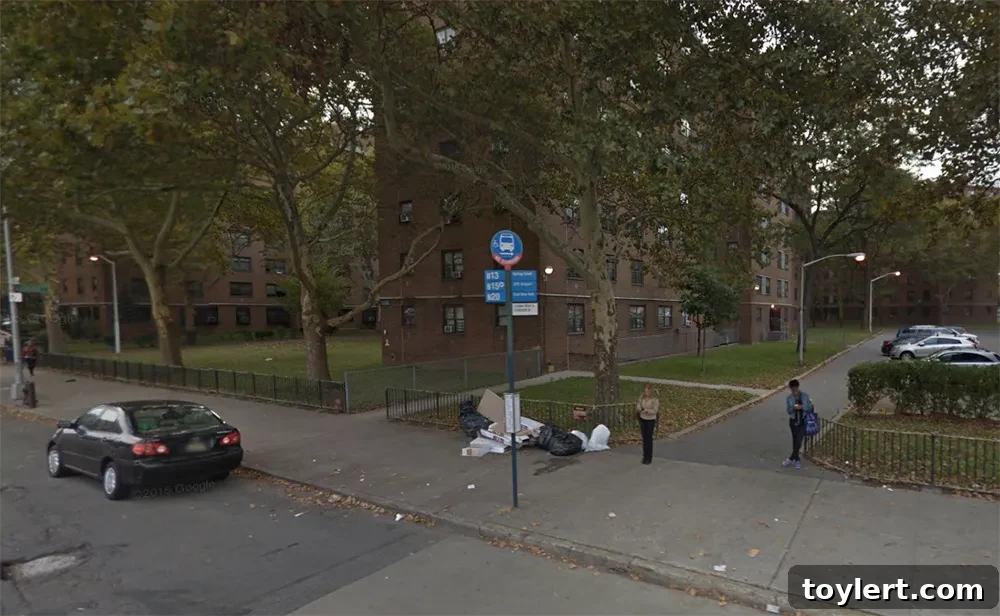
NYCHA-run Louis Heaton Pink Houses in East New York
Understanding Gentrification: Does It Truly Help the Poor?
The intricate dynamics of urban development often spark heated debates, particularly concerning the process known as gentrification. For decades, policymakers, urban planners, and community members have grappled with the question: does gentrification, with its promise of economic revitalization and urban renewal, ultimately benefit the poor and existing low-income residents? A recent comprehensive report, backed by a significant $250,000 investment and uniquely informed by the insights of five NYCHA (New York City Housing Authority) residents, offers a compelling answer: no, the poor generally do not benefit from gentrification. This groundbreaking study challenges long-held assumptions and brings a crucial ground-level perspective to a complex societal issue.
This article delves into the core findings of this report, exploring the multifaceted impacts of gentrification on vulnerable communities. We will examine the arguments often made in favor of gentrification, juxtaposing them with the harsh realities experienced by those living in rapidly changing neighborhoods. By shedding light on direct and indirect displacement, economic strain, and the erosion of community identity, we aim to foster a deeper understanding of why current models of gentrification often exacerbate inequality rather than alleviate poverty.
What is Gentrification? A Brief Overview
Before dissecting its effects, it’s essential to define gentrification. In its simplest form, gentrification refers to the process of renovating and improving a house or district so that it conforms to middle-class taste. More broadly, it describes the socio-economic transformation of historically disinvested urban neighborhoods. This process typically involves an influx of wealthier individuals and businesses, leading to increased property values, rising rents, and changes in the area’s cultural landscape. While often associated with physical improvements like new infrastructure, renovated buildings, and a broader array of commercial establishments, its impact on the original inhabitants is frequently overlooked or downplayed.
Historically, gentrification has been viewed by some as a natural progression of urban renewal, bringing capital, jobs, and safety to areas once plagued by poverty and neglect. Proponents argue that it stimulates local economies, increases tax revenues, improves public services, and reduces crime rates. From this perspective, the “trickle-down” effect should, in theory, uplift all residents, including those with lower incomes. However, the lived experiences of countless communities across the globe tell a different story, one often marked by displacement and disempowerment.
The Report’s Damning Findings: Gentrification’s Detrimental Impact
The report, partially informed by the invaluable perspectives of NYCHA residents, meticulously outlines how gentrification systematically fails to benefit the poor. Their research, conducted in various urban settings, including areas reminiscent of East New York where the Louis Heaton Pink Houses stand, points to several critical areas where negative impacts far outweigh any purported advantages for low-income populations.
1. Direct and Indirect Displacement
- Rising Rents and Property Taxes: Perhaps the most immediate and devastating effect is the rapid increase in housing costs. As new, higher-income residents move in, demand for housing surges, driving up rents and property values. Existing low-income tenants, often on fixed incomes or working minimum wage jobs, find themselves unable to afford the new market rates, leading to involuntary displacement.
- Evictions and Non-Renewals: Landlords in gentrifying areas frequently opt not to renew leases for long-term tenants, sometimes using renovation as a pretext, or simply to make way for new tenants who can pay higher rents. This often leaves vulnerable families with limited options and forces them to move far from their established communities, jobs, and schools.
- Erosion of Affordable Housing Stock: The conversion of multi-family homes into luxury apartments or single-family dwellings further reduces the availability of affordable housing. Developers are often incentivized to build for the affluent, neglecting the desperate need for low-cost options.
2. Economic Strain and Lack of Inclusive Opportunities
- Increased Cost of Living: Beyond housing, gentrification brings an overall increase in the cost of living. Traditional, affordable businesses like local grocery stores, laundromats, and community services are replaced by upscale boutiques, cafes, and restaurants. While these new establishments may create jobs, they often do not cater to the needs or budgets of existing residents.
- Job Mismatch: The new jobs created in gentrifying areas often require different skill sets than those possessed by long-term residents. For example, a new tech company or high-end retail store might not employ individuals previously working in local manufacturing or service industries, leading to job displacement rather than creation for the poor.
- Limited Access to New Amenities: While new parks, cultural institutions, and infrastructure improvements are often touted as benefits, low-income residents frequently find themselves excluded from these new amenities due to cost, cultural barriers, or a feeling of not belonging in their changing neighborhood.
3. Loss of Community and Cultural Identity
- Breakdown of Social Networks: Displacement fragments established social networks and support systems crucial for low-income families. Neighbors who have relied on each other for childcare, community events, and emotional support are scattered, leading to isolation and increased vulnerability.
- Erosion of Cultural Heritage: Long-standing community institutions, cultural centers, and local businesses that reflect the unique history and identity of the neighborhood are often lost or marginalized. This can lead to a sense of alienation among original residents, who feel their culture and heritage are being erased.
- Psychological Impact: The constant threat of displacement, coupled with the feeling of being pushed out of one’s own home and community, can have profound psychological effects, including stress, anxiety, and a sense of powerlessness.
The Crucial Role of NYCHA Residents in the Research
The involvement of five NYCHA residents in the research process is a standout feature of this report, lending unparalleled authenticity and practical insight. These residents, living at the forefront of urban change, brought their daily experiences and understanding of community dynamics directly into the academic and policy discourse. Their participation ensured that the study was not merely an abstract analysis of statistics but a deeply empathetic examination of human lives affected by policy decisions.
Their contributions likely highlighted the nuances often missed by external researchers: the subtle shifts in neighborhood character, the increasing difficulty of finding affordable goods, the fear of eviction, and the stress of navigating a changing social landscape. This direct engagement underscores the importance of participatory research, where those most impacted by a phenomenon are empowered to define its challenges and contribute to potential solutions. Their collective voice served as a powerful testament to the fact that for many, gentrification is not a pathway to prosperity but a direct threat to their stability and well-being.
Beyond the Debate: Seeking Equitable Urban Development
The findings of this report are a stark reminder that urban development must be pursued with equity and inclusion at its core. If the goal is truly to uplift all members of a community, then the current models of gentrification are profoundly flawed. Instead of a “rising tide lifts all boats” scenario, gentrification often creates a new, wealthier tide that capsizes the boats of the poor.
Moving forward, cities must prioritize strategies that foster inclusive growth without displacing existing residents. This includes robust affordable housing programs, stringent rent control measures, and protections for tenants against predatory landlords. Community land trusts, where land is owned collectively to preserve affordability, offer a promising alternative. Investment in local businesses and job training programs tailored to the existing workforce can ensure that economic benefits are shared more broadly.
Furthermore, urban planning needs to recognize and value the cultural assets and social capital that already exist in low-income neighborhoods. Development should complement, rather than erase, the unique identity and history of these communities. Policies should aim to empower residents, giving them a meaningful voice in planning decisions that directly affect their homes and livelihoods.
Conclusion: A Call for Conscious Urbanism
The $250,000 report, with its invaluable input from NYCHA residents, unequivocally concludes that gentrification, in its prevalent form, does not serve the poor. While it might bring new investments and amenities to a neighborhood, these benefits rarely trickle down to existing low-income residents, who are more often faced with displacement, economic hardship, and the loss of their cherished communities. The image of the Louis Heaton Pink Houses in East New York serves as a poignant reminder of the communities whose futures hang in the balance.
This report is a critical call to action for urban planners, policymakers, and community advocates. It urges us to move beyond simplistic narratives of urban renewal and confront the complex realities of socio-economic change. True urban progress should be measured not by the influx of wealth or the rise of property values, but by the extent to which it improves the quality of life, stability, and opportunities for all residents, especially the most vulnerable. It is time for a conscious, equitable approach to urban development that genuinely builds stronger, more inclusive cities for everyone.