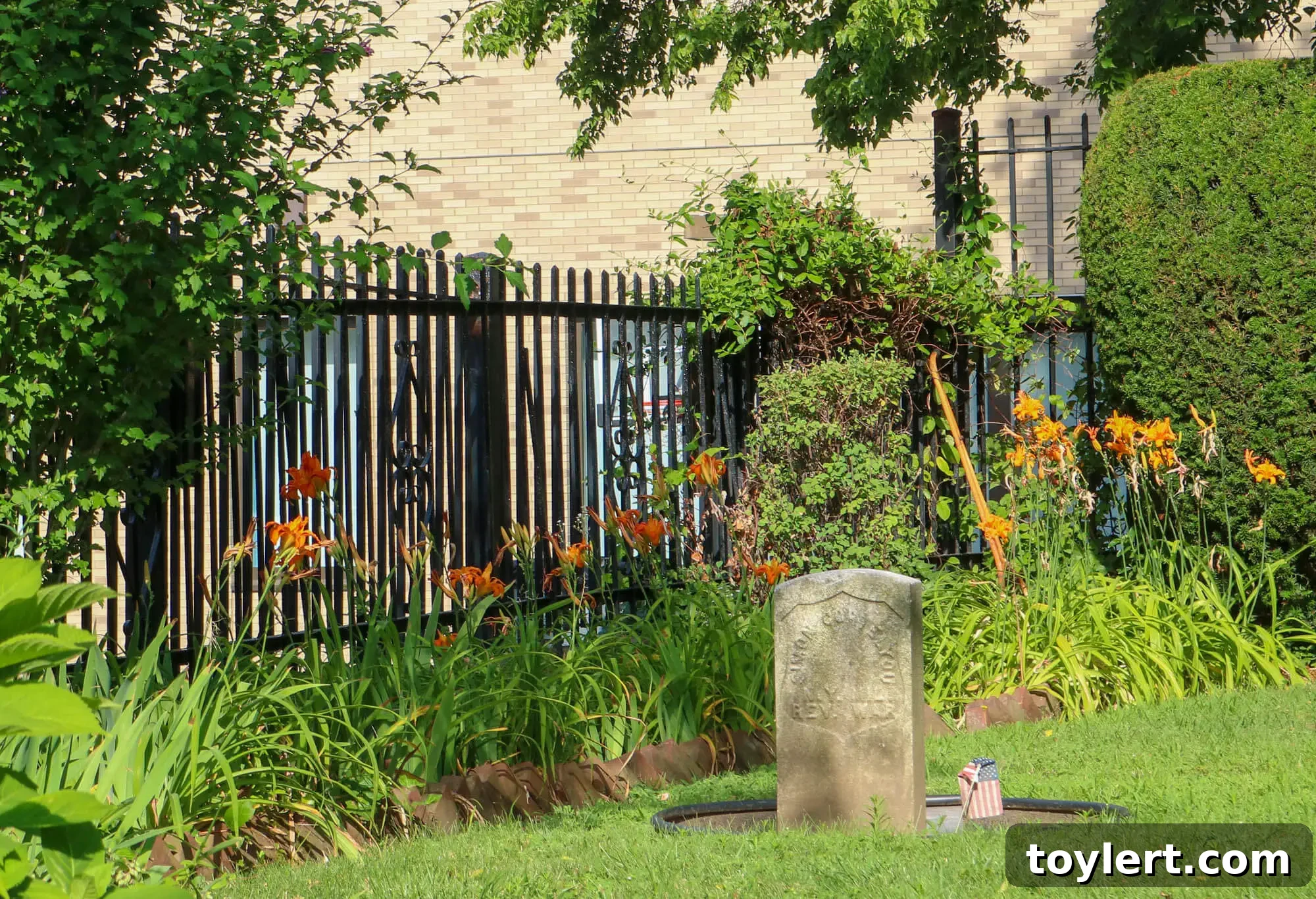
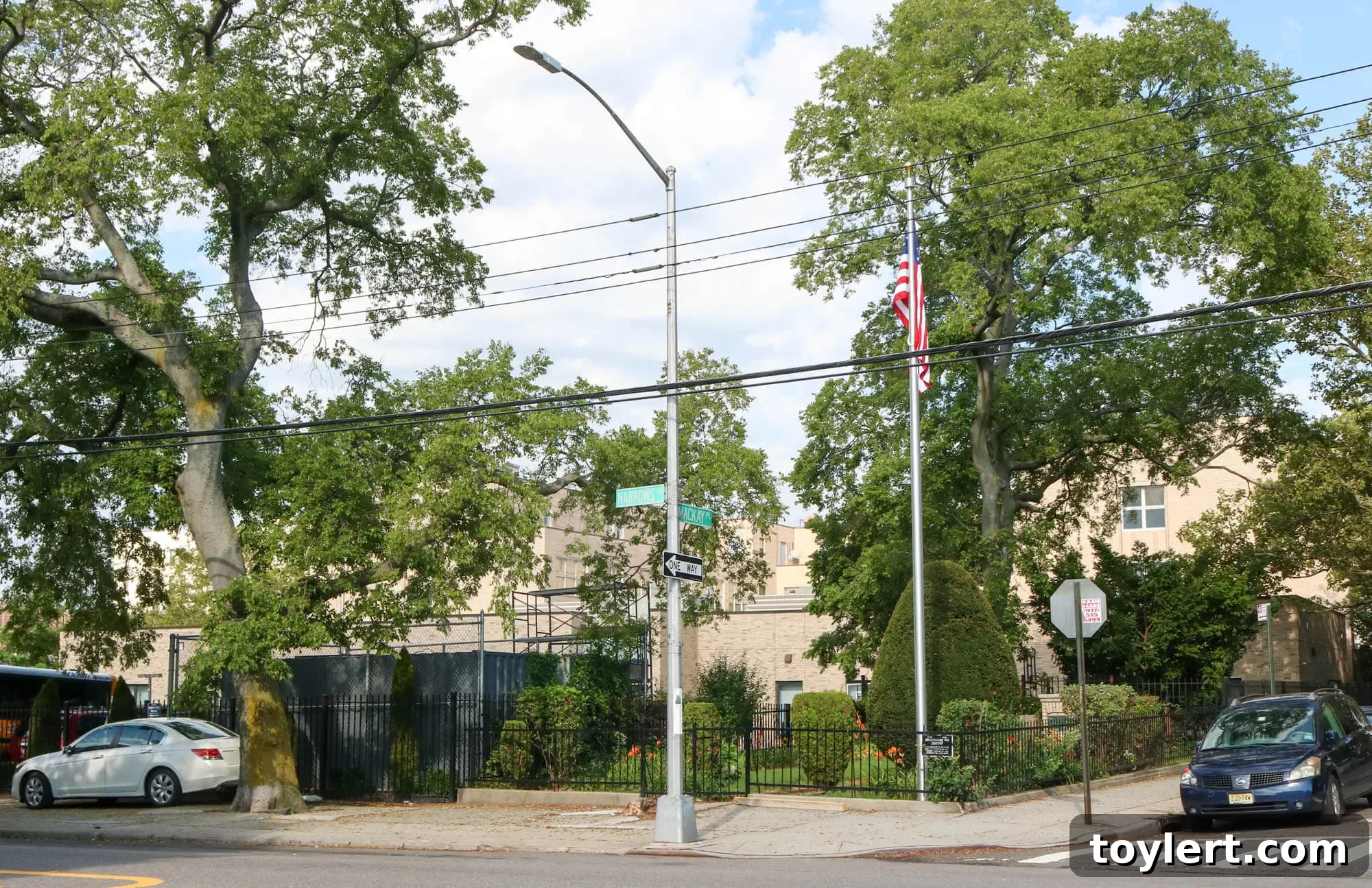
In the vibrant tapestry of Brooklyn’s storied past, certain threads stand out not for their grand scale, but for their enduring quiet resilience. One such thread is the Barkaloo Cemetery, a unique historical parcel nestled at the corner of Narrows Avenue and Mackay Place in the charming Bay Ridge neighborhood. Often celebrated as the smallest cemetery in Brooklyn, this unassuming plot of land has witnessed centuries of change, shifting from a sacred family burial ground to a neglected dumping site, only to be reclaimed and preserved as a testament to the area’s deep roots. Its journey through time mirrors the very development of Brooklyn itself – a narrative of growth, forgetfulness, rediscovery, and ultimately, a fierce dedication to heritage.
For generations, the Barkaloo Cemetery has faded in and out of local consciousness, its history whispered among long-time residents and uncovered by diligent historians. Before concerted preservation efforts in the early 20th century secured its future and illuminated its fascinating origins, the site often languished, becoming a neglected corner of the community. Yet, each time it threatened to be swallowed by urban development or forgotten by memory, its story re-emerged, reminding Bay Ridge of its profound connection to an earlier era. Today, the fenced-off grassy lot serves as a tranquil, green pause amidst the bustling streets, an invaluable link to the settlers who first shaped this part of New York City.
The Dutch Roots: Origins in New Utrecht and the Barkaloo Legacy
The story of the Barkaloo Cemetery begins in the early 18th century, a period when the area now known as Bay Ridge was part of the Dutch colonial settlement of New Utrecht. This was a time when individual family burial plots on private land were common, predating the large, municipal cemeteries we recognize today. The Barkaloo family, prominent early settlers in the region, established this plot as their final resting place, laying the foundation for what would eventually become a cherished historical landmark. These family plots were integral to the social fabric of colonial life, offering a personal and enduring connection to ancestral lands.
The name “Barkaloo” itself carries a rich lineage, reflecting its Dutch origins. Researchers delving into the family’s extensive history often encounter numerous spelling variants: Barkuloo, Barkelou, Borkuloo, and many others. These variations are not uncommon in historical records, particularly from periods before standardized spelling became prevalent. It is widely believed that these names are derivations of “Borcolu,” a town in the Netherlands, underscoring the deep European roots of these pioneering Brooklyn families. The Barkaloos, like many Dutch settlers, played a significant role in shaping the agricultural and social landscape of New Utrecht, cultivating land and contributing to the nascent community that would eventually form part of Brooklyn. Their commitment to establishing a family burial ground on their own property speaks volumes about their long-term vision and their desire to create a lasting legacy in the New World.
In an age before formalized record-keeping was widespread, these private family cemeteries served as vital repositories of generational history. Each grave marker, however simple, represented a life lived and contributed to the foundational narrative of the community. The Barkaloo family plot would have been a sacred space, tended by generations, reflecting their devotion and their lasting claim to the land they had cultivated. It offered a tangible connection between the living and their ancestors, a silent testament to the continuity of family and heritage. Such plots were not merely places of burial but symbols of identity and belonging, deeply woven into the fabric of daily life for early colonial families.
From Hallowed Ground to Forgotten Plot: Centuries of Neglect
As the centuries progressed and Brooklyn transformed from a collection of rural townships into a burgeoning metropolis, many such private family burial grounds faced an uncertain future. The Barkaloo Cemetery was no exception. By the 19th and early 20th centuries, as Bay Ridge developed and became more densely populated, the once hallowed ground gradually succumbed to neglect. Its original purpose began to fade from public memory, and the land, no longer actively maintained by descendants or recognized by a wider public, became vulnerable to the encroaching forces of urbanization.
Tales from this period speak of the plot degenerating into a “trash-strewn dumping ground,” a disheartening fate for what was once a sacred space. Residents, perhaps unaware of its historical significance, or simply lacking an alternative, used the secluded corner for refuse, casting debris and forgotten items onto the sacred earth. This degradation was further compounded by the presence of squatters, individuals seeking shelter in the forgotten fringes of the growing city. The serene landscape of the family plot was obscured by makeshift dwellings and accumulated detritus, a stark contrast to its original intent. It is easy to imagine the quiet despair of those who remembered its past, watching as a piece of their history was slowly eroded by urban expansion and indifference, threatened by the very progress it had once helped to define.
The very existence of the Barkaloo Cemetery became precarious. Without intervention, it seemed destined to be completely erased, perhaps paved over for new development or absorbed into a larger property, its history lost forever beneath layers of concrete and modern infrastructure. This period of neglect underscores a common challenge faced by historical sites in rapidly developing urban environments: the tension between preservation and progress. For a time, it appeared progress would win, consigning the Barkaloo family and their resting place to the footnotes of history, if not complete oblivion. The forces of economic development and a shifting population base often prioritized efficiency over historical continuity, making the survival of such a small, forgotten parcel all the more remarkable.
A Turning Point: The Early 20th Century Preservation Efforts
Fortunately, the story of the Barkaloo Cemetery did not end in neglect. As the 20th century dawned, a growing awareness of local history and the importance of preserving the past began to take hold in communities across Brooklyn. For the Barkaloo plot, this nascent preservation movement arrived just in time. Local historians, community activists, and descendants of early Bay Ridge families recognized the profound historical value of the forgotten cemetery and rallied to save it. Their efforts underscore a collective awakening to the idea that a community’s identity is inextricably linked to its historical roots.
These preservation efforts, though not widely documented in minute detail, were undoubtedly spearheaded by dedicated individuals and groups who understood that the small parcel represented a tangible link to Brooklyn’s colonial past. It is plausible that local historical societies, such as the Brooklyn Historical Society (now the Center for Brooklyn History) or smaller, neighborhood-specific organizations, played a crucial role. They would have meticulously researched property records, genealogical data, and oral histories to firmly establish the site’s authenticity and significance, bringing the Barkaloo family’s story back into the light. Newspaper articles from the era might have highlighted its plight, galvanizing public support and attracting the attention of local authorities, transforming a local concern into a community-wide mission.
The campaign to preserve the Barkaloo Cemetery would likely have involved advocating for legal protection, potentially through landmark designation, and securing funds for its restoration and ongoing maintenance. Community meetings, petitions, and public awareness campaigns would have been essential tools in gathering momentum, convincing skeptics, and ensuring long-term protection. The objective was not merely to clean up the plot, but to formally recognize and protect it as a historic site, ensuring that future generations would understand its importance as a foundational element of Bay Ridge’s character. The efforts culminated in the fencing off and landscaping of the site, transforming it from a neglected patch of land into the respectful, well-maintained historical landmark we see today, a proud emblem of community-led heritage conservation.
This period of preservation ensured the cemetery’s survival and, crucially, burnished the tale of its origins, transforming it from a fading memory into a celebrated piece of local lore. It became a powerful symbol of how a community can collectively safeguard its history, proving that even the smallest historical sites hold immense value and contribute significantly to the broader narrative of urban development and cultural identity.
Barkaloo Cemetery Today: A Living Link to Brooklyn’s Past
Today, the Barkaloo Cemetery stands as a serene and poignant landmark in Bay Ridge. The “fenced-off grassy lot” is meticulously maintained, a verdant sanctuary that offers a quiet contrast to the urban landscape surrounding it. Its modest size – often cited as the smallest cemetery in Brooklyn – belies its vast historical significance. It is a powerful reminder that history isn’t always found in grand monuments or sprawling estates; sometimes, it resides in humble, overlooked corners, speaking volumes through its very existence.
Visitors to the intersection of Narrows Avenue and Mackay Place are often struck by the tranquility of the site. Though no visible gravestones remain (likely lost or removed during periods of neglect, or simply weathered away over centuries), the ground itself is hallowed, representing the resting place of early Brooklyn settlers. The simple fence and manicured lawn speak volumes about the community’s commitment to honoring its past, a testament to the success of those early 20th-century preservationists who saw beyond the decay to the enduring historical value beneath. This small plot acts as a contemplative space, inviting passersby to pause and reflect on the layers of time that have shaped Bay Ridge.
The Barkaloo Cemetery serves as more than just a historical marker; it is an educational tool. It prompts reflection on the development of New York City, the evolution of burial practices from private family plots to large public cemeteries, and the profound impact of Dutch colonial heritage on Brooklyn. It reminds us that underneath our modern infrastructure lie layers of history, waiting to be discovered and appreciated, each one a thread in the rich tapestry of the city’s continuous narrative. This small plot tells a grand story of endurance, remembrance, and the reclamation of heritage.
The Broader Significance of Brooklyn’s Smallest Cemetery
The story of the Barkaloo Cemetery resonates far beyond the confines of Bay Ridge. It highlights the critical importance of preserving small, often forgotten historical sites. In a city constantly evolving, where space is at a premium and development pressures are relentless, these micro-cemeteries and family plots offer invaluable windows into early American life. They provide tangible connections to the individuals who laid the foundations of our modern communities, offering insights into their struggles, their beliefs, and their enduring legacies that might otherwise be lost to time.
Moreover, the preservation of such sites is crucial for genealogical research, allowing descendants to trace their family histories back to the very origins of the nation and fostering a deeper understanding of their personal heritage. It fosters a deeper sense of place and belonging for current residents, connecting them to the generations who walked the same streets centuries ago, creating a bridge between past and present. The Barkaloo Cemetery is a powerful example of how community engagement and historical consciousness can rescue a site from oblivion and elevate it to a status of profound local and historical significance, inspiring similar efforts elsewhere.
It stands as a testament to the power of collective memory and the enduring human desire to honor the past. In an age of rapid change and development, these small, quiet spaces serve as anchors, grounding us in history and reminding us of the rich, complex narratives that shaped our urban environment. The Barkaloo Cemetery, Brooklyn’s smallest, is indeed one of its greatest treasures, a silent guardian of centuries of history, offering a powerful lesson in the value of every piece of our shared heritage.