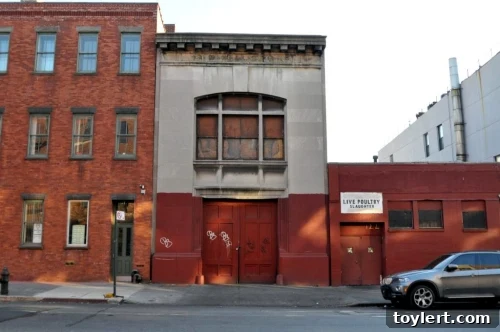
Brooklyn, One Building at a Time: The Enduring Legacy of 124 Greenpoint Avenue
In the vibrant tapestry of Brooklyn’s architectural landscape, each structure tells a compelling story, offering a unique window into the borough’s past, its people, and its dynamic evolution. Among these silent narrators stands the distinguished building at 124 Greenpoint Avenue, a site that once proudly housed the Former Hook and Ladder Company Number 106. This edifice is far more than just an old building; it is a tangible piece of history, embodying the community spirit, the industriousness, and the architectural prowess that defined Greenpoint and Brooklyn at the turn of the 20th century. Its robust façade and distinctive features echo an era when firehouses were not merely functional facilities but civic landmarks, integral to the safety and pride of their surrounding neighborhoods.
The Pivotal Role of Hook and Ladder Company Number 106 in Greenpoint’s Development
The history of fire services in New York City is a fascinating journey, evolving from ad hoc volunteer brigades to professional, uniformed companies, and Brooklyn’s Greenpoint neighborhood played a significant part in this transformation. Hook and Ladder Company Number 106, strategically stationed at 124 Greenpoint Avenue, was a vital component in safeguarding a rapidly industrializing and expanding area. Greenpoint, with its thriving waterfront—home to bustling shipyards, diverse factories, and busy docks—faced unique and constant challenges concerning fire safety. The inherent risk of catastrophic blazes in such a dense industrial environment made the presence of a well-equipped and professionally staffed firehouse absolutely essential for the community’s survival and prosperity.
Constructed during a period of significant urban expansion and modernization, the firehouse at 124 Greenpoint Avenue was meticulously designed to meet the demanding requirements of its time. While precise construction dates for all historic firehouses can vary, many Brooklyn firehouses from this era (late 19th to early 20th century) reflect a steadfast commitment to durable materials and civic-minded design principles. The firefighters of Hook and Ladder Company 106 were more than just emergency responders; they were integral pillars of the community, often residing and working within a few blocks of their station, thereby forming deep and lasting bonds with the residents they bravely served. Their unwavering dedication ensured the safety of countless homes, burgeoning businesses, and precious lives in a neighborhood that was perpetually growing and adapting to new challenges.
Tracing Greenpoint’s Industrial Roots and the Need for Robust Public Services
Greenpoint’s distinct identity was forged in the crucible of industry. From the mid-19th century onward, it underwent a dramatic transformation from pastoral farmland into a bustling epicenter of manufacturing and maritime activity. Esteemed shipyards, such as those operated by Webb & Bell, produced magnificent vessels, while a proliferation of oil refineries, glassworks, and iron foundries dotted the dynamic landscape. This intense wave of industrialization attracted diverse waves of immigrants seeking employment and a new life, consequently swelling the population and creating an increasingly dense and vibrant urban fabric. The burgeoning need for robust public services, particularly comprehensive fire protection, grew exponentially in parallel with this unprecedented expansion.
The establishment of Hook and Ladder Company Number 106 at 124 Greenpoint Avenue was a direct and proactive response to these burgeoning urban necessities. Its strategic location facilitated rapid deployment to the numerous factories, crowded tenements, and essential commercial establishments that vividly characterized Greenpoint. The building itself quickly became an enduring symbol of reliability and resilience, standing as a constant vigil against the inherent dangers posed by an industrializing city. Understanding the profound context of Greenpoint’s rich industrial past is absolutely crucial to fully appreciating the historical and architectural significance of structures like this historic firehouse.
Architectural Splendor: Form Meets Function at 124 Greenpoint Avenue
Many of Brooklyn’s historic firehouses are justly celebrated not only for their critical utilitarian purpose but also for their striking architectural beauty and civic presence. The building at 124 Greenpoint Avenue stands as a compelling example of this architectural philosophy. While detailed original plans might be required for an exhaustive analysis, such structures typically embody characteristics of popular architectural styles of their time, often featuring elements of Romanesque Revival, Neo-Classical, or a simplified Beaux-Arts influence, seamlessly blending functionality with an impressive civic aesthetic. These architectural styles frequently incorporated:
- Robust Masonry: Often constructed with rich red brick, intricate terra cotta, or sturdy stone, providing both exceptional fire resistance and an overwhelming sense of permanence and gravitas.
- Arched Openings: Grand, wide arched openings for the apparatus bay doors, frequently adorned with decorative keystones or elaborate voussoirs, adding a touch of classical elegance.
- Decorative Details: Ornate cornices, pronounced belt courses, intricately carved window surrounds, and occasionally sculptural elements that emphatically denote the building’s crucial public function and importance.
- Vertical Elements: While not all firehouses featured full hose-drying towers visibly from the front, many thoughtfully incorporated vertical elements, distinct gables, or prominent rooflines to significantly enhance their civic monumentality and visibility within the urban landscape.
The meticulous design of 124 Greenpoint Avenue undoubtedly aimed to convey an unmistakable sense of strength, reliability, and community pride. Its sturdy construction and carefully considered aesthetic details would have made it a standout structure, commanding respect and consistently assuring residents of their safety and the presence of dedicated public service. The architectural details were not merely decorative embellishments; they were an intentional and powerful statement about the profound importance of the public services housed within, contributing significantly to the streetscape and the overall distinctive character of Greenpoint. These buildings were engineered and designed to endure, and their continuing presence today is a powerful testament to the superior quality of their original construction and the visionary foresight of their architects.
The Art of Preservation and Adaptive Reuse: A Modern Chapter for Historic Brooklyn
As Brooklyn underwent continuous transformation and modernization, many invaluable historical buildings faced the unfortunate threat of demolition to make way for new, often less characterful, developments. However, a growing and commendable appreciation for architectural heritage has led to significant and impactful efforts in urban preservation and adaptive reuse. The former Hook and Ladder Company Number 106 at 124 Greenpoint Avenue stands as a prime and inspiring example of how historic structures can successfully find new life while thoughtfully retaining their original charm, historical integrity, and an undeniable connection to their past.
Adaptive reuse is a sustainable and intelligent practice that involves creatively repurposing old buildings for entirely new functions, thereby extending their lifespan and significantly reducing the environmental impact associated with new construction. For a distinguished building like 124 Greenpoint Avenue, this could entail a sensitive conversion into stylish residential lofts, dynamic commercial spaces, or even a vibrant community center, all while meticulously preserving its distinctive facade and cherished historical elements. Such thoughtful transformations demand careful planning, innovative design, and a deep, abiding respect for the building’s storied past, ensuring that its legacy is honored and celebrated even as its functional purpose gracefully shifts.
The diligent preservation of structures like this historic firehouse is absolutely vital for several compelling reasons:
- Historical Continuity: They serve as tangible, enduring links to the past, enabling current and future generations to understand and appreciate the borough’s complex and fascinating development.
- Architectural Diversity: They add invaluable character, uniqueness, and aesthetic richness to urban environments, effectively preventing monotonous and uninspired streetscapes.
- Economic Benefits: Preserved historic buildings often attract cultural tourism, foster the growth of local businesses, and significantly contribute to property values within cherished historic districts.
- Sustainability: Reusing existing structures is inherently a more environmentally responsible and sustainable approach than the costly and resource-intensive cycle of demolition and new construction.
Brooklyn’s unwavering commitment to preserving its architectural gems, including cherished structures like 124 Greenpoint Avenue, ensures that the borough’s rich and multifaceted narrative continues to unfold, beautifully documented and celebrated, one meticulously maintained building at a time.
Greenpoint Today: A Harmonious Blend of Heritage and Modernity
Today, Greenpoint stands as a remarkably vibrant and highly sought-after neighborhood that beautifully merges its rugged industrial past with a modern, artistic, and contemporary sensibility. While many of the old factories, bustling shipyards, and sprawling warehouses have been thoughtfully replaced by verdant parks, trendy cafes, and sleek new residential developments, the compelling echoes of its profound history are still tangibly palpable. Historic buildings, like the venerable former firehouse at 124 Greenpoint Avenue, stand proudly and gracefully amidst newer constructions, serving as poignant and powerful reminders of the area’s rich and enduring heritage.
Walking through the enchanting streets of Greenpoint, one can vividly observe this fascinating juxtaposition. Classic brownstones and charming row houses sit comfortably beside artfully repurposed industrial buildings, and a thriving array of local businesses flourish in spaces that once housed bustling workshops or vital civic services. The community cherishes these historical landmarks, understanding implicitly that they are not just old bricks and mortar, but invaluable repositories of countless stories, cherished memories, and the very essence of Greenpoint’s unique and irreplaceable identity. The continued existence and widespread appreciation of buildings like the former Hook and Ladder Company Number 106 contribute significantly to the neighborhood’s distinct charm and desirability, consistently attracting those who deeply value authenticity, historical resonance, and a profound connection to the past.
Conclusion: A Building That Speaks Volumes for Brooklyn’s Soul
The distinguished building at 124 Greenpoint Avenue, formerly the revered home of Hook and Ladder Company Number 106, is far more than just a forgotten municipal structure. It is, in essence, a living artifact of Brooklyn’s expansive history, a silent yet powerful guardian that once valiantly protected a burgeoning industrial neighborhood and now stands as an eloquent symbol of architectural resilience and invaluable community heritage. Its robust form and profound historical character invite us to pause, reflect, and contemplate the generations of courageous firefighters who bravely served there, the immense industrial boom that indelibly shaped Greenpoint, and the ongoing, passionate efforts to preserve the unique and cherished identity of one of New York City’s most beloved and dynamic boroughs.
Indeed, Brooklyn’s captivating story is perpetually told, one magnificent building at a time, and 124 Greenpoint Avenue offers a particularly compelling and resonant chapter, gracefully reminding us that every weathered facade possesses an untold narrative, and every meticulously preserved structure immeasurably enriches the collective memory and vibrant spirit of a truly great city.