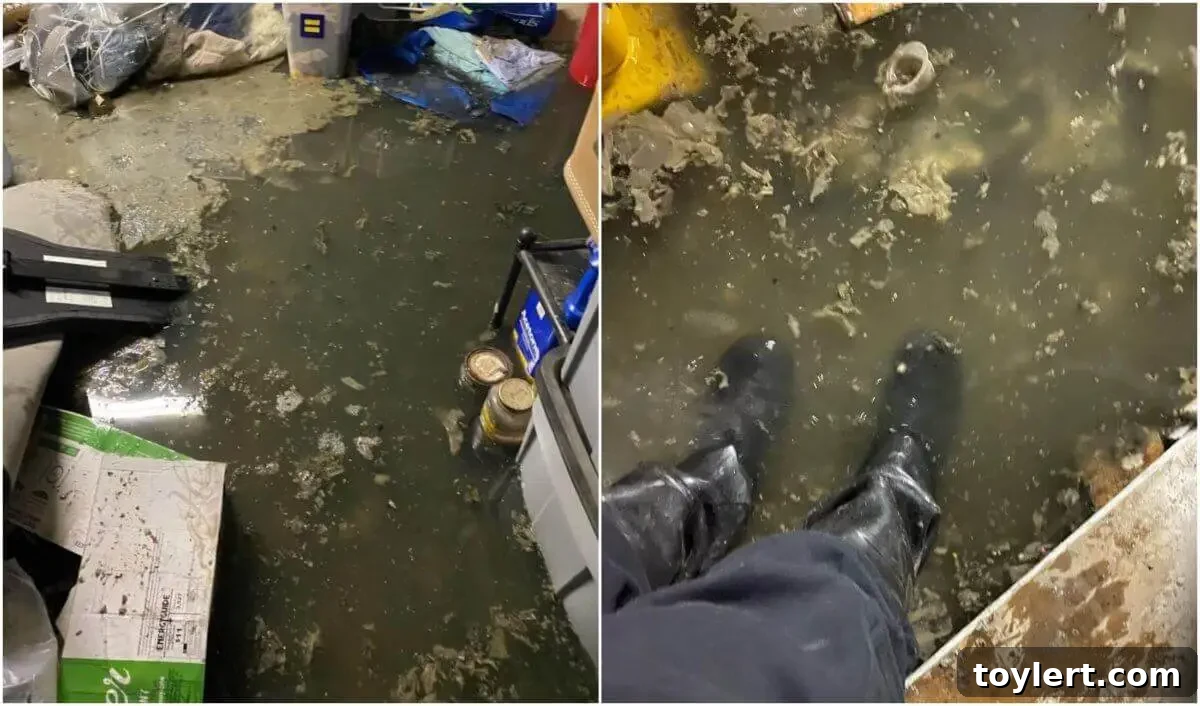
For nearly a month, a Flatbush homeowner has endured an unimaginable nightmare: his basement continuously inundated with putrid sewage. This distressing situation, stemming from a severe sewer backup on his block, has left his home uninhabitable in parts, causing significant financial damage and immense emotional distress. What’s more alarming is the alleged inaction from city authorities, who, despite repeated pleas, have seemingly taken no concrete steps to rectify the problem, leaving the resident to contend with hazardous waste and mounting frustration.
The Nightmare Begins: A Homeowner’s Ordeal
Eric Alexie, the embattled homeowner residing on East 21st Street near Woodruff Avenue in Flatbush, Brooklyn, recounts the harrowing start of his ordeal. The basement of his cherished home first became a repository for rancid, raw sewage on January 13. What began as an alarming seep quickly escalated into a full-blown inundation, transforming a functional living space and storage area into a biohazard zone. The immediate aftermath was devastating: a pervasive, nauseating odor permeated his entire residence, making daily life unbearable and forcing him to confront the grim reality of widespread property damage. Every possession stored in the basement, from family heirlooms to essential utilities, was now compromised, submerged in an unsanitary mixture of water and waste.
Alexie’s firsthand account paints a vivid picture of the sheer horror and helplessness he feels. “My house smells like s—,” he candidly stated, expressing the profound disgust and discomfort that has become a constant companion in his home. This isn’t merely an unpleasant smell; it’s a constant reminder of the contaminants present and the potential health risks lurking within his own property. The financial toll is already staggering, with initial estimates of damages soaring into the tens of thousands. Beyond the immediate destruction, Alexie is gravely concerned about the long-term consequences, particularly the insidious threat of mold growth. “I cannot keep anything in that basement… I can see that there’s blackness down there so I know that there’s mold,” he added, highlighting his justified fears that the persistent moisture and organic matter provide a fertile breeding ground for hazardous fungi, further compromising the structural integrity and air quality of his home.
Unbearable Conditions: Health Risks and Extensive Damage
The presence of raw sewage in a residential basement is not merely an inconvenience; it constitutes a severe public health hazard. Raw sewage contains a dangerous cocktail of bacteria, viruses, parasites, and other pathogens that can cause a wide range of illnesses, from gastrointestinal infections to more severe respiratory and skin conditions. Exposure to these contaminants, whether through direct contact or inhalation of aerosolized particles, poses a significant risk to Eric Alexie and anyone entering his property. Children, the elderly, and individuals with compromised immune systems are particularly vulnerable. The prolonged exposure to such an environment also creates an ideal breeding ground for insects and rodents, further exacerbating the unsanitary conditions and potential for disease transmission.
Beyond the immediate health concerns, the property damage caused by a basement flooding with sewage is extensive and often irreversible. Water-damaged drywall, insulation, flooring, and wooden structures can quickly degrade and become breeding grounds for mold and mildew. Mold, as Eric Alexie rightly fears, not only emits an unpleasant musty odor but can also release spores that trigger allergic reactions, asthma attacks, and other respiratory problems. Electrical systems submerged in water pose electrocution risks and can lead to permanent damage requiring costly replacements. Personal belongings, furniture, appliances, and HVAC systems are often irreparably ruined by sewage contamination, leading to significant financial losses that often extend beyond what standard homeowner’s insurance might cover, particularly if the root cause is a municipal sewer issue. The structural integrity of the home itself can be compromised over time, leading to weakened foundations, wood rot, and a significant depreciation in property value. The task of remediation is not only expensive but also complex, requiring specialized cleaning, sanitization, and often reconstruction to restore the space to a safe and habitable condition.
The City’s Unresponsive Stance: A Call for Action
A critical aspect of Eric Alexie’s distressing situation in Flatbush is the perceived lack of intervention from New York City authorities. For nearly a month, despite the persistent problem and clear health risks, the city has allegedly failed to provide a tangible solution. When a sewer backup originates from a city-owned main line, it is typically the responsibility of the Department of Environmental Protection (DEP) to address and resolve the issue. Homeowners like Alexie rely on these municipal services to maintain public infrastructure and ensure the safety and well-being of residents. The delay in response not only prolongs the homeowner’s suffering but also suggests a systemic failure in addressing urgent public works issues, especially those involving hazardous materials.
The bureaucratic hurdles in dealing with municipal agencies can be incredibly frustrating for residents. Homeowners often find themselves navigating a labyrinth of phone calls, service requests, and departmental transfers, frequently without clear answers or timelines. This lack of transparency and accountability can exacerbate the emotional toll on individuals already grappling with significant property damage and health concerns. For Eric Alexie, every passing day without a resolution means more damage to his home, greater risk to his health, and a deepening sense of abandonment by the very institutions meant to protect the community. The ongoing silence or slow response from the city’s DEP raises questions about resource allocation, emergency response protocols, and overall commitment to maintaining essential urban infrastructure in areas like Brooklyn.
Understanding Urban Sewer Systems: Causes of Backups
Sewer backups, while deeply unpleasant, are unfortunately a common occurrence in many urban environments, especially in older cities with aging infrastructure like New York. Understanding the potential causes can shed light on why Eric Alexie’s Flatbush home might be experiencing such a persistent problem. Blockages are one of the most frequent culprits. These can be caused by an accumulation of grease, non-flushable items (wipes, feminine hygiene products), tree roots infiltrating pipes, or even foreign objects accidentally or deliberately introduced into the system. Over time, these blockages restrict flow, causing sewage to back up into the lowest points connected to the system, which is often a basement.
Another significant factor, particularly in densely populated areas, is the capacity of the sewer system itself. Heavy rainfall or rapid snowmelt can overwhelm combined sewer systems (which carry both stormwater and sewage), leading to surcharges and backups. If the city’s main sewer line on Eric Alexie’s block is indeed the source, it could be due to a significant blockage in the main pipe, a structural collapse within the aging infrastructure, or an undersized system struggling to cope with current demands. It’s crucial to differentiate between a blockage in a private lateral line (the pipe connecting a single home to the city main) versus an issue in the municipal main. While homeowners are generally responsible for their lateral lines, a problem in the city’s main sewer unequivocally falls under municipal jurisdiction, demanding an immediate and effective response from the Department of Environmental Protection.
The Financial and Emotional Toll on Homeowners
The financial ramifications of a persistent sewer backup are immense and far-reaching for any homeowner. The immediate costs involve emergency cleanup, professional sewage remediation, and the replacement of damaged personal property. However, the expenses don’t stop there. Structural repairs, including replacing drywall, flooring, insulation, and potentially even foundations, can run into tens of thousands of dollars. Furthermore, the specialized nature of sewage cleanup means higher costs compared to clean water flooding, as strict protocols must be followed to ensure proper sanitization and prevent the spread of pathogens and mold. Depending on the extent of the damage, homeowners might also incur temporary living expenses if their home becomes uninhabitable during the lengthy repair process. Insurance coverage for sewer backups can be complex, often requiring specific riders or separate policies, and even then, disputes over responsibility (city vs. homeowner) can delay claims and reimbursements significantly. For Eric Alexie, these costs represent a substantial and unexpected burden, potentially wiping out savings and creating long-term financial strain.
Beyond the monetary costs, the emotional and psychological toll on a homeowner like Eric Alexie is profound. The home is often considered a sanctuary, a place of safety and comfort. When that sanctuary is violated by hazardous waste, the sense of security is shattered. The constant stench, the sight of contamination, and the uncertainty of a resolution can lead to severe stress, anxiety, and even depression. The feeling of helplessness when city authorities are unresponsive only exacerbates these feelings. Homeowners invest their time, effort, and dreams into their properties, and seeing it severely damaged by something beyond their control, especially when external entities are involved, is deeply disheartening. The loss of personal belongings, particularly those with sentimental value, adds another layer of grief. The disruption to daily life, the endless phone calls, and the uncertainty create a persistent state of unease that can impact mental well-being for months, if not years, after the initial incident.
Seeking Resolution: What Can Homeowners Do?
When faced with a devastating sewer backup, especially one linked to municipal infrastructure, homeowners like Eric Alexie often feel overwhelmed and unsure of their next steps. Documenting everything is paramount: photographs and videos of the damage, records of all communication with city agencies (dates, times, names of officials), and any receipts for cleanup efforts or temporary repairs. This comprehensive documentation serves as crucial evidence for insurance claims and potential legal action. Engaging a public adjuster can help navigate complex insurance policies and ensure a fair assessment of damages. If the city’s DEP remains unresponsive or denies responsibility, consulting with a lawyer specializing in municipal liability or property law might become necessary. Such legal counsel can help determine the best course of action, which could involve filing a notice of claim against the city, a prerequisite for most lawsuits against municipal entities. Community advocacy can also play a vital role; bringing the issue to local elected officials or community boards can exert pressure on the city to act and highlight broader infrastructure concerns in Flatbush.
A Community-Wide Concern: Addressing Infrastructure Challenges
The plight of Eric Alexie in Flatbush underscores a larger issue facing many older, densely populated urban centers: the pressing need for significant investment in aging infrastructure. New York City’s sewer system, much like its water mains and other utilities, comprises components that are decades, if not a century, old. While designed to be robust, these systems have endured continuous use, increasing population density, and changing environmental conditions, leading to wear and tear that can result in collapses, blockages, and capacity failures. The city has a responsibility to proactively maintain, repair, and upgrade its critical infrastructure to prevent such catastrophic events from impacting its residents. When incidents like Alexie’s basement flooding occur, they serve as stark reminders that neglecting these vital systems can have dire consequences for individual homeowners and the community at large. Addressing these challenges requires not only immediate responses to emergencies but also long-term strategic planning, significant budgetary allocations, and transparent communication with residents. Eric Alexie’s ongoing struggle is a powerful call to action for the city to prioritize the health, safety, and property of its citizens by ensuring its essential services function as intended.