The End of an Era: Unearthing and Demolishing Brooklyn’s Last Lexington Avenue El Remnants
In the ever-evolving landscape of New York City, where progress often means the erasure of the past, moments of demolition can be both poignant and historically significant. We recently received a captivating submission from a vigilant reader: this compelling video, capturing the final moments of a forgotten piece of Brooklyn’s rich transit history – the demolition of the last physical remnants of the Lexington Avenue Elevated (El) train. This wasn’t just any old structure; it was a tangible link to a bygone era, a steel ghost nestled within a modern building, speaking volumes about the city’s layered past.
The Lexington Avenue El train, an engineering marvel of its time, first ascended into Brooklyn’s sky in 1888. For decades, it served as a vital artery, carrying countless commuters through the bustling neighborhoods of Clinton Hill and Bed-Stuy. It was part of an extensive network of elevated railways that defined the skyline and facilitated rapid expansion across the boroughs, shaping the very fabric of urban life in late 19th and early 20th century New York. The noise and shadow cast by these towering structures were an intrinsic part of daily life for residents living beneath them, a constant reminder of the city’s ceaseless energy and connectivity.
A Legacy of Connection: The Lexington Avenue El’s Impact on Brooklyn
Constructed during a period of unprecedented growth, the Lexington Avenue El was more than just a means of transport; it was an economic engine. It enabled residents to commute to burgeoning business districts and connected vibrant communities like Clinton Hill and Bed-Stuy to the broader city. These neighborhoods, now highly sought after, were profoundly influenced by the El. Property values, commercial development, and population density all felt the ripple effect of this elevated lifeline. It transformed commutes, shortened travel times, and knitted together a diverse borough, contributing to the unique character and dynamism that Brooklyn is celebrated for today.
However, the reign of the elevated trains was not destined to last forever. By the mid-20th century, as New York’s subway system expanded significantly and urban planning philosophies shifted, many of the El lines began to be viewed as relics of a past era. Critics cited their noise, the darkness they cast upon the streets below, and their perceived visual blight as reasons for their removal. The modern subway, running underground, offered a quieter, cleaner, and less intrusive alternative. Consequently, the Lexington Avenue El, like many of its counterparts, was systematically dismantled in the 1950s, making way for new forms of transit and urban development. Most of its steel structure was sold for scrap, and its physical memory faded into photographs and historical texts.
The Unlikely Survivor: A Hidden Relic on Grand and Lexington
What makes this recent demolition particularly noteworthy is the unique way a piece of the El managed to survive for nearly seven decades after its official dismantling. At the corner of Grand and Lexington Avenues, the old subway trusses – robust, riveted steel beams that once supported the weight of trains – were cleverly integrated into the structure of a garage. This was not a conscious act of historical preservation, but rather a practical adaptation. When the El was torn down, rather than completely removing every last vestige, these massive trusses were simply incorporated into a new building’s framework, becoming an integral, albeit hidden, part of its foundation and support system.
For decades, these forgotten steel behemoths served their new purpose, silently holding up the garage, unseen by most, yet carrying a profound historical weight. They represented an almost accidental piece of urban archaeology, a direct, tangible link to the late 19th century engineering prowess and the daily lives of Brooklynites from a bygone era. For those few who knew of their existence, they were a whispered secret, a testament to the layers of history hidden within the seemingly mundane structures of a constantly rebuilding city. This garage stood as the final physical sentinel of the Lexington El, making its demolition a truly significant event for historians, urban enthusiasts, and long-time Brooklyn residents alike.
Witnessing History Disappear: The Demolition Event
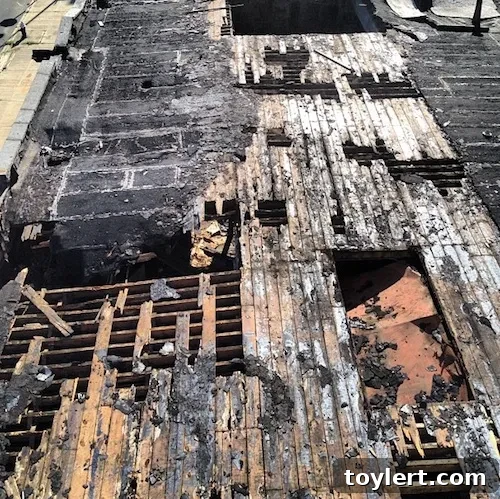
The wheels of progress, however, never stop turning. In late November [2012, based on original content’s context], the garage that housed these extraordinary remnants faced its own fate. Construction workers moved in, not just to renovate, but to demolish the entire structure. The poignant video and the accompanying photographs meticulously document this final act. Initially, the garage stood, a seemingly unremarkable building on a busy corner. Then, bit by bit, it was peeled away, revealing the sturdy, dark steel trusses of the old El structure, exposed once again to the Brooklyn sky after decades of concealment.
The footage captured by Jesse Resnick is invaluable, offering a rare glimpse into the process of dismantling history. It’s a powerful visual narrative, showing the transition from an everyday building to a skeleton revealing its past, and finally, to an empty lot. The demolition was a careful, calculated process, yet it carried an undeniable sense of finality. As the last pieces of the elevated subway structure were removed, an irreplaceable connection to Brooklyn’s early mass transit era was severed forever. This event served as a stark reminder of how rapidly urban landscapes transform and how easily historical markers can vanish.
From El Remnant to Modern Living: The Future of the Site
With the El remnants now fully removed, the site at Grand and Lexington Avenues is poised for its next chapter. Plans are already in motion for a new development: a four-story, four-unit building will rise from the cleared lot. This new structure symbolizes the ongoing evolution of Brooklyn, particularly in neighborhoods like Clinton Hill and Bed-Stuy, which have experienced a renaissance in recent decades. The demand for housing, driven by an influx of new residents and a renewed appreciation for these historic areas, continues to reshape their architectural fabric.
The transition from an industrial-era transit remnant to modern residential units encapsulates the dynamic tension between preservation and progress that characterizes urban development. While some may lament the loss of such unique historical markers, others will embrace the new housing, seeing it as a necessary step in accommodating a growing population and revitalizing urban spaces. This cycle of building, adaptation, demolition, and rebuilding is fundamental to the life of a city like New York, constantly reinventing itself while retaining echoes of its past.
Urban Archaeology and Brooklyn’s Continuous Transformation
This particular episode with the Lexington Avenue El remnants highlights a broader theme of urban archaeology – the fascinating process of uncovering and understanding the layers of history that lie beneath and within our cities. Every demolition, every construction project, offers a potential window into previous eras, revealing how our ancestors built, lived, and moved through their urban environments. It encourages us to look closer at the seemingly ordinary structures around us, wondering what stories they might hold.
Brooklyn, in particular, is a borough rich with such hidden histories. From its humble beginnings as a Dutch settlement to its growth as an industrial powerhouse and its current status as a global cultural hub, its landscape is a palimpsest of change. The removal of the El’s last physical trace is a powerful reminder of this continuous transformation, urging us to document and appreciate these fleeting moments before they too become just a memory.
Visual Documentation: Witnessing the Change
To truly appreciate the significance of this demolition, it’s essential to visualize the transformation. Below, we’ve included photographs that chronicle the site’s change. The “before” shot provides a clear view of the garage’s roof, showing the building in its complete state, outwardly unremarkable, but inwardly safeguarding a precious piece of history. The subsequent images depict the garage during its demolition, slowly revealing the ancient steel framework of the El, a stark contrast between modern construction equipment and industrial-era engineering.
A photo of the garage’s roof before it was demolished.
Further Exploration into Brooklyn’s Past
For those intrigued by the fascinating history of New York City’s forgotten infrastructures and the Lexington Avenue El in particular, we highly recommend delving deeper. You can read a comprehensive history of the Lexington El over at Forgotten New York, an invaluable resource for urban history buffs. Additionally, Brownstoner provided early coverage and context regarding these “remnants of the Lexington El at the construction site,” offering more pictures and insights from the time of the demolition. These resources paint an even fuller picture of the El’s legacy and its enduring presence in the collective memory of Brooklyn.
The demolition of this last fragment of the Lexington Avenue El train is more than just a local news item; it’s a profound moment in Brooklyn’s ongoing narrative. It closes a chapter on a vital piece of the borough’s past while simultaneously opening a new one for its future. As new buildings rise, the echoes of the El will remain, a silent testament to the dynamic and layered history that continues to define New York City.
Photos and video by Jesse Resnick.