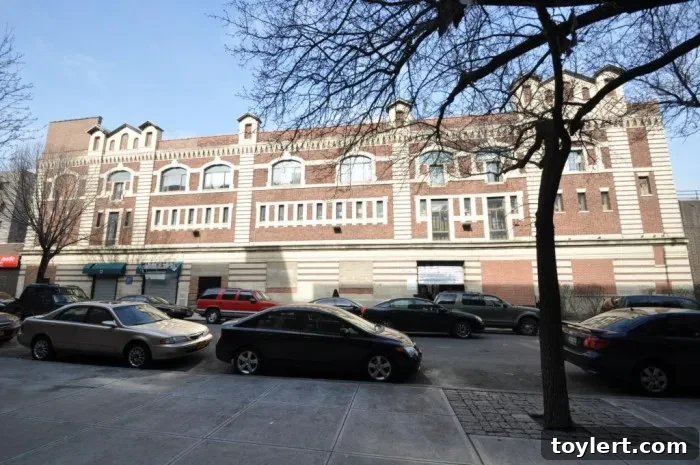
From Sweet Treats to Community Hub: The Enduring Legacy of 245-247 Herkimer Street in Brooklyn
Brooklyn’s rich tapestry is woven with stories of transformation, resilience, and adaptive reuse, often told one building at a time. Among these narratives stands the venerable structure at 245-247 Herkimer Street. Once the bustling headquarters of the J. M. Horton Ice Cream Company, this architectural landmark has undergone a remarkable metamorphosis, transitioning from a commercial enterprise to a pivotal component of the esteemed Restoration Plaza. This journey reflects not only the changing economic landscape of Bedford-Stuyvesant but also the enduring spirit of community-led development that has shaped one of Brooklyn’s most vibrant neighborhoods.
A Taste of History: The J. M. Horton Ice Cream Company
In the early 20th century, as Brooklyn solidified its reputation as a burgeoning urban center, local industries thrived, catering to the needs and desires of a rapidly growing population. The J. M. Horton Ice Cream Company emerged as a prominent player in this vibrant commercial environment. Founded with a commitment to quality and craftsmanship, the company quickly established itself as a beloved brand, providing refreshing ice cream to families and businesses across the borough. The building at 245-247 Herkimer Street served as its operational heart, a testament to the industrial prowess and commercial vitality of Brooklyn during that era.
Architecturally, the structure likely embodied the functional yet robust characteristics common to industrial and commercial buildings of its time. Designed for efficiency in production, storage, and distribution, it would have featured sturdy construction, ample space, and perhaps distinctive signage that signaled its purpose to passersby. For decades, the sweet aroma of vanilla, chocolate, and various fruit flavors might have wafted through the streets of Bedford-Stuyvesant, making the J. M. Horton building a well-known and cherished landmark within the community. It wasn’t just a factory; it was a source of local pride and an integral part of daily life, contributing to the local economy by providing jobs and a desirable product.
The company’s success was intertwined with the growth of Brooklyn itself. As the borough became more densely populated and its residents sought out both necessities and luxuries, businesses like J. M. Horton flourished. The building on Herkimer Street became a silent observer of countless changes – new families moving into brownstones, the development of local infrastructure, and the evolving social fabric of the neighborhood. Its presence underscored a period when local manufacturing and homegrown brands held significant sway, before the widespread consolidation and globalization that would redefine industries in later decades.
The Winds of Change: From Manufacturing Hub to Community Vision
As the mid-20th century progressed, urban landscapes across America began to experience significant shifts. Economic pressures, changing consumer habits, and the rise of larger, more centralized corporations often led to the decline of smaller, local manufacturing operations. The J. M. Horton Ice Cream Company, like many businesses of its kind, eventually ceased its operations or relocated, leaving its historic building at 245-247 Herkimer Street with an uncertain future. This period marked a challenging time for many urban neighborhoods, including Bedford-Stuyvesant, which faced issues of disinvestment and urban decay.
However, out of these challenges arose a powerful vision for renewal and community empowerment. This vision found its most enduring expression in the creation of the Bedford-Stuyvesant Restoration Corporation (BSRC) and its ambitious project, Restoration Plaza. Established in 1967 with the backing of prominent figures like Senator Robert F. Kennedy and Senator Jacob Javits, BSRC became the nation’s first community development corporation. Its mission was groundbreaking: to revitalize the physical, economic, and social fabric of Bedford-Stuyvesant through community-driven initiatives, rather than through traditional top-down urban renewal projects that often displaced residents.
Restoration Plaza: A Beacon of Community Development
Restoration Plaza, at the heart of BSRC’s efforts, was conceived as a comprehensive hub for economic opportunity, cultural enrichment, and essential services for the residents of Central Brooklyn. It aimed to create a vibrant nexus where commerce, art, education, and community support could converge. The development of the Plaza involved the acquisition and adaptive reuse of several existing structures, transforming them into modern, functional spaces while honoring their historical significance. The former J. M. Horton Ice Cream Company building was among these crucial acquisitions, its sturdy bones and prime location making it an ideal candidate for integration into the larger Restoration Plaza complex.
The adaptive reuse of 245-247 Herkimer Street symbolized a profound shift. It was no longer a site of private industrial production but rather a space dedicated to public good and community advancement. The transformation involved meticulous planning to repurpose the building’s spacious interior for new functions, potentially housing offices, retail establishments, educational programs, or community services that directly benefited local residents. This process of revitalization not only preserved a piece of Brooklyn’s architectural heritage but also imbued it with renewed purpose, demonstrating that historic buildings could play a vital role in contemporary urban development.
245-247 Herkimer Street Today: A Pillar of Progress
Today, the building at 245-247 Herkimer Street stands as an integral part of Restoration Plaza, a testament to the power of community vision and architectural adaptation. It is no longer just a building; it is a living symbol of Bedford-Stuyvesant’s journey from struggle to resurgence. The former ice cream factory now contributes to a dynamic complex that includes everything from performance venues and art galleries to banking services, health clinics, and job training centers. Its inclusion in Restoration Plaza means it continues to foster economic activity and provide crucial resources, albeit in a vastly different capacity than its original intent.
The preservation and repurposing of such structures are critical for maintaining the unique character and historical narrative of neighborhoods like Bedford-Stuyvesant. They remind us of the layers of history beneath our feet and the various enterprises that have shaped local identity. By integrating this historic edifice into a forward-looking community development, BSRC ensured that the legacy of a past industry could contribute to the prosperity of the present and future. This approach aligns perfectly with the “Brooklyn, one building at a time” philosophy, emphasizing that each structure holds a story and contributes to the broader urban fabric.
The Broader Impact: Preserving Brooklyn’s Architectural and Social Heritage
The story of 245-247 Herkimer Street extends beyond its walls, resonating with broader themes of urban planning, historic preservation, and social equity in Brooklyn. It highlights the importance of recognizing the potential in existing infrastructure, rather than resorting to demolition and new construction alone. Adaptive reuse is a sustainable practice that minimizes waste, preserves embodied energy, and retains the unique aesthetics and historical continuity of a place. For Bedford-Stuyvesant, a neighborhood rich in architectural heritage, maintaining these links to the past is crucial for fostering a sense of identity and belonging among its residents.
Moreover, the success of Restoration Plaza and its components, including the former J. M. Horton building, serves as a powerful model for community development worldwide. It demonstrates how local leadership, combined with strategic investment and a deep understanding of community needs, can transform neglected areas into thriving centers of activity. The building’s transition from a private commercial venture to a publicly oriented asset within a comprehensive community hub exemplifies the best practices in urban revitalization—practices that prioritize people, place, and historical memory.
Conclusion: A Sweet Legacy Reimagined
The journey of 245-247 Herkimer Street, from a beloved ice cream factory to an integral part of the pioneering Restoration Plaza, encapsulates the spirit of Brooklyn. It is a narrative of evolution, adaptation, and enduring community commitment. This building, like so many others across the borough, tells a story of change, not through erasure, but through thoughtful transformation. It stands as a powerful reminder that history is not just about the past; it is a living force that continues to shape our present and inspire our future. As visitors and residents walk past this historic structure today, they are not merely seeing an old building, but a vibrant testament to Brooklyn’s continuous capacity for reinvention, one cherished landmark at a time.