Brooklyn Public Library Secures $5M Grant for State-of-the-Art Greenpoint Environmental Education Center
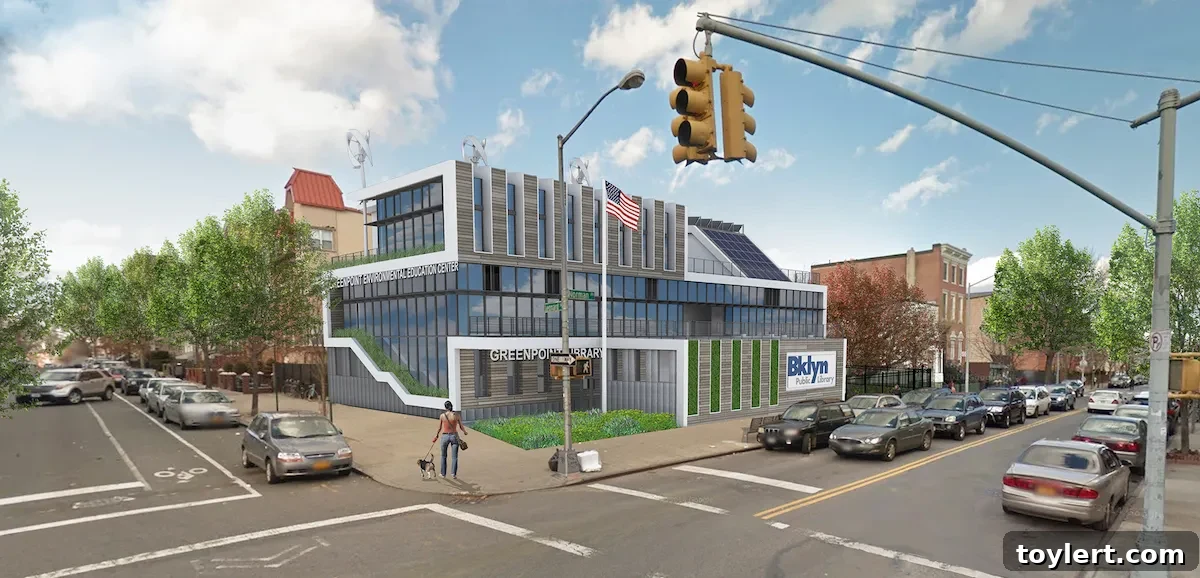
The Brooklyn Public Library (BPL) has announced a monumental stride towards urban sustainability and community education, securing a generous $5,000,000 grant to establish the Greenpoint Environmental Education Center (GEEC). This ambitious project is set to transform the existing Greenpoint Library at 107 Norman Avenue, adding two innovative floors and a dynamic public roof deck atop the current single-story structure. The BPL recently unveiled captivating renderings and comprehensive plans, offering a glimpse into a future where environmental stewardship and community engagement converge in the heart of Greenpoint.
This significant investment marks a pivotal moment for the neighborhood, promising to elevate the Greenpoint Library beyond its traditional role. The forthcoming 6,500-square-foot GEEC is meticulously designed to be a beacon of green living, featuring a wide array of educational and interactive spaces. From a dedicated community composting area and a vibrant greenhouse teeming with herb gardens to cutting-edge wind turbines, native plant installations, versatile event spaces, and modern classrooms, the center is poised to become a hub for environmental learning and sustainable practices in Brooklyn.
A Vision for Sustainable Urban Living: The Greenpoint Environmental Education Center
The Greenpoint Environmental Education Center embodies a profound commitment to fostering environmental literacy and empowering communities to adopt sustainable lifestyles. In an increasingly urbanized world, the GEEC stands as a critical initiative, providing accessible education and practical tools for residents to understand and address pressing environmental challenges. Its strategic location within a vibrant Brooklyn neighborhood ensures that these invaluable resources are available to a diverse population, from young students to seasoned community activists.
More than just a building, the GEEC is envisioned as a living laboratory and a vital community resource. It will serve as a catalyst for local environmental initiatives, promoting everything from waste reduction and urban gardening to renewable energy adoption. By integrating diverse features within a single, accessible location, the center aims to demystify complex environmental topics, making them engaging and actionable for everyone. This holistic approach ensures that the GEEC will not only educate but also inspire a new generation of environmental stewards, strengthening Greenpoint’s resilience and commitment to a greener future.
The Transformative Renovation: Expanding the Greenpoint Library
The architectural transformation of the Greenpoint Library is designed to be as inspiring as its mission. Originally a single-story brick building with a distinctive mansard roof, constructed in 1973, the library is set to undergo a remarkable metamorphosis. The design, spearheaded by the renowned Beatty Harvey Coco Architects, strategically adds two new floors above the existing structure. This expansion dramatically increases the library’s footprint and capacity, allowing for the integration of the GEEC’s extensive programs and features while preserving the foundational integrity of the original building.
One of the most anticipated additions is the expansive public roof deck. This isn’t merely an aesthetic feature; it’s a thoughtfully designed urban oasis, offering residents a unique green space high above the bustling streets of Greenpoint. This public amenity will provide opportunities for relaxation, community gatherings, and hands-on learning experiences, all while offering panoramic views of the surrounding neighborhood. Imagine outdoor workshops on urban gardening, serene spaces for reading amidst native plantings, or community events under the open sky – the public roof deck will redefine the library experience.
Beyond the main public roof deck, the renovation also includes a smaller, more intimate roof terrace situated atop the first new floor. This secondary terrace will offer a more secluded environment, potentially serving as a quiet study area, an outdoor classroom for smaller groups, or a dedicated space for specific plant collections. The strategic placement of these outdoor spaces reflects a deep understanding of urban needs, maximizing green areas and promoting outdoor engagement within a compact footprint. The design seamlessly blends the old with the new, ensuring that the expanded library remains a cohesive and welcoming presence on Norman Avenue.
Key Features of the Eco-Educational Hub
The Greenpoint Environmental Education Center is packed with innovative features, each meticulously planned to serve both educational and practical purposes:
- Community Composting Space & Greenhouse with Herb Gardens: At the heart of sustainable living is the responsible management of resources. The dedicated community composting space will empower residents to divert organic waste from landfills, transforming it into nutrient-rich soil. This hands-on experience will be complemented by a state-of-the-art greenhouse, which will not only host a vibrant collection of herb gardens but also serve as a year-round learning environment for urban agriculture, plant science, and food literacy. Residents can learn how to grow their own food, fostering a deeper connection to their environment and promoting healthier lifestyles.
- Renewable Energy Integration: Wind Turbines & Rooftop Solar Panels: Demonstrating a tangible commitment to energy independence and renewable resources, the GEEC will prominently feature both wind turbines and an array of rooftop solar panels. These installations will not only contribute significantly to the building’s energy needs, reducing its carbon footprint, but will also serve as powerful educational tools. Visitors will be able to observe renewable energy generation firsthand, learning about the principles of clean energy and its vital role in combating climate change.
- Native Plants & Biodiversity: The outdoor spaces of the GEEC will be thoughtfully designed with native plants. These indigenous species are crucial for supporting local ecosystems, providing habitat and food for pollinators like bees and butterflies, and requiring less water and maintenance than non-native alternatives. Educational signage and guided tours will highlight the importance of biodiversity and the ecological benefits of native flora, encouraging visitors to incorporate similar plantings in their own gardens and public spaces.
- Versatile Event Spaces and Classrooms: To facilitate its educational mission, the GEEC will include flexible event spaces and modern classrooms. These areas will be utilized for a diverse range of programs, including workshops on sustainable living, environmental film screenings, lectures by experts, and interactive science lessons for children. These spaces are designed to foster collaboration, dialogue, and hands-on learning, making environmental education accessible and engaging for all age groups and interests.
Architectural Excellence and Green Design Principles
Beatty Harvey Coco Architects’ design for the GEEC is a testament to how modern sustainable architecture can harmoniously integrate with existing structures. Their vision for the Greenpoint Library expansion emphasizes transparency, natural light, and a seamless connection with nature, which is particularly evident in the generous use of windows and strategically placed plantings. These design choices are not merely aesthetic; they play a crucial role in creating an inviting, energy-efficient, and biophilic environment.
The addition of numerous large windows throughout the new floors will flood the interior spaces with natural light, reducing the reliance on artificial lighting and enhancing the overall well-being of occupants. This emphasis on natural illumination creates a bright and airy atmosphere, making learning and community activities more enjoyable. Furthermore, the integration of diverse plantings, both indoors and on the various terraces, serves to soften the architectural lines, improve air quality, and provide a constant visual reminder of the center’s environmental mission.
The careful consideration of materials and the strategic use of greenery transform the Greenpoint Library into a living building that breathes with its surroundings. The design respects the original 1973 building while introducing contemporary elements that speak to a future-forward vision of sustainability. The smaller roof terrace, in addition to the grand public deck, offers a nuanced approach to outdoor space, providing different scales of interaction with the urban environment and serving diverse programmatic needs. This thoughtful architectural approach ensures that the GEEC will be both a functional educational facility and an inspiring landmark for Greenpoint.
Commitment to Green Building: LEED Silver Certification and Beyond
The Greenpoint Environmental Education Center’s commitment to sustainability extends deeply into its very construction, aiming for LEED Silver certification. LEED (Leadership in Energy and Environmental Design) is the most widely used green building rating system in the world, providing a framework for healthy, highly efficient, and cost-saving green buildings. Achieving LEED Silver demonstrates a significant dedication to environmental responsibility throughout the design, construction, and operation phases of the project, setting a benchmark for sustainable urban development.
To meet these rigorous standards, the GEEC will incorporate a suite of advanced “green” building materials and technologies. Rooftop solar panels are central to its renewable energy strategy, significantly reducing reliance on conventional power grids and offsetting the building’s carbon emissions. A sophisticated rainwater collection system will capture precipitation for non-potable uses, such as irrigation for the native plant gardens and flushing toilets, thereby conserving precious potable water resources. Energy-efficient windows, strategically placed to maximize natural light while minimizing heat gain and loss, will play a crucial role in maintaining optimal indoor temperatures year-round.
Furthermore, the building will be equipped with high-efficiency heating and cooling systems. These cutting-edge HVAC technologies are designed to consume significantly less energy than traditional systems, ensuring comfortable indoor environments with a minimal environmental footprint. By prioritizing these eco-friendly building practices, the Greenpoint Environmental Education Center will not only embody its educational mission but also serve as a living example of how sustainable design can be both functional and environmentally sound, contributing to reduced operational costs and a healthier planet.
Fostering Community and Environmental Stewardship
The expansion of the Greenpoint Library into the Greenpoint Environmental Education Center represents a profound investment in the community’s future. The library has long served as a vital anchor in the neighborhood, a place for learning, connection, and growth. This new development will dramatically strengthen that role, transforming it into an even more dynamic and indispensable resource for residents of all ages.
The GEEC is designed to be highly interactive and accessible, offering a wide array of educational outreach and programs. Imagine workshops on urban gardening techniques for apartment dwellers, composting demonstrations for local businesses, family-friendly events focusing on local ecology, or adult education classes on renewable energy solutions. These programs will empower individuals with practical skills and knowledge, encouraging them to become active participants in environmental stewardship within their homes, neighborhoods, and beyond.
The impact on local residents will be multifaceted and deeply positive. The center will provide unique opportunities for learning and engagement, offering a welcoming space where environmental concepts come alive. It will foster a sense of community by bringing people together around shared interests in sustainability, creating networks of like-minded individuals. Moreover, access to new green spaces, such as the public roof deck and herb gardens, will offer much-needed respite and connection to nature in an urban setting, enhancing the overall quality of life in Greenpoint. The GEEC is poised to be a powerful catalyst for community building and collective action towards a healthier, more sustainable future.
A Model for Urban Sustainability
The Greenpoint Environmental Education Center is more than just an impressive local project; it is poised to become a significant model for urban sustainability, setting a precedent for other libraries, community centers, and public institutions across the nation. In a world increasingly grappling with the realities of climate change and rapid urbanization, the GEEC offers a tangible blueprint for integrating environmental education and green infrastructure into the very fabric of city life.
By demonstrating how a public library can evolve into a dynamic hub for environmental learning and sustainable living, the GEEC will inspire similar initiatives in other urban centers. It showcases the feasibility and benefits of transforming existing public spaces into eco-conscious facilities that actively contribute to their communities’ resilience. Its innovative combination of educational programming, renewable energy systems, green building practices, and community engagement features creates a holistic approach to environmental stewardship that is both replicable and highly impactful.
Ultimately, the Greenpoint Environmental Education Center will play a crucial role in addressing climate change at a local level. By empowering individuals with knowledge and practical skills, fostering a deeper connection to nature, and showcasing sustainable technologies, it contributes directly to building a more environmentally conscious and resilient society. It stands as a testament to what is possible when vision, funding, and community spirit converge to create a truly transformative space for the future.
Conclusion
The Greenpoint Environmental Education Center represents an exciting new chapter for the Brooklyn Public Library and the Greenpoint community. With the substantial $5,000,000 grant, the vision of transforming the Greenpoint Library into a cutting-edge hub for environmental education and sustainable practices is becoming a tangible reality. This project is much more than just an architectural expansion; it’s a strategic investment in the future, designed to cultivate environmental literacy, foster community engagement, and serve as a living testament to green building principles.
From its innovative community composting space and thriving herb gardens to its integration of solar and wind power, the GEEC is set to offer unparalleled opportunities for learning and hands-on experience. The design by Beatty Harvey Coco Architects promises a beautiful and functional space, replete with natural light and vibrant plantings, while its LEED Silver certification goal underscores a deep commitment to environmental responsibility. The public roof deck, a highlight of the renovation, will offer a unique urban green space for relaxation, education, and community gathering.
Upon its completion, the Greenpoint Environmental Education Center will stand as a beacon of sustainability in Brooklyn, inspiring residents and serving as a model for urban environmental initiatives nationwide. It promises to empower countless individuals with the knowledge and tools to live more sustainably, fostering a stronger, greener, and more connected community for generations to come. This is a project that truly embodies the spirit of progress and hope for a healthier planet, starting right in the heart of Greenpoint.