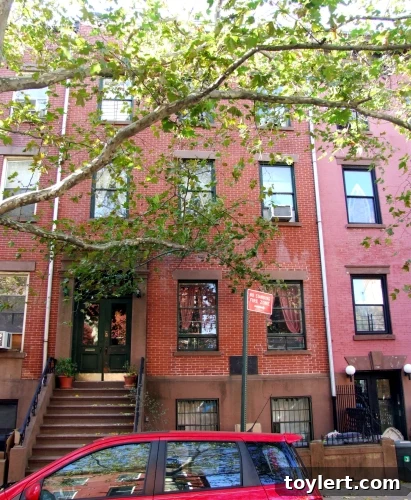
Unveiling 426 Henry Street: A Brooklyn Jewel and the Enduring Jenny Jerome Myth
Nestled in the heart of Cobble Hill, Brooklyn, at the distinguished address of 426 Henry Street, stands a brownstone that encapsulates much of the borough’s rich architectural heritage and intriguing historical narratives. This particular building, with its elegant facade and timeless appeal, has long been associated with a famous historical figure, Jenny Jerome – later Lady Randolph Churchill and mother to the iconic Winston Churchill. However, as is often the case with popular lore, the precise historical details surrounding 426 Henry Street and its connection to Jenny Jerome are frequently blurred, leading to a persistent misconception that deserves a closer, more accurate examination. While undeniably a magnificent piece of Brooklyn’s past, discerning truth from legend is key to fully appreciating this remarkable structure and its place in the vibrant tapestry of the city.
The allure of Brooklyn’s brownstones extends far beyond their aesthetic charm; they are tangible links to a bygone era, silent witnesses to generations of change and progress. Each building tells a story, and 426 Henry Street is no exception. Its association with Jenny Jerome, though ultimately debunked as her actual birthplace, lends it an additional layer of mystique, drawing history enthusiasts and curious onlookers alike to ponder the lives once lived within its venerable walls. This article aims to explore the architectural splendor of 426 Henry Street, delve into the captivating history of Jenny Jerome, and meticulously clarify why, despite popular belief, this address is significant in the broader context of her family’s Brooklyn roots, even if it wasn’t the exact site of her birth.
The Storied Life of Jenny Jerome: American Belle to British Aristocrat
To understand the enduring myth surrounding 426 Henry Street, it’s essential to first appreciate the extraordinary life of Jenny Jerome herself. Born Jeanette Jerome on January 9, 1854, in Brooklyn, New York, she was the daughter of Leonard Jerome, a wealthy American financier and sportsman, and Clara Hall. Her upbringing was one of privilege and cosmopolitan exposure, reflecting her father’s success and her family’s prominent social standing. Jenny was renowned for her intelligence, wit, and striking beauty, traits that would serve her well as she navigated the upper echelons of society on both sides of the Atlantic.
In 1874, Jenny Jerome married Lord Randolph Churchill, a prominent British politician and the third son of the 7th Duke of Marlborough. This union marked her transformation into Lady Randolph Churchill and her permanent relocation to England, immersing her in the aristocratic circles of Victorian Britain. She quickly became a celebrated figure in London society, known for her sharp intellect, political acumen, and influential social gatherings. Together, she and Lord Randolph had two sons: Winston Leonard Spencer-Churchill, who would famously become Britain’s wartime Prime Minister, and John Strange Spencer-Churchill.
Jenny Jerome’s influence extended beyond her social charm. She was deeply involved in politics, often assisting her husband with his campaigns and maintaining a vast network of influential contacts. Her life was characterized by a blend of American dynamism and British aristocratic tradition, making her a unique and compelling figure in late 19th and early 20th-century history. It is this extraordinary background, her American origins, and her connection to one of the most pivotal figures of the 20th century that fuels public interest in her early life and, consequently, the various residences associated with her family in Brooklyn.
Debunking the Myth: Where Was Jenny Jerome Truly Born?
The persistent belief that 426 Henry Street served as Jenny Jerome’s birthplace is a classic example of historical association evolving into definitive fact over time. While the Jerome family certainly had significant ties to Brooklyn, and indeed resided in multiple impressive homes within the borough, historical records consistently point elsewhere for Jenny’s exact genesis. Research by historians and local preservation societies has largely clarified that Jenny Jerome was born at 84 Amity Street, another elegant brownstone located not far from Henry Street in what is now part of the Cobble Hill or Brooklyn Heights area, depending on precise boundary definitions.
The confusion likely stems from the Jerome family’s transient nature within Brooklyn during the mid-19th century. Wealthy families often moved between grand residences, and public memory or casual historical accounts might conflate various family homes with the specific event of a child’s birth. While the Jeromes undoubtedly owned or resided in several distinguished properties, the weight of evidence places Jenny’s birth at Amity Street. This distinction is crucial for historical accuracy, yet it does not diminish the architectural significance or historical value of 426 Henry Street itself. Instead, it highlights how a building can acquire a secondary layer of narrative through popular imagination, becoming a landmark of interest even without direct, verifiable primary association.
Understanding this “but not” aspect is vital. It allows us to appreciate 426 Henry Street for what it truly is: a remarkable example of mid-19th-century Brooklyn architecture, representative of the style and prosperity that characterized the neighborhood where Jenny Jerome’s family *did* live and thrive. It serves as a powerful reminder that while the specific birthplace claim may be inaccurate, the building remains an integral part of the broader historical landscape that shaped one of history’s most fascinating families. Its allure is derived from its authentic presence within a historic district that the Jeromes knew intimately, a testament to Brooklyn’s enduring legacy as a cradle of significant American figures.
Architectural Splendor: A Deep Dive into 426 Henry Street
Regardless of its precise connection to Jenny Jerome’s birth, 426 Henry Street stands as an exemplary representation of Brooklyn’s architectural grandeur from the mid-19th century. Typically, buildings of this era in Cobble Hill exhibit a strong Italianate influence, a style that became immensely popular between 1840 and 1885. This architectural trend was favored for its ornate detailing, robust construction, and stately appearance, perfectly suiting the aspirations of the burgeoning merchant class and affluent families like the Jeromes.
An Italianate brownstone like 426 Henry Street would typically feature a distinct set of characteristics. The most striking element is often the brownstone facade itself, a reddish-brown sandstone quarried primarily from New Jersey, which gave these homes their iconic nickname. The material conveyed status and durability, contributing to the uniform yet distinguished streetscapes prevalent in historic Brooklyn neighborhoods. Key architectural elements to observe on such a structure include:
- Low-Pitched Roofs: Often hidden behind a prominent cornice, distinguishing them from earlier Federal or Greek Revival styles.
- Wide Eaves with Decorative Brackets: These are a hallmark of Italianate design, providing visual interest and a sense of classical elegance.
- Tall, Narrow Windows: Frequently adorned with elaborate hooded architraves, often deeply set, adding depth and shadow to the facade. First-floor windows might be taller, emphasizing grand interior spaces.
- Elaborate Double Doors: Usually recessed, often with decorative glass panels (transoms and sidelights), leading to a grand entry vestibule.
- Grand Stoop: A quintessential feature of Brooklyn brownstones, the high stoop leads from the sidewalk directly to the parlor floor, providing privacy and a ceremonial entrance. These stoops are often flanked by elegant iron railings.
- Decorative Cornices: Ornate elements at the top of the building, often with dentils or other classical motifs, crowning the structure.
The interior layout of a typical four-story brownstone at this address would have been designed for comfort and social function. The parlor floor, accessible via the stoop, typically housed formal living and dining rooms, characterized by high ceilings, intricate plasterwork, and perhaps marble fireplaces. The garden level, often with its own entrance, might have contained the kitchen, service areas, and perhaps informal living spaces. Upper floors would accommodate bedrooms, dressing rooms, and bathrooms, reflecting the domestic arrangements of a prosperous Victorian family. The durable construction and timeless design of these homes have allowed many to adapt gracefully to modern living while retaining their historical integrity, a testament to the quality of 19th-century craftsmanship.
Cobble Hill: A Neighborhood Forged in History and Charm
426 Henry Street is not merely a standalone architectural marvel; it is an intrinsic part of the fabric of Cobble Hill, one of Brooklyn’s most cherished and historically significant neighborhoods. Situated on the northwestern side of Brooklyn, bordered by Brooklyn Heights, Carroll Gardens, and the East River, Cobble Hill boasts a rich history dating back to its colonial origins. Originally known as “Ponkiesberg,” the area was characterized by its hilly terrain, from which it later derived the name “Cobble Hill.” This strategic elevation played a role during the American Revolutionary War, notably as a defensive position.
The neighborhood truly began to flourish in the mid-19th century, transforming from farmlands and fortifications into a densely populated residential area. The construction boom saw the rise of thousands of brick and brownstone row houses, catering to the growing middle and upper-middle classes commuting to Manhattan and working in Brooklyn’s burgeoning industries. Henry Street, along with its parallel avenues, became particularly desirable, lined with elegant homes that reflected the prosperity of the era.
Cobble Hill’s charm lies in its remarkably preserved architectural landscape. Unlike many urban areas, it largely escaped the large-scale demolitions of urban renewal projects in the mid-20th century, thanks in part to early preservation efforts. The Cobble Hill Historic District, designated in 1969, protects this unique environment, ensuring that the tree-lined streets, historic facades, and overall character are maintained for future generations. Walking through Cobble Hill today is like stepping back in time, with its quaint shops, inviting cafes, and, of course, its magnificent brownstones.
The neighborhood’s community spirit is also a defining characteristic. Residents take immense pride in their historic homes and the vibrant street life. Local organizations actively work to preserve its unique identity, balancing historical integrity with modern amenities. This blend of past and present makes Cobble Hill not just a collection of old buildings, but a living, breathing historical narrative, and 426 Henry Street stands as a proud testament to this enduring legacy.
Preservation and Modernity: Living in a Historic Brooklyn Brownstone
The continued existence and appreciation of buildings like 426 Henry Street underscore the vital importance of historic preservation in urban environments. Preserving these architectural treasures is not merely about maintaining old structures; it’s about safeguarding cultural heritage, promoting sustainable urban development, and retaining the unique character that defines a city. In Brooklyn, particularly in neighborhoods like Cobble Hill, the brownstone is more than just a type of building; it’s an emblem of identity, a symbol of architectural excellence and historical continuity.
Living in a historic brownstone presents both unique challenges and unparalleled rewards. Owners of buildings like 426 Henry Street often face the complexities of maintaining century-old structures, adhering to historic district guidelines, and integrating modern conveniences without compromising original architectural details. Restoration projects can be extensive, requiring specialized knowledge of historical materials and building techniques. However, the reward lies in inhabiting a piece of history, enjoying the craftsmanship of a bygone era, and contributing to the ongoing narrative of a vibrant community.
Modern residents of 426 Henry Street, and similar homes throughout Cobble Hill, benefit from the spacious layouts, high ceilings, and unique charm that these buildings offer. They navigate the blend of original features – such as ornate fireplaces, detailed moldings, and original hardwood floors – with contemporary upgrades like modern kitchens and bathrooms. This careful balance ensures that these historic homes remain relevant and desirable in the 21st century, continuing to serve as comfortable residences while simultaneously functioning as living museums of Brooklyn’s past.
The commitment to preservation also has broader benefits for the community. Historic districts like Cobble Hill attract tourism, foster local businesses, and create a strong sense of place for their inhabitants. The presence of well-maintained historic buildings like 426 Henry Street adds immeasurable value, both economic and cultural, to the urban landscape, reminding us of the enduring beauty and resilience of classic American architecture.
Conclusion: The Enduring Allure of 426 Henry Street
In conclusion, 426 Henry Street in Cobble Hill, Brooklyn, stands as a magnificent testament to 19th-century American architecture and the rich history of one of New York City’s most beloved boroughs. While the popular narrative linking it directly to Jenny Jerome’s birthplace has been largely clarified by historical research, its association, even if indirect, continues to fuel interest and underscore its significance within the broader context of her family’s presence in Brooklyn.
This Italianate brownstone, with its distinctive facade, elegant stoop, and intricate detailing, is a quintessential example of the craftsmanship and prosperity that defined Cobble Hill during its formative years. It serves as a physical embodiment of the aspirations and aesthetic sensibilities of a bygone era, contributing immensely to the charm and historical character of the neighborhood. The careful preservation of such buildings ensures that future generations can continue to admire their beauty and connect with the stories embedded within their walls.
426 Henry Street is more than just an address; it is a historical landmark, a beacon of architectural excellence, and a silent narrator of Brooklyn’s storied past. Whether or not it precisely holds the honor of Jenny Jerome’s birth, its place in the historical consciousness of Cobble Hill is undeniable. It stands as a powerful reminder of how buildings, myths, and the lives of extraordinary individuals intertwine to create a compelling and enduring narrative, perpetually inviting us to explore, learn, and appreciate the layers of history that shape our urban environment.