Urgent Action Demanded: Community Rises for Pedestrian Safety at Church Avenue and Ocean Parkway
The tragic death of a 73-year-old pedestrian, who was struck and killed by a semi-truck earlier this week at the notorious intersection of Church Avenue and Ocean Parkway, has ignited a fierce outcry from the local community and elected officials. This heartbreaking incident has intensified long-standing demands for immediate and comprehensive safety upgrades at what residents describe as one of Brooklyn’s most perilous intersections. For years, the community has advocated tirelessly for improvements, even allocating significant funds through participatory budgeting. Now, with a life tragically lost, the pressure on the New York State Department of Transportation (NYS DOT) to approve and implement vital safety measures has reached an unprecedented level.
This particular crossroads, a sprawling nine-lane thoroughfare, has consistently posed a significant hazard for pedestrians, cyclists, and motorists alike. Its complex design, combined with heavy traffic volume, creates a daily gauntlet for those attempting to navigate its extensive crossings. The recent fatality serves as a stark and painful reminder of the critical need for a re-evaluation of urban infrastructure that prioritizes human life over mere vehicular flow. The community’s plea is clear: enough is enough; immediate action is no longer optional but absolutely essential.
A Tragic Loss Ignites Renewed Calls for Safety in Brooklyn
The somber news of a senior pedestrian’s death has sent shockwaves through the tightly knit community surrounding Church Avenue and Ocean Parkway in Brooklyn. The incident, involving a large commercial vehicle, underscores the severe risks pedestrians face when crossing wide, multi-lane streets without adequate protection. This devastating event is not an isolated occurrence but rather the culmination of years of documented safety concerns, near-misses, and persistent community advocacy that, until now, have seemingly fallen on deaf ears within certain bureaucratic circles. The vulnerability of pedestrians, particularly the elderly, in such high-traffic environments is a pressing issue that demands immediate and systemic attention from transportation authorities.
Residents have consistently voiced their fears about the high speeds of vehicles, the often-limited visibility around large trucks, and the sheer distance pedestrians must cover to cross safely. The emotional toll of this tragedy extends beyond the victim’s immediate family, impacting neighbors who now walk with heightened anxiety, knowing that their concerns have been tragically validated. It highlights the urgent imperative for transportation authorities to shift from reactive responses to proactive, preventative measures that truly safeguard vulnerable road users and foster a culture of safety on our streets.
The Intersection: A History of Hazards and Unmet Community Concerns
The intersection of Church Avenue and Ocean Parkway is more than just a junction; it’s a critical artery in Brooklyn’s infrastructure, connecting diverse neighborhoods and facilitating significant traffic flow. However, its current design, which historically prioritizes high-speed vehicular movement, inadvertently creates a hostile and dangerous environment for pedestrians. With nine lanes of traffic to contend with, crossing this intersection can feel like navigating a highway on foot. The lack of adequate pedestrian infrastructure, such as sufficient refuge areas, contributes directly to the high-risk environment, making every crossing a gamble for those on foot.
Community members have long reported a litany of challenges, including insufficient crossing times, damaged and uneven sidewalks, unclear or faded crosswalk markings, and the constant threat posed by turning vehicles that often fail to yield to pedestrians. These systemic factors combine to create a perfect storm for accidents. For years, residents have rallied, held public meetings, and actively engaged in local democratic processes, such as Participatory Budgeting, specifically to funnel resources towards making this very intersection safer. Their dedication demonstrates a clear, collective understanding of the inherent dangers and a strong commitment to finding lasting solutions that prioritize human life over traffic expediency.
Participatory Budgeting: Community Action Meets Bureaucratic Inertia
In a powerful testament to local democracy and community empowerment, residents voted last year to allocate a substantial $200,000 from their Participatory Budgeting funds specifically for safety upgrades at the perilous Church Avenue and Ocean Parkway intersection. This direct allocation of funds reflected a clear and overwhelming consensus on the severity of the problem and the community’s proactive, hands-on approach to addressing it. The aim was to fund tangible improvements that would make a measurable difference in pedestrian safety, reflecting a bottom-up initiative to address a top-down problem.
The community’s vision for these allocated funds included practical and proven solutions designed to mitigate risks and enhance pedestrian visibility and safety. However, the subsequent bureaucratic process has been marked by frustrating delays and inter-agency disagreements. Despite the community’s proactive stance and significant financial commitment, the necessary approvals from the New York State Department of Transportation (NYS DOT), which holds jurisdiction over Ocean Parkway, have remained elusive. This protracted stalemate has left residents feeling disheartened, frustrated, and, tragically, has now culminated in a preventable loss of life, underscoring the critical need for administrative responsiveness to community-driven safety initiatives.
The Battle for a Pedestrian Refuge Island: NYC DOT vs. NYS DOT
The path to implementing vital safety improvements at this critical intersection has been fraught with bureaucratic hurdles, primarily stemming from a perplexing disagreement between the New York City Department of Transportation (NYC DOT) and the New York State Department of Transportation (NYS DOT). The NYC DOT, acting in direct response to persistent community demands and its own thorough safety assessments, proposed the common-sense construction of a pedestrian refuge island. This widely recognized and highly effective urban planning solution would create a safe intermediate space for pedestrians to wait when crossing the wide, nine-lane street, allowing them to tackle the crossing in two manageable stages rather than one daunting sprint across heavy traffic.
A pedestrian refuge island significantly reduces exposure time to moving traffic, provides a visible physical barrier between traffic lanes, and helps to naturally slow down turning vehicles, making it an invaluable tool for enhancing pedestrian safety on wide thoroughfares. It is a proven strategy perfectly aligned with Vision Zero principles, aiming to eliminate traffic fatalities and serious injuries by designing safer streets.
However, much to the dismay and disbelief of the community and NYC DOT, the New York State DOT inexplicably rejected this common-sense and well-vetted proposal. Instead, in a move that baffled and angered local residents, NYS DOT proposed an alarming alternative: to eliminate the existing crosswalk entirely. Such a drastic and counterintuitive measure would force residents to walk an additional block out of their way, navigating three separate crossing signals instead of one, dramatically increasing their travel time and inconvenience. Beyond the significant inconvenience, it is highly probable that many pedestrians, faced with such an impractical detour, would still opt to cross at the original, now unsignalized, location, thereby increasing the risk of accidents rather than diminishing it. This counter-proposal is widely seen as a dangerous regression, completely undermining the community’s diligent efforts and the fundamental principles of pedestrian-first urban design.
Council Member Brad Lander Leads the Charge for Immediate Change
In the tragic wake of the recent fatality and the ongoing bureaucratic impasse, Council Member Brad Lander has emerged as a vocal and unwavering advocate for immediate and decisive action. Recognizing the profound urgency of the situation, Lander has swiftly launched a petition, directly addressing the New York State DOT. The petition’s core demands are clear and comprehensive: not only the immediate approval and construction of the vital pedestrian safety island but also extensive repairs to the damaged sidewalks and existing crosswalks, which are currently in a state of disrepair and further exacerbate the perilous safety concerns at the intersection.
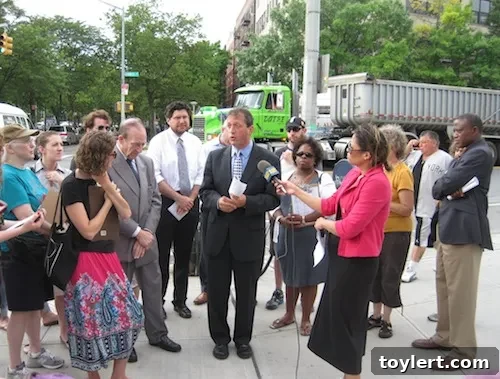
Earlier this morning, Council Member Lander stood defiantly at the very corner of Church Avenue and Ocean Parkway, addressing a gathering of concerned residents and the media. Pictured above, he powerfully articulated the community’s profound frustration and unwavering demand for a robust and actionable safety plan. His resolute presence at the site of the tragedy served as a potent symbol of solidarity with the victims and a direct challenge to the administrative inertia that has plagued this critical safety issue for far too long. Lander’s dedicated advocacy underscores the vital importance of elected officials acting as a crucial bridge between pressing community needs and responsive governmental action, tirelessly pushing for accountability and swift resolution to prevent future tragedies.
Beyond the Island: Comprehensive Solutions for Safer Streets and Vision Zero Alignment
While the pedestrian refuge island is undoubtedly a critical immediate solution, achieving true and lasting pedestrian safety at complex intersections like Church Avenue and Ocean Parkway requires a multi-faceted and holistic approach. Beyond the proposed island, transportation authorities must seriously consider and implement a broader spectrum of traffic calming and safety enhancements. These comprehensive measures, designed to work in synergy, could include:
- Improved Signal Timing: Adjusting pedestrian signal phases to provide more generous time for crossing, particularly vital for seniors, children, and individuals with disabilities. Implementing Leading Pedestrian Intervals (LPIs) that give pedestrians a crucial head start before vehicles receive a green light, significantly reducing conflicts.
- Enhanced Visibility: Upgrading street lighting specifically at crosswalks and intersections to improve nighttime visibility, and utilizing high-visibility, durable thermoplastic markings for crosswalks, which are far more resistant to wear and tear and fading than traditional paint.
- Traffic Calming Measures: Implementing physical curb extensions (bulb-outs) to effectively shorten crossing distances for pedestrians and improve sightlines between pedestrians and drivers. Potentially narrowing traffic lanes to visually and physically encourage lower speeds for vehicles.
- Enforcement and Education: Increased and consistent enforcement of speed limits and traffic laws, especially for turning vehicles that often fail to yield to pedestrians. Alongside this, robust public awareness campaigns can educate both drivers about pedestrian rights and the dangers of distracted driving, and pedestrians about safe crossing practices.
- Large Vehicle Safety: Given that the recent incident involved a semi-truck, specific measures addressing large vehicle safety, such as improved sightlines at turns, mandatory safety technology, and specialized driver education on blind spots, are crucial for preventing similar tragedies.
- “Complete Streets” Principles: Adopting a comprehensive urban planning approach that designs streets to be inherently safe, accessible, and comfortable for all users, regardless of their mode of transportation. This fosters an urban environment where pedestrians and cyclists are equally considered and protected alongside motorists.
These diverse interventions, when implemented collectively and thoughtfully, have the power to transform dangerous intersections into safe, navigable, and equitable spaces, thereby aligning directly with the broader goals of Vision Zero and creating more livable communities.
The Broader Context: Vision Zero and Persistent Pedestrian Fatalities in NYC
The recent tragedy at Church Avenue and Ocean Parkway is a stark and painful reminder of the ongoing challenge New York City faces in achieving its ambitious Vision Zero goals – the unwavering commitment to eliminate all traffic fatalities and serious injuries on its streets. Despite significant strides made in recent years through various safety initiatives, pedestrian fatalities remain a persistent and heartbreaking concern, particularly in outer-borough areas characterized by wide, high-speed arterial roads where vehicular traffic often dominates design considerations.
Incidents involving large trucks are especially devastating due to the sheer size, weight, and force involved, often leading to catastrophic outcomes. These events underscore the urgent need for continuous investment in proactive street design that inherently protects the most vulnerable road users. Vision Zero’s core philosophy unequivocally emphasizes that traffic deaths are preventable, not inevitable, and places a fundamental responsibility on city planners and transportation departments to engineer safer streets. The proactive and persistent community engagement in Brooklyn directly aligns with the spirit and objectives of Vision Zero, making the New York State Department of Transportation’s rejection of a proven safety measure all the more perplexing, disheartening, and ultimately, unacceptable in the face of preventable death.
A United Community Demands Action: The Path Forward for Church Avenue and Ocean Parkway
The community of Church Avenue and Ocean Parkway stands united and resolute in its demand for swift and decisive action. The tragic and avoidable loss of life has only strengthened their collective resolve to see meaningful and permanent change implemented at this perilous intersection. Council Member Lander’s powerful petition serves as a critical tool for residents to amplify their voices, making it unequivocally clear to the New York State Department of Transportation that further delays are intolerable and that the safety of human lives must take absolute precedence over bureaucratic complexities or jurisdictional disputes.
It is imperative that the NYS DOT acknowledges and respects the community’s overwhelming will, the NYC DOT’s expert recommendations for proven safety measures, and the irrefutable evidence that this intersection poses an extreme and demonstrable hazard to its residents. Approving the long-sought pedestrian refuge island and undertaking comprehensive sidewalk and crosswalk repairs are not merely suggestions; they are urgent necessities to prevent further senseless tragedies. The fundamental right to safely cross the street is a basic urban right, and the determined residents of Brooklyn are firmly committed to ensuring that this right is not only acknowledged but robustly upheld at Church Avenue and Ocean Parkway, securing a safer future for all.