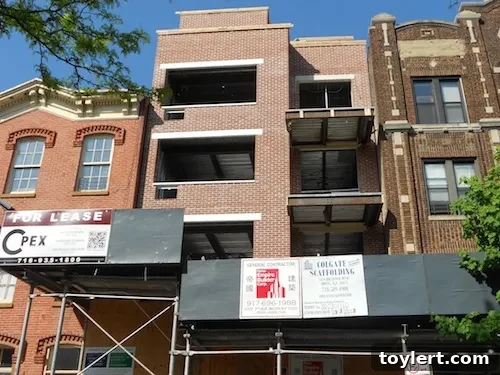
The Evolving Face of Boerum Hill: 11 Wyckoff Street and Brooklyn’s Preservation Debate
Boerum Hill, a captivating neighborhood in Brooklyn, New York, is renowned for its picturesque tree-lined streets, historic brownstones, and distinctive architectural character. However, like many cherished urban areas, it faces the perpetual challenge of balancing growth with preservation. The recent transformation of a property at 11 Wyckoff Street has thrust this delicate equilibrium into the spotlight, igniting a fervent discussion about architectural integrity, community identity, and the future of historic districts in one of New York City’s most beloved boroughs.
This particular address has become a poignant symbol of the ongoing urban development dilemma. After an extensive period of demolition and subsequent reconstruction, the site where a treasured piece of Brooklyn’s past once stood now hosts a new structure that has drawn considerable criticism. As one concerned community member lamented, “There was once a perfectly good federal brick townhouse at 11 Wyckoff Street in Boerum Hill. Now there is an ugly, seemingly over-height ‘Fedders Building.’” This term, “Fedders Building,” is frequently used in architectural discourse to describe new constructions that are perceived as generic, poorly designed, or overtly incompatible with their historical surroundings. The sentiment clearly articulates a growing demand for more robust landmarking initiatives to safeguard Boerum Hill’s unique heritage from insensitive development.
The removal of the construction scaffolding recently unveiled the new building, solidifying residents’ concerns and presenting a compelling illustration of how rapid urban expansion can inadvertently erode the very essence and visual harmony of a neighborhood. The controversy surrounding 11 Wyckoff Street is not an isolated incident; it serves as a powerful microcosm of the broader struggle that numerous historic communities within New York City encounter as they strive to maintain their distinct character amidst relentless pressures for modernization and development.
Remembering the Past: The Original Federal Brick Townhouse
To fully grasp the depth of the community’s concern, it is essential to appreciate the architectural and historical significance of what once occupied the site. The original building at 11 Wyckoff Street was a classic example of a federal brick townhouse. This architectural style, popular in the United States from the late 18th to the mid-19th century, is celebrated for its elegant simplicity, symmetrical facades, and meticulous use of brickwork. These townhouses often feature distinct characteristics such as raised stoops, tall, evenly spaced windows, and subtle decorative elements like cornices and lintels that reflect the prevailing aesthetics of post-colonial American urban design. They are far more than mere residential structures; they are tangible historical artifacts, each brick contributing to the rich narrative of New York City’s growth and architectural evolution.
Boerum Hill, like much of what is affectionately known as “brownstone Brooklyn,” showcases a rich tapestry of architectural styles, including Federal, Greek Revival, and Italianate. These styles collectively contribute to the neighborhood’s timeless allure and its esteemed status as one of Brooklyn’s most desirable residential areas. The preservation of these authentic period buildings is paramount, not solely for their aesthetic beauty but equally for maintaining a vital link to the past, offering a sense of historical continuity and rootedness that contemporary constructions often struggle to replicate. The description of the original federal brick townhouse as “perfectly good” strongly suggests it was a cherished component of this historical mosaic, making its demolition a profound loss to the architectural integrity and character of the streetscape.
The “Fedders Building” Controversy: A Clash of Architectural Philosophies
The term “Fedders Building” has gained traction within urban preservation circles as a pejorative label for new constructions that are perceived as cheap, disproportionate, or aesthetically discordant within an established historic setting. These buildings are often characterized by a noticeable lack of intricate architectural detail, repetitive and uninspired design, and a perceived disregard for the surrounding urban fabric. Consequently, new developments described this way, such as the one at 11 Wyckoff Street with its “ugly” and “over-height” attributes, frequently become focal points of neighborhood contention and architectural criticism.
The inherent challenge lies in harmoniously integrating modern architecture into districts steeped in history. While architectural innovation and contemporary design are undeniably valuable, many urban planners and community advocates argue that new developments must show deference to the existing scale, material palettes, and rhythmic patterns of the streetscape. When a building is perceived as “over-height,” it dramatically disrupts the visual harmony of the block, casting literal shadows and fostering a pervasive sense of incongruity. This type of architectural clash can progressively erode the unique character that renders neighborhoods like Boerum Hill so distinctive and appealing, leading to a regrettable homogenization that diminishes both individuality and historical depth. The core concern revolves around the assertion that individual property rights are being exercised without sufficient consideration for the collective historical, aesthetic, and cultural value that defines the community.
Boerum Hill’s Transformation: Gentrification and Development Pressures in Brooklyn
Boerum Hill’s evolution from a predominantly working-class community into one of Brooklyn’s most coveted and affluent enclaves serves as a quintessential example of urban gentrification. Driven by escalating property values and an ever-increasing demand for prime real estate, developers are perpetually seeking opportunities to maximize their investments. This economic imperative often leads to the demolition of smaller, older structures to clear the way for larger, more lucrative residential or commercial projects. The financial pressures are immense, making it exceedingly difficult for individual historic buildings to resist the relentless forces of redevelopment, particularly if they lack specific landmarking protections.
The case of 11 Wyckoff Street vividly illustrates the complex dilemmas confronting both communities and urban policymakers. How can the rights of property owners to develop their land be judiciously balanced against the collective desire of residents to preserve cultural heritage and the distinctive character of their neighborhood? These are not trivial decisions; they carry profound, long-term consequences, shaping the visual landscape and the very identity of a place for generations to come. The perceived loss of a charming federal brick townhouse, replaced by a structure widely regarded as aesthetically inferior, powerfully reinforces the argument that current safeguards are often inadequate. The impact extends far beyond mere aesthetics; it profoundly touches upon the community’s sense of belonging, continuity, and its vital connection to its storied past.
View 11 Wyckoff Street on Google Maps
The Imperative of Landmarking: Protecting Brooklyn’s Architectural Heritage
The passionate call for landmarking in response to the changes at 11 Wyckoff Street is not an isolated incident; it resonates with a broader, powerful movement across New York City to shield historically significant structures and districts from insensitive or destructive development. Landmarking, a critical function overseen by the New York City Landmarks Preservation Commission (LPC), involves formally designating individual buildings or entire areas as possessing special historic, architectural, or cultural significance. Once a property receives this designation, it becomes subject to stringent regulations concerning exterior alterations, demolition, and new construction, thereby ensuring the preservation of its unique character for future generations.
The advantages of landmarking are extensive and far-reaching. It serves as an indispensable tool for safeguarding irreplaceable architectural treasures, maintaining the distinct aesthetic appeal of neighborhoods, fostering heritage tourism, and cultivating a profound sense of community pride. In Brooklyn, numerous districts such as the iconic Brooklyn Heights, the vibrant Park Slope, and significant portions of Fort Greene, have successfully leveraged landmarking to preserve their distinctive character and architectural integrity. The argument for extending landmark protections in Boerum Hill gains considerable traction with every instance where a historic building is replaced by a structure that demonstrably detracts from the beloved streetscape. The prevailing fear is that without more robust and proactive protections, the very qualities that render these neighborhoods so desirable will be systematically eroded, brick by brick and foundation by foundation. The case of 11 Wyckoff Street stands as a potent example of why proactive landmark designation, rather than reactive measures taken after a perceived loss, is critically important for the sustained health of historic urban environments.
Below, you can view a photograph of the classic federal brick townhouse that once stood proudly at 11 Wyckoff Street. This image serves as a powerful and poignant reminder of the architectural legacy that many residents are fiercely determined to preserve, showcasing the building that contributed significantly to the historic charm and fabric of Boerum Hill.
Architectural Integrity vs. Modern Aesthetics: A Continuous Dialogue
The intense debate ignited by the redevelopment at 11 Wyckoff Street is an integral part of a much larger, ongoing discussion about architectural integrity and the appropriate role of modern aesthetics within deeply historic urban contexts. There exists a fundamental tension between those who advocate for strict adherence to existing historical styles and those who believe that cities must dynamically evolve, embracing and reflecting contemporary design principles. Proponents of modern architecture frequently argue that new buildings should unequivocally represent the current era, thereby contributing to a diverse and evolving architectural landscape rather than simply mimicking the past. However, critics often counter that “modern” does not automatically equate to “good,” particularly when new constructions fail to integrate harmoniously with their existing surroundings in terms of scale, material usage, and subtle stylistic nuances.
In neighborhoods like Boerum Hill, where the existing architecture narrates stories spanning centuries, the overarching challenge for any new development is to add genuine value without simultaneously detracting from the established and cherished character. This delicate balance necessitates exceptionally thoughtful design that consciously acknowledges historical context while simultaneously maintaining a distinctly contemporary identity. The pervasive “ugliness” critique leveled against the new building at 11 Wyckoff Street, while subjective, nonetheless encapsulates a collective sentiment that certain specific design choices are fundamentally incompatible with the deeply cherished visual identity of the neighborhood. This often leads to widespread calls for more rigorous architectural review processes, ensuring that new projects undergo meticulous scrutiny and deliberation before they receive approval and proceed to construction. The ultimate objective is to achieve development that is both innovative and profoundly respectful, fostering essential urban growth without irrevocably sacrificing the unique soul and spirit of the community.
Broader Implications for Brooklyn and Beyond: A Call for Mindful Development
The localized incident at 11 Wyckoff Street is by no means an isolated event; it is emblematic of a systemic and pervasive challenge confronting numerous desirable urban areas across the globe. Brooklyn, with its unparalleled architectural heritage and surging popularity, experiences these conflicts on a regular basis. From the iconic brownstones of Carroll Gardens to the rapidly evolving streetscapes of Bushwick, diverse communities grapple with the often-unrelenting pace of urban transformation. The struggle to effectively balance the undeniable need for housing and robust economic development with the critical imperative of preserving cultural and architectural legacies remains an exceedingly complex and multifaceted endeavor.
For the long-term residents of these communities, these changes often feel profoundly personal. A building such as the original federal brick townhouse at 11 Wyckoff Street contributes significantly to the mental map, emotional topography, and profound sense of connection that people develop with their neighborhood. Its disappearance, and subsequent replacement by a structure widely perceived as less appealing or fundamentally out of character, can evoke potent feelings of loss, powerlessness, and even disenfranchisement. This potent sentiment frequently galvanizes community groups to advocate more forcefully for preservation, organize peaceful protests, and actively push for more stringent zoning regulations and comprehensive landmarking designations. Valuable resources such as PropertyShark, which furnishes detailed real estate information, become indispensable tools for meticulously tracking property changes, analyzing development trends, and informing advocacy efforts.
The ongoing debate surrounding 11 Wyckoff Street serves as a potent and timely reminder that urban planning and development are far from being mere logistical or economic exercises; they are deeply and intrinsically intertwined with cultural values, collective historical memory, and the very identity of a community. As Brooklyn continues its dynamic and often turbulent evolution, the narratives of buildings like the one at 11 Wyckoff Street will undoubtedly continue to shape the broader discourse on how cities grow, adapt, and occasionally, regrettably, lose a cherished piece of their past in the relentless march towards an uncertain future. Ultimately, mindful development, consistently informed by genuine community input and a profound, unwavering respect for historical context, remains the singular key to ensuring that beloved neighborhoods like Boerum Hill successfully retain their unique charm, character, and soul for generations yet to come.
Via PropertyShark