The Curious Case of 402 Adelphi Street: A Fort Greene Real Estate Mystery
In the vibrant and ever-evolving landscape of Brooklyn’s real estate market, some properties stand out not just for their architectural beauty or prime location, but for the enigmatic stories they tell through their transactional histories. The two-family townhouse at 402 Adelphi Street in Fort Greene is one such intriguing example, offering a fascinating glimpse into the market dynamics of late 2012. What began as a seemingly straightforward estate sale quickly transformed into a dizzying saga of price hikes and adjustments, leaving market observers to ponder the forces at play behind its rapidly shifting valuation. This particular property, despite showing no apparent signs of renovation between sales, embarked on a remarkable journey of escalating asking prices, culminating in a valuation that sparked widespread curiosity and discussion.
Understanding the Fort Greene Appeal: A Coveted Brooklyn Enclave
Before delving into the specifics of 402 Adelphi Street’s tumultuous pricing, it’s essential to appreciate the context of its location. Fort Greene, Brooklyn, has long been celebrated as one of New York City’s most desirable neighborhoods. Renowned for its picturesque tree-lined streets, historic brownstones, and vibrant cultural scene, it offers a unique blend of urban sophistication and charming residential tranquility. Home to Fort Greene Park, designed by Frederick Law Olmsted and Calvert Vaux, and proximate to the Brooklyn Academy of Music (BAM) cultural district, the area attracts a diverse mix of artists, professionals, and families. Its excellent transportation links, with numerous subway lines offering quick access to Manhattan, further enhance its appeal. The architectural integrity of its historic district, characterized by meticulously preserved 19th-century townhouses, makes properties like 402 Adelphi Street highly sought after, often commanding premium prices even in a competitive market.
The Property at 402 Adelphi Street: A Glimpse into its Charm and Potential
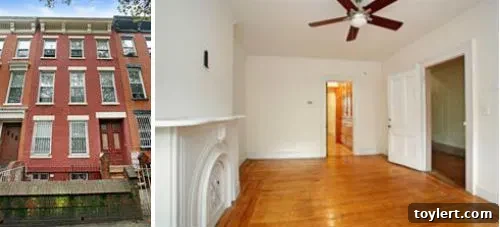
The townhouse at 402 Adelphi Street is described as a two-family residence, a configuration highly prized in Brooklyn for its flexibility. Such properties can serve as income-generating assets, with owners residing in one unit and renting out the other, or they can be seamlessly converted into expansive single-family homes. The original reporting specifically notes the presence of “beautiful original detail” within the house. This is a crucial aspect of brownstone appeal, as buyers often prioritize homes that retain period features such as intricate moldings, carved fireplaces, parquet flooring, ornate staircases, and original window frames. These details not only contribute to the property’s aesthetic charm but also represent a link to its rich history, adding significant intrinsic and market value. While the extent of these details is not fully specified, their mention suggests a foundation for a truly exquisite home, whether meticulously restored or carefully updated to blend historic character with modern amenities.
A Chronology of Price Volatility: The Adelphi Street Saga Unfolds
The trajectory of 402 Adelphi Street’s market activity in late 2012 is a compelling study in real estate dynamics, marked by a series of dramatic price adjustments that captivated local observers. Let’s trace the path of its valuation:
September 2012: The Initial Acquisition
The journey began in September 2012 when the property officially sold for $613,000. This transaction saw the townhouse change hands from the estate of its previous owners to a corporation. Estate sales often represent unique opportunities in the real estate market. Properties sold by estates may sometimes be priced below market value, either due to a need for quick liquidation, a lack of extensive preparation for sale, or the absence of a direct family member overseeing the process with a focus on maximizing profit. The purchase by a corporation immediately hinted at a potential investment strategy, suggesting that the new owner recognized significant untapped value.
October 2012: The First Public Relisting
Just weeks after its initial sale, in October, Corcoran—a prominent real estate brokerage—relisted 402 Adelphi Street on the open market. The asking price was a staggering $1,670,000. This immediate and substantial increase of over 172% from the September sale price raised the first eyebrow. The original account notes that, judging by available photos, the house did not appear to have undergone any significant renovations during this short interim period. This observation fueled speculation: was this an aggressive repricing to align with true market value, or was it a bold move anticipating rapid appreciation?
Late October 2012: A Temporary Retreat
A few weeks later, the market saw a slight adjustment. The asking price for 402 Adelphi Street decreased by 11 percent, settling at $1,490,000, according to data from Streeteasy. Such a reduction can be indicative of several factors: perhaps the initial high price was testing the market’s limits, and feedback from potential buyers suggested it was out of sync. It could also be a strategic move to broaden the buyer pool or generate renewed interest, hinting at a willingness to negotiate.
Early November 2012: The Price Rebound
Surprisingly, shortly after the price drop, the asking price for the townhouse experienced another significant shift. In early November, it increased by 14 percent, bringing it back up to $1,700,000. This fluctuation further complicated the narrative. A rebound after a decrease could signal renewed confidence from the seller, perhaps due to multiple interested parties, or a re-evaluation of the property’s intrinsic value in a competitive market. It suggested a highly dynamic pricing strategy, rather than a fixed approach.
December 2012: The Climactic Price Jump
The most dramatic development occurred on December 6th, when Corcoran relisted the house once more. This time, the asking price soared to an astonishing $2,400,000. This represented an increase of 41 percent from the previous November ask, and a monumental leap from the initial September sale price. PropertyShark confirmed this astounding escalation. The question posed by the original report—”Does anyone know what’s going on?”—became even more pertinent. The absence of any indication on the listing that the property was “in contract” meant it was still actively available, making the series of price increases even more perplexing and intriguing.
Unraveling the Mystery: Potential Explanations for the Volatility
The remarkable price journey of 402 Adelphi Street, especially without visible renovations, invites several theories:
Market Speculation and “Flipping”
The most immediate and plausible explanation is that the initial corporate buyer intended to “flip” the property. Real estate flipping involves purchasing a property, often at a discount or through an undervalued opportunity like an estate sale, and quickly reselling it for a higher profit. Given the rapid succession of listings and the escalating prices without apparent renovations, this scenario aligns well. The corporation might have leveraged market inefficiencies or anticipated a surge in demand that allowed them to dramatically reprice the asset based on its inherent potential and the bullish Fort Greene market.
Strategic Market Testing
The fluctuating prices could also be interpreted as an aggressive form of market testing. By starting high, adjusting, then raising again, the sellers (or their agents) might have been trying to pinpoint the absolute ceiling of what a buyer was willing to pay for a property of this caliber in Fort Greene. This strategy, while bold, can sometimes be effective in highly competitive markets where demand outstrips supply, and buyers are willing to pay a premium for prime locations and historic charm.
Undisclosed Plans or Subtle Improvements
While the original report stated no apparent renovations, it’s possible that the corporate buyer had secured permits for extensive future renovations, or perhaps completed very subtle yet high-impact improvements not immediately visible in listing photos (e.g., structural assessments, environmental remediation, or highly detailed staging that dramatically enhanced perceived value). The acquisition of such permits or the completion of preliminary groundwork could justify a significant increase in the asking price, signaling “shovel-ready” potential to a developer or a discerning homeowner.
Understanding the True Value of Original Details
The emphasis on “beautiful original detail” is key. In Brooklyn’s brownstone market, these features are invaluable. A discerning buyer or developer might recognize the immense potential in restoring or enhancing these details, transforming the property into a luxury residence without the need for extensive structural overhauls. The corporation might have had a clearer vision of this intrinsic value and the potential return on investment for a buyer who appreciates historical authenticity combined with modern comforts.
The Enduring Allure of Brooklyn Brownstones as Investments
The case of 402 Adelphi Street underscores the robust and often aggressive nature of the Brooklyn brownstone market. Properties in neighborhoods like Fort Greene, Park Slope, and Carroll Gardens have consistently demonstrated strong appreciation, making them attractive assets for both long-term homeowners and investors. The limited supply of these historic homes, combined with enduring demand, creates an environment where values can climb rapidly, especially when a property is perceived to be undervalued or to possess significant potential. This dynamic allows for speculation and bold pricing strategies, as seen with this Adelphi Street townhouse.
Navigating the Market: Insights for Buyers and Sellers
For potential buyers, the Adelphi Street saga serves as a reminder of the importance of thorough due diligence. Understanding a property’s transactional history, researching comparable sales (comps), and scrutinizing renovation status are crucial. Relying on reputable data sources like Streeteasy and PropertyShark provides invaluable transparency into past sales, price changes, and property specifications. For sellers, it highlights the potential for aggressive pricing strategies in a hot market, but also the need for flexibility and a keen understanding of buyer perception.
Conclusion: A Microcosm of Market Dynamism
The story of 402 Adelphi Street in Fort Greene is more than just a sequence of transactions; it’s a compelling narrative that encapsulates the excitement, speculation, and inherent value within New York City’s real estate market. The dramatic escalation of its asking price, particularly without visible renovations and remaining out of contract, left many questioning the underlying rationale. Was it pure market speculation, a masterful display of pricing strategy, or an indication of undisclosed potential? While the definitive answer remains elusive, this historic townhouse stands as a potent symbol of Fort Greene’s desirability and the dynamic forces that shape property values in one of Brooklyn’s most cherished neighborhoods. It reminds us that in real estate, particularly in a market as vibrant as Brooklyn’s, the true value of a home can be a complex and rapidly evolving proposition.
Further Reading:
- 402 Adelphi Street Listing [Corcoran]
- House of the Day: 402 Adelphi Street [Brownstoner]