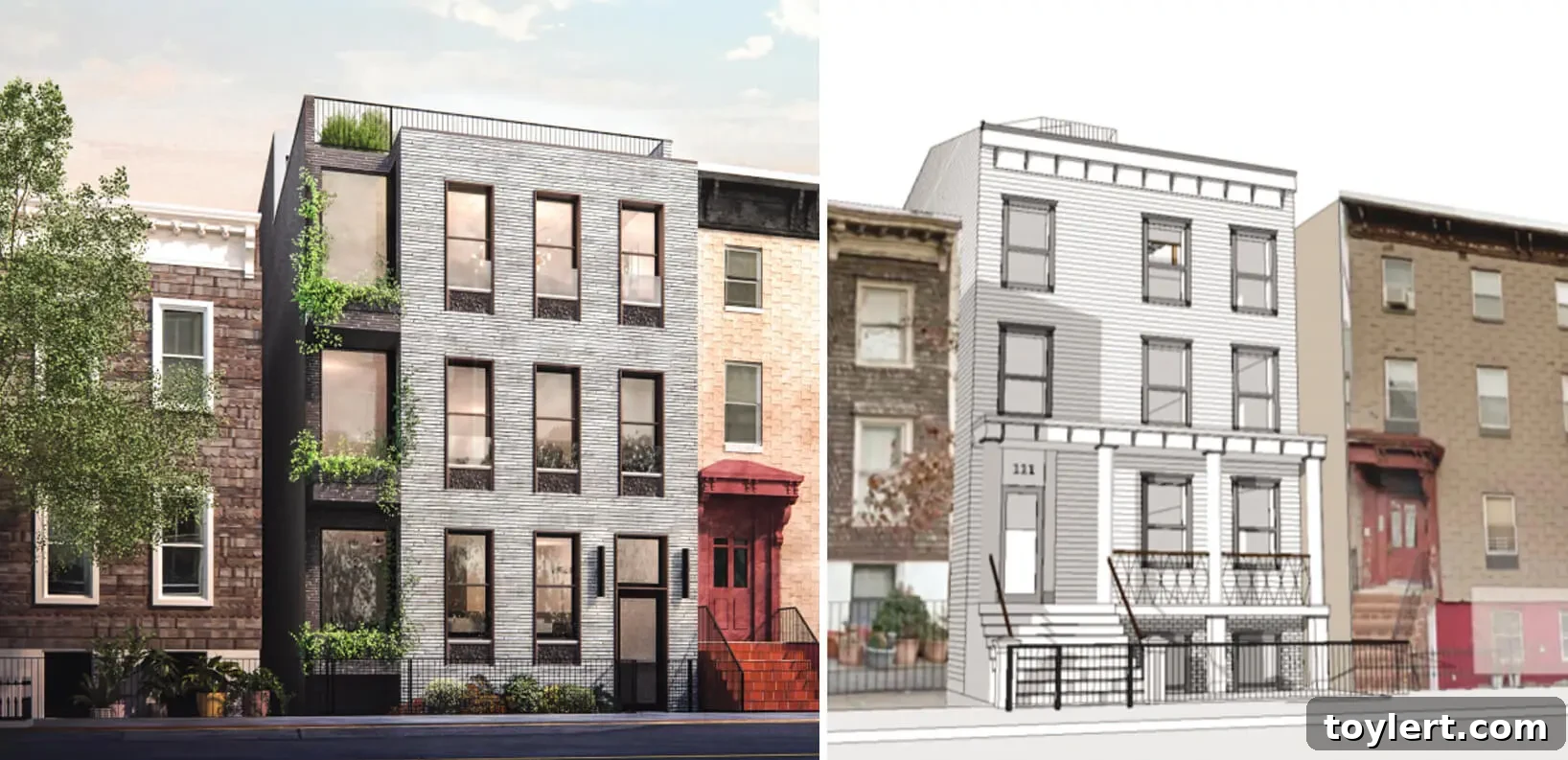
In the vibrant heart of Brooklyn’s cherished Greenpoint Historic District, a significant architectural narrative continues to unfold, centered around the pre-Civil War house located at 111 Noble Street. This historic dwelling, a testament to a bygone era, once again finds itself under the scrutiny of the Landmarks Preservation Commission (LPC) as its owner prepares to present a refined proposal and a compelling argument regarding the property’s enduring significance. The ongoing dialogue between development aspirations and the imperative of historic preservation highlights the delicate balance that defines New York City’s urban landscape.
The saga began in September, when a representative from MDIM Design, acting on behalf of the building’s owner, Roei Paz, initially approached the commission with a contentious proposition. The core of that first request was a plan to demolish the small, two-family wood-frame structure – a characteristic example of Greenpoint’s architectural heritage – and replace it with a contemporary apartment building. This initial move immediately sparked concerns among preservationists and those dedicated to maintaining the unique character of the historic district.
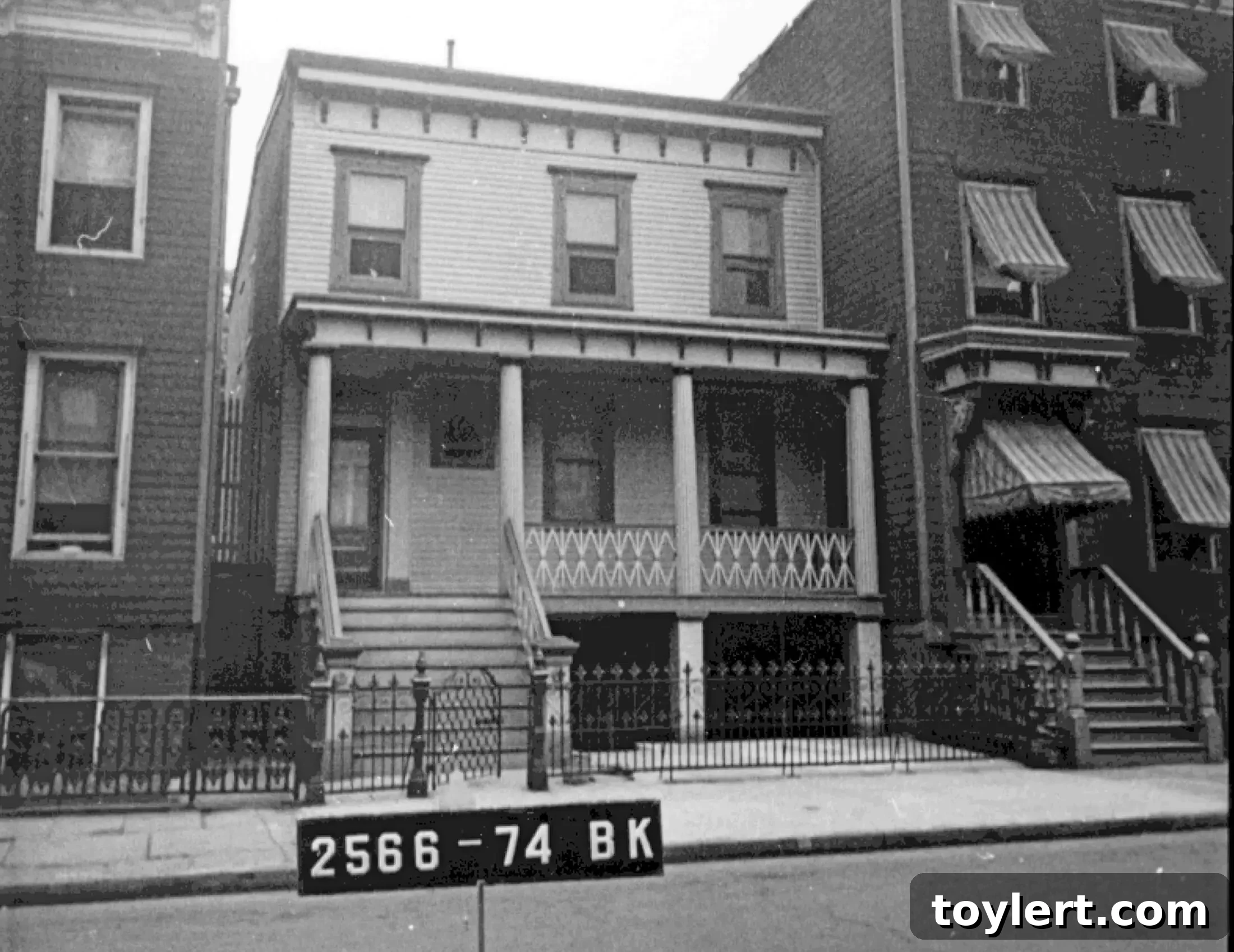
The primary justification for demolition presented by the owner’s representatives was twofold: a claim that the house was structurally unsound and, moreover, that it constituted a “non-contributing building” within the historic district due to prior alterations. This “non-contributing” designation is often used to argue that a building lacks the architectural integrity or historical significance to warrant preservation within a designated district. However, the Landmarks Preservation Commission, after careful deliberation, found these claims to be unsubstantiated.
The commission ultimately chose to take no action on the demolition request, citing insufficient proof that such a drastic measure was truly necessary. In a move that often signals the LPC’s preference for preservation over demolition, they strongly suggested that the developer explore alternative options, such as incorporating an addition to the existing structure rather than outright replacement. Crucially, the commission also highlighted that the house was not classified as a non-contributing building in the district’s original designation report, directly challenging a core tenet of the owner’s argument. This underscores the LPC’s commitment to upholding the integrity of its historic designations and protecting buildings that contribute to the district’s overall character, even if they have undergone some modifications over time.
Understanding the Significance of 111 Noble Street and Greenpoint’s Heritage
The house at 111 Noble Street is more than just an old building; it is a tangible link to Greenpoint’s rich history, predating the American Civil War. This era, spanning roughly from the 1840s to the 1860s, was a period of rapid industrialization and residential growth for Greenpoint, transforming it from a bucolic rural area into a thriving shipbuilding and manufacturing hub. Houses built during this time, particularly wood-frame structures, represent the initial wave of residential development that housed the district’s burgeoning working and middle classes.
The Greenpoint Historic District itself, established to protect this unique architectural and historical fabric, encompasses an array of structures that collectively tell the story of a vibrant 19th and early 20th-century Brooklyn neighborhood. The district is celebrated for its remarkably intact collection of residential buildings, including elegant row houses, humble worker cottages, and numerous two-family wood-frame homes like the one at 111 Noble Street. These buildings, often characterized by their specific detailing, construction methods, and urban planning, contribute significantly to the area’s distinct visual identity and sense of place. Preserving them is not just about saving old buildings; it’s about safeguarding the collective memory and historical narrative of one of New York City’s most charming and historically rich neighborhoods.
A “pre-Civil War house” carries with it inherent historical weight. These structures were built with techniques and materials that speak to the craftsmanship of the era. They witnessed the profound societal changes that preceded and followed the Civil War, and their continued existence provides invaluable insight into the evolution of urban living in Brooklyn. While alterations over the decades are common for properties of this age, the LPC’s role is to determine whether these changes have irrevocably diminished the property’s historical or architectural merit to the point of justifying demolition within a protected district.
The Role of the Landmarks Preservation Commission: Balancing Progress and Preservation
The Landmarks Preservation Commission (LPC) plays a critical role in safeguarding New York City’s architectural, historical, and cultural heritage. Established in 1965, the commission is tasked with designating and regulating individual landmarks and historic districts, ensuring that new construction, alterations, or demolitions within these protected areas are sensitive to their historical context and contribute positively to the streetscape. The case of 111 Noble Street exemplifies the complex challenges the LPC regularly navigates.
The LPC’s decision-making process is thorough and multi-faceted. When evaluating a demolition proposal within a historic district, the commission considers a wide range of factors, including the building’s historical age, architectural style, contribution to the district’s character, structural integrity, and the feasibility of preservation or adaptive reuse. Their mandate is not to impede progress entirely, but to ensure that development respects and enhances the existing historical fabric. In cases like 111 Noble Street, where an owner claims structural unsoundness, the LPC requires robust, independent engineering reports to corroborate such assertions. Their initial finding that “insufficient proof” was provided highlights the high bar for justifying demolition of a historic structure.
Furthermore, the LPC’s suggestion for an “addition” rather than full demolition reflects a common approach to modernizing historic properties while retaining their essence. This strategy allows property owners to expand and adapt their buildings to contemporary needs, potentially increasing their utility and value, without sacrificing the original structure’s historical integrity. This approach aligns with broader urban preservation philosophies that advocate for adaptive reuse and respectful integration of new elements into old structures.
The “Non-Contributing Building” Argument: A Closer Look
The argument that 111 Noble Street is a “non-contributing building” due to alterations is a frequently used strategy by developers seeking to bypass preservation regulations. In the context of a historic district, a “contributing building” is generally one that retains a significant amount of its original design and fabric, and thus helps define the historical and architectural character of the district. Conversely, a “non-contributing building” is one that, due to extensive alterations, or being built outside the period of significance, no longer possesses the integrity to contribute to the district’s character.
However, the LPC’s swift rejection of this claim in the case of 111 Noble Street is highly significant. It indicates that, in their expert judgment, the alterations made to the house have not been so extensive as to strip it of its historical value or its ability to contribute to the Greenpoint Historic District. Many historic buildings undergo modifications over their lifespan – additions, facade changes, window replacements. The key determination for the LPC is whether these changes have fundamentally compromised the building’s original design, materials, and overall historical integrity. For 111 Noble Street, the commission determined that its essential character as a pre-Civil War wood-frame residence in Greenpoint remains intact, making it a valuable asset to the district rather than an impediment.
Anticipating the Adjusted Proposal and Future Implications
As the owner and MDIM Design prepare to return to the Landmarks Preservation Commission with an “adjusted proposal and argument,” the focus will likely shift. Given the LPC’s previous guidance, it is highly probable that the new proposal will move away from outright demolition. Instead, it might explore options such as a carefully designed rear addition, a vertical extension that respects the existing cornice line, or interior renovations that do not impact the exterior’s historic character.
The “adjusted argument about the significance of the property” could also be a fascinating development. Perhaps the owner will present research that seeks to reinterpret the building’s historical context in a way that aligns with their development goals, or perhaps they will focus on the economic viability of preserving only certain elements. However, given the LPC’s firm stance and the established designation of the Greenpoint Historic District, any argument seeking to diminish the property’s significance would likely face considerable scrutiny. More constructively, the argument might focus on how the building’s significance can be preserved and even enhanced through a sensitive, modern intervention that meets both contemporary needs and historical preservation standards.
The ongoing deliberation over 111 Noble Street is more than a localized dispute; it is a microcosm of the larger urban challenge facing many historic cities. It pits the desire for modern development and increased housing density against the crucial need to preserve the unique architectural heritage that defines New York City’s neighborhoods. The outcome of this case will not only determine the future of a specific pre-Civil War house but will also serve as a precedent, influencing how similar properties within Greenpoint and other historic districts are treated in the future. It underscores the vital role of the Landmarks Preservation Commission in mediating these forces, ensuring that Brooklyn’s rich past continues to inform and enrich its dynamic present and future.