New York City’s Dual Crisis: Navigating Pandemic, Protests, and the Call for Justice
The spring of 2020 presented New York City with an unprecedented set of challenges, forcing its millions of residents to confront a dual crisis that tested the very fabric of urban life. As the city entered its twelfth consecutive week of sheltering in place, a period marked by silent streets, shuttered businesses, and the ongoing, often solitary, struggle of homeschooling for New York City public schools on their 49th day, a different kind of storm began to brew. The backdrop of a global pandemic, which had brought the world’s most vibrant metropolis to a standstill, ironically created a unique pressure cooker for social unrest, culminating in widespread demonstrations against systemic injustice.
This era was defined not only by the public health crisis but also by a profound awakening to deep-seated societal issues. While families grappled with the daily realities of remote learning, adapting to a new normal within the confines of their homes, the exterior world was ablaze with calls for change. The quiet isolation of lockdown was dramatically interrupted by a surge of public anger and frustration, giving rise to protests that would redefine the narrative of this historic period. The tension between public health mandates and the urgent demand for civil rights played out on a global stage, with New York City at its epicenter, showcasing both the fragility and resilience of its diverse communities.
The Crucible of Lockdown and Discontent: A City on Edge
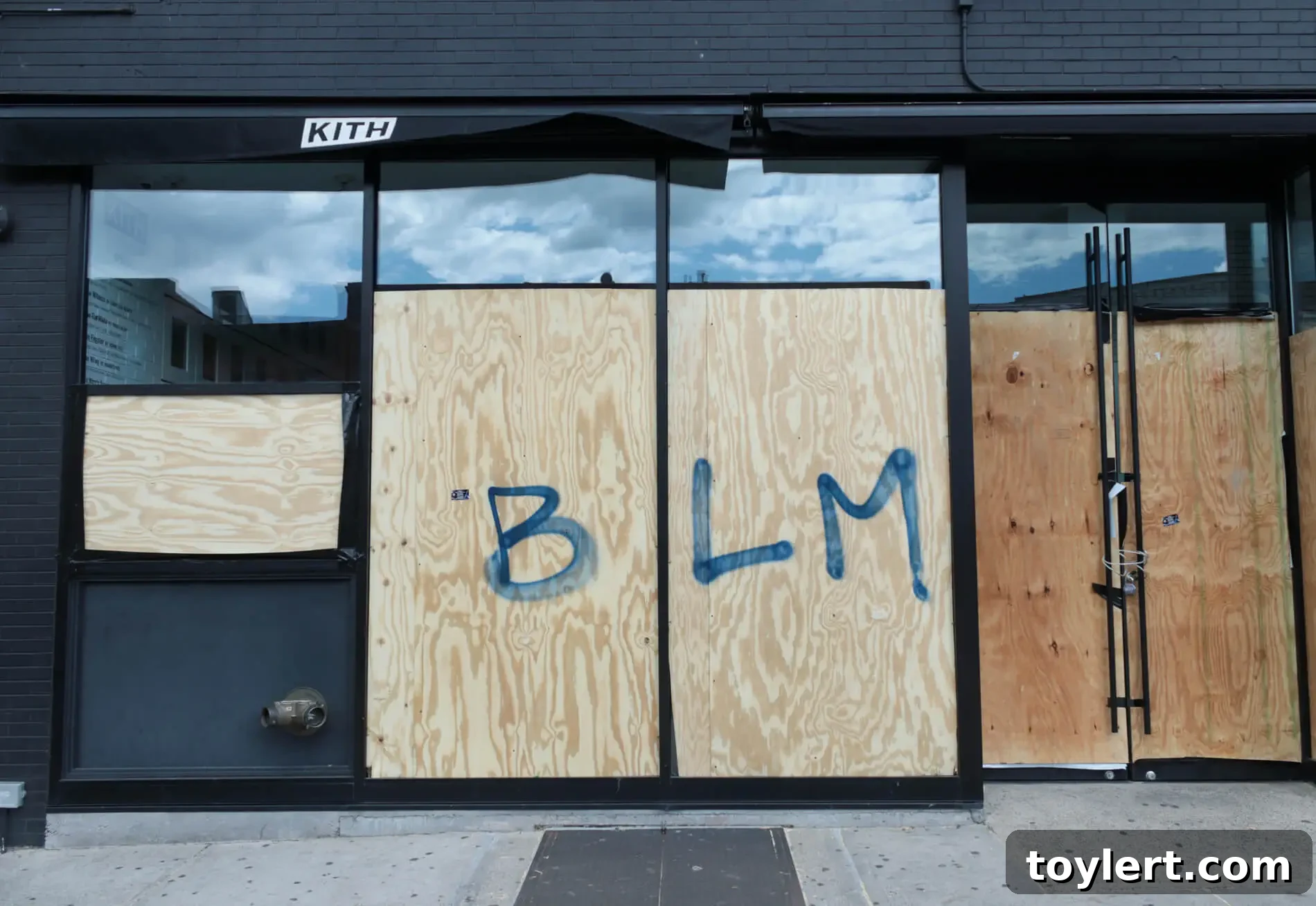
Across the United States, skirmishes involving guns and vehicles erupted, reflecting a broader national sentiment of outrage and despair. New York City, a microcosm of the nation, witnessed its own share of these disturbances. In areas like the Bronx, already hit hard by the pandemic’s socioeconomic impact, tensions ran high. Looting intensified in prominent commercial districts, notably in Midtown Manhattan and along the bustling Fordham Road, painting a grim picture of desperation and opportunism that contrasted sharply with the organized calls for justice. These incidents of property damage and unrest often overshadowed, or were deliberately conflated with, the legitimate grievances that fueled the majority of peaceful demonstrations.
The city found itself at a critical juncture, navigating the immediate threats of a deadly virus while simultaneously addressing decades of accumulated social and racial injustice. The initial shock of the pandemic had given way to a palpable sense of exhaustion and anxiety, creating fertile ground for public expression, whether in the form of destructive acts or, more significantly, through organized civil disobedience. The dichotomy between chaotic outbursts and disciplined activism became a defining feature of the period, prompting widespread discussions about the underlying causes of social fragmentation and the most effective pathways to meaningful reform.
Echoes of Protest: Brooklyn’s Stand for Justice
Amidst the national and citywide tumult, Brooklyn emerged as a beacon of organized, peaceful protest, demonstrating a powerful commitment to civil rights and social change. While other parts of the city grappled with escalating property damage, Brooklyn’s residents largely channeled their collective frustration into remarkably well-orchestrated and impactful demonstrations. A significant example was the large-scale march organized by the esteemed December 12th Movement, a long-standing Bed-Stuy civil rights group with a rich history of advocating for Black liberation and empowerment. Their deep roots in the community provided a strong foundation for mobilizing a diverse group of participants.
This powerful demonstration saw activists march purposefully from Restoration Plaza, a vital community hub, to the 79th Precinct, a symbolic location representing the local apparatus of law enforcement. The protestors’ message was clear and resonant: “Defund the Police.” This slogan, often misunderstood, was not merely a call to abolish law enforcement entirely, but rather a demand to reallocate substantial portions of police budgets towards community services, mental health initiatives, housing, and education. Proponents argued that such reallocation would address the root causes of crime and injustice more effectively than traditional policing, leading to safer and more equitable communities. The march then circled back, reinforcing the steadfastness and unity of its participants, showcasing a community united in its demand for systemic change and a fundamental re-evaluation of public safety priorities.
Mayoral Response and Public Scrutiny: A Question of Accountability
The heated atmosphere of the protests brought intense scrutiny upon city leadership, particularly Mayor Bill de Blasio. His initial comments regarding incidents involving police vehicles and protesters in Park Slope drew widespread condemnation. Public outcry erupted when the mayor seemed to justify, or at least downplay, the actions of police officers who drove vehicles into crowds of demonstrators, exacerbating public mistrust and fueling the perception of official indifference to citizen grievances. The images of these incidents, widely circulated on social media, shocked many and became a focal point of debate over appropriate police conduct during protests.
Under immense pressure from civil liberties groups, community leaders, and the public, Mayor de Blasio eventually offered an apology for his earlier remarks, acknowledging the harm and anger they had caused. This apology, though welcomed by some, also highlighted the deep chasm that had opened between city officials and the very communities they served. It underscored the challenge of maintaining public order while upholding the fundamental rights of assembly and free speech, especially in a city already reeling from the stresses of a pandemic. The incident served as a stark reminder of the delicate balance required in leadership during times of profound social unrest and the critical importance of empathetic and transparent communication.
Unveiling Brutality: The East New York Incident and the Power of Documentation
Adding another layer to the city’s evolving narrative of police-community relations, a disturbing video surfaced that quickly went viral, igniting further outrage. This footage depicted a person of color being savagely attacked by police in East New York. The circumstances surrounding the incident were particularly alarming: the individual was reportedly filming the arrest of another young man, who was allegedly being apprehended for not observing social distancing protocols. This specific detail — the act of filming a police interaction — underscored a critical point of contention between law enforcement and the public: the right to record police activity and the perception of accountability.
The video served as powerful, undeniable evidence of excessive force, stripping away any ambiguity and presenting a stark reality to viewers. It fueled the widespread belief that such incidents were not isolated anomalies but rather symptoms of a systemic issue within policing. For many, it encapsulated the very essence of why the protests were taking place: to demand an end to arbitrary violence and to assert the right of citizens to hold authorities accountable. The East New York incident became a powerful symbol in the larger discourse around police accountability, civil liberties, and the protective role that citizen journalism and readily available recording technology now play in bringing injustices to light. These documented moments became catalysts, not just for local outrage, but for a broader national and international conversation on police reform.
The Broader Implications and Call for Systemic Reform
The events unfolding across New York City during this period, from the peaceful marches in Brooklyn to the more violent clashes in other boroughs and the chilling documented instances of police brutality, coalesced into a potent demand for systemic change. These were not merely protests against isolated incidents; they represented a deep-seated cry for a re-evaluation of the role of policing in society, particularly in communities of color that have historically borne the brunt of aggressive law enforcement tactics. The call to “defund the police” resonated with many as a radical yet necessary step to reimagine public safety, shifting resources from punitive measures to preventative community-led solutions.
The confluence of a global health crisis and an awakened social justice movement created a unique opportunity for dialogue about the future of New York City. It forced stakeholders, from policymakers to everyday citizens, to confront uncomfortable truths about inequality, power, and justice. The debates extended beyond police budgets to encompass discussions about racial bias in institutions, access to healthcare, economic disparities, and the very definition of a safe and equitable city. This period marked a significant turning point, cementing the idea that true public safety cannot be achieved through policing alone but requires a holistic approach that addresses the root causes of societal issues.
A Lingering Impact and the Path Forward
As New York City slowly emerged from the twin shadows of the pandemic and intense social unrest, the impact of these events continues to reverberate. The calls for police reform, accountability, and a more equitable distribution of public resources have not faded but have instead become integral parts of the ongoing civic discourse. The experiences of sheltering in place, adapting to remote learning, and witnessing firsthand the passionate demands for justice have indelibly shaped the collective consciousness of New Yorkers. The memory of peaceful marches coexisting with moments of intense friction serves as a powerful reminder of the complex tapestry of urban life.
The period highlights the enduring strength of community activism and the vital role of citizen engagement in driving societal change. While the challenges remain formidable, the collective action seen during these months underscored a powerful commitment to building a more just and equitable future. The legacy of these turbulent weeks will undoubtedly continue to influence policy decisions, community initiatives, and the ongoing struggle for civil rights in New York City and beyond, ensuring that the lessons learned from this unprecedented era are not forgotten.