In the vibrant tapestry of Brooklyn’s historic neighborhoods, where every brick and beam tells a story, stands a remarkable testament to architectural vision and transformative design. This particular three-story row house, nestled within a bustling Flatbush block, had silently endured a century of modifications, additions, and layers of history. As architect Sarah Jacoby, founder of the Long Island City-based firm Sarah Jacoby Architect, delicately put it, the structure had truly been through “a lot of iterations” over its long lifespan. Far from its original grandeur, the property presented a daunting challenge, yet also an incredible opportunity for revitalization.
Unveiling the Layers: The Initial State of a Century-Old Home
Upon initial assessment, the house revealed a narrative common to many aging urban dwellings: a labyrinth of spaces that had lost their original purpose and charm. “Everything was old and cramped and not in good condition,” Jacoby recounted, painting a vivid picture of the dilapidated interiors. The house was a genuine “warren of tiny rooms,” each seemingly smaller and less inviting than the last, suffocating under years of neglect and misguided alterations. Adding to the complexity was an illegal unit in the basement, a common issue in rapidly gentrifying areas, which required immediate attention and a comprehensive solution.
Beyond the structural and spatial disarray, the property harbored significant health and safety concerns. The entire interior was “coated in asbestos,” a perilous discovery that mandated careful, professional remediation before any creative design work could begin. Furthermore, the aesthetic landscape was a chaotic blend of bygone eras and temporary fixes: “There was wood paneling and tile and wallpaper and dropped ceilings and even some fake beams.” These accumulated layers, far from adding character, obscured the home’s potential and stifled any sense of spaciousness or light. It was clear that this was not merely a cosmetic update; it was a deep dive into the essence of the building, demanding a complete overhaul.
A Vision for Revival: Sarah Jacoby’s Transformative Approach
Facing such a formidable project, Sarah Jacoby, who established her acclaimed practice in 2014, articulated her guiding principle with elegant simplicity: “Opening it up and stripping away the layers of time.” This philosophy became the bedrock of the entire renovation, a commitment to peel back the decades of accreted materials and dysfunctional layouts to reveal the inherent beauty and structural integrity beneath. The objective was not just to modernize, but to breathe new life into the historic bones of the building, re-envisioning it for contemporary living while honoring its Brooklyn heritage.
The scope of the project was nothing short of monumental. What followed was a comprehensive gut renovation that left no corner untouched. From the ground up, the entire building was meticulously redesigned and rebuilt. This ambitious undertaking encompassed the owner’s unit, strategically located across the main floor and the newly revitalized lower level. Crucially, the basement, once an illegal dwelling and a repository of hazards, underwent a significant excavation. This process transformed it into a functional and aesthetically pleasing space dedicated to storage and recreation, adding invaluable square footage and utility to the owner’s domain. Simultaneously, the top floor was reimagined as an entirely new, self-contained rental apartment, thoughtfully designed to maximize appeal and functionality for future tenants.
The Renovation Journey: From Deconstruction to Reimagination
The first critical phase of the Brooklyn row house renovation involved extensive and methodical demolition. Removing the accumulated debris, the asbestos-laden surfaces, and the hodgepodge of outdated finishes was a monumental task. Every piece of wood paneling, every section of dropped ceiling, and all traces of the illicit basement unit were carefully stripped away. This deconstruction was more than just clearing out; it was an act of architectural liberation, creating a blank canvas upon which Sarah Jacoby Architect could manifest their vision for an open, airy, and functional home. The process was painstaking, ensuring that all hazardous materials were safely abated, laying a clean, healthy foundation for the future.
Reconfiguring Space: Unlocking Potential and Enhancing Flow
One of the central challenges was to overcome the “warren of tiny rooms” that defined the original layout. Sarah Jacoby’s design strategy focused on optimizing the interior footprint, creating an intuitive flow between living spaces. Walls that once compartmentalized were strategically removed or reconfigured, allowing natural light to penetrate deeper into the core of the home. This emphasis on open-concept living transformed cramped corridors and isolated rooms into inviting, interconnected zones that foster a sense of community and spaciousness. For instance, the main living areas on the ground floor were opened up to create a seamless transition between the living room, dining area, and kitchen, making it ideal for entertaining and daily family life.
The basement excavation was a critical intervention. By digging deeper, Sarah Jacoby Architect effectively added significant ceiling height and usable square footage to the lower level. This once-problematic area was reimagined as a versatile extension of the main residence, offering dedicated storage solutions to keep clutter at bay, alongside flexible recreational space that could serve as a media room, home gym, or children’s play area. The integration of modern waterproofing techniques and efficient lighting ensured that this subterranean space felt bright, welcoming, and entirely integrated into the home’s overall design.
Crafting Modern Aesthetics: Materials and Design Choices
With the structural and spatial challenges addressed, the focus shifted to the aesthetic and functional elements that would define the revitalized row house. Sarah Jacoby Architect carefully curated a palette of materials that balanced durability, timeless appeal, and modern sensibilities. Hardwood floors were selected for their warmth and classic elegance, running continuously through the main living areas to further enhance the sense of openness. Walls were finished in serene, neutral tones, providing a sophisticated backdrop for personal decor while maximizing light reflection.
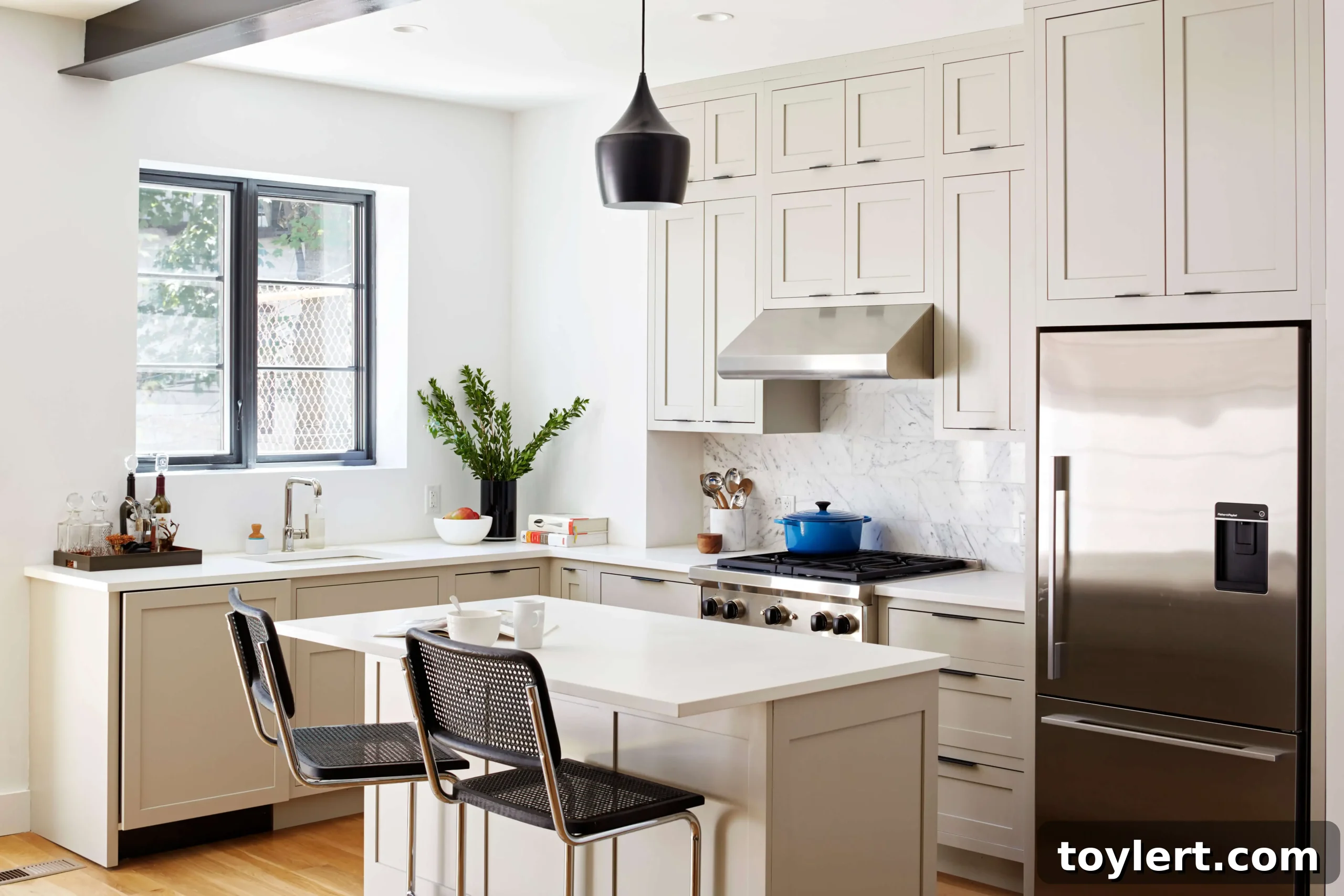
The kitchen, often considered the heart of a home, received particular attention. It was outfitted with custom cabinetry, high-end, energy-efficient appliances, and sleek countertops, blending functionality with contemporary style. Integrated lighting solutions, including recessed fixtures and task lighting, were strategically placed to illuminate workspaces and create ambiance. Bathrooms were similarly transformed into tranquil retreats, featuring modern fixtures, elegant tiling, and smart storage solutions that cater to everyday comfort and luxury. Throughout the owner’s unit, every detail, from door hardware to window treatments, was chosen to contribute to a cohesive, refined aesthetic that speaks to understated elegance and practical living.
The Dual Purpose: A Modern Owner’s Unit and an Inviting Rental
One of the most impressive aspects of Sarah Jacoby Architect’s work on this Brooklyn row house was its successful dual-purpose design. The extensive gut renovation resulted not only in a beautifully appointed owner’s unit but also in a fully independent, modern rental apartment on the top floor. This strategic division not only adds significant value to the property but also offers a flexible income stream for the homeowners, a highly desirable feature in urban real estate markets.
The owner’s unit, spanning the main floor and the newly finished lower level, was meticulously tailored to meet the specific needs and lifestyle of its inhabitants. It boasts spacious living areas, a gourmet kitchen perfect for culinary enthusiasts, and comfortable private zones for relaxation. The direct access to the redesigned backyard space creates an urban oasis, seamlessly blending indoor and outdoor living. The lower level, with its recreational space and ample storage, provides essential versatility, adapting to the family’s evolving needs.
The top-floor rental apartment was designed with the same attention to detail and quality as the owner’s residence, ensuring it stands as a premium offering in the rental market. Featuring its own independent entrance, a compact yet highly functional kitchen, and a bright, well-proportioned living area, it offers a comfortable and stylish abode. Large windows were installed or refurbished to maximize natural light, creating an inviting atmosphere. The design prioritizes efficient use of space, modern finishes, and durable materials, guaranteeing an attractive and low-maintenance living environment for tenants, while also contributing to the overall aesthetic integrity of the building.
Overcoming Challenges and Embracing History
Renovating a century-old property, especially one with as many structural and historical eccentricities as this Brooklyn row house, is rarely without its challenges. Unforeseen structural issues often emerge once walls are opened, requiring creative problem-solving and adaptive design. The presence of asbestos, as initially discovered, mandated a highly specialized and time-consuming remediation process, adding complexity and cost to the initial stages of the project. Navigating local building codes and regulations for a historical property, especially with the addition of a new rental unit and basement excavation, also required meticulous planning and coordination with city authorities.
However, under the expert guidance of Sarah Jacoby Architect, these obstacles were met with innovative solutions and a steadfast commitment to the project’s vision. The renovation seamlessly blends the home’s rich history with contemporary demands, integrating modern amenities and open layouts without sacrificing the row house’s inherent charm. Original features that could be salvaged, such as window frames or unique architectural details, were carefully restored and integrated into the new design, serving as subtle nods to the building’s past. This delicate balance between preservation and modernization is a hallmark of Jacoby’s thoughtful architectural approach, ensuring the home feels both fresh and deeply rooted in its context.
A Revitalized Landmark for Modern Brooklyn Living
The comprehensive gut renovation executed by Sarah Jacoby Architect has not merely updated a dilapidated Brooklyn row house; it has orchestrated a complete revitalization, transforming it into a beacon of modern urban living. What was once a cramped, hazardous, and functionally obsolete structure has been reborn as a radiant, spacious, and highly efficient home, perfectly suited for the demands of the 21st century. The project stands as a powerful illustration of how thoughtful design and meticulous execution can breathe new life into historic properties, enhancing their value, functionality, and aesthetic appeal for generations to come.
Through “opening it up and stripping away the layers of time,” Sarah Jacoby has not only created a beautiful residence and a valuable income-generating unit but has also preserved a piece of Brooklyn’s architectural heritage, ensuring this century-old row house continues to tell its story for another hundred years. The successful transformation of this Flatbush property underscores Sarah Jacoby Architect’s expertise in navigating complex urban renovations, delivering bespoke solutions that are both stunningly beautiful and inherently practical. The result is a truly remarkable home that perfectly embodies the spirit of Brooklyn: a harmonious blend of history, innovation, and vibrant community living.