Navigating the Aftermath: Barclays Center Emerges as a Vital Commuter Hub in Post-Crisis NYC
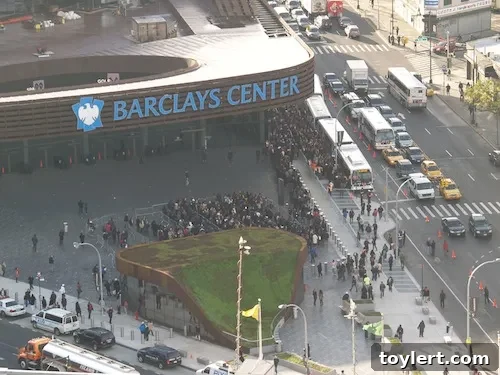
The resilience of New York City and its inhabitants often shines brightest in the face of adversity. This profound spirit was perhaps nowhere more evident than in the days following a major disruptive event, which crippled much of the city’s vital transportation network. The images captured here, taken around 9 AM on a recent morning, offer a striking visual testament to the extraordinary measures New Yorkers undertook to simply get to work. An aerial photograph, submitted by a diligent tipster, vividly portrays the massive queues forming at the Barclays Center in Brooklyn, all patiently waiting for buses to transport them into Manhattan. This wasn’t merely a busy morning commute; it was a critical lifeline in a city grappling with unprecedented transit challenges. We had previously reported on the extended wait times and snarled traffic that characterized these post-crisis days, but these visuals truly underscore the scale of the challenge and the collective effort to overcome it.
Our tipster’s observation painted a clear picture: “There have been a lot of people down there this morning and it seems like the MTA is doing a pretty great job keeping the line moving with a constant stream of buses.” This comment highlights not only the immense public demand but also the diligent response from the Metropolitan Transportation Authority (MTA) in mobilizing resources under difficult circumstances. The line, as described, wasn’t just long; it was an intricate, snaking formation that wound around the entire perimeter of the Barclays Center arena, a testament to the sheer volume of commuters reliant on this temporary solution. Another reader provided an additional perspective, sending in the view depicted below, further illustrating the extensive nature of these temporary transit hubs that sprang up across the city.
The Aftermath: NYC’s Transportation Gridlock Unravels
The severe weather event that struck New York City profoundly impacted its intricate transportation infrastructure, bringing much of the world’s most extensive subway system to a grinding halt. Submerged tunnels, widespread power outages, and damaged tracks rendered numerous subway lines inoperable, effectively severing vital connections between boroughs. Beyond the underground, major bridges and tunnels faced closures or severe restrictions, compounding the transit nightmare. For countless Brooklyn residents, their usual morning commute into Manhattan, once a seamless blend of subway rides or car journeys, transformed overnight into an arduous, uncertain undertaking. With private vehicles often hampered by fuel shortages and widespread traffic congestion, public buses emerged as the undisputed, albeit heavily strained, lifeline. This sudden, overwhelming reliance on the bus network placed immense pressure on the MTA, challenging its operational capabilities to an unprecedented degree. The very fabric of daily life for millions of New Yorkers was dramatically altered, forcing improvisation and adaptability on a grand scale.
Barclays Center: An Unexpected Commuter Nexus
In the wake of this widespread transportation disruption, the Barclays Center, typically known as a premier sports and entertainment venue, rapidly transformed into a critical emergency commuter hub. Its strategic location in downtown Brooklyn, at the convergence of several major avenues and easily accessible from surrounding residential neighborhoods, made it an ideal rallying point for those desperate to reach Manhattan. The vast open spaces surrounding the arena, designed to handle large crowds for events, proved unexpectedly invaluable for organizing the massive queues of commuters. Furthermore, its proximity to existing bus routes facilitated the rapid deployment and rerouting of MTA buses. What was once a vibrant destination for concerts and games became, for a period, a symbol of urban resilience – a place where collective necessity forged an impromptu, yet remarkably effective, public transit solution. The sheer scale of human assembly at this singular location underscored its newfound importance in the city’s recovery efforts, turning a modern landmark into an essential piece of the crisis response infrastructure.
A Snapshot of Resilience: The Daily Pilgrimage to Manhattan
The striking visuals captured from above truly convey the extraordinary scene unfolding each morning at the Barclays Center. Thousands upon thousands of New Yorkers, bundled against the crisp morning air, formed an orderly but seemingly endless procession. The line, an intricate maze of humanity, snaked around the entire arena, extending far beyond what one might typically associate with a bus stop. This wasn’t just a waiting line; it was a testament to patience, collective determination, and the indomitable spirit of a city refusing to be halted. People exchanged stories, shared updates, and even found moments of camaraderie amidst the shared inconvenience. Children clutched their parents’ hands, students carried their backpacks, and professionals in business attire stood side-by-side, all united by the common goal of reaching their destinations. The early morning hours, usually bustling with quick dashes to the subway, were now defined by a slow, deliberate movement towards the next available bus, each departure a small victory in the broader struggle to restore normalcy. The atmosphere, while certainly tinged with frustration, also pulsed with an underlying sense of shared purpose and quiet resolve.
MTA’s Herculean Effort: Keeping New York Moving Against All Odds
Amidst the chaos and unprecedented demand, the Metropolitan Transportation Authority demonstrated an extraordinary commitment to keeping New York moving. The commendation from our tipster – “the MTA is doing a pretty great job keeping the line moving with a constant stream of buses” – was not just a casual observation but a crucial acknowledgment of an organizational triumph under duress. Faced with immense logistical challenges, including damaged infrastructure, disrupted depots, and a sudden surge in demand for bus services, the MTA rapidly mobilized its fleet and personnel. Buses were rerouted, schedules were improvised, and an unprecedented number of vehicles were deployed to critical hubs like Barclays Center. Drivers worked extended shifts, often navigating congested streets and new routes, embodying a front-line response to the crisis. Information was disseminated through various channels, albeit sometimes imperfectly, to guide commuters. This massive, coordinated effort ensured that despite the immense obstacles, a continuous flow of buses was maintained, systematically ferrying thousands of New Yorkers across the East River. It was a testament to the dedication of transit workers and the inherent flexibility of a system pushed to its absolute limits, proving indispensable in the city’s recovery.
Beyond the Buses: Lessons in Urban Preparedness and Community Strength
The images from Barclays Center serve as more than just a record of a challenging commute; they offer profound insights into urban resilience, disaster preparedness, and the strength of community. Such events underscore the critical importance of a robust and diverse public transportation infrastructure, capable of adapting to unexpected disruptions. While the immediate focus was on getting people to work, the broader implications touched upon economic stability, mental well-being, and the social fabric of the city. The collective patience and cooperation exhibited by the commuters, along with the tireless efforts of the MTA, highlighted a deep-seated civic responsibility and a shared determination to overcome adversity. In the aftermath, urban planners and policymakers inevitably analyzed these critical weeks to glean valuable lessons for future disaster response and infrastructure hardening. The experience at Barclays Center, and similar transit hubs across the city, became a powerful case study in how a major metropolis can, and must, pivot to maintain functionality during times of crisis. It wasn’t just about buses; it was about ensuring the continued pulse of a city that never truly sleeps, even when its arteries are temporarily blocked.
These powerful visual records, sent in by vigilant readers, stand as a testament to a pivotal moment in New York City’s history. They capture not just a scene of congestion, but one of collective resolve and the vital role of public services during an extraordinary period. The lines at Barclays Center were more than just queues for a bus; they were a symbol of a city moving forward, one determined commuter at a time.