How Safe Is Dumbo’s York Street Subway Stop With Only One Exit?
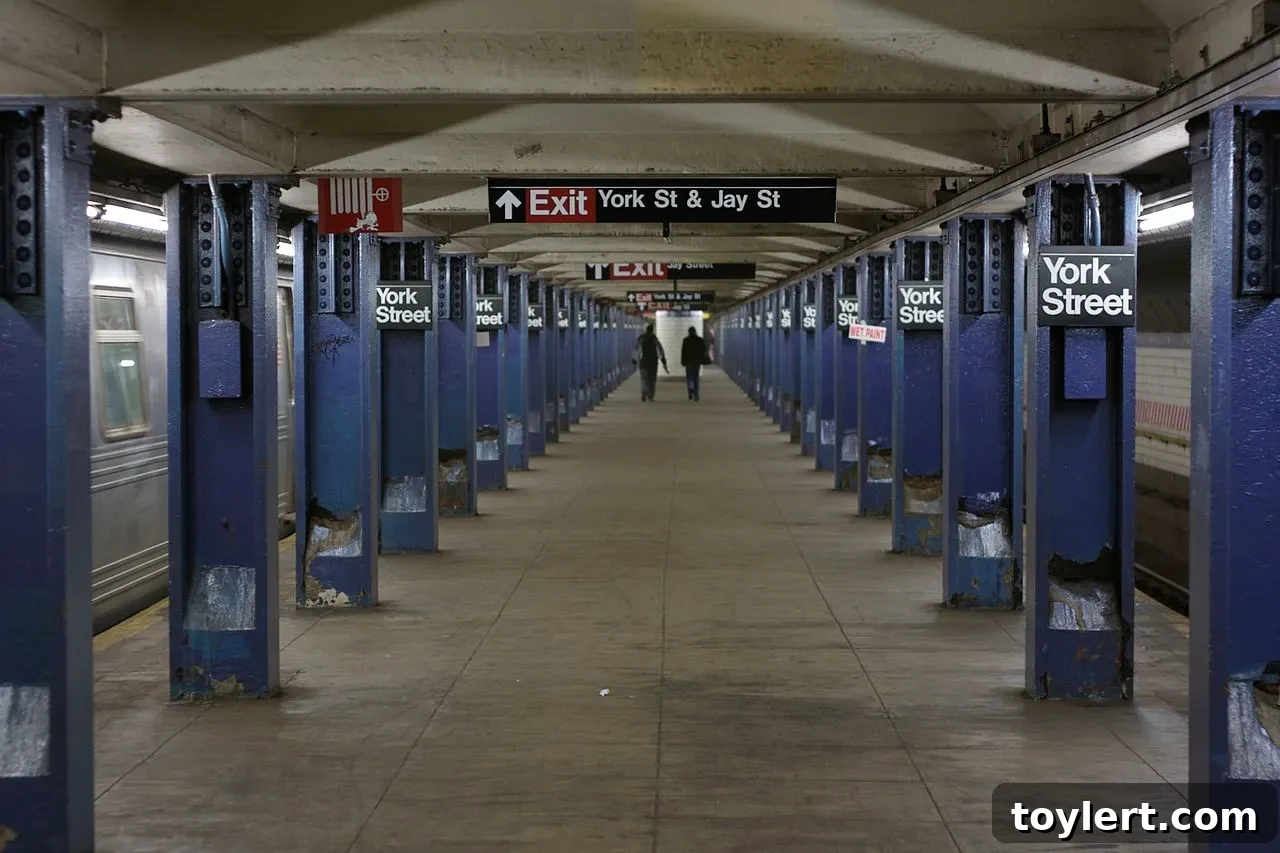
The York Street F train stop in Dumbo, Brooklyn, stands as a critical artery for a rapidly evolving neighborhood. Yet, for all its importance, this particular subway station presents a unique and increasingly pressing dilemma: it boasts only one way in and one way out. This singular point of entry and egress has become a persistent source of concern and frustration for the thousands of residents, workers, and visitors who rely on it daily. Opened in 1936, the York Street stop is widely recognized for its seemingly endless inclined tunnel, a distinctive architectural feature that guides straphangers from its single platform up to the sole entrance and exit situated at the base of a prominent, industrial-era ventilation tower on the bustling corner of York and Jay streets.
In an area that has transformed dramatically from an industrial hub into a premier residential and commercial district, the station’s design—rooted in a bygone era—now feels profoundly out of step with Dumbo’s modern vibrancy and population density. During peak hours, the tunnel frequently transforms into a bottleneck, leading to uncomfortable crowd congestion and a palpable sense of anxiety among commuters. Whispers of “how is this legal?” are commonplace, accompanied by general groans and the sight of many anxious individuals jogging to catch their trains amidst the rush hour crush. Beyond mere inconvenience, this single point of access raises significant questions about passenger safety, emergency preparedness, and the sustainability of urban infrastructure in the face of relentless growth.
The York Street F Train: A Glimpse into Brooklyn’s Past and Present
The York Street F train station is more than just a transit stop; it’s a living relic of New York City’s public transportation history. Inaugurated in 1936 as part of the Independent Subway System’s (IND) Fulton Street Line, the station was originally conceived to serve a predominantly industrial waterfront district. At that time, Dumbo, an acronym for “Down Under the Manhattan Bridge Overpass,” was characterized by warehouses, factories, and the docks that fueled Brooklyn’s robust maritime trade. The design, including its lengthy, inclined pedestrian tunnel, reflected the practical considerations of connecting workers to a then less densely populated area, where pedestrian flow was far less intense than it is today.
The distinctive tunnel, which commuters traverse daily, is a testament to the engineering challenges of building subway lines deep underground beneath complex urban landscapes. Unlike many other New York City subway stations that feature multiple stairwells or direct street-level access points, York Street’s single, protracted incline funnels all foot traffic through one narrow channel. This architectural choice, while perhaps efficient for its time, now creates a singular chokepoint. The platform itself, relatively compact, further compounds the issue, offering limited space for passengers to wait, especially during peak commute times when trains arrive packed with commuters from Manhattan and beyond.
The experience of navigating the York Street stop during rush hour is unique, often described by commuters as a test of patience and spatial awareness. The “traffic jam” isn’t vehicular but human, as streams of people attempt to enter and exit simultaneously. The constant flow of bodies, coupled with the enclosed nature of the tunnel, creates an environment where personal space is a luxury and efficiency is often compromised. For those rushing to work or home, the single entrance/exit can transform a simple commute into a stressful ordeal, fostering a sense of urgency that sometimes borders on desperation as trains pull into the station.
Unpacking the Safety Concerns: A Potential Fire Hazard and Crowd Control Nightmare
The most alarming aspect of the York Street F train station’s design is the significant safety risk posed by its single entrance and exit. In any public transportation system, robust emergency egress routes are paramount. Modern safety standards for subway stations, often guided by regulations like NFPA 130 (Standard for Fixed Guideway Transit and Passenger Rail Systems), emphasize the critical need for multiple, clearly marked exits to facilitate rapid evacuation in the event of an emergency. The York Street stop, with its singular, long, inclined tunnel, starkly contravenes these contemporary best practices.
Consider the potential scenarios: a fire on the platform or within the tunnel, a power outage plunging the station into darkness, a medical emergency requiring swift external access, or even a security incident. In any of these situations, the single exit would become an immediate and terrifying bottleneck. The enclosed tunnel, which functions as both an escape route and an entry point, could quickly become overwhelmed, leading to crushing crowds, panic, and potentially severe injuries or fatalities. The lack of alternative routes means that thousands of people would be funneled into a single, constrained path, drastically hindering the ability of emergency services to respond effectively or for passengers to evacuate safely.
The sheer volume of daily commuters further exacerbates these concerns. As Dumbo’s population has surged, so too has the ridership at York Street. What was once a manageable flow of people has escalated into a densely packed human stream, particularly during the morning and evening peaks. This high density, combined with the structural limitations, creates a perpetual crowd control challenge. The simple act of entering or exiting can become a struggle, intensifying the risk of falls, collisions, and general disorder, especially in a sudden emergency where calm movement is replaced by fear and urgency. The question “how is this legal?” isn’t just a rhetorical expression of frustration; it’s a genuine plea for reassessment of a design that, while compliant with codes decades ago, falls short of today’s imperative safety standards.
Dumbo’s Transformation: Rising Population Meets Stagnant Infrastructure
Dumbo’s journey from an overlooked industrial backwater to one of Brooklyn’s most coveted neighborhoods is a quintessential New York success story. Once defined by its cobblestone streets, brick warehouses, and forgotten waterfront, Dumbo has undergone a dramatic renaissance since the late 20th century. Old factories have been meticulously converted into stunning residential lofts, trendy offices, art galleries, and upscale boutiques. The neighborhood now boasts a vibrant tech scene, world-class dining, and unparalleled views of the Manhattan skyline, attracting a diverse demographic of affluent residents, creative professionals, and burgeoning families.
This rapid gentrification and development have, however, placed immense strain on the area’s original infrastructure, particularly its public transit. The York Street F train station, designed for an entirely different Dumbo, now serves a population that has swelled exponentially. The demand for housing, despite Dumbo being far from a “starter home” market with its notoriously high property values, continues unabated. Each new residential conversion, office building, or commercial space adds hundreds, if not thousands, of new daily commuters to the subway system. This continuous influx highlights a common urban planning challenge: existing infrastructure often struggles to keep pace with an area’s newfound popularity and population density.
The paradox is stark: residents pay a premium to live and work in Dumbo, attracted by its amenities and accessibility, yet they confront a fundamental challenge in their daily commute. The single-exit station, once a minor inconvenience, has become a symbol of the disconnect between Dumbo’s modern aspirations and its historical limitations. This growing disparity underscores the critical need for proactive urban planning that anticipates growth and invests in infrastructure upgrades before existing systems become dangerously overstressed. The quality of public transit, including safety and efficiency, is a cornerstone of urban livability, even in the most sought-after neighborhoods.

Exploring Solutions: A Path Towards Enhanced Safety and Efficiency
Addressing the complex challenges at the York Street F train station requires a multi-faceted approach, combining engineering solutions with community advocacy and strategic investment. The most frequently discussed and arguably most impactful solution is the addition of a second entrance and exit. While this project would be logistically challenging and expensive, involving complex underground excavation in a dense urban environment, its potential benefits for safety and passenger flow are undeniable. Identifying a suitable location, acquiring necessary property, and minimizing disruption during construction would be major hurdles, but the long-term gains in safety and efficiency could justify the significant undertaking.
Short of a full second exit, several other measures could improve the current situation. Implementing advanced crowd management techniques, such as real-time monitoring of passenger density and controlled access during peak hours, could help mitigate overcrowding. Improved signage, both within the tunnel and on the platform, could guide passengers more efficiently and help maintain order. Enhanced ventilation systems within the tunnel could also improve air quality and comfort, particularly during high-density periods. Regular and highly visible presence of MTA personnel to direct traffic and assist commuters could also play a crucial role in maintaining safety and order.
Furthermore, technological innovations could offer supplementary solutions. Real-time app notifications about station congestion or potential delays, for instance, could empower commuters to make informed decisions about their travel times or alternative routes. Community advocacy groups and local politicians have a vital role to play in keeping this issue on the MTA’s agenda, pushing for feasibility studies, funding allocations, and clear timelines for improvements. The York Street station serves as a prime example of how aging infrastructure in rapidly developing urban areas demands continuous evaluation and investment to meet modern safety standards and accommodate contemporary population levels.
The Future of Urban Transit: Learning from Dumbo’s York Street
The York Street F train stop in Dumbo serves as a microcosm of broader challenges facing major urban centers globally. It illustrates the inherent tension between preserving historical infrastructure and adapting to the relentless march of urban development and population growth. While the station’s single entrance/exit was a functional design choice nearly a century ago, it has become an untenable bottleneck in the context of Dumbo’s modern vibrancy and density. The safety concerns are real and pressing, extending beyond mere commuter inconvenience to potential public safety hazards that demand urgent attention.
As cities continue to expand and transform, the experience at York Street underscores the critical importance of proactive urban planning, strategic infrastructure investment, and a commitment to prioritizing passenger safety and accessibility. The ongoing dialogue around this station highlights the power of community voices in advocating for necessary change. Ultimately, ensuring the safety and efficiency of vital transit hubs like York Street is not just about moving people from point A to point B; it’s about sustaining the health, livability, and resilience of our most dynamic urban environments. The future of urban transit depends on our ability to learn from these challenges and build forward-thinking solutions that serve all commuters safely and effectively.