Revitalizing a Legacy: Neuhaus Design Architecture Transforms a Historic Brooklyn Carriage House
When prospective homeowners first stumbled upon the late 19th-century carriage house nestled in a charming Brooklyn neighborhood, its inherent historical charm was undoubtedly a significant draw. However, what truly captivated their imagination and sealed their decision was a feature often considered a rare luxury in bustling urban environments: dedicated parking. This practical advantage, coupled with the romantic allure of a bygone era, presented an irresistible opportunity for a family seeking a unique urban dwelling.
The Allure and Challenges of Historic Carriage Houses in Modern Brooklyn
Historic carriage houses, once utilitarian structures designed to shelter horses and carriages, have evolved into some of Brooklyn’s most coveted residential properties. Their unique architecture, often characterized by robust masonry, distinctive door openings, and a rich history, offers a palpable connection to the past. This inherent character is what often draws discerning buyers. Yet, beneath the charming facade often lie significant challenges. Many of these structures, built for an entirely different purpose, present complex design puzzles when attempting to adapt them for contemporary family living. Outdated layouts, structural wear, limited natural light in certain areas, and the sheer age of the buildings require a specialized approach to renovation.
An Architect’s Eye: Seeing Potential Beyond Decades of Disuse
While the clients saw immediate appeal, architect Kimberly Neuhaus, founder of the distinguished 24-year-old firm Neuhaus Design Architecture based in Park Slope, saw a different reality – a landscape ripe with decrepitude and latent potential. Her seasoned eye immediately recognized the layers of neglect that had accumulated over decades. “The ground level was just a garage and a boiler room with a concrete floor,” Neuhaus recalled, painting a picture of a space utterly devoid of residential warmth or functionality. “Upstairs was a caretaker’s apartment, but no one had been living there. It was pretty run down.” The existing structure was far from move-in ready, presenting a stark contrast to the clients’ initial excitement. Furthermore, the practical requirement of retaining the front half of the ground floor for parking meant that the available living space for a family of four was severely limited, posing a formidable design challenge.
Echoes of the Past: A Remarkable Origin Story
The property came with a captivating backstory, adding another layer of intrigue to its historical charm. The clients had acquired the carriage house from an individual whose father had been born within its very walls. Neuhaus recounted the fascinating anecdote, a tale passed down through generations, “fifth or sixth hand,” as she described it. The narrative centered around the grandfather, who had served as the chauffeur for the affluent family residing in a grand residence around the corner on Clinton Avenue, the very family that originally owned the carriage house. The story goes that one day, in a gesture of unexpected generosity, his employers posed a simple question: “Do you have a dollar?” Upon receiving the dollar, they declared, “The carriage house is yours.” This incredible tale of a chauffeur’s humble dwelling becoming his own, a symbol of loyalty and serendipity, imbues the property with a unique emotional resonance, grounding its future transformation in a rich, human history.
Designing for Modern Living: A Holistic Transformation by Neuhaus Design Architecture
The challenge for Neuhaus Design Architecture was clear: to transform a dilapidated, functionally obsolete carriage house into a vibrant, spacious, and contemporary home for a family of four, all while honoring its storied past and the practical necessity of integrated urban parking. This required a vision that went beyond mere renovation, embracing a philosophy of adaptive reuse that prioritizes both historical integrity and modern liveability. The firm embarked on a comprehensive design journey, meticulously planning every detail to maximize space, enhance natural light, and create seamless flow throughout the structure.
Reimagining the Ground Floor: Beyond Parking to Practicality and Welcome
The ground floor presented the most significant architectural puzzle. The task was to integrate the essential parking requirement without allowing it to dominate or detract from the residential experience. Kimberly Neuhaus and her team ingeniously designed a solution that allowed for secure, convenient parking while simultaneously carving out a welcoming entry sequence and practical utility spaces. This involved rethinking the traditional separation of garage and home, perhaps incorporating smart storage solutions, mudroom functionalities, or even a compact home office adjacent to the main entrance, creating a multi-functional zone that served both the car and the family efficiently. The concrete floor of the old garage was likely replaced with durable, attractive materials that could withstand both vehicular traffic and human activity, blurring the lines between the utilitarian and the aesthetic.
Elevating the Living Experience: Crafting Light-Filled Spaces on Upper Levels
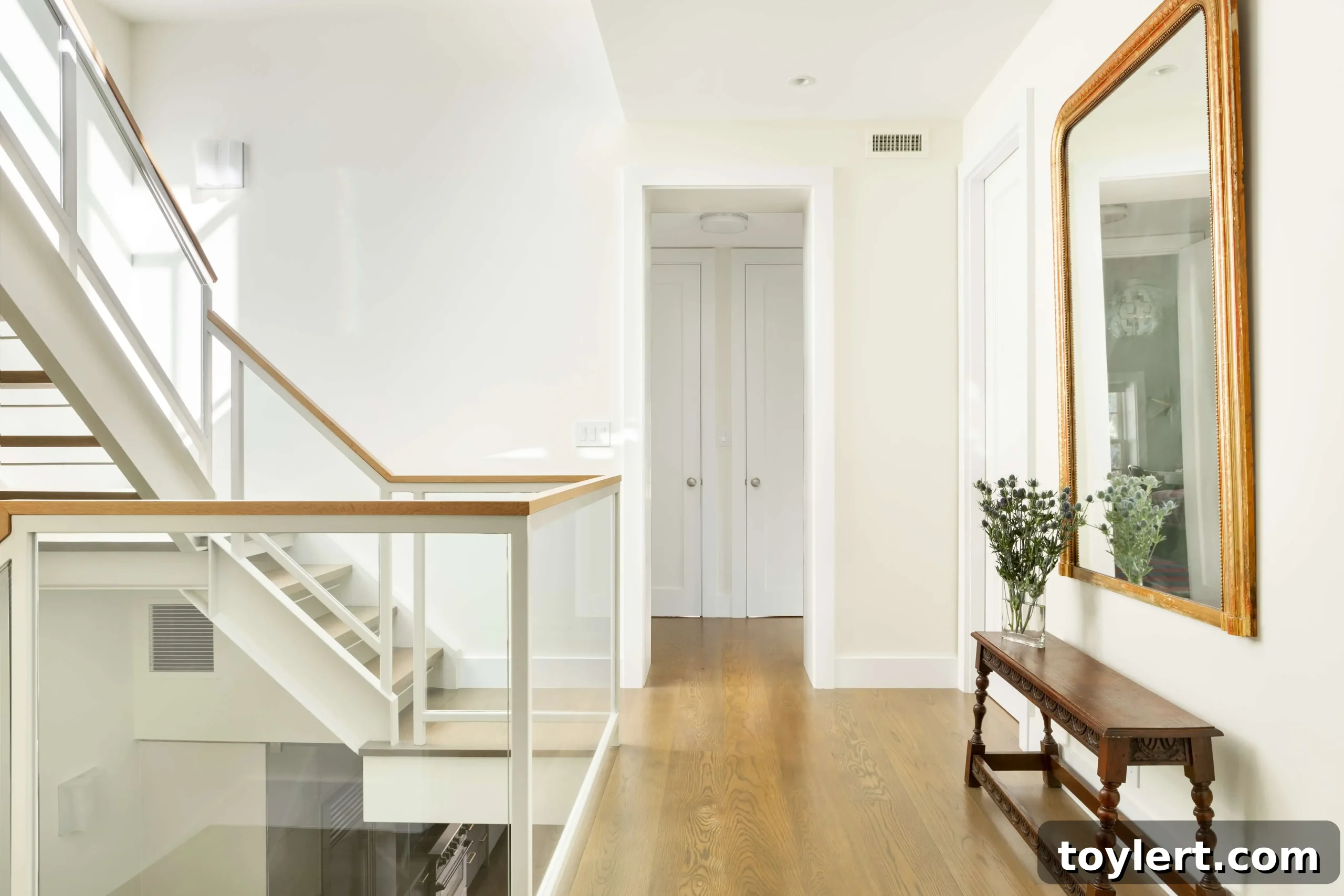
The transformation of the upper levels, particularly the old caretaker’s apartment, was central to creating ample living space. Neuhaus Design Architecture likely undertook a significant reconfiguration, possibly involving a roof addition as hinted in the original article’s URL, to expand the footprint and introduce new levels or double-height spaces. The goal was to dismantle the cramped, outdated layout and replace it with an open, airy design conducive to family interaction. This would involve carefully placed windows and skylights to flood the interiors with natural light, a crucial element for urban homes. The design would focus on creating a harmonious progression of spaces, from an inviting living area and a functional, modern kitchen to comfortable bedrooms and elegantly appointed bathrooms, all designed with the family’s daily routines and aesthetic preferences in mind.
Light, Air, and Materials: Crafting a Sanctuary in the City
Beyond structural changes, the success of the renovation hinged on meticulous attention to details concerning light, ventilation, and material selection. Neuhaus Design Architecture would have prioritized optimizing natural light penetration into every corner of the home, perhaps through strategically placed larger windows, light wells, or even a central atrium. Advanced ventilation systems would ensure fresh air circulation throughout the year, contributing to a healthy indoor environment. The choice of materials would be a deliberate blend of the durable and the delightful, honoring the building’s historic character with elements like exposed brick or restored original woodwork, while introducing contemporary finishes that offer comfort, style, and sustainability. This careful curation of materials would not only ensure longevity but also create a tactile richness that speaks to both the past and the present.
Outdoor Spaces: Urban Oases for Relaxation and Connection
Given the urban setting, integrating meaningful outdoor spaces would have been a high priority. The mention of a “roof addition” in the URL strongly suggests the creation of a rooftop terrace or deck. Such an addition would provide invaluable opportunities for outdoor dining, entertaining, or simply enjoying panoramic city views – a true luxury in Brooklyn. Even modest additions like a small courtyard garden at ground level, or charming window boxes, would serve to connect the interior living spaces with nature, offering a peaceful respite from the city’s hustle and bustle.
The Neuhaus Design Architecture Approach: Blending Heritage with Innovation
The successful transformation of this Brooklyn carriage house stands as a testament to Neuhaus Design Architecture’s distinctive approach. The firm excels at navigating the complexities of historic properties, understanding that true preservation involves not just restoration, but thoughtful adaptation for contemporary needs. Their process is deeply collaborative, ensuring that the clients’ vision, lifestyle, and aspirations are woven into every aspect of the design. Kimberly Neuhaus and her team demonstrate a profound ability to blend historical sensitivity with modern innovation, employing creative problem-solving to overcome spatial constraints and aesthetic challenges. Their work transforms functional structures into cherished homes that are both beautiful and eminently livable, providing a seamless continuum between past and future.
A New Chapter for a Historic Landmark
Through the expertise and vision of Neuhaus Design Architecture, this late 19th-century carriage house has been reborn. What was once a decaying, underutilized structure, marred by “decrepitude” and an archaic layout, has been transformed into a sophisticated, light-filled family home. The project successfully marries the irresistible charm and rich history of the original building with the demanding needs of modern urban living, including the much-prized parking. It serves as a shining example of adaptive reuse, demonstrating how historical properties can not only be preserved but also enhanced to serve new generations. For the family fortunate enough to call it home, this carriage house is more than just a residence; it is a vibrant narrative, a comfortable sanctuary, and a continuing legacy that honors its unique past while confidently embracing a new, contemporary chapter in the heart of Brooklyn.
Keywords for SEO:
Brooklyn carriage house renovation, historic home transformation, Neuhaus Design Architecture, Kimberly Neuhaus, adaptive reuse architecture, luxury urban living, Park Slope architecture firm, Clinton Hill historic renovation, family home design, modern-historic blend, residential architecture Brooklyn, historic property redesign, urban architectural solutions, bespoke home renovation, distinctive Brooklyn homes.