Exploring Brooklyn: A Tapestry of Development, Community, and Enduring Spirit
Brooklyn, a borough renowned for its rich history, vibrant culture, and diverse neighborhoods, continues to be a focal point for urban development and community dynamics in New York City. From soaring new residential towers and commercial investments to pressing environmental concerns and essential civic engagement, Brooklyn is a borough in constant motion. This dynamic evolution shapes its unique identity, presenting both opportunities for growth and challenges that require careful navigation. Let’s delve into some of the recent narratives that underscore Brooklyn’s multifaceted character, exploring how its various communities are adapting and thriving amidst rapid change.
Brooklyn’s Dynamic Real Estate Landscape: Investment and Transformation
The real estate market in Brooklyn remains a powerful engine of change, attracting significant investment and reshaping the urban fabric of numerous neighborhoods. This ongoing transformation is evident across the borough, from its bustling downtown core to emerging residential enclaves. Investors and developers are keenly focused on Brooklyn’s potential, driven by its growing population, strategic location, and undeniable appeal.
Major Commercial Deals Reshape Downtown Brooklyn
Downtown Brooklyn, a crucial economic hub, continues to draw substantial commercial interest. A prime example of this robust activity was highlighted by reports detailing Thor picking up 180 Livingston Street for an impressive $136 million. Such high-value transactions signify not only confidence in the area’s economic vitality but also a continued shift towards making Downtown Brooklyn a modern, dynamic center for business and retail. This investment reflects a broader trend of urbanization, where commercial properties are seen as strategic assets, contributing to job creation and enhancing the overall urban experience for residents and visitors alike. The acquisition of such a significant property further solidifies Downtown Brooklyn’s position as a premier destination for corporate and retail operations, cementing its status as a key player in the city’s commercial landscape.
New Hospitality Ventures in Greenwood Heights
Beyond the immediate downtown core, other Brooklyn neighborhoods are also experiencing significant development, particularly in the hospitality sector. In Greenwood Heights, for instance, revised filings indicated plans for an eight-story, 62-key hotel at 822 4th Avenue. This project, while modest in scale compared to downtown skyscrapers, points to the increasing demand for accommodation options in Brooklyn. As the borough becomes an increasingly popular destination for tourism and business travel, the need for new hotels in areas with excellent transportation links and neighborhood charm becomes paramount. Developments like this contribute to local economies, creating jobs and providing essential services for the influx of visitors eager to experience Brooklyn’s unique atmosphere and attractions.
Residential Expansion in Greenpoint
Further north, Greenpoint continues its trajectory of residential expansion, with new projects constantly breaking ground. The filing of permits for 29 Clay Street underscores the ongoing interest in this waterfront community. Greenpoint has long been attractive for its distinctive character, vibrant local businesses, and proximity to Manhattan. The continuous flow of new residential buildings aims to meet the demand for housing in this sought-after neighborhood, bringing new residents and further enriching the diverse tapestry of the area. However, such rapid growth also necessitates careful urban planning to ensure that infrastructure keeps pace with population density and that the unique character of Greenpoint is preserved.
Navigating Community Concerns: Governance, Safety, and Quality of Life
While development often dominates headlines, the pulse of Brooklyn truly lies in its communities. Addressing the everyday concerns of residents, ensuring public safety, and fostering effective governance are critical aspects of maintaining the borough’s liveability and vibrant spirit. Recent reports highlight both the challenges and the proactive efforts within Brooklyn’s neighborhoods to enhance the quality of life for all.
Accountability in Local Governance: The Brooklyn Borough President Meeting
Effective local governance relies heavily on accountability and consistent communication between city agencies and the communities they serve. A concerning report from the NY Post revealed that 60 percent of de Blasio’s agency representatives skipped a crucial Brooklyn Borough President meeting. Such absenteeism can hinder vital dialogues on borough-specific issues, undermining public trust and potentially delaying solutions to pressing community problems. These meetings are crucial platforms for local leaders to voice concerns, advocate for their constituents, and ensure that city-wide policies are effectively implemented at the neighborhood level. The incident underscores the importance of transparent and responsive governance to address the diverse needs of Brooklyn’s residents.
Addressing Safety Concerns in Bed-Stuy Crossings
Public safety, particularly for pedestrians, remains a paramount concern in densely populated urban areas. In Bed-Stuy, the community rallied for immediate action, asserting that safety changes were desperately needed at certain crossings following a tragic fatality. This heartbreaking incident brought into sharp focus the need for improved urban infrastructure and traffic management. Local residents and advocates often possess invaluable insights into dangerous intersections and design flaws, making their input essential for creating safer streets. Efforts to implement Vision Zero principles and other pedestrian-focused initiatives are vital to prevent future tragedies and foster a sense of security for all who navigate Brooklyn’s busy thoroughfares. Community advocacy plays a pivotal role in pushing for these critical improvements.
Balancing Aesthetics and Essential Repairs in Crown Heights
The aesthetic enhancement of urban spaces can significantly contribute to community pride and well-being. However, these efforts must not overshadow fundamental maintenance needs. Gothamist reported on a perplexing situation in Crown Heights where a Swedish firm beautifully beautified a building courtyard while seemingly ignoring leaking ceilings within the same property. This incident highlights a common tension in urban development and property management: the balance between superficial improvements and essential, often less visible, repairs. While attractive public spaces are valuable, neglect of basic living conditions can lead to significant resident dissatisfaction and long-term structural issues. It serves as a reminder that genuine quality of life improvements must encompass both the visible and the unseen aspects of urban living.
Environmental Stewardship: The Case of the Gowanus Canal
Brooklyn’s urban landscape is not solely defined by its buildings and streets but also by its natural and semi-natural features, including its waterways. The Gowanus Canal stands as a stark reminder of industrial legacy and the ongoing challenges of urban environmental cleanup. Yet, it also symbolizes resilience and the powerful impact of environmental activism.
Activism and the Gowanus Canal Cleanup
The Gowanus Canal, a Superfund site, is notorious for its heavy pollution, a legacy of its industrial past. Despite ongoing cleanup efforts, the canal frequently draws attention due to its environmental state. Activists like Christopher Swain have famously taken direct action to highlight the issue. Reports indicated that Swain planned another swim in the heavily polluted Gowanus Canal, a powerful, albeit controversial, form of protest designed to draw public attention to the waterway’s condition. Such acts, alongside sustained community organizing and scientific monitoring, pressure authorities and developers to prioritize and expedite comprehensive environmental remediation. The future of the Gowanus Canal is a complex narrative of ecological restoration, community engagement, and responsible urban planning, aiming to transform a hazardous waterway into a safe and integrated part of the Brooklyn landscape.
The Heart of Brooklyn: Green Spaces and Urban Sanctuary
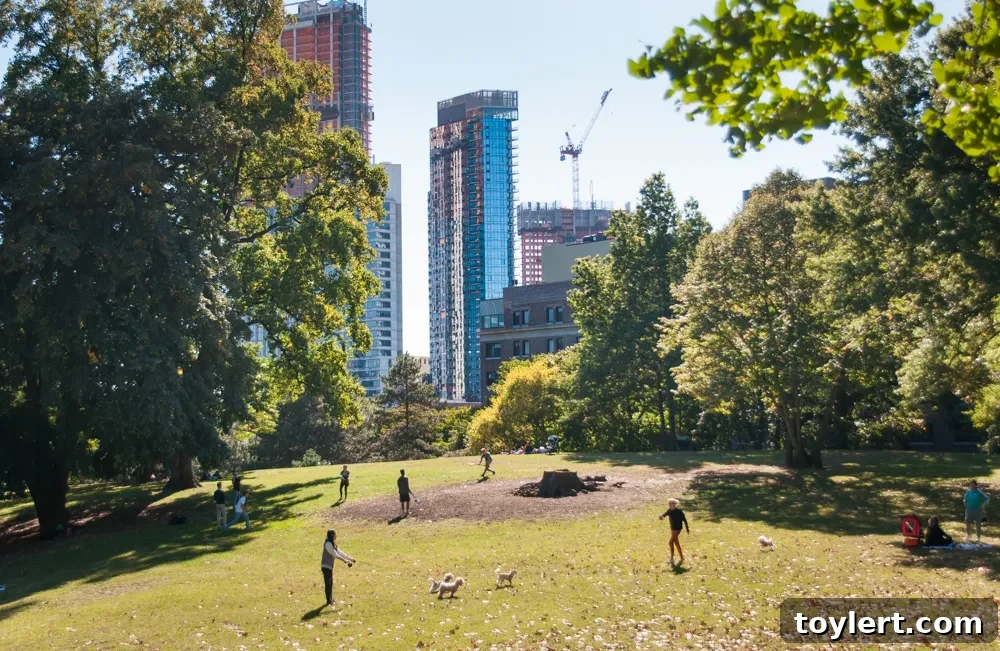
Amidst the bustle of development and civic challenges, Brooklyn’s green spaces offer essential respite and play a crucial role in the borough’s quality of life. Parks like the iconic Fort Greene Park serve as vital lungs for the city, providing residents with opportunities for recreation, relaxation, and community gathering. The image of Fort Greene Park, captured by Mary Hautman, beautifully illustrates its serene yet vibrant atmosphere.
Fort Greene Park: A Historical Oasis
Fort Greene Park, with its commanding views, historic monuments, and lush landscapes, is much more than just a patch of green. Designed in part by Frederick Law Olmsted and Calvert Vaux, the visionary landscape architects behind Central Park, it is a testament to the importance of natural beauty in an urban setting. The park serves as a community anchor for the Fort Greene neighborhood and beyond, hosting countless events, providing space for exercise, and offering a peaceful retreat from the surrounding city. Its preservation and ongoing maintenance are crucial for the well-being of Brooklynites, underscoring the intrinsic value of accessible green spaces in fostering mental and physical health, social cohesion, and environmental sustainability within a dense urban environment. The park embodies Brooklyn’s commitment to balancing urban development with opportunities for natural engagement and historical preservation.
Beyond the Headlines: Brooklyn’s Unfolding Narrative
Brooklyn’s narrative is one of constant evolution, marked by an intricate interplay of ambitious development, persistent community advocacy, and dedicated environmental stewardship. The snippets of news, from multi-million dollar real estate deals in Downtown Brooklyn and new hotels in Greenwood Heights to the ongoing fight for pedestrian safety in Bed-Stuy and the symbolic swims in the Gowanus Canal, all contribute to a larger story. It is a story of a borough that embraces change while fiercely protecting its identity and advocating for its residents. As Brooklyn continues to grow and adapt, its resilience, diversity, and unwavering community spirit will undoubtedly remain its defining characteristics, making it one of the most compelling places to live, work, and explore in the world.
[Fort Greene Park | Photo: Mary Hautman]