Greenpoint Landing: The Dawn of a New Waterfront Era in Brooklyn
The urban landscape of New York City is constantly evolving, with Brooklyn’s waterfront emerging as a vibrant canvas for ambitious development projects. Among these, Greenpoint Landing stands out as a colossal undertaking set to redefine the Greenpoint neighborhood. Spearheaded by developer Park Tower Group, this hotly debated megaproject has officially commenced its journey, marking a significant milestone with the filing of a building application for its inaugural structure: a six-story mixed-use building located at 21 Commercial Street.
This initial phase, while a mere prelude to the larger vision, is critical in setting the tone for the entire development. Designed by the esteemed Handel Architects, known for their innovative and impactful urban designs, the building at 21 Commercial Street is more than just a blueprint; it represents the tangible beginning of a monumental transformation. According to detailed plans outlined in a new building application filed, this impressive 85,033-square-foot structure will seamlessly blend ground-floor commercial space with 93 modern residential units. Its strategic placement on prime Greenpoint waterfront land underscores the project’s commitment to creating a dynamic, integrated community that capitalizes on its unparalleled location and breathtaking views.
The Vision Unfolds: More Than Just Buildings
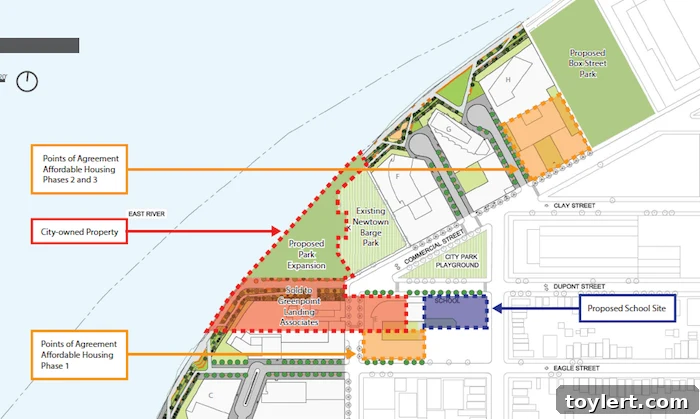
Greenpoint Landing is far from being just another residential complex; it is envisioned as a comprehensive, self-sustaining community designed to cater to a diverse array of needs. The 20-acre megadevelopment, once fully realized, will dramatically reshape the Brooklyn skyline and offer a new paradigm for urban living. The master plan includes the construction of ten towering structures, ranging from 30 to 40 stories in height, which will introduce thousands of new homes to the area. This scale of development reflects a significant investment in the future of Greenpoint and its potential to accommodate a growing population while enhancing the urban fabric.
Beyond residential towers, the developers have meticulously planned for essential community infrastructure. A new K-8 school is a cornerstone of the project, addressing the critical need for educational facilities in a rapidly expanding neighborhood. This commitment to local education ensures that families moving into Greenpoint Landing will have immediate access to quality schooling, fostering a vibrant, family-friendly environment. Equally important is the promise of extensive public parkland. These green spaces are not merely aesthetic additions but serve as vital recreational hubs, offering residents and the wider Greenpoint community much-needed access to nature, waterfront promenades, and outdoor activities, thereby enhancing the quality of life and promoting a healthier urban lifestyle.
Addressing Community Concerns: Affordability and Accessibility
The journey of Greenpoint Landing through the city’s approval processes was not without its challenges. The project faced significant opposition from segments of the Greenpoint community. Concerns ranged from increased density and potential strain on existing infrastructure to the impact on the neighborhood’s unique character and, crucially, the availability of affordable housing. Recognizing these valid anxieties, the developers made significant concessions and commitments to ensure the project would benefit the broader community.
One of the most impactful promises made was the dedication of 431 apartments to be “permanently affordable.” This commitment is vital for maintaining socioeconomic diversity within the new community and ensuring that a portion of the housing remains accessible to individuals and families across various income brackets. Such provisions are increasingly critical in New York City’s competitive housing market, making Greenpoint Landing a model for inclusive urban development. Furthermore, acknowledging Greenpoint’s transportation challenges, particularly its reliance on the G train, developers pledged to run a dedicated shuttle service between the development and the nearest G train station. This initiative aims to enhance connectivity and mitigate potential transit burdens, making daily commutes more convenient for future residents.
Navigating the ULURP Process and City Council Approval
Like all major developments in New York City, Greenpoint Landing had to successfully navigate the Uniform Land Use Review Procedure (ULURP). This rigorous, months-long public review process involves multiple city agencies and community boards, providing ample opportunity for public input and debate. Despite the strong community opposition and the complex nature of the project, Greenpoint Landing cleared all the ULURP hurdles in the fall, demonstrating the developer’s ability to address concerns and secure the necessary approvals.
The culmination of this extensive review process was the project’s final approval by the City Council in December. This approval signified a critical endorsement from the city’s legislative body, paving the way for construction to begin and transforming years of planning and negotiation into tangible progress. The City Council’s decision reflected a balance between development needs, economic growth, and community welfare, setting the stage for one of Brooklyn’s most ambitious waterfront revitalizations.
The Broader Impact: Reshaping Greenpoint’s Identity
The Greenpoint Landing project is poised to have a profound and lasting impact on the Greenpoint neighborhood. Historically an industrial waterfront, Greenpoint is steadily transitioning into a dynamic residential and commercial hub. This development accelerates that transition, bringing with it not only new housing but also commercial spaces that will foster local businesses, create jobs, and stimulate economic growth within the community. The ground-floor commercial spaces in buildings like 21 Commercial Street are designed to activate street life, providing convenient amenities for residents and drawing visitors to the area.
Moreover, the influx of residents will support existing local businesses and encourage the establishment of new ones, creating a ripple effect throughout the local economy. While concerns about gentrification and the displacement of long-time residents are often associated with developments of this scale, the inclusion of permanently affordable housing units aims to mitigate some of these issues, striving for a more equitable form of urban revitalization. The public park and waterfront access will also serve as a communal amenity, offering recreational opportunities that were previously unavailable or limited, thus enhancing the overall livability and appeal of Greenpoint.
Architectural Excellence and Urban Integration
Handel Architects’ involvement underscores a commitment to design excellence. Known for their ability to craft buildings that are both aesthetically pleasing and highly functional, their design for 21 Commercial Street and the broader Greenpoint Landing project will undoubtedly contribute to a distinctive architectural identity for the area. The challenge in such large-scale developments lies in creating structures that stand out while seamlessly integrating with the surrounding urban fabric. Handel Architects’ approach often emphasizes contextual design, ensuring that new buildings complement and enhance their environment rather than overpowering it.
The integration of green spaces, pedestrian pathways, and thoughtful urban planning will be crucial in making Greenpoint Landing a cohesive and welcoming community. The development aims to create a vibrant streetscape where residents can live, work, and recreate without having to travel far. This holistic approach to urban design is essential for fostering a strong sense of place and community, making Greenpoint Landing not just a collection of buildings but a true neighborhood within the larger tapestry of Brooklyn.
A Glimpse into the Future: A Transformed Waterfront
The groundbreaking at 21 Commercial Street marks the beginning of a multi-decade journey that will culminate in a thoroughly transformed Greenpoint waterfront. Greenpoint Landing is more than just a real estate venture; it is an ambitious experiment in urban renewal, aiming to create a thriving, inclusive community on what was once industrial land. Its completion will represent a significant chapter in New York City’s ongoing narrative of growth and adaptation, offering a blueprint for how large-scale developments can address housing needs, provide public amenities, and stimulate economic vitality.
As construction progresses, the eyes of the city will remain on Greenpoint, watching this ambitious vision take shape. The project’s success will be measured not just by the towers that rise but by the community that flourishes within them, the accessibility it provides, and its ability to enrich the lives of both new and existing Greenpoint residents. Greenpoint Landing stands as a powerful testament to the enduring potential of urban waterfronts and the relentless drive to innovate and build for the future in one of the world’s most dynamic cities.