Editor’s note: This article offers an expanded exploration into the rich history and enduring significance of Fort Greene Park, delving deeper into its past and present as a cherished Brooklyn landmark.
Fort Greene Park: Brooklyn’s Historic Oasis and Revolutionary War Legacy
Nestled in the heart of Brooklyn, Fort Greene Park stands as a testament to history, resilience, and community spirit. Originally christened Washington Park, it holds the distinguished title of Brooklyn’s very first public park. More than just a verdant escape from urban life, this iconic green space carries with it a profound legacy, deeply rooted in the earliest chapters of American independence and the thoughtful evolution of urban planning.
From its commanding position, rising majestically above the shimmering waters of Wallabout Bay, the land on which Fort Greene Park now rests was once a critical defensive stronghold during the tumultuous years of the American Revolutionary War. It was here that Fort Putnam was strategically established, a key bastion against the encroaching British forces. Under the astute leadership of Major General Nathaniel Greene – the very figure who would later lend his name to the park – and the engineering prowess of Rufus Putnam, a formidable star-shaped earthen defense point was meticulously constructed at the summit of the hill. This strategic outpost was armed with a battery of four or five cannons, a vital arsenal in the fledgling nation’s fight for freedom.
The fort was not merely a cluster of cannons; it was a well-provisioned military installation. It boasted its own well to ensure a steady supply of water for its defenders and was stocked with provisions to sustain the troops during prolonged engagements. Further enhancing its defensive capabilities, a deep ditch was meticulously dug around the fort, creating an additional barrier to isolate it from direct assault. To ensure maximum visibility and deny cover to enemy forces, the surrounding forest was systematically cleared, leaving behind a formidable landscape of pointed tree trunks and bristling limbs that extended outward from the clearing, designed to impede any advance. Despite these extensive preparations and the valiant efforts of its defenders, the overwhelming might of the British forces during the Battle of Long Island in August 1776 rendered these defenses insufficient, leading to a strategic American retreat, but not before demonstrating fierce resolve.
The Battle of Long Island and the Prison Ship Martyrs
The story of Fort Greene Park is inextricably linked to one of the most pivotal and tragic episodes of the Revolutionary War: the Battle of Long Island. While the strategic fortifications of Fort Putnam were designed to protect vital routes and positions, the sheer numerical superiority and tactical advantage of the British forces, led by General William Howe, proved overwhelming for General George Washington’s Continental Army. The battle resulted in a significant defeat for the Americans, forcing a perilous nighttime evacuation across the East River to Manhattan, a maneuver that saved Washington’s army but left thousands captured.
The aftermath of this battle saw a humanitarian catastrophe unfold in Wallabout Bay. Thousands of American prisoners of war were confined to overcrowded, disease-ridden British prison ships anchored in the bay. These horrific floating dungeons became death traps, where an estimated 11,000 men perished from starvation, neglect, and disease – a casualty count far exceeding those lost in combat during the entire war. For decades, their remains were interred in shallow graves along the Wallabout shoreline, their sacrifices largely uncommemorated.
It was this profound tragedy that ultimately led to the creation of one of Fort Greene Park’s most solemn and significant landmarks: the Prison Ship Martyrs’ Monument. The idea of honoring these forgotten heroes gained momentum in the late 19th century, culminating in the monument’s dedication in 1908. Designed by the renowned architect Stanford White of the prestigious firm McKim, Mead & White, the monument stands as a towering Doric column, rising over 100 feet from the crypt below. This crypt serves as the final resting place for the bone fragments of those who perished on the prison ships, gathered from their original burial sites. The monument is not merely a memorial; it is a powerful symbol of sacrifice and a permanent reminder of the immense cost of American freedom, drawing visitors from across the nation to reflect on this crucial, yet often overlooked, aspect of the Revolutionary War.
From Fort to Park: The Visionaries Behind Brooklyn’s First Green Space
The transformation of this historic military site into Brooklyn’s first public park was a visionary undertaking that reflected the growing understanding of the importance of green spaces in urban environments during the 19th century. In 1847, the city of Brooklyn officially designated the land as Washington Park, setting the stage for its metamorphosis. However, it was not until the genius of two landscape architecture titans, Frederick Law Olmsted and Calvert Vaux, was brought to bear that Fort Greene Park began to take its modern shape.
Olmsted and Vaux, celebrated for their groundbreaking work on Central Park in Manhattan and Prospect Park also in Brooklyn, were tasked with designing a serene and accessible public park that would respect its historical foundations while providing much-needed recreational and aesthetic value to the burgeoning borough. Their design for Fort Greene Park, unveiled in the 1860s, masterfully incorporated the dramatic topography of the land. They envisioned a park that would offer sweeping vistas, gentle pathways, and intimate groves, all carefully integrated to enhance the natural beauty of the site and create a sense of tranquility and order amidst the urban bustle. The initial plans included winding paths, strategically placed trees and shrubs to frame views, and seating areas that encouraged relaxation and contemplation. The idea was to create an “urban resort” where residents could escape the pressures of city life and reconnect with nature.
Their design principles emphasized creating a distinct character for Fort Greene Park, differentiating it from their larger, more expansive projects. The park’s elevated position was leveraged to provide stunning panoramic views of the surrounding city, a feature that remains a highlight for visitors today. The winding pathways were designed not just for casual strolls but to guide visitors through varied landscapes, offering different perspectives and experiences within a relatively compact space. Olmsted and Vaux understood the unique challenges and opportunities presented by Fort Greene Park’s historical significance and its prominent location, crafting a design that paid homage to its past while looking firmly towards the future as a vital public amenity.
Architectural Grandeur: The Comfort Station and McKim, Mead & White’s Legacy
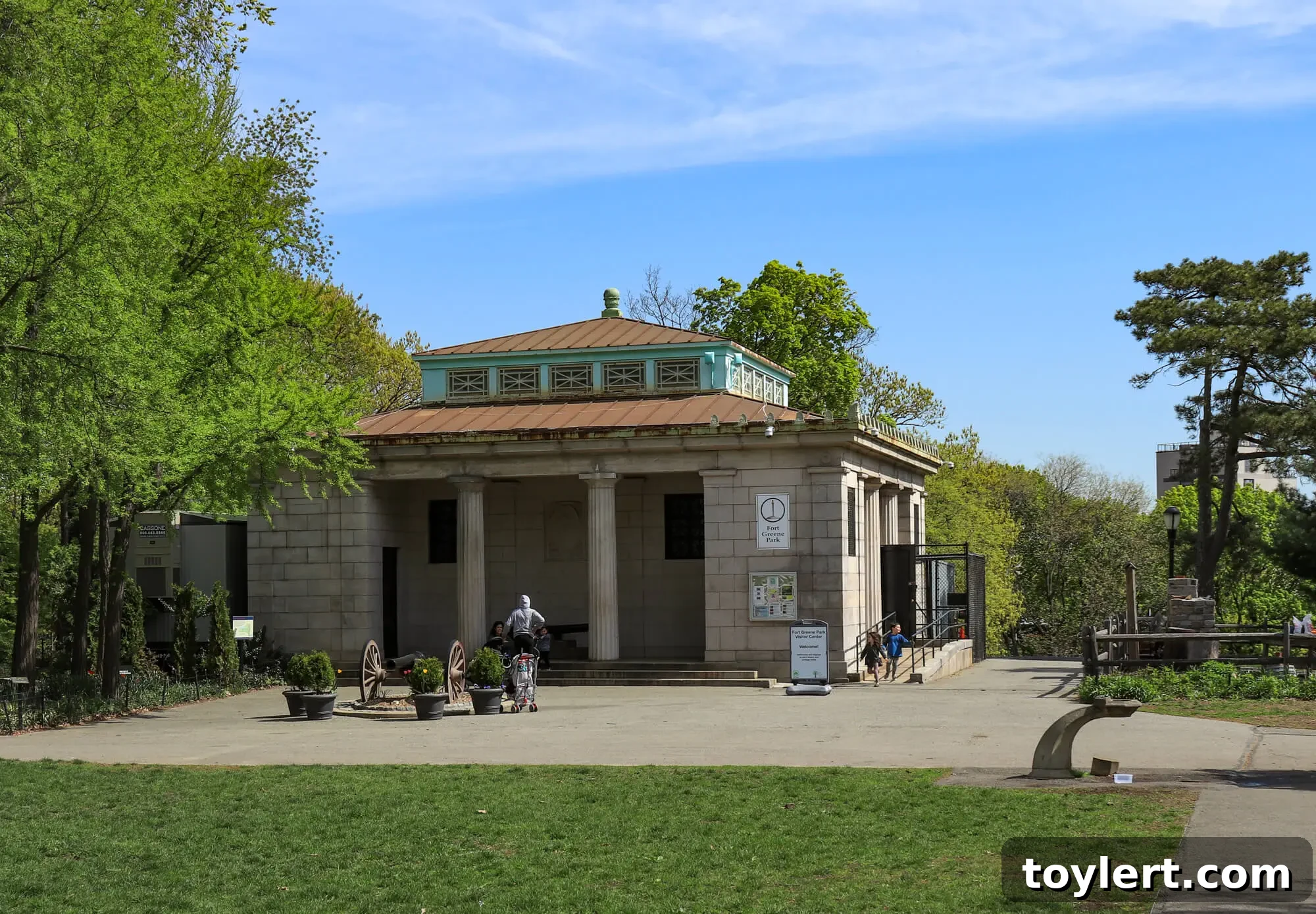
Beyond its landscape design, Fort Greene Park also boasts significant architectural contributions, further solidifying its status as a historical and cultural landmark. One such notable structure is the park’s elegant Comfort Station, an often-overlooked yet architecturally significant building. This facility was also designed by the illustrious firm of McKim, Mead & White, the same architectural masters responsible for the Prison Ship Martyrs’ Monument and countless other iconic structures across New York City and beyond.
Built in the classical revival style, the Comfort Station embodies the firm’s commitment to combining aesthetic beauty with functional design. Its stately facade, adorned with classical details, blends harmoniously with the park’s natural surroundings, reflecting the era’s belief that public amenities should be both practical and beautiful. The firm, known for its Beaux-Arts influence and its ability to imbue public buildings with a sense of grandeur and permanence, ensured that even a utility building like a comfort station contributed to the overall elegance and dignity of Fort Greene Park. Its presence underscores the comprehensive vision for the park, where every element, from the layout of paths to the design of public facilities, was carefully considered to enhance the visitor experience and contribute to the park’s distinguished character.
The architectural elements within Fort Greene Park are more than just functional structures; they are integral parts of its narrative, bridging its military past with its civic present. The meticulous design of the monument and the thoughtful construction of the comfort station reflect an era when public works were seen as opportunities to create lasting beauty and impart a sense of civic pride. These structures serve not only their intended purposes but also as educational tools, silently narrating tales of heroism, sacrifice, and the evolution of urban design.
A Community Jewel: Fort Greene Park Today
Today, Fort Greene Park continues to thrive as a dynamic and indispensable resource for the vibrant community of Fort Greene and indeed, for all of Brooklyn. It is a place where history resonates with contemporary life, where the echoes of the past meet the laughter of children and the peaceful murmur of conversations.
The park serves as a beloved urban oasis, offering a diverse array of activities and spaces for relaxation and recreation. Its rolling hills and mature trees provide a serene backdrop for leisurely strolls, morning jogs, and dog walks. The sprawling lawns are perfect for picnics, sunbathing, and impromptu games, drawing families and friends alike. Playgrounds buzz with the energy of young children, while basketball and tennis courts offer outlets for active pursuits. Throughout the year, Fort Greene Park hosts numerous community events, from outdoor concerts and film screenings to farmers’ markets and fitness classes, solidifying its role as a central gathering place that fosters connection and strengthens neighborhood bonds.
Beyond its recreational offerings, the park remains a vital educational site. The Prison Ship Martyrs’ Monument stands as a somber yet inspiring focal point, inviting contemplation and encouraging a deeper understanding of the sacrifices made during the nation’s fight for independence. Interpretive signs and historical markers throughout the park help visitors connect with its rich past, making a visit not just a recreational outing but also a journey through time.
Fort Greene Park is more than just green space; it is a living monument to Brooklyn’s history, a masterpiece of landscape architecture, and a cherished public amenity that continues to enrich the lives of countless individuals. From its strategic role in the Revolutionary War to its thoughtful design by visionary landscape architects and its enduring legacy as a community hub, Fort Greene Park exemplifies the enduring power of urban green spaces to connect us to our past, nurture our present, and inspire our future.