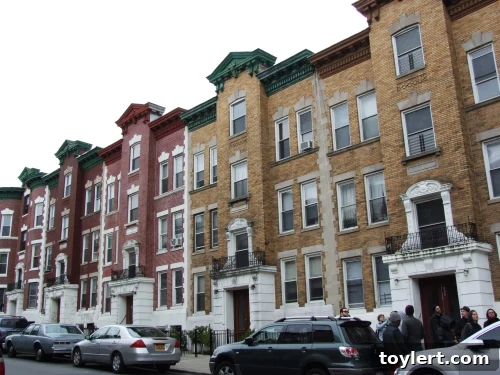
The Enduring Legacy of Brooklyn’s Tenement Buildings: A Journey Through History and Architecture
Brooklyn, one building at a time. This powerful phrase encapsulates the essence of a borough whose identity is intricately woven into the fabric of its diverse architectural landscape. Among its most iconic and historically significant structures are the tenement buildings, often misunderstood yet undeniably pivotal to Brooklyn’s development. These resilient edifices, such as the one historically located at 442-472 40th Street, are more than just brick and mortar; they are living testaments to the immigrant experience, urban growth, and the enduring spirit of community that defines this vibrant New York City borough. They represent a cornerstone of Brooklyn’s past and continue to shape its present character.
Unveiling Brooklyn’s Tenements: A Glimpse into the Past
The term “tenement” often evokes images of cramped, unsanitary living conditions, a reality for many residents during the late 19th and early 20th centuries. However, to truly appreciate Brooklyn’s architectural heritage, it’s crucial to understand the profound historical context that led to the widespread construction of these buildings. As New York City, and Brooklyn in particular, experienced unprecedented population booms driven by rapid industrialization and successive waves of immigration, there arose an urgent and critical need for affordable housing. Tenement buildings emerged as the primary solution, providing essential shelter for millions arriving from Europe and other corners of the globe, all eager to embark on new lives in America.
These structures were typically multi-story, utilitarian dwellings meticulously designed to maximize occupancy on often narrow and deep urban lots. While early designs frequently suffered from a lack of adequate natural light, ventilation, and sanitation facilities, subsequent housing reforms led to significant improvements. Key among these was the landmark Tenement House Act of 1901, widely known as the “New Law.” This progressive legislation mandated better light and air shafts, larger courtyards, and improved fire safety measures, fundamentally transforming the living standards within these buildings and establishing new, higher precedents for urban housing development that would influence cities nationwide.
Architectural Distinctives: Form and Function in Urban Brooklyn
The Signature Style of Brooklyn Tenements
Brooklyn’s tenement buildings exhibit a distinct architectural character that vividly reflects the specific era of their construction. Primarily built from robust and durable materials such as brick, often beautifully complemented by brownstone or terra cotta detailing, they stand as sturdy, unwavering sentinels lining countless streets throughout the borough. Their facades typically feature repeating window patterns, frequently adorned with simple yet elegant lintels and sills, emphasizing practicality and function over elaborate, purely ornamental flourishes. Fire escapes, though often added later in many instances as a critical safety requirement following regulations, have become an iconic and immediately recognizable visual element, crisscrossing the fronts of these buildings and significantly contributing to their unique, gritty urban aesthetic. These buildings are a masterclass in making the most of limited space, a testament to the ingenuity of their time.
Beyond their distinctive exteriors, the internal layout of tenements was ingeniously designed for maximum efficiency in a compact footprint. Apartments were often arranged in a “railroad” style, meaning rooms were positioned one after another without a central hallway, necessitating passage through one room to reach the next. While challenging by contemporary standards, these layouts inadvertently fostered incredibly close-knit family units and communal living. The ground floors of many tenements often housed small businesses, from bakeries and grocery stores to tailor shops, contributing immensely to the self-sufficient nature of immigrant communities and generating vibrant, bustling street-level activity that characterized these dynamic neighborhoods.
Evolution of Design and Living Standards: Old Law vs. New Law
The architectural evolution of tenements, particularly the shift from “Old Law” to “New Law” designs, marked a truly pivotal moment in urban planning and public health reform. Old Law tenements, constructed predominantly before 1879, gained notoriety for their notoriously dark, airless interior rooms, which often relied on narrow, unventilated air shafts that became unfortunate breeding grounds for disease. The innovative, yet ultimately flawed, “dumbbell” tenement design was an early attempt to address the critical issues of light and air with an indented shape that created interior light wells, but it still fell short of providing truly adequate conditions.
The groundbreaking New Law, enacted in 1901, however, mandated much wider light courts, the installation of indoor plumbing (including a toilet in each apartment), and vastly improved ventilation systems, fundamentally altering the quality of life for tenement residents. These transformative legislative changes not only dramatically improved living conditions but also profoundly shaped the physical appearance of subsequent tenement constructions, making them noticeably more spacious and introducing essential elements like larger windows and more robust fire prevention features. The enduring presence of both Old and New Law tenements across Brooklyn’s diverse neighborhoods offers a tangible, architectural timeline of urban reform, social progress, and continuous adaptation.
Life Within the Walls: Stories of Community and Resilience
For generations of immigrants, tenement buildings were far more than mere residences; they served as crucial gateways to a brand new world. They functioned as bustling hubs where diverse cultures converged, new languages were gradually learned, and vibrant communities were forged out of both necessity and shared experiences. Families, often large and multigenerational, lived in close quarters, a reality that fostered remarkably strong bonds and mutual support systems. The stoop, a ubiquitous feature of these buildings, transcended its utilitarian purpose to become a vital social space – a cherished place for neighbors to gather, children to play, and news to be exchanged. This embodies the very spirit of “Brooklyn, one building at a time,” as individual homes collectively contributed to a larger, vibrant, and interconnected neighborhood fabric.
Life in a tenement was undoubtedly challenging, often marked by relentless hard work, economic hardship, and the unwavering pursuit of opportunity. Yet, these buildings also played an instrumental role in facilitating the rise of distinct ethnic enclaves, allowing new arrivals to preserve their cherished cultural traditions while simultaneously integrating into the broader American society. From bustling kitchens filled with the comforting aromas of diverse cuisines to shared courtyards where children of different backgrounds played together, tenements were true crucibles of cultural exchange, adaptation, and profound human resilience. They nurtured generations of Brooklynites, many of whom went on to achieve great success and leave an indelible mark on the borough, forever carrying the memories of their early lives within these humble, yet immensely significant, structures.
Brooklyn’s Enduring Character: Tenements Today
Preserving History, Embracing Modernity
Today, many of Brooklyn’s historic tenement buildings have undergone significant and remarkable transformations, evolving far beyond their original utilitarian function. While some conscientiously continue to provide much-needed affordable housing, a substantial number of others have been meticulously renovated and thoughtfully converted into stylish, highly sought-after apartments, reflecting the borough’s ongoing revitalization and gentrification. Developers, architects, and preservationists alike increasingly recognize the inherent charm, robust structural integrity, and historical value of these buildings, often striving diligently to maintain their distinctive historical facades while comprehensively updating their interiors to meet contemporary standards of comfort, luxury, and sustainable living.
The enduring appeal of these buildings lies not solely in their robust, time-tested construction but equally in the rich, compelling narratives they contain. They stand as powerful visual reminders of Brooklyn’s layered and complex past, serving as tangible testaments to the arduous journeys and vibrant lives of millions who built their homes and futures here. Walking through historically rich neighborhoods like Sunset Park, Bushwick, or specific parts of Brownsville, one can still observe endless rows of these distinctive buildings, each with its own unique story, collectively contributing to the borough’s distinctive streetscape and defining urban identity. These buildings are not merely relics; they are active participants in Brooklyn’s ongoing story.
The Tenement’s Legacy in Brooklyn’s Urban Fabric
The legacy of Brooklyn’s tenement buildings is profoundly multifaceted and deeply ingrained in the borough’s character. They stand as enduring symbols of urban resilience, human adaptation, and the relentless pursuit of opportunity in the face of adversity. They represent a crucial and indelible chapter in American urban history, vividly illustrating how rapidly growing cities grappled with the immense challenges of accommodating diverse and expanding populations. Moreover, they embody a distinct architectural typology that, despite its humble and often utilitarian origins, has proven remarkably adaptable, structurally sound, and aesthetically enduring.
As Brooklyn continues its dynamic evolution and reinvention, these buildings serve as an invaluable anchor to its storied past, reminding residents and visitors alike of the borough’s profound historical depth and the struggles and triumphs that shaped it. They are integral to the aesthetic, social, and cultural landscape, contributing significantly to the unique, inimitable character that makes Brooklyn one of the most dynamic, diverse, and sought-after places to live in the world. Their story is, in essence, the very story of Brooklyn itself—a rich narrative of continuous transformation, deeply rooted in a strong sense of community, unwavering resilience, and a profound appreciation for its vibrant, lived history.