By Reuven Blau
This article was originally published on by THE CITY
Clinton Hill’s Costly Demolition: A Decade of Dereliction and Delayed Action
New York State Faces $3.7 Million Bill for Neglected Fulton Street Property
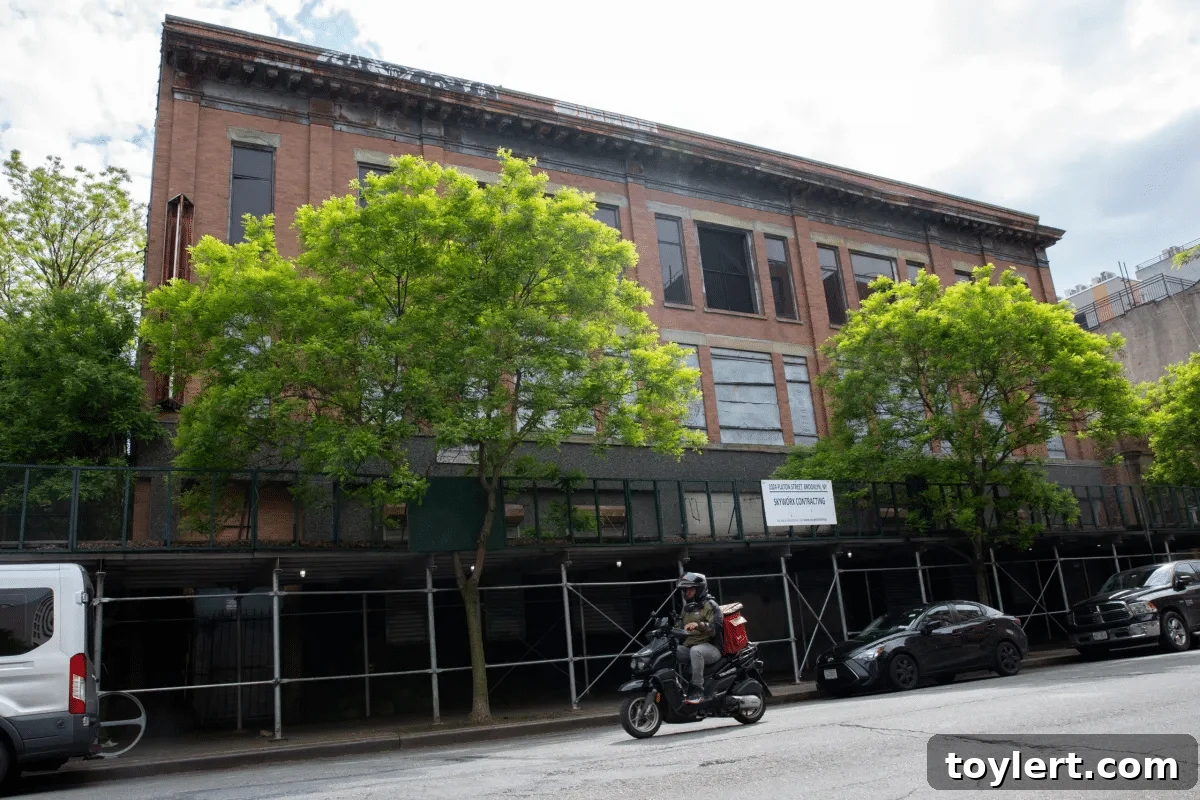
A decade after a local Assembly member intervened to halt its sale, a state-owned building in Brooklyn’s vibrant Clinton Hill neighborhood, specifically at 1024 Fulton Street, is finally slated for demolition. This long-awaited action comes with a staggering price tag for New York State taxpayers: an estimated $3.7 million. The saga of this derelict property highlights significant concerns regarding government property management, bureaucratic inertia, and the ultimate cost of prolonged inaction.
The decision to demolish the building, which has stood as a decaying eyesore in a rapidly gentrifying area, closes a chapter fraught with missed opportunities and mounting expenses. What began as an attempt to re-envision the site for community benefit or responsible development ultimately spiraled into a decade of neglect, culminating in a costly demolition that could have been avoided with more decisive and timely action.
The Genesis of Neglect: A Political Intervention
The story of the 1024 Fulton Street property dates back to a crucial intervention by then-Assembly Member Walter Mosley. Around ten years ago, when the state was considering selling the property, Mosley stepped in to block the transaction. While the precise reasons for his intervention varied, they generally revolved around concerns that a direct sale might not serve the best interests of the Clinton Hill community. There was hope for a more deliberate process, perhaps one that could lead to affordable housing, a community facility, or a development project more aligned with local needs and aspirations, rather than a quick sale to the highest bidder.
Mosley’s move, though well-intentioned, set in motion a chain of events that trapped the building in a bureaucratic limbo. Instead of leading to a swift, community-focused development, the property languished. Without a clear pathway forward for development or maintenance, the building steadily deteriorated. What was once a potentially valuable asset became a liability, a stark monument to stalled progress and administrative oversight.
A Symbol of Failed Intervention and Bureaucratic Stagnation
The description of the building as a “monument to Hochul officials failed intervention” from the original reporting underscores a deeper issue of governmental accountability. While the initial intervention predates Governor Kathy Hochul’s administration, the prolonged dereliction and the eventual, costly demolition fall squarely within the period where her administration, or its predecessors, could have acted more decisively. The extended delay suggests a lack of urgency, coordination, or strategic planning among state agencies responsible for managing public assets.
Over the past decade, the property at 1024 Fulton Street became more than just an abandoned structure; it transformed into a glaring symbol of urban decay amidst Brooklyn’s renaissance. Its state of disrepair undoubtedly impacted the aesthetic appeal and perceived safety of the surrounding blocks in Clinton Hill, a neighborhood known for its historic brownstones and vibrant commercial corridors. For local residents and businesses, the sight of a crumbling state-owned building served as a constant reminder of government inefficiency and unfulfilled promises.
The Hefty Price Tag: What $3.7 Million Means for Taxpayers
The $3.7 million estimated cost for demolition is a significant sum, especially when considering the opportunity cost. This amount of taxpayer money could have been allocated to numerous other pressing needs within New York State, from funding educational programs and improving public infrastructure to supporting vital social services. Instead, it is being spent to undo a decade of neglect – to remove a structure that, at one point, held potential value.
Had the property been sold a decade ago, even without a grand redevelopment plan, the state could have avoided years of potential liabilities, security costs, and the eventual expense of demolition. Furthermore, the sale itself could have generated revenue. The $3.7 million reflects not just the physical cost of tearing down a building, but also the compounded financial burden of delayed decision-making and poor asset management.
It raises critical questions about how New York State manages its vast portfolio of properties. Are there clear protocols for identifying underutilized or derelict assets? What mechanisms are in place to ensure timely action and prevent similar situations from recurring? The Clinton Hill case serves as a costly lesson in the importance of efficient governmental stewardship.
Community Impact and Future Prospects for 1024 Fulton Street
For the residents of Clinton Hill, the derelict building has long been a source of frustration. Beyond its unsightly appearance, abandoned properties often attract unwanted activity, raising concerns about safety and contributing to a decline in neighborhood morale. Property values in the immediate vicinity might also have been indirectly affected by the presence of a neglected structure.
The upcoming demolition, while costly, offers a glimmer of hope. Once the site is cleared, it presents a blank canvas for future development. The critical question now shifts from “when will it be torn down?” to “what will rise in its place?” The community of Clinton Hill, having endured a decade of uncertainty, deserves a transparent and inclusive process for determining the future of this prime piece of real estate on Fulton Street.
Potential uses for the newly vacant lot are numerous and varied. It could become the site for much-needed affordable housing, addressing the ongoing housing crisis in New York City. Alternatively, it could be developed into a mixed-use commercial and residential building, providing jobs and services while contributing to the local tax base. A green space or a new community center could also greatly benefit the neighborhood, enhancing its quality of life and providing essential public amenities. Regardless of the specific plan, prioritizing community engagement and ensuring the swift implementation of the next phase will be crucial to avoid repeating the mistakes of the past.
Lessons in Public Asset Management
The Clinton Hill saga offers valuable lessons for New York State and other municipalities managing public assets. Effective public asset management requires a proactive approach, clear lines of accountability, and a willingness to make timely decisions, even when faced with complex political considerations. Allowing properties to fall into such extreme states of disrepair not only incurs significant financial costs but also erodes public trust and deprives communities of potential benefits.
Moving forward, state officials must evaluate the processes that led to this decade-long standstill. Implementing stricter timelines for property assessment, sale, or redevelopment, fostering greater inter-agency cooperation, and ensuring robust community input can prevent similar costly delays. The goal should be to transform public assets into sources of community benefit and economic vitality, rather than allowing them to become liabilities and symbols of governmental inertia.
Conclusion: A Costly Resolution for Clinton Hill
The impending $3.7 million demolition of the derelict building at 1024 Fulton Street in Clinton Hill marks an expensive end to a decade-long saga of neglect and bureaucratic entanglement. While the removal of the blighted structure will undoubtedly be welcomed by the community, the cost serves as a stark reminder of the financial consequences of delayed governance and oversight. As New York State prepares to clear the site, the focus must now shift to ensuring that the next chapter for this significant plot of land truly serves the public good, preventing another decade of missed opportunities and ensuring that taxpayer money is utilized wisely and efficiently for the benefit of all New Yorkers.