The Tragic Demise of Bed-Stuy’s Pre-Civil War Carpenter Gothic Church at 809 Jefferson Avenue
The urban landscape of Brooklyn is a rich tapestry woven with threads of history, culture, and stunning architecture. Among its most cherished, yet often vulnerable, elements are the historic structures that tell the stories of bygone eras. One such story recently came to a poignant close in Bed-Stuy, as a remarkable pre-Civil War Carpenter Gothic church, located at 809 Jefferson Avenue, succumbed to the wrecking ball. This article delves into the unique character of this lost gem, the struggles surrounding its fate, and the broader implications for historic preservation in our rapidly changing cities.
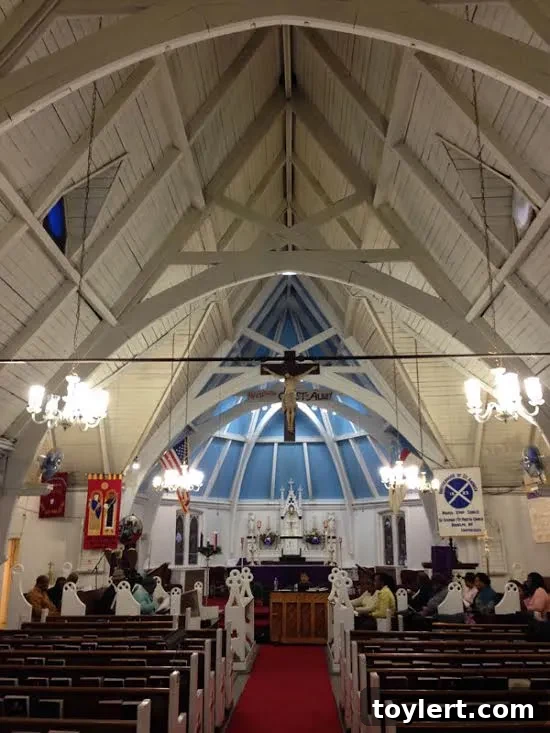
A mutual friend recently shared a series of evocative photographs, captured by a concerned neighbor approximately two months prior to the church’s demolition. These images offer a rare and heartbreaking glimpse into the interior of the Carpenter Gothic edifice, revealing its dilapidated beauty and the scale of the preservation challenge. The photographer’s accompanying commentary encapsulated the profound sadness felt by many in the community:
Friends of mine belong to this church and tell me that they struggled with the situation for a very long time but ultimately decided they couldn’t afford to save a very deteriorated structure. It is very sad, indeed. I don’t know who could have saved this building. To anyone in the neighborhood, this is not a surprise. We will always wonder what could have been done to save it, and let this inspire us to prevent further loss of these old gems.
This sentiment echoes a universal lament whenever a piece of shared heritage is lost. The church at 809 Jefferson Avenue was not merely a building; it was a silent witness to generations, a spiritual anchor, and an irreplaceable architectural artifact. Its story serves as a powerful reminder of the delicate balance between progress and preservation.
Understanding the Carpenter Gothic Style: A Vanishing Architectural Treasure
To fully grasp the significance of the loss at 809 Jefferson Avenue, one must first appreciate the unique characteristics of Carpenter Gothic architecture. Flourishing primarily in North America during the mid-19th century, this style emerged as a more accessible and adaptable interpretation of the grand European Gothic Revival. Instead of expensive stone and masonry, Carpenter Gothic utilized readily available timber, transforming it with the intricate detailing and verticality characteristic of its stone counterparts.
Key Features of Carpenter Gothic Churches:
- Wood Construction: The defining element, allowing for greater affordability and speed of construction compared to stone.
- Steeply Pitched Roofs: Evoking traditional Gothic aesthetics and providing dramatic vertical lines.
- Pointed Arch Windows and Doors: A hallmark of Gothic architecture, recreated with wooden frames.
- Vertical Siding: Often board-and-batten, emphasizing height.
- Ornate Trim (Bargeboards and Finials): Intricate gingerbread-like decorations adorning gables, eaves, and bell towers, showcasing the carpenter’s skill.
- Stained Glass: Though often simpler than in grand cathedrals, stained glass windows were common, casting colorful light into the interior.
The church at 809 Jefferson Avenue, being a pre-Civil War structure, represented an early and relatively rare example of this style in Brooklyn. Such buildings are vital historical documents, reflecting the burgeoning craftsmanship and architectural trends of a young American nation. They tell stories of local communities, their faith, and their aspirations during a pivotal period in the country’s development. The interior photos, even in their depiction of decay, hinted at the original grandeur: soaring ceilings, delicate wooden tracery, and the potential for vibrant light through what would have once been pristine windows. Every carved detail, every arch, spoke volumes about the artistry of its builders.
The Unyielding Challenges of Historic Preservation in Urban Environments
The neighbor’s comment about the church members “struggling with the situation for a very long time” and ultimately deciding they “couldn’t afford to save a very deteriorated structure” highlights the immense hurdles faced by those dedicated to historic preservation. Saving an old building, especially one that has fallen into significant disrepair, is a monumental undertaking, often fraught with financial, logistical, and bureaucratic challenges.
Factors Contributing to Deterioration and Demolition:
- Age-Related Decay: Over a century and a half of exposure to the elements takes an inevitable toll. Roof leaks, foundation issues, wood rot, pest infestations, and structural fatigue can accumulate over decades, leading to catastrophic damage.
- Prohibitive Costs: Restoring historic buildings requires specialized expertise, materials, and techniques that are far more expensive than modern construction. Matching original details, sourcing period-appropriate components, and adhering to strict preservation guidelines can quickly deplete budgets.
- Lack of Funds: Many historic churches, often serving smaller or less affluent congregations, simply lack the endowment or fundraising capacity to undertake multi-million dollar restoration projects. Public funding for preservation is often scarce, and private donations, while crucial, may not be sufficient for projects of this magnitude.
- Zoning and Development Pressures: In rapidly developing areas like Bed-Stuy, prime real estate often becomes more valuable as a vacant lot for new construction than as a decaying historic building. Developers, seeing an opportunity for higher density housing or commercial ventures, may exert pressure for demolition.
- Building Code Challenges: Bringing an old building up to modern safety and accessibility codes can be incredibly difficult and expensive, sometimes requiring modifications that compromise the historical integrity of the structure.
The question, “I don’t know who could have saved this building,” is a haunting one that resonates deeply within preservation circles. It points to a systemic issue where individual groups, no matter how dedicated, may not possess the collective resources or leverage to counteract the forces of deterioration and development. True salvation often requires a concerted effort from the congregation, local community organizations, historical societies, city agencies, and philanthropic foundations, all working in concert towards a shared vision.
The Irreplaceable Loss: A Community Mourns an “Old Gem”
For residents of Bed-Stuy, particularly those living near 809 Jefferson Avenue, the demise of the Carpenter Gothic church was not a surprise, but it was undoubtedly a profound sorrow. Historic buildings are more than just bricks and mortar (or in this case, wood and glass); they are integral to a neighborhood’s identity, providing a sense of place, continuity, and collective memory.
The loss of such an “old gem” creates a void that cannot be easily filled. It strips away a tangible link to the past, diminishing the architectural diversity and historical richness that make Brooklyn so unique. Each vanished landmark means fewer opportunities for future generations to connect physically with their heritage, to wonder at the craftsmanship of their ancestors, and to understand the evolution of their community.
Beyond its architectural merit, this church likely served as a hub for community life for over a century. It witnessed countless baptisms, weddings, funerals, and weekly services. It was a place of solace, celebration, and gathering. When such a focal point disappears, the social fabric of the neighborhood can also suffer, losing a familiar landmark that grounded people to their surroundings and to each other.
Inspiring Future Preservation: Lessons from 809 Jefferson Avenue
The final plea from the neighbor – “let this inspire us to prevent further loss of these old gems” – serves as a powerful call to action. While the church at 809 Jefferson Avenue may be gone, its story can and should galvanize efforts to protect other endangered historic properties.
Strategies for Proactive Preservation:
- Early Identification and Documentation: Proactive measures begin with identifying historically significant buildings before they reach a critical state of decay. Comprehensive surveys and documentation can highlight vulnerable structures and raise awareness.
- Community Engagement: Fostering a strong sense of ownership and appreciation for local heritage within the community is paramount. Local historical societies, civic groups, and residents can be powerful advocates.
- Adaptive Reuse: Finding new, economically viable uses for historic buildings can be a key to their survival. Converting an old church into residences, a community center, a library, or an arts venue can generate revenue for maintenance and ensure its continued relevance.
- Public-Private Partnerships: Collaboration between government entities, non-profit preservation organizations, private developers, and philanthropic individuals can pool resources and expertise to tackle complex restoration projects.
- Grants and Incentives: Advocating for and utilizing tax incentives, grants, and low-interest loans specifically aimed at historic preservation can make restoration financially feasible.
- Education and Awareness: Educating the public about the value of historic architecture and the challenges of preservation can foster greater support and volunteerism.
The tragedy of the Carpenter Gothic church at 809 Jefferson Avenue is a stark reminder that our architectural heritage is fragile. Each historic building tells a unique story, contributes to the character of our neighborhoods, and serves as a tangible link to the past. While the specific battle for this Bed-Stuy gem has been lost, its memory should fuel a renewed commitment to safeguarding the remaining “old gems” that grace our urban landscapes. By learning from these losses and actively working towards solutions, we can hope to prevent similar heartbreaking demolitions in the future, ensuring that Brooklyn’s rich history continues to stand tall for generations to come.